


Turkish Van Cat Wall Art Geometric
The Painting cat Turkish Van Geometric celebrates feline elegance through a contemporary artistic prism. This unique collection transforms the majestic beauty of the Turkish Van cat into an abstract geometric composition, where clean lines and angular shapes magnify the natural grace of this iconic breed. Each creation subtly combines feline art and modern design, creating a perfect visual harmony for lovers of sophisticated decoration and revisited animal art.
 Turkish Van Cat White Profile Art - Geometric Harmony - Turkish Van Cat Edition273,90 €
 Turkish Van Cat with Heterochromatic Eyes Painting - Geometric Elegance - Turkish Van Cat Edition273,90 €
 Turkish Van Cat Sitting Painting - Contemplative Portrait - Turkish Van Cat Edition273,90 €
 Turkish Van Cat Painting Elegant - Modern Artistic Portrait - Turkish Van Cat Edition228,90 €
Explore further
In Turkish Van Cat Wall Art Geometric
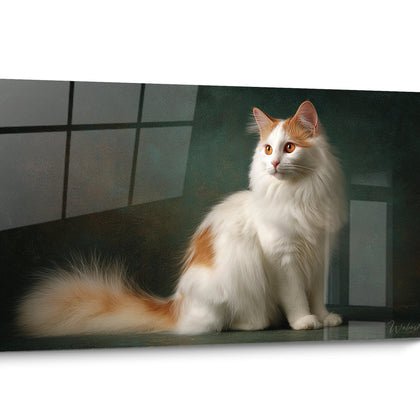
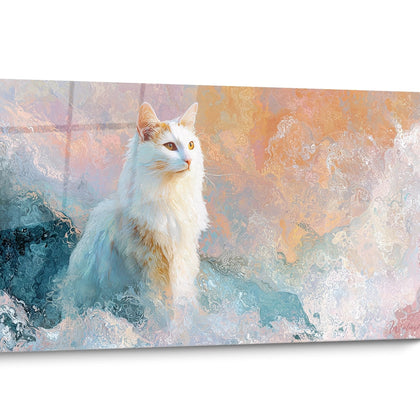
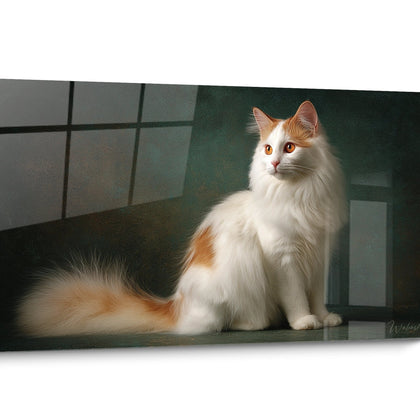
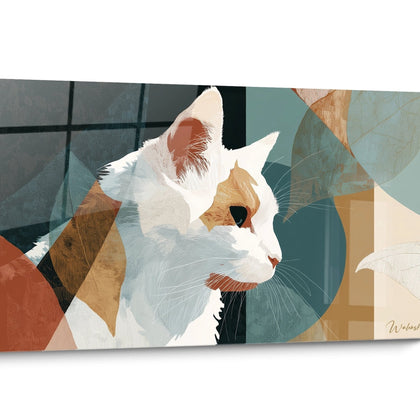
All about Turkish Van Cat Wall Art Geometric
- Presentation Turkish Van Cat Geometric Painting
- Angular shapes and Anatolian feline
- Visual polygonal decoding
- Structured aesthetics in large format
The Turkish Van cat geometric painting reinvents feline iconography through an architectural deconstruction of the famous Anatolian cat. This representation transforms the characteristic traits of the Turkish Van - its legendary odd-eyed eyes, its distinctive bicolored coat, and its majestic profile - into a mosaic of sophisticated polygonal segments. The geometric approach magnifies the unique anatomy of this rare breed by fragmenting its natural volumes into crystalline facets that capture and diffract ambient light along multidirectional axes. Each colorimetric fragment accurately reproduces the amber, copper, and immaculate white nuances characteristic of the Turkish Van's coat, while the angular segmentation creates a renewed visual dynamism at every viewing angle. This fusion of the millennial genetic heritage of a legendary feline and contemporary abstraction produces a monumental work perfectly suited to residential spaces requiring a distinctive conversation-starting centerpiece.
The Polygonal Architecture at the Service of the Anatolian Feline
The geometric Turkish Van cat painting exploits angular fragmentation to reveal unsuspected dimensions of this emblematic breed originating from the Turkish highlands. The faceted decomposition methodology transforms each organic curve of the feline into a succession of sharp planes that reconstruct the anatomy with a disturbing fidelity. This approach recalls the principles of analytical cubism while preserving the specific chromatic identity of the Turkish Van: reddish areas concentrated on the skull and tail, dominant milky expanse, striking contrast accentuated by the sharp geometric transitions.
Why does geometrization particularly sublimate the Turkish Van?
The pronounced bone structure and athletic musculature of the Turkish Van lend themselves exceptionally to angular stylization. Unlike breeds with rounded morphology, this feline naturally presents marked guidelines - straight profile, prominent cheekbones, triangular ears - which the polygonal segmentation amplifies without distorting. Fluid interpretations like the Turkish Van cat watercolor painting privilege the softness of transitions, while the geometric version celebrates the inherently angular body architecture of this ancient breed.
Chromatic stratification and spatial depth
Each geometric segment functions as an autonomous colorimetric entity generating subtle tonal variations despite belonging to the same family of hues. This micro-variation created by the facets produces a three-dimensional relief effect perceptible even on a two-dimensional support. The accumulation of hundreds of slightly differentiated fragments reconstructs the silky texture characteristic of the semi-long coat of the Turkish Van while maintaining the structural rigor of the composition. The transition zones between white and red segments generate visual force lines that naturally guide the gaze towards the major expressive elements: penetrating gaze with dissimilar irises, colored extremities contrasting with the ivory body.
Architectural dimensionality in large format
The impact of a Turkish Van cat geometric artwork grows proportionally with its dimensions. Monumental formats allow for a multiplication of polygonal subdivisions, increasing perceptual complexity: what may seem simplistic in a small format becomes a fascinating visual labyrinth at wall scale. The density of facets deployed over several square meters transforms observation into active exploration, each area of the artwork revealing specific chromatic arrangements requiring alternating proximity and distance to grasp both microscopic details and overall coherence.
Visual Decryption of Feline Polygonal Compositions
The interpretation of a Turkish Van cat geometric artwork requires understanding of the visual codes specific to this double hybridization: animalistic on the one hand, abstract on the other. The immediate recognition of the feline subject coexists with the formal appreciation of pure geometric arrangements, creating a double level of reading enriching the contemplative experience. This semantic duality ideally positions these creations in sophisticated contemporary interiors seeking balance between identifiable representation and bold plastic experimentation.
How to identify the quality of a feline geometric composition?
Technical mastery is revealed in preserving expressiveness despite radical fragmentation. A successful Turkish Van cat geometric artwork maintains the characteristic intensity of the breed's gaze - piercing, slightly oblique, asymmetrical eyes - even in the form of angular segments. Transcribing the feline emotional nuances through a purely geometric vocabulary distinguishes conceptually accomplished works from superficial stylistic exercises. The observer must perceive the typical proud personality of the Turkish Van, its legendary curiosity and independent temperament solely through the arrangement of abstract forms.
Interaction with the residential architectural environment
The multidirectional guidelines created by the polygonal mosaic establish formal dialogues with the surrounding interior architecture. Right angles of frames, edges of design furniture, geometries of contemporary lighting find an echo in the faceted composition of the feline, generating overall aesthetic coherence without monotonous uniformity. This formal resonance is particularly effective in clean spaces that prioritize straight lines and defined volumes, where the modern Turkish Van cat artwork brings controlled visual complexity.
Perceptual evolution according to ambient brightness
The fragmented nature of the composition considerably amplifies the influence of daily light variations. Each facet reacts differently to light sources depending on orientation and surface finish, creating continuous visual metamorphoses from sunrise to sunset. Morning sidelight accentuates suggested reliefs between adjacent segments, zenithal lighting reveals overall chromatic homogeneity, artificial evening lights transform certain areas into reflective surfaces contrasting with matte sectors. This programmed visual instability maintains a permanent renewal of contemplative interest, preventing perceptual habituation despite daily presence in a familiar environment.
Structured Aesthetics and Feline Monumentality
Adopting a geometric Turkish Van cat painting in a large format is a structuring decorative decision that radically transforms the spatial perception and visual hierarchy of an interior. The monumentality combined with geometric complexity creates an immediate magnetic presence, establishing an essential focal point organizing subsequent furniture arrangement and eye movement in the living space. This ability to reorganize spatial dynamics distinguishes these creations from secondary decorative elements.
What is the optimal wall surface to reveal the complexity of the polygons?
The maximum effectiveness of a feline geometric composition requires generous dimensions allowing for the multiplication of faceted subdivisions without compromising the readability of the whole. Surfaces exceeding two meters in their main dimension allow for the development of sufficiently dense polygonal networks to generate authentic visual richness while preserving the immediate recognition of the Turkish Van subject. This monumental scale transforms the work into an alternative wall architecture, modifying the overall volumetric perception of the room comparable to the opening of a virtual space suggested by the illusory depth of the layered composition.
Complementarity with diverse feline collections
Integrating multiple stylistic interpretations of the same feline subject enriches the decorative experience by confronting plastic approaches. A geometric Turkish Van cat painting dialogues advantageously with realistic representations such as the Turkish Van portrait cat painting, creating a visual educational journey illustrating the versatility of the interpretative approach of the same reference. This methodological juxtaposition simultaneously highlights the constant identity traits of the breed - distinctive morphology, specific color palette - and the infinity of possible artistic transcriptions, celebrating both the animal and the human creativity inspired by it.
Perceptual durability of abstract compositions
Unlike hyperrealistic representations vulnerable to the effects of fashion and rapid stylistic obsolescence, the geometric abstract approach benefits from formal timelessness resisting fluctuations in decorative trends. The mathematical structural rigor underlying the polygonal arrangements transcends ephemeral modes, guaranteeing prolonged aesthetic relevance over decades. This visual longevity represents a judicious decorative investment for buyers seeking a centerpiece that retains impact and contemporaneity regardless of the seasonal stylistic rotations characterizing the decorative industries.
Is a geometric Turkish Van cat painting suitable for professional spaces?
Absolutely, the formal sophistication and relative emotional neutrality of geometric compositions make them perfectly suited to corporate environments seeking a striking visual presence without infantilizing connotations. The complete Turkish Van cat painting collection offers various interpretations adaptable to both residential and commercial contexts.
Does geometric fragmentation alter the recognizable identity of the Turkish Van?
No, successful compositions preserve the distinctive visual markers of the breed despite radical stylization: characteristic bicolor configuration, slender body proportions, expressiveness of the gaze. Geometrization functions as a filter revealing the structural essence rather than a masking identity.
Why prioritize a geometric Turkish Van cat painting over other feline representations?
The Turkish Van possesses a naturally angular body structure and a contrasting color palette that lends itself exceptionally well to geometric treatment. Its relative rarity compared to common breeds also confers a superior exclusivity and distinction to compositions depicting it, positioning the work as a cultivated conversation starter rather than a generic decorative element.
Further reading
Our articles on this topic
- Turkish Van cat painting in white: how to pair it with light walls without a washed-out effect
- Manx cat painting without a tail: choosing the right silhouette for a modern living room
- Siberian cat painting for a modern living room: the art of combining feline power and clean lines
- Siberian cat painting, realistic large-format portrait: the guide to a flawless rendering
- Panoramic Siamese cat painting: feline elegance for a contemporary living room
L'art qui suscite l'envie
Maison belge d'art mural grand format
14 jourspour changer d'avis*
Protection Walenskyincluse
Fabriquéen Italie
FormatXXL
Kit de fixationtoujours fourni
* Hors tableaux personnalisés et tailles personnalisées


