

French Revolution Tricolor Wall Art
The French Revolution Tricolore painting celebrates historical heritage and the republican values of 1789. This artistic collection evokes the grandeur of founding events with vibrant compositions in blue, white, and red. Ideal for lovers of history and French patriotic decoration, it transforms your interiors into true hymns to freedom. Each work captures the revolutionary spirit and national pride. Discover a collection that honors the republican historical memory.
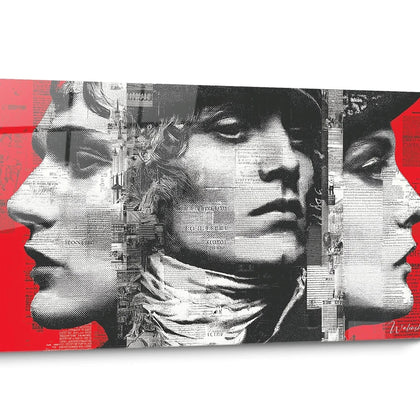
 Woman Liberty Embodied Wall Art - French Revolution Edition273,90 €
 Pantheon Liberty Triumphant Wall Art - French Revolution Edition273,90 €
 Revolutionary Heroic March Popular Painting - French Revolution Edition273,90 €
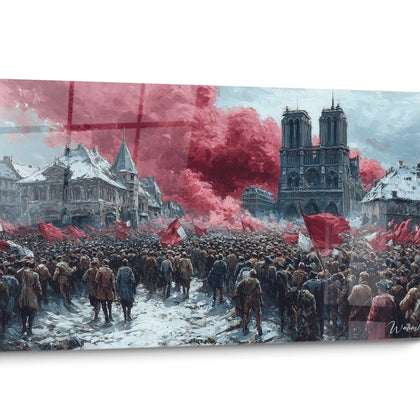
 Soldiers Floating Banner Wall Art - French Revolution Edition273,90 €
 Marianne Republican Spirit Wall Art - French Revolution Edition228,90 €
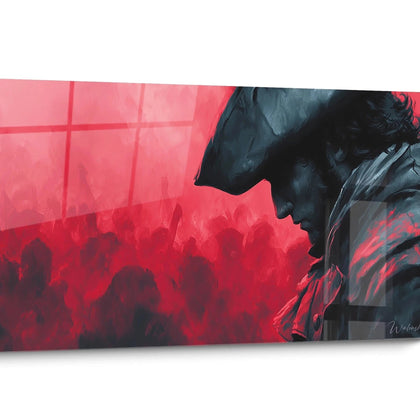
 Soldiers Snow Red Painting - French Revolution Edition228,90 €
Explore further
In French Revolution Tricolor Wall Art

All about French Revolution Tricolor Wall Art
- Painting Presentation Tricolore
- Patriotic Symbolism
- Republican Decorative Impact
- Historical Authenticity
The painting French Revolution tricolor embodies the republican spirit through a powerful visual representation of the events that shaped the nation. These large-scale wall art pieces capture the essence of iconic moments where blue, white, and red emerged as symbols of national unity. Each composition evokes the popular fervor and civic engagement that characterize this pivotal period in French history, transforming your space into a true memorial sanctuary dedicated to the founding values of liberty, equality, and fraternity.
The Visual Expression of Republican Ideals Through the Tricolor
The painting French Revolution tricolor is distinguished by its ability to visually translate the birth of French democratic principles. These monumental representations combine the three iconic colors in authentic revolutionary scenes, creating an emotional resonance with the republican values that still resonate today.
The Choreography of National Colors in Revolutionary Scenes
The arrangement of royal blue, recovered white monarchy, and popular red in these historical compositions reflects the fusion of classes that characterized 1789. Contemporary artists who create these French Revolution tricolor paintings meticulously study iconographic archives to restore the exact chromatic proportion that appeared on the flags, cockades, and banners carried by insurgents during the storming of the Bastille or subsequent revolutionary days.
These large-scale works exploit the tricolor symbolism to create focal points in your patriotic interior. The arrangement of the three hues generates an upward visual dynamic that evokes the revolutionary impetus, particularly when red occupies the dramatic tension zones of the scenes depicted.
Which historical moments to prioritize for a revolutionary tricolor painting?
The most sought-after compositions represent collective oaths , such as the one at the Jeu de Paume where deputies already wore the national colors, civic processions where the tricolor floated above the Parisian crowds, or popular assemblies where the red Phrygian caps contrasted with the blue and white uniforms of the National Guard. These specific scenes visually anchor the emergence of the national flag in its authentic revolutionary context.
The Symbolic Intensity of Tricolor Flags and Banners
A painting French Revolution tricolor acquires its evocative power through the recurring presence of flags waved during insurrectionary days. These banners, often positioned as dominant vertical elements in the composition, create a visual structure that guides the gaze towards the key historical figures. For collectors of patriotic art or enthusiasts of republican history, these representations are much more than a simple decorative element: they materialize the very genesis of French national identity. Some compositions also include references to the dramatic French Revolution painting by their theatrical intensity, while retaining this specific tricolor characteristic that defines them.
Monumental formats amplify the impact of these founding colors, transforming an entire wall into a visual manifesto of republican principles. This imposing presence is particularly suitable for spaces dedicated to civic reflection, historical libraries, or salons where intellectual conversation prevails.
The Revolutionary Tricolor Painting as an Identity Anchor in Contemporary Space
Integrating a painting of the French revolutionary tricolor into a modern environment creates a productive tension between founding past and citizen present. These large-scale historical compositions establish a permanent dialogue with the occupants of the space, daily reminding them of the revolutionary roots of French democracy.
How does a revolutionary tricolor transform the atmosphere of a space?
The presence of a painting of the French revolutionary tricolor immediately generates an atmosphere of republican dignity and civic engagement. Unlike abstract representations of national colors, these documented historical scenes transport the viewer to the precise moments when the tricolor was born from the will of the people. This historical authenticity gives your interior a narrative depth that simple chromatic compositions cannot match.
The imposing formats recommended for these works – generally over 120 centimeters – allow you to appreciate the period clothing details, the expressions of the revolutionaries, and above all the texture of the tricolor fabrics that float in scenes of popular mobilization. This monumental scale respects the historical importance of the subject represented.
Specific Decorative Associations with Revolutionary Heritage
A painting of the French revolutionary tricolore is ideally accompanied by elements that reinforce its memorial dimension: framed replicas of constitutional documents, old editions of the Declaration of the Rights of Man, or Directoire style furniture whose clean lines evoke republican austerity. This thematic staging creates a coherent environment where each element reinforces the overall patriotic message.
Professional spaces linked to republican institutions, law firms specializing in constitutional law, elected officials' offices, or municipal council chambers find in these tricolor representations a visual legitimacy that anchors their mission in historical continuity. The presence of the three colors in their original revolutionary context constantly recalls the democratic foundations on which the exercise of power is based.
The Emotional Resonance of Collective Tricolor Scenes
Compositions that privilege crowds of revolutionaries displaying the national colors create a particularly powerful sense of collective belonging. These representations of popular mobilization where the tricolor unites citizens of all conditions evoke the universalist dimension of the ideals of 1789. For buyers sensitive to civic engagement, these scenes resonate with contemporary democratic issues.
Acquiring a painting of the French revolutionary tricolor is thus a symbolic act of identity affirmation, particularly sought after during commemorative years or in contexts where the reaffirmation of republican values takes on a particular importance. These works transcend ephemeral decorative trends thanks to their anchoring in permanent national history.
The Documentary Authenticity of Revolutionary Tricolor Representations
The value of a painting of the French revolutionary tricolor essentially rests on its fidelity to the iconography of the time and its ability to restore the exact chromaticity of the revolutionary emblems as they appeared between 1789 and 1794. This historical rigor distinguishes serious compositions from fanciful interpretations.
Criteria for Historical Accuracy in Tricolor Scenes
Creators specializing in the French tricolor revolution painting rely on contemporary accounts regarding the precise nuances adopted for the national flag. Archives reveal that the blue used differed significantly from the standardized navy shades later, while the red possessed variations depending on the textile manufacturers producing the banners. This search for chromatic authenticity gives modern reproductions an essential historical credibility.
Scenes privileging moments of change – such as the removal of royalist emblems in favor of the tricolor during the first revolutionary days – offer a particularly engaging visual narrative. These compositions capture the precise moment when the three colors acquire their status as a unified national symbol.
Which revolutionary period to prioritize for an authentic tricolor painting?
The most sought-after representations focus on the period 1789-1792 when the tricolor gradually establishes itself as the national emblem without competition. Scenes after the proclamation of the Republic show an already institutionalized use of colors, while compositions centered on the early revolutionary years capture this unique moment when red-white-blue spontaneously emerges from the popular will, carried by the sans-culottes and the nascent national guard.
Details of Tricolore Clothing and Period Accessories
A high-quality French Revolution tricolor painting meticulously reproduces the tricolor cockades worn on hats, the three-color belts of municipal officers, the ribbons adorning the pikes of revolutionary women. These clothing details, often neglected in generic representations, visually authenticate the scene and allow connoisseurs to assess the seriousness of the underlying historical research.
Large-format sizes allow one to appreciate these iconographic subtleties that would disappear in more modest compositions. A painting of 150 centimeters or more allows for a detailed reading of the tricolor accessories worn by the various social groups represented, thus offering a true visual history lesson.
Preserving Republican Memory Through Image
Acquiring a French Revolution tricolor painting is part of an active memory preservation approach. Faced with the increasing abstraction of national symbols in contemporary public spaces, these documented historical representations keep alive the knowledge of the precise circumstances in which the republican emblems were born. For educators, cultural mediators, or simply citizens attached to historical transmission, these works constitute permanent educational supports.
Experienced collectors particularly seek compositions that balance documentary accuracy and aesthetic strength, creating pieces that function simultaneously as historical testimonies and visually impactful creations for demanding contemporary spaces.
Where is the ideal place to position a French Revolution tricolor painting in an interior?
The optimal location is on a main wall benefiting from sufficient visual distance to appreciate the monumental dimensions of the work, ideally facing the entrance to a reception room to maximize its immediate symbolic impact. Spaces with generous ceiling heights particularly enhance these vertical compositions dominated by waving flags.
Is a revolutionary tricolor painting suitable for professional spaces?
These historical representations naturally find their place in institutional settings, law firms, headquarters of civic associations, or spaces dedicated to democratic debate, where they visually embody the republican foundations of the activities carried out. Their heritage dimension legitimizes their presence in professional contexts requiring dignity and solid historical references.
How does a French Revolution tricolor painting stand out from other historical representations?
The specificity lies in the centrality given to the three national colors as the main narrative element, transforming the flag and its derivatives into a true visual protagonist of the composition, far beyond a simple background detail present in generic historical scenes. This chromatic focus creates an immediately recognizable visual identity.
L'art qui suscite l'envie
Maison belge d'art mural grand format
14 jourspour changer d'avis*
Protection Walenskyincluse
Fabriquéen Italie
FormatXXL
Kit de fixationtoujours fourni
* Hors tableaux personnalisés et tailles personnalisées


