


French Military Revolution Wall Art
Our French Revolution Military collection celebrates the heroism and grandeur of this foundational period. Discover works evoking iconic Napoleonic battles and period military uniforms. Each creation captures the intensity of the battles, the nobility of the soldiers and the revolutionary spirit that marked history. Perfect for history enthusiasts and lovers of heritage art, these compositions bring character and prestige to your interior decoration.
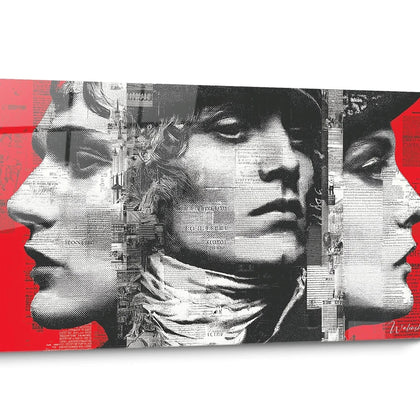
 Revolutionary Wall Art Beating Heart Republic - French Revolution Edition233,90 €
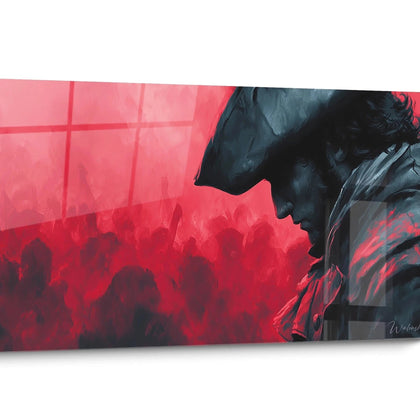
 Soldier Clouds of Blood Painting - French Revolution edition233,90 €
 Soldiers Out of Step Painting - French Revolution Edition233,90 €
 Soldiers Floating Banner Wall Art - French Revolution Edition233,90 €
 Revolutionaries Sacred Inferno Wall Art - French Revolution Edition233,90 €
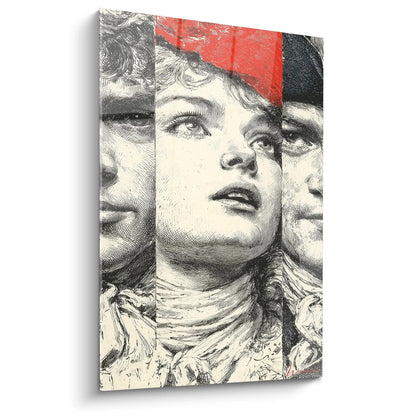
 Revolutionary Soldiers Heroes Mosaic Wall Art - French Revolution Edition233,90 €
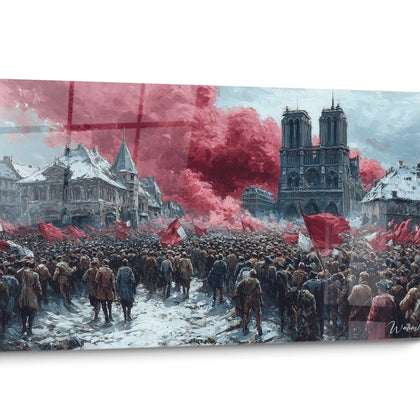
 Soldiers Snow Red Painting - French Revolution Edition213,90 €
Explore further
In French Military Revolution Wall Art

All about French Military Revolution Wall Art
- French Revolution Military Painting Presentation
- Revolutionary Military Iconography
- Strategic Symbolism and Heroism
- Military Historical Decoration
A French Revolution military painting celebrates emblematic battles, legendary generals, and the epic of revolutionary armies that shaped European history. These large-scale representations capture the bravery of soldiers, decisive cavalry charges, and strategic confrontations that marked the 1789-1799 period. Perfect for military history enthusiasts, collectors of Napoleonic representations, and spaces seeking authentic heritage atmosphere, this monumental format transforms private libraries, corporate offices, and living rooms into veritable historical galleries dedicated to French military legacy.
Revolutionary Military Art: Uniforms, Battles and Legendary Commanders
A French Revolution military painting distinguishes itself through iconographic precision in representing the regulatory uniforms of the Rhine Army, the Italian Army, or revolutionary demi-brigades. The striking tricolor colors of cockades, the striped trousers of fighting sans-culottes, and the characteristic bicornes of senior officers constitute immediately recognizable visual elements for connoisseurs of the French military epic.
Which revolutionary battles are most represented in military art?
Scenes of Valmy (1792), considered the founding victory, appear alongside representations of Jemappes, Fleurus, and the Italian campaigns led by Bonaparte. These decisive moments illustrate the transformation of a royal army into a disciplined revolutionary force capable of repelling European coalitions. A French Revolution military painting frequently captures the precise moment when revolutionary artillery opens fire, symbolizing new technical power.
Identification of revolutionary generals in historical compositions
Representations visually distinguish Kellermann raising his hat at Valmy, Hoche planning his Rhine campaigns, or Marceau falling in combat. These commanders embody different facets of revolutionary military leadership: tactical bravery, strategic genius, and patriotic sacrifice. For collectors seeking an authentic French Revolution military painting, the presence of precise biographical details — period decorations, regulation sabers, staff maps — guarantees the work's documentary value.
Emblematic regiments and their distinctive insignia
The 32nd light infantry demi-brigade, Murat's cavalry, or the Consular Guard grenadiers each possess specific visual characteristics faithfully reproduced. Regimental flags bearing names of victories, nascent imperial eagles, and inscriptions "Liberty or Death" constitute essential historical markers. An imposing format allows appreciation of these regimental details that distinguish a true French Revolution military painting from a generic combat scene, offering historical depth comparable to dramatic French Revolution paintings focused on major political events.
Strategic Symbolism and Representation of Republican Courage
How does composition convey revolutionary military strategy?
A museum-quality French Revolution military painting organizes its composition according to tactical principles of the era: assault columns in depth, defensive thin order, artillery deployment in concentrated batteries. The chosen perspectives — panoramic view dominating the battlefield or immersion in the heart of combat — reflect revolutionary military doctrines favoring mobility and bold offense over the static siege warfare of the Old Regime.
Integrated cartographic representations, showing geographic positions and troop movements, transform these works into veritable strategic study documents. For law offices specializing in international law or strategy consulting firms, a monumental format evoking Austerlitz or Rivoli visually communicates concepts of decisive planning and flawless execution.
Republican sacrifice and collective heroism immortalized
Unlike royal representations centered on triumphant monarchy, the French Revolution military painting values the collective heroism of citizen-soldiers. Scenes frequently show anonymous soldiers holding their position against superior forces, embodying the revolutionary motto "Conquer or Die". This ideological dimension resonates particularly in institutional spaces, veterans associations, or private collections valuing civic engagement.
Which symbolic elements reinforce the patriotic message?
Torn tricolor flags still being waved, drums beating the charge despite danger, and officers sharing their soldiers' risks constitute powerful visual codes. An authentic French Revolution military painting integrates these republican symbols without falling into simplistic propaganda, privileging rigorous historical documentation. Imposing formats — easily exceeding 120 cm in width — allow simultaneous appreciation of close combat intensity and the strategic scope of collective maneuvers, creating an immersive visual experience comparable to 19th-century historical panoramas.
Decorative Integration of Monumental Military Heritage
In which spaces does a French Revolution military painting produce the best impact?
Private libraries lined with historical volumes, executive offices evoking leadership and determination, and reception rooms with heritage character constitute privileged locations. A French Revolution military painting of large dimensions requires a clear main wall — ideally 3 to 4 meters wide — allowing sufficient viewing distance to appreciate compositional complexity and multiple depth planes characteristic of battle scenes.
Professional spaces related to defense, strategy consulting firms, headquarters of long-established family businesses, or public institutions particularly value these monumental historical representations. Unlike standard formats, these imposing dimensions create architectural presence radically transforming a room's atmosphere, immediately establishing a historical context and institutional gravitas.
Association with Empire and Directoire period furniture and decoration
A French Revolution military painting harmonizes naturally with Directoire or Empire furniture: solid mahogany writing desks, gondola armchairs with enveloping backs, architectural bookcases with columns. Period military objects — officer sabers in display cases, framed antique maps, bronze busts of revolutionary generals — create a coherent ensemble evoking an enlightened amateur's 19th-century cabinet.
Museum-quality lighting for complex composition and uniformological details
Military scenes featuring numerous characters in action, detailed topographic backgrounds, and subtle chromatic variations in uniforms require precisely calibrated museum lighting. Directional LED tracks at neutral color temperature (4000K) reveal regimental details without creating parasitic reflections. For discerning collectors, investment in professional lighting transforms a French Revolution military painting into a true heritage focal point, comparable to installations in national military history museums.
Building thematic revolutionary military collections
Enthusiasts frequently develop coherent ensembles combining different campaigns: Coalition wars, Egyptian campaigns, Italian battles. This collector approach progressively transforms a space into a private gallery chronologically retracing the 1792-1802 military epic. Monumental formats naturally occupy central positions, while complementary representations — officer portraits, bivouac scenes, topographic battlefield views — enrich the overall narrative context.
Why choose a large-scale French Revolution military painting?
Monumental formats faithfully reproduce the scale of original history paintings preserved in the Versailles Museum or the Invalides, restoring the intention of contemporary artists to create impressive works intended for public spaces. This museum dimension transforms simple decoration into heritage investment appreciating long-term, particularly sought after by collectors specializing in Napoleonic iconography.
Is a French Revolution military painting suitable for modern professional spaces?
Absolutely, provided interior architecture privileging generous ceiling height and spacious volumes. Executive offices, boardrooms, and reception spaces gain distinctive character through these historical representations that immediately communicate values of courage, strategy, and institutional heritage — attributes particularly valued in legal, financial, and management consulting sectors.
How to authenticate the historical quality of a French Revolution military painting?
Verify uniform precision according to military regulations of the era, topographic accuracy of identifiable battle locations, and chronological consistency between represented weapons and presumed dating. Reference documentary works rely on primary iconographic sources — contemporary engravings, eyewitness descriptions, museum collections — guaranteeing flawless historical fidelity sought by true connoisseurs.


