


French Revolution Portrait Wall Art
Our French Revolution Painting Portrait collection celebrates the emblematic figures of 1789. Discover revolutionary historical portraits capturing the spirit of the great personalities of this pivotal period. These works evoke the passion, courage, and ideals that shaped modern France. Each creation highlights the dramatic intensity of this French revolutionary era. Perfect for history enthusiasts and lovers of classical art seeking to enrich their interior with a deep cultural touch.
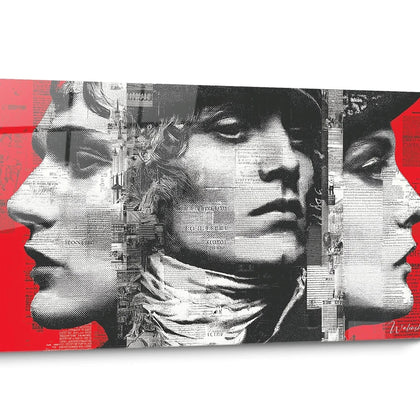
 Napoleon Shadows Twin - French Revolution edition wall art228,90 €
 Bearded Portrait Painting Inner Storm - French Revolution Edition273,90 €
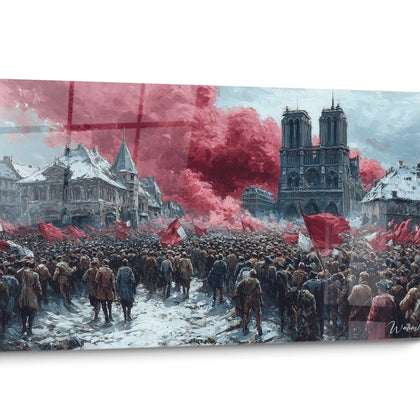
 Revolutionary Wall Art Beating Heart Republic - French Revolution Edition273,90 €
 Male Profile Introspection Burning Painting - French Revolution Edition273,90 €
 Revolutionary Soldiers Heroes Mosaic Wall Art - French Revolution Edition273,90 €
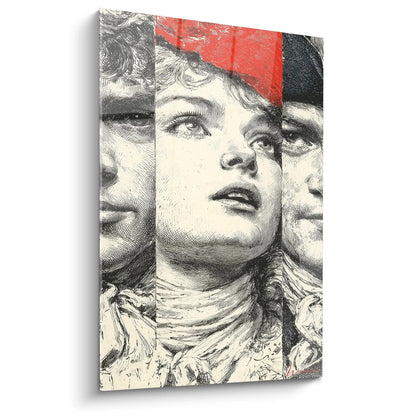
 Marianne Republican Spirit Wall Art - French Revolution Edition228,90 €
 Renaissance Human Portrait Wall Art - French Revolution Edition228,90 €
Explore further
In French Revolution Portrait Wall Art

All about French Revolution Portrait Wall Art
- Presentation Painting Revolution French Portrait
- Revolutionary Historical Portraits
- Iconic Figures 1789
- Portrait Art Revolutionary Period
A painting revolution French portrait is much more than a simple wall art representation. These monumental works capture the essence of the personalities who shaped history between 1789 and 1799, transforming your space into a true historical gallery. Each immortalized face tells a unique revolutionary epic, from major political figures to anonymous citizens who participated in the founding events of the Republic. Acquiring a large-scale revolutionary portrait allows you to assert a strong intellectual position while creating an exceptional conversational focal point in demanding residential or professional spaces.
The Revolutionary Iconography Through Monumental Portraiture
The paintings revolution French portrait of imposing size are distinguished by their ability to restore the psychological intensity of revolutionary actors. Unlike generic representations, these monumental portraits reveal the authentic facial expressions of Jacobins, Girondins and Sans-culottes in their decisive moments. Robespierre's physiognomy during debates at the Convention, Danton's determined gaze facing the scaffold, or Charlotte Corday's resolute expression are irreplaceable visual testimonies.
Why choose a revolutionary portrait for your bourgeois interior?
Installing a large-format revolutionary portrait in a Haussmannian living room or an industrial loft creates a fascinating aesthetic tension. This juxtaposition between contemporary comfort and historical violence generates exceptional narrative depth. Collectors of historical art particularly seek representations of lesser-known secondary characters: deputies of the Third Estate, revolutionary journalists such as Camille Desmoulins, or engaged women such as Olympe de Gouges. These less publicized figures offer a superior historical authenticity.
The expression of republican ideals in monumental portraiture
An authentic painting revolution French portrait visually conveys the founding values: fraternity shines through in the collective portraits of fédérés, equality is expressed by the democratized representation of ordinary citizens, freedom radiates in defiant gazes facing monarchical absolutism. The large dimensions allow you to appreciate crucial symbolic details: tricolor cockades, Phrygian caps, sans-culottes costumes, republican medallions. To explore more dramatic representations of revolutionary events, discover our selection of painting revolution French dramatic illustrating significant insurrectionary scenes.
The revealing clothing attributes of political affiliation
Costume analysis in revolutionary portraits is a historical science in its own right. The French costume of the moderates contrasts radically with the proletarian attire of the Sans-culottes. Carmagnoles, striped vests, long trousers and wooden shoes are determining social markers. Monumental portraits allow you to precisely identify political allegiances: black ties of radical Jacobins, checkered suits of Thermidorian muscadins, simple clothing of Hébertists. This sociological reading considerably enriches the documentary value of the work.
Little-Known Revolutionary Figures in Portrait Art
Beyond the great names: portraits of forgotten actors
While Robespierre and Danton dominate the collective imagination, paintings depicting the French Revolution and portraying secondary characters offer a superior historical authenticity. Jacques Roux, leader of the Enragés defending the most destitute, presents a fascinating austere physiognomy. Jean-Paul Marat in his medicinal bath before his assassination constitutes a powerful iconography for intellectual spaces. Portraits of Théroigne de Méricourt, a radical feminist revolutionary, particularly seduce contemporary collectors sensitive to precursor egalitarian struggles.
How to identify the historical authenticity of a revolutionary portrait?
Acquiring a revolutionary portrait requires specific iconographic vigilance. Authentic representations scrupulously respect the portraitist conventions of the time: three-quarter poses inherited from classicism, neutral or neoclassical architectural backgrounds, dramatic lateral lighting inspired by caravaggism. Stylistic anachronisms immediately betray fanciful creations. A true French revolutionary portrait painting monumental invariably integrates datable contextual elements: period documents, Directoire furniture, official republican symbols. Historical coherence takes precedence over romantic aesthetics.
The psychological impact of revolutionary portraits in professional spaces
Law firms, notarial offices, and legal institutions favor revolutionary portraits for their symbolic democratic charge. Representing the founders of modern French law in a contemporary legal space establishes a valorizing intellectual lineage. Portraits of Merlin de Douai, the drafter of the Civil Code, or Cambacérès, a major revolutionary jurist, confer a tangible historical legitimacy. Large dimensions impose respect and visually materialize the founding principles of the current French legal system. This approach goes far beyond simple decoration to affirm a professional identity rooted in history.
Revolutionary female portraits: a category prized by collectors
Representations of revolutionary women are experiencing exceptional and increasing demand. Olympe de Gouges, author of the Declaration of the Rights of Woman, Manon Roland, a Girondine intellectual, or Pauline Léon, a militant of the Parisian sections, embody precursor struggles that resonate powerfully with contemporary issues. These monumental female portraits offer a refreshing alternative to the traditional male domination of revolutionary iconography. Informed collectors anticipate the exceptional heritage valuation of these representations historically underestimated but culturally current.
The Neoclassical Aesthetics of Monumental Revolutionary Portraits
The specific artistic codes of revolutionary portraits
An authentic French revolutionary portrait painting is in line with the dominant neoclassical aesthetics of the 1789-1799 period. Revolutionary artists such as Jacques-Louis David imposed a radical compositional sobriety: elimination of rococo artifices, return to ancient dignity, valorization of republican virtue through formal simplicity. Architectural backgrounds systematically evoke the idealized Rome of the Republic: Doric columns, triangular pediments, austere draperies. This stylistic purification contrasts sharply with the ornate aristocratic portraits of the Ancien Régime.
What is the significance of recurring symbols in these portraits?
The revolutionary iconography is full of codified symbols worthy of decoding. The red Phrygian cap signals freedom from monarchical slavery, the Roman fasces symbolize indivisible republican unity, the masonic level represents universal citizenship equality. Portraits frequently integrate identifiable textual documents: Declaration of the Rights of Man, 1793 Constitution, revolutionary newspapers. These textual insertions transform the portrait into a visual political manifesto. Erudite collectors particularly appreciate this semiotic density offering multiple renewed readings.
The stylistic evolution of the portrait according to the revolutionary phases
French revolutionary paintings portray perfectly reflect the successive political shifts. Portraits from 1789-1791 retain a residual aristocratic elegance: powdered wigs, sumptuous garments, graceful poses. The Jacobin radicalization of 1792-1794 imposes a drastic austerity in dress and composition: dark costumes, severe expressions, neutral backgrounds. The Thermidorian and Directory period marks a progressive return to refinement: the extravagant costumes of the Incroyables, elaborate hairstyles, theatrical poses. This stylistic evolution constitutes a valuable visual thermometer of the revolutionary political temperature.
Where to install a monumental revolutionary portrait to maximize its impact?
The location of a large-format revolutionary portrait determines its narrative effectiveness. Personal libraries constitute the ideal environment: the juxtaposition with Enlightenment philosophical works creates a natural intellectual coherence. Formal dining rooms also benefit from this historical presence stimulating erudite conversations. Monumental entrances immediately impose the intellectual character of the home. Avoid bedrooms where the psychological intensity of revolutionary gazes could disrupt rest. Demanding professional spaces particularly value these historical representations affirming a distinctive cultural depth in contrast to generic corporate decorations.
Is a French revolutionary portrait suitable for contemporary minimalist interiors?
Absolutely. The neoclassical sobriety of revolutionary portraits harmonizes perfectly with contemporary purification. The chromatic contrast between historical tones and minimalist white spaces generates a sophisticated aesthetic tension highly prized by avant-garde interior architects.
Why do revolutionary portraits appeal to collectors of historical art?
These works exceptionally combine aesthetic value, historical density, and republican symbolic charge. Unlike aristocratic portraits celebrating abolished privileges, revolutionary portraits embody universal democratic ideals that remain relevant, guaranteeing lasting cultural resonance and sustained heritage valuation.
Do portraits of controversial revolutionary figures pose ethical exhibition problems?
The moral complexity of revolutionary actors precisely enriches their intellectual interest. Exhibiting Robespierre or Marat does not signify approval of the Reign of Terror, but rather recognition of their undeniable historical role in the foundation of the French Republic. This nuance stimulates critical reflection, the primary function of historical art demanding.
L'art qui suscite l'envie
Maison belge d'art mural grand format
14 jourspour changer d'avis*
Protection Walenskyincluse
Fabriquéen Italie
FormatXXL
Kit de fixationtoujours fourni
* Hors tableaux personnalisés et tailles personnalisées


