


Amedeo Modigliani Inspired Painting Expressionist Portrait
The Painting inspiration Amedeo Modigliani Portrait Expressionist captures the essence of the Italian master with his iconic elongated faces and melancholic gazes. Each artwork evokes the unique sensitivity of the bohemian artist, between timeless elegance and Parisian modernity. The Expressionist Modigliani portraits are distinguished by their pure lines and refined color palette. Explore this artistic universe where modern Italian portrait art and authentic pictorial emotion blend.
 Painting Inspired by Head of Amedeo Modigliani No. 2 – Tribute to Renowned Artist273,90 €
 Painting Inspired by Amedeo Modigliani Head N°3 – Homage to a Famous Artist273,90 €
 Painting Inspired by Head of Amedeo Modigliani No. 1 – Tribute to Renowned Artist273,90 €
 Painting inspired by Amedeo Modigliani’s The Beauty Roman N°2 – Homage to Famous Artist273,90 €
 Painting Inspired by Seated Jeanne Hébuterne by Amedeo Modigliani N°2 – Tribute to Celebrated Artist273,90 €
Explore further
In Amedeo Modigliani Inspired Painting Expressionist Portrait
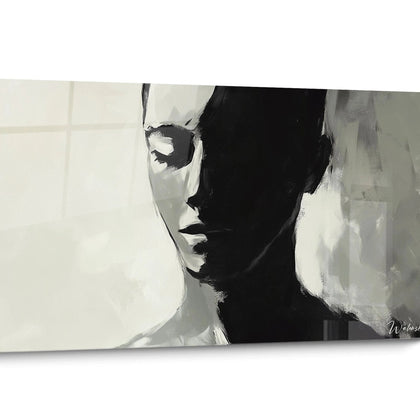

All about Amedeo Modigliani Inspired Painting Expressionist Portrait
- Presentation of Expressionist Paintings by Modigliani
- The Expressionist Legacy
- Modigliani in the Modern Space
- Aesthetic Authenticity
The paintings inspired by Amedeo Modigliani expressionist portrait embody an exceptional encounter between the Parisian melancholy of the early 20th century and the emotional intensity characteristic of the Expressionist movement. These large-scale wall art pieces capture the essence of elongated faces, meditative gazes, and that characteristic color palette oscillating between warm ochres and deep blues. Each composition reveals this tension between elegant figuration and expressive distortion that defines Modigliani's art, creating a magnetic visual presence in contemporary spaces seeking a marked psychological dimension.
The Psychological Expression of Elongated Faces by Modigliani
The painting inspired by Amedeo Modigliani portrait expressionist translates into contemporary interiors this immediately recognizable aesthetic signature: stretched physiognomies, graceful, oversized necks, eyes often devoid of pupils. This anatomical stylization is not simple decorative deformation but an exploration of psychic depths. Monumental formats amplify this emotional tension, transforming each absent gaze into a metaphysical question about human identity and existential solitude.
Why do expressionist portraits by Modigliani fascinate contemporary collectors?
The contemporary appeal of these representations lies in their unique ability to fuse Parisian formal sophistication and expressive vulnerability. Unlike conventional portraits celebrating triumphant individuality, Modiglian faces evoke a fragile, introspective, almost spectral humanity. This elegant melancholy resonates particularly in minimalist Scandinavian interiors or industrial lofts, where the psychological dimension of art becomes an emotional counterpoint to architectural clean lines.
The chromatic interaction between ochres, earths and melancholic blues
Modigliani's expressionist palette relies on earthy harmonies punctuated by nostalgic blues and subtle crimson reds. These organic tones create subtle visual dialogues with raw materials such as polished concrete, exposed brick, or patinated woodwork. A painting inspired by Amedeo Modigliani portrait of large dimensions generates a soft, almost intimate atmosphere, even in imposing architectural volumes, thanks to this sophisticated chromatic restraint.
The sculptural presence of vertical compositions
Modiglian portraits naturally favor vertical formats echoing the characteristic elongation of the figures. In contemporary residential spaces, these tall compositions create ascending visual axes that energize walls without horizontal clutter. Entrance halls, stairwells, or narrow wall panels particularly benefit from this elegant verticality that guides the gaze upwards while maintaining an emotional focus on the represented face.
Integrating Expressionist Aesthetics into Intellectual Spaces
The painting inspired by Amedeo Modigliani expressionist portrait finds its optimal expression in environments cultivating a contemplative atmosphere. Private libraries, consulting rooms, artists' studios, or reading rooms become natural settings for these introspective works. The psychological dimension of the portraits resonates with the meditative ambiance of these spaces, creating a semantic coherence between architectural function and visual language.
How to position an expressionist portrait facing light sources?
Modigliani expressionism demands indirect, diffused lighting, avoiding harsh contrasts that would fragment the continuity of the colored areas. Locations perpendicular to windows, rather than frontal, allow for a progressive revelation of subtle chromatic nuances. Soft ambient lighting, especially in the evening, intensifies the nostalgic dimension and emotional depth of the gazes, transforming the work into an almost living presence dialoguing with the nocturnal space.
The association with mid-century furniture and natural textiles
The organic lines of Scandinavian design from the 1950s-1960s establish a harmonious formal conversation with the sensual curves of Modigliani portraits. An Eames armchair, a Hans Wegner bookcase, or a Noguchi table share the same search for expressive simplicity and humanistic warmth. Raw linen, bouclé wool, or ribbed velvet textiles in neutral tones extend the earthy tactility of the expressionist palette, creating a sensory continuity between the wall art and the living environment.
Creating a themed wall gallery around the School of Paris
For passionate collectors, combining multiple representations inspired by Modigliani with references to Soutine, Chagall, or Pascin creates a visually coherent narrative around the Montparnasse Bohemia. This domestic museum approach requires varied formats arranged according to a studied visual rhythm, where the monumental expressionist portrait holds the dominant position, dialoguing with smaller satellite compositions. This staging transforms the wall into a living page of art history.
Stylistic Authenticity and Adherence to Expressionist Codes
Acquiring a painting inspired by Amedeo Modigliani, an expressionist portrait , requires aesthetic vigilance regarding the respect of fundamental stylistic markers. The linear simplification of facial features, the frequent absence of tonal modulation in skin tones, the geometric stylization of architectural backgrounds are criteria of visual authenticity. Museum-quality large-format reproductions preserve these technical subtleties, notably delicate chromatic transitions and the suggested pictorial materiality.
What details reveal the mastery of Modigliani expressionism?
Careful observation reveals distinctive elements: the subtle asymmetry of faces creating a dynamic tension, black outlines encircling certain forms as in cloisonnism, a restricted palette favoring analogous harmonies rather than complementary contrasts. Monumental formats amplify these technical details often imperceptible in miniature reproductions, allowing for a complete appreciation of the formal sophistication underlying the apparent simplicity of the compositions.
The narrative dimension of the stripped backgrounds
Unlike portraits contextualized in elaborate settings, Modigliani favors abstract backgrounds, monochrome, or simply divided into elementary geometric planes. This narrative reduction concentrates attention on the psychological presence of the model, creating a timelessness that facilitates integration into contemporary interiors. The absence of dated historical references allows for a smooth coexistence with modern architecture, the portrait becoming a universal presence rather than a circumscribed artifact of the era.
The emotional investment in figurative expressionist art
Beyond its decorative dimension, these artworks foster a lasting emotional connection with their owners. The daily recurrence of these melancholic faces, their silent yet magnetic presence, generates a unique contemplative familiarity. Collectors frequently testify to a profound emotional connection, as if these absent gazes perpetually questioned the observer's own inner self. This psychological dimension transforms the acquisition of art into an existential companionship.
What impact does an expressionist Modigliani portrait have on the atmosphere of a space?
The introduction of a Modigliani portrait immediately transforms the ambiance into an introspective, cultivated, and slightly nostalgic tone. The artwork functions as an emotional anchor, slowing down the perceptual rhythm of the space and inviting contemplation rather than a hasty passage. This meditative quality is particularly suitable for environments seeking discreet sophistication and cultural depth without ostentatious display.
How does Modigliani’s expressionism dialogue with contemporary art?
Bold collectors create stimulating visual confrontations by associating historical expressionist portraits with contemporary abstract or conceptual creations. This temporal juxtaposition highlights the persistent modernity of Modigliani’s approach, his ability to transcend chronological categorizations. Monumental formats facilitate this intergenerational dialogue by establishing an equivalent presence alongside contemporary works, which are often imposing in themselves.
Why prioritize a monumental format for an expressionist portrait?
Generous dimensions amplify the psychological intensity characteristic of expressionism, creating an emotional immersion impossible to reproduce in a reduced format. The face-to-face encounter with an elongated face of almost human or superior size establishes a disturbing, almost confrontational presence, which fully materializes the original expressive intention. This scale transforms the artwork from a decorative object into a spatial event structuring the entire room.
L'art qui suscite l'envie
Maison belge d'art mural grand format
14 jourspour changer d'avis*
Protection Walenskyincluse
Fabriquéen Italie
FormatXXL
Kit de fixationtoujours fourni
* Hors tableaux personnalisés et tailles personnalisées


