


Weimaraner Dog Canvas Modern Art
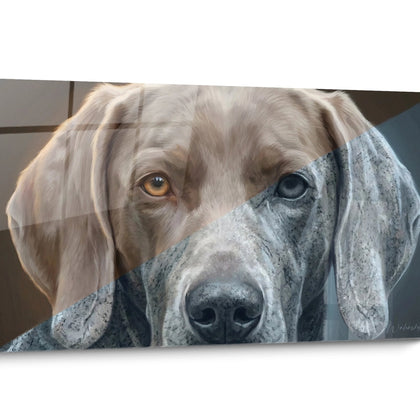
The Painting Dog Wirehaired Vizsla Modern celebrates the timeless elegance of this aristocratic breed. This exclusive collection captures the nobility and piercing gaze of the Wirehaired Vizsla through contemporary artistic creations. Perfect for lovers of high-end dog decor, each work highlights the athletic silhouette and characteristic silver coat of this exceptional dog. Ideal for enhancing your interior with a Wirehaired Vizsla artwork that is both sophisticated and elegant.
 Gray Dog Painting Geometric Silhouette Colorful Background - Contemporary Elegance - Weimaraner Braque Edition273,90 €
 Gray Dog Painting with Lavender Tones in Artistic Burst - Colorful Explosion - Weimaraner Edition273,90 €
 Weimaraner in Motion Black and White Wall Art - Dynamic Momentum - Weimaraner Edition273,90 €
 White Geometric Dog Painting in Motion - Contemporary Elegance - Weimaraner Edition273,90 €
 Liquefied Weimaraner Painting in Black and White - Artistic Fusion - Weimaraner Edition273,90 €
 Gray Dog with Colorful Drips - Expressive Portrait - Weimaraner Edition273,90 €
Explore further
In Weimaraner Dog Canvas Modern Art


All about Weimaraner Dog Canvas Modern Art
- Presentation of Braque de Weimar Modern Painting
- Contemporary Aesthetics
- Minimalist Decoration
- Architectural Integration
The Braque dog painting of Modern Weimar represents the perfect alliance between the aristocratic elegance of this iconic breed and the visual codes of contemporary design. Designed for refined architectural spaces and sophisticated urban interiors, this type of wall decoration transcends simple animal representation to become a true stylistic manifesto. Clean lines, asymmetrical compositions and bold color treatments transform the characteristic silver coat of the Braque into a formal exploration that dialogues with modern architecture. For demanding collectors seeking a large decorative piece capable of visually anchoring an open living room or an industrial loft, these creations offer this impactful wall presence while preserving a refined sobriety. The modern approach favors geometric abstractions, visual fragmentations and positive-negative games that reinterpret the silhouette of the Braque according to the principles of contemporary graphic design and digital art.
The Contemporary Expression of the Braque de Weimar in Modern Wall Art
The Braque de Weimar dog painting of Modern Weimar embodies an aesthetic break with traditional canine representations by adopting the codes of contemporary graphic design. This approach favors flat colors, maximized contrasts and off-center compositions that create a dynamic visual tension. Unlike classical styles, the modern version often fragments the Braque's silhouette into distinct color zones, exploiting its sculptural profile and natural angles to generate quasi-architectural compositions.
The visual codes of modernity applied to the Braque
The modern interpretation transforms the piercing gaze of the Braque de Weimar into a graphic focal point, often emphasized by concentric circles, directional stripes or superimposed geometric grids. The silver coat becomes a field of experimentation for digital gradients, controlled pixelation effects or half-tone treatments inspired by pop art. These techniques create visual depth without resorting to academic shadows, preferring instead the superposition of semi-transparent color planes. For those who also appreciate other stylistic approaches, the Geometric Braque de Weimar Dog Painting collection offers complementary variations exploring pure forms.
What color palettes define the modern style for this canine subject?
Modern creations break away from chromatic realism to explore unexpected ranges: electric blues contrasting with saturated oranges, graphic monochromes where deep black dialogues with pure white, or even neon variations that transform the Braque into a nocturnal urban icon. This chromatic freedom allows for precise adaptation of the decoration to contemporary environments dominated by polished concrete, brushed steel and glass. Extra-large formats amplify the impact of these bold color choices, transforming an entire wall into an assumed stylistic statement.
Compositional asymmetry as a modern signature
Unlike traditional centered compositions, the modern Braque painting favors off-center framing, sharp cuts that deliberately section the silhouette, or diagonal compositions creating directional dynamism. The aristocratic profile of the dog can emerge from the edge of the frame, creating a spatial tension that attracts the eye and generates visual movement. This approach works particularly well in open spaces where the flow of the gaze must be orchestrated between different functional areas.
Integrating the Braque de Weimar Painting into Minimalist Spaces
The Braque de Weimar dog painting perfectly meets the requirements of minimalist interiors where every decorative element must justify its presence with an undeniable visual force. In these clean environments characterized by smooth surfaces, pronounced horizontal lines, and a restricted palette, adding a modernized canine representation creates the necessary emotional anchor without compromising the overall sobriety. The formal simplification inherent in the modern style naturally harmonizes with the principles of less is more.
How does this type of decoration interact with contemporary architecture?
Large bay windows, cathedral ceilings, and blank walls in lofts demand proportionate and graphically assertive decorative interventions. The Braque de Weimar, with its slender morphology and natural vertical posture, offers a verticality that balances the dominant horizontal lines of modern spaces. Linear or vector versions create visual echoes with exposed metal structures, designer stair railings, or wire-suspension luminaires. For a different but equally contemporary atmosphere, explore the Braque de Weimar Black and White Painting collection, which offers bold contrasts suitable for monochromatic environments.
Monumental formats as spatial affirmation
In the generous volumes of contemporary homes, a standard format goes unnoticed. The modern Braque painting gains relevance when it reaches imposing dimensions that transform the wall into a total graphic expression surface. These large-format creations function as visual partitions in open spaces, subtly defining areas without resorting to physical partitioning. The dog's silver gaze, enlarged to a monumental scale, establishes an almost sculptural presence that animates the space without cluttering it.
What materials and finishes amplify the modern effect?
Rigid supports with a perfectly smooth surface, matte anti-reflective finishes or, conversely, ultra-glossy varnishes creating mirror effects, flush metal frames or the total absence of frame with a clean cut at the edges: all these technical choices reinforce the modern reading of the work. Invisible mounting systems preserve the visual purity, giving the impression that the image floats in front of the wall. This attention to detail distinguishes a simple print from a true decorative piece designed for contemporary architecture.
The Modern Braque de Weimar as an Identity Element of Sophisticated Urban Interiors
Beyond its decorative function, the Modern Braque de Weimar dog painting conveys a specific cultural positioning. Choosing this specific breed in a contemporary interpretation signals an appreciation for aristocratic heritage reinterpreted according to current codes, a balance between tradition and innovation that characterizes the most accomplished urban interiors. The Braque de Weimar is not an arbitrary choice: its history as a German hunting dog, its relative rarity, and its distinctive aesthetic make it a symbol of discernment.
Why the Braque rather than another breed for modern decoration?
The uniformly gray coat of the Weimaraner provides a decisive advantage for modern graphic treatments: the absence of natural patterns allows creators to freely project visual structures without conflicting with fur markings. Its amber or gray-blue eyes create a natural chromatic contrast that can be graphically exploited. Its athletic morphology and taut lines lend themselves perfectly to the geometric simplifications and angular stylizations that characterize modern aesthetics. Other complementary interpretations can be found in the vast Painting chien Braque de Weimarcollection, offering considerable stylistic diversity.
Pairing with contemporary design furniture
A modern Weimaraner painting finds its full expression when it dialogues with furniture with clean lines: low modular sofas, tempered glass coffee tables, asymmetrical suspended shelves. The organic curves of the canine body create a welcome counterpoint to the dominant right angles of contemporary furniture, introducing a touch of fluidity without tipping into excessive ornamentation. The metallic tones often present in the modern rendering of the silver coat establish subtle correspondences with the chrome or brushed finishes of furniture elements. For those seeking a more intimate approach, the Painting chien Braque de Weimar Portrait collection offers compositions centered on expressiveness.
How does this decorative choice evolve with trends?
Unlike ephemeral trends, the modern Weimaraner is part of a stylistic durability. Its graphic treatment protects it from the rapid obsolescence that affects overly literal or sentimental representations. Renewals are made through chromatic or compositional variations rather than radical changes in subject. This durability justifies the investment in generous formats that will structure the space for years to come. Variations on the theme allow for seasonal rotations for collectors: cool tones in summer with golden versions to warm up the winter months, thus creating an evolving collection while maintaining thematic consistency.
Frequently Asked Questions about the Modern Weimaraner Painting
Which piece best complements a large-format Modern Weimaraner Painting?
Reception areas such as the main living room or a cathedral entrance benefit most from these monumental creations. The wall facing the main entrance is the ideal location, creating an immediate visual impact that establishes the aesthetic tone of the entire dwelling. In contemporary home offices, such a painting brings a professional sophistication while avoiding corporate coldness.
Is a Modern Weimaraner Painting suitable for professional spaces?
Absolutely, particularly in creative industries, architecture firms, design showrooms, or high-end co-working spaces. The Weimaraner symbolizes excellence, loyalty, and distinction, values appropriate for demanding professional environments. Its modern treatment avoids any excessive domestic connotation while humanizing the workspace.
How to combine multiple Modern Weimaraner Paintings without overwhelming?
Creating a gallery wall works if the variations remain consistent: the same color palette with different compositions, or conversely the same composition with variations in colors. Generous spacing between the pieces (minimum 15-20 cm) preserves the essential visual breathing space for modern interiors. Alternating vertical and horizontal formats creates a dynamic visual rhythm while maintaining thematic unity around this iconic breed.


