


Weimaraner Dog Geometric Wall Art
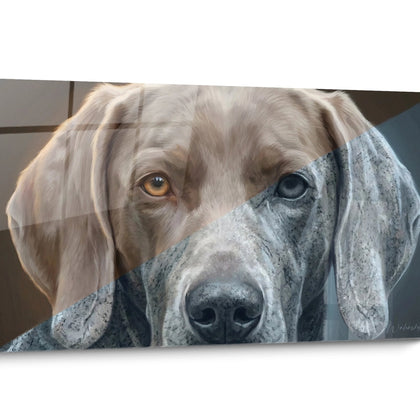
The Painting Dog Wirehaired Vizsla Geometric celebrates the natural elegance of this noble breed through a contemporary and bold interpretation. This collection combines the aesthetics of angular shapes with the characteristic bearing of the Wirehaired Vizsla, creating striking wall artworks. Perfect for lovers of modern canine decoration, it brings a sophisticated touch to design interiors. The streamlined compositions highlight the graceful silhouette of the dog in a geometric animal art style that is unique and captivating.
 Gray Dog Painting Geometric Silhouette Colorful Background - Contemporary Elegance - Weimaraner Braque Edition273,90 €
 White Geometric Dog Painting in Motion - Contemporary Elegance - Weimaraner Edition273,90 €
 Geometric Gray Dog Painting on Autumn Decorative Background - Faceted Elegance - Weimaraner Edition273,90 €
Explore further
In Weimaraner Dog Geometric Wall Art


All about Weimaraner Dog Geometric Wall Art
- Geometric Weimaraner Dog Painting Presentation
- Angular Aesthetics
- Decorative Impact
- Selection & Placement
The geometric Weimaraner dog painting reinvents the representation of this noble breed by transforming its natural elegance through abstract forms and angular compositions. This contemporary artistic approach captures the essence of the Weimaraner – its haughty posture, piercing gaze, and refined silhouette – while deconstructing it according to geometric principles that create a fascinating visual tension between immediate recognition and conceptual abstraction.
These large-scale wall creations exploit polygonal fragmentation, facet play, and crystalline decompositions to enhance the characteristic anatomy of this German hunting dog. The geometric approach highlights the Weimaraner's clean lines, harmonious proportions, and aristocratic presence through decidedly contemporary visual language.
Geometric Art Applied to the Weimaraner
The geometric Weimaraner dog painting is part of an artistic approach where visual fragmentation becomes expressive language. Contemporary artists decompose the Weimaraner's silhouette into irregular polygons, triangular facets, or angular mosaics that transform each representation into a sophisticated visual puzzle. This technique creates a unique dynamic where the eye mentally reconstructs the dog's image from scattered geometric elements.
Why choose a geometric representation for this breed of dog?
The geometrization of the Weimaraner responds to several precise aesthetic intentions. It allows the accentuation of the breed's athletic musculature by creating angular contrast zones that emphasize volumes. Transitions between facets generate purely graphic relief effects, without resorting to traditional shading techniques. This approach is particularly suited to minimalist interior design, industrial lofts, and spaces with demanding contemporary aesthetics.
The low-poly approach, inspired by three-dimensional digital imagery, transforms the Weimaraner's characteristic silver coat into an assembly of colored planes that capture light differently depending on the viewing angle. The gray shades emblematic of the breed fragment into varied hues – from anthracite gray to blue-white – creating chromatic depth impossible to achieve with conventional pictorial techniques. Some compositions even incorporate unexpected color accents that invigorate the whole without betraying breed recognition.
Visual fragmentation techniques specific to the Weimaraner
Geometric creations dedicated to the Weimaraner exploit several distinctive decomposition processes. Delaunay triangulation segments the image into non-uniform triangles whose density varies according to areas of interest: more concentrated on the gaze and muzzle, more spaced in the background. This technique generates a natural visual hierarchy that guides attention toward the dog's expressive elements. Other artists favor massive geometric pixelization, transforming the Weimaraner into an assembly of large colored squares or rectangles evoking the monumentalized pixel art aesthetic, particularly suited to large wall formats that create immediate visual impact in generous spaces. For those who also appreciate other contemporary styles, modern Weimaraner dog paintings offer a palette of alternative artistic expressions while maintaining this contemporary dimension.
Decorative Integration of Geometric Canine Compositions
Installing a geometric Weimaraner dog painting in a residential or professional space requires reflection on the visual interactions it generates. These angular representations create unique dialogues with surrounding architecture, especially in interiors with contemporary lines where sharp furniture edges resonate with the artwork's facets. A large geometric format quickly becomes the focal point of a room, naturally attracting the eye and structurally organizing space around it.
Which environments best showcase these angular creations?
Innovative corporate offices frequently adopt these geometric representations for their ability to communicate both refinement and modernity simultaneously. A Weimaraner fragmented into colored polygons in an reception hall or conference room projects a dynamic and creative brand image. Architecture firms and graphic design agencies particularly appreciate this aesthetic that echoes their own professional practices based on form and structure.
In private residences, these compositions find their ideal place above a rectilinear sofa, on a raw concrete wall, or facing a modular bookshelf with orthogonal geometries. The visual effect maximizes when the artwork benefits from sufficient breathing space – a clear wall without competing decorative clutter. Scandinavian design enthusiasts appreciate how these geometric representations harmonize with furniture featuring clean lines and the neutral color palettes typical of this style.
How do color variations influence ambiance?
Unlike black and white Weimaraner dog paintings that favor monochrome contrast, geometric versions often explore bolder palettes. Some compositions retain the Weimaraner's natural gray tones while adding accents of electric blue, vibrant orange, or emerald green in certain facets, creating strategic color points that invigorate the whole. Other artists adopt a fully chromatic approach where each polygon receives a different hue, transforming the dog into a controlled kaleidoscope that functions as a genuine visual energy source in the space.
Versions with warm dominants – incorporating ochres, earthy reds, and oranges – generate a convivial and enveloping atmosphere, suited to main living spaces. Compositions with cool tonalities – deep blues, steel grays, purples – create a more contemplative and sophisticated ambiance, particularly effective in bedrooms or private libraries. To complement this contemporary approach with a touch of luxury, gold Weimaraner dog paintings introduce precious metallic notes.
Selection Criteria for Optimal Acquisition
Acquiring a large-scale geometric Weimaraner dog painting requires precise evaluation of several decision parameters. Fragmentation complexity constitutes a first criterion: some artworks present hundreds of micro-facets creating a dense mosaic effect, while others privilege several dozen large polygons for more immediate and legible impact at distance. The choice depends on habitual viewing distance and the desired effect – detailed contemplation or instant recognition.
Which dimensions to prioritize based on available space?
For optimal visual impact, monumental formats impose themselves in this artistic category. A geometric Weimaraner painting gains presence when reaching or exceeding 120 cm in width, allowing each facet to be perceived individually while contributing to overall harmony. In a spacious living room, a panoramic horizontal format of 150 to 200 cm magnificently captures the eye and structures the entire space around it. Vertical spaces such as entrance halls or stairwells perfectly accommodate elongated vertical compositions that accompany the eye's upward movement.
The representation itself varies considerably: some artists favor the Weimaraner's profile, highlighting the elegance of its spinal line and the nobility of its head carriage. Others opt for a frontal view that showcases the intensity of the amber gaze characteristic of the breed, transformed into a constellation of colored facets. Dynamic compositions – Weimaraner in point or full stride – add an extra dimension through force lines created by oriented polygons. To appreciate the diversity of possible representations, exploring the complete Weimaraner dog painting collection allows comparison of different available artistic approaches.
The importance of support and finish for large dimensions
Large-format geometric creations require rigid and stable supports that guarantee perfect flatness, essential for preserving the sharpness of edges and transitions between facets. Dibond aluminum prints offer excellent rigidity while remaining relatively lightweight, facilitating wall mounting even for imposing dimensions. Acrylic glass adds supplementary visual depth thanks to its lens effect that intensifies colors and creates subtle reflections varying with ambient lighting.
Matte finishes preserve geometric form legibility by eliminating disturbing reflections, particularly recommended for rooms bathed in natural light. Satin finishes offer an elegant compromise, adding slight brightness that enhances chromatic contrasts without creating dazzling zones. Some collectors particularly appreciate versions where certain facets receive metallized or iridescent treatment, creating aspect variations depending on viewing angle and adding an interactive dimension to the artwork. The Weimaraner dog painting portraits offer an alternative for those seeking a more classical approach to the subject while maintaining high artistic quality.
How does the geometric Weimaraner dog painting adapt to contemporary interiors?
This type of representation integrates naturally into contemporary design spaces through its abstract visual language that dialogues with modern materials like concrete, glass, and steel. The composition's angular lines echo streamlined architectural structures and furniture with affirmed geometries, creating a comprehensive aesthetic coherence particularly sought in contemporary interiors.
What decorative advantages do extra-large formats of these compositions offer?
Monumental dimensions transform the painting into genuine visual architecture that redefines space perception. A large geometric format creates a powerful focal point that immediately structures the room, while adding artistic sophistication that elevates the entire decoration. The multi-faceted fragmentation generates visual richness that renews itself based on lighting and viewing angle, offering an evolving aesthetic experience.
Is the geometric Weimaraner dog painting suitable for professional spaces?
Absolutely, these representations encounter growing success in corporate environments where they communicate creativity, innovation, and refinement simultaneously. Law firms, creative agencies, tech startups, and high-end veterinary clinics adopt these artworks for their ability to create distinctive visual identity while conveying values of modernity and excellence. The Weimaraner, a breed associated with nobility and intelligence, reinforces these messages through its intrinsic symbolism.


