


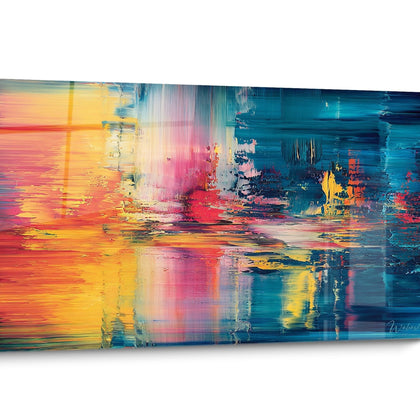
Colorful Scraped Abstract Wall Art
The Painting Abstract scraped style Colorful brings an exceptional artistic dimension to your interior. This collection celebrates the scraping technique where colors vibrate and blend creating fascinating textures and unique compositions. Each work captures the energy of the spontaneous artistic gesture, revealing intense chromatic nuances. Perfect for lovers of expressive abstract contemporary art, this style transforms your spaces into lively and characterful modern galleries.
 Abstract colored waterfalls painting - Chromatic Torrent - scraped abstract style edition273,90 €
 Abstract colored painting - Chromatic Fusion - scraped abstract style edition273,90 €
 Maritime landscape painting - Blazing Sunset - scraped abstract style edition273,90 €
 Abstract colored movement painting - Fluid Energy - scraped abstract style edition273,90 €
 Abstract landscape painting - Vibrant Horizon - scraped abstract style edition242,90 €
 Abstract Painting Colorful Reflections - Aquatic Symphony - abstract style scraped edition N°2273,90 €
 Abstract colored reflections painting - Aquatic symphony - scraped abstract style edition242,90 €
 Colorful abstract painting - Vibrant horizon - scraped abstract style edition228,90 €
Explore further
In Colorful Scraped Abstract Wall Art


All about Colorful Scraped Abstract Wall Art
- Presentation of Scraped, Colorful Abstract Paintings
- Chromatic Dynamism Scraped
- Large-Format Visual Impact
- Composition and Vibrations
A painting in a scraped colorful style instantly transforms the atmosphere of a space thanks to its explosion of superimposed pigments. This pictorial technique creates visual strata where bright hues and saturated nuances blend, generating exceptional depth. Monumental formats amplify this chromatic presence to conquer spacious volumes requiring a bold artistic statement. Each scraped artwork reveals unexpected textures, resulting from the energetic passage of the blade that literally sculpts the pigment matter. These contemporary creations meet the decorative requirements of modern environments seeking gestural authenticity combined with a palette overflowing with energy.
The Gestural Energy of Superimposed Pigments Scraped
The painting in a scraped colorful style is distinguished by its unique creative process where the scraper becomes the revealing instrument of multiple chromatic layers. This method generates visual collisions between primary and secondary colors, creating spectacular transition zones. The irregular pigment trails produce an abstract cartography where each passage of the blade tells a different artistic intention.
Chromatic Stratification and Optical Depth
Large-scale formats fully exploit this technique by revealing details invisible on smaller supports. The accumulations of pigment in certain areas contrast with the transparent flats where the blade has swept the material, creating a visual breath. This alternation between density and lightness gives the scraped colorful painting its hypnotic character, ideal for reception areas requiring an immediate artistic presence.
What hues dominate in contemporary scraped colorful paintings?
Bold pairings often favor vibrant combinations: electric orange against cobalt blue, magenta fused with turquoise, lemon yellow traversed with emerald green. These juxtapositions create chromatic tensions that only the scraped technique can naturally harmonize. Multicolored artworks also generate unexpected tertiary shades in the mixing areas, enriching the overall palette. For enthusiasts seeking marine freshness while retaining this gestural energy, the scraped aquatic style abstract painting offers a soothing alternative.
Light Interaction with Scraped Surfaces
The reliefs created by the scraping capture light in a variable way depending on the time and orientation. Thick areas project micro-shadows while thin passages directly reflect light sources. This accidental geometry transforms the artwork into a living surface, never identical from one moment to the next, particularly valuable in interiors benefiting from changing natural light throughout the day.
The Monumental Scale of Multichrome Scraped Formats
A painting in a scraped colorful style of large size constitutes the visual anchor of a spacious room, capable of structurally organizing a volume otherwise difficult to inhabit. Generous dimensions allow the colored trails to develop their full gestural amplitude, creating pictorial trajectories that naturally guide the eye through the composition. This scraped monumentality specifically responds to the needs of contemporary professional spaces, converted industrial lofts or residences with high ceilings.
How to strategically position a large-scale multicolored scraped artwork?
Optimal placement considers the necessary viewing distance to appreciate the entirety of the chromatic interactions. A wall perpendicular to traffic flow allows for a progressive discovery of details during movement. Double-height spaces particularly benefit from these scraped vertical compositions where colors naturally stack. Proximity to neutral architectural elements (raw concrete, brushed metal, frosted glass) enhances the pigment vibrations without creating visual competition.
Proportional balance in spacious volumes
A large, multicolored scraped format requires a clear environment to deploy its impact without visual saturation. Minimalist spaces with clean lines constitute the ideal terrain to welcome this controlled chromatic explosion. The rule of thirds applies effectively: the artwork should occupy approximately two-thirds of the available wall surface to create a defined presence without overwhelming. Corner configurations also allow for spectacular installations where the colored scraped painting dialogues with two wall panels simultaneously.
Enhancement of transition spaces
Entrance halls, generous corridors, and voluminous landings find in these scraped creations a transformative decorative solution. These often-neglected zones become private galleries when a scraped abstract painting with vibrant hues is installed. The narrative dimension of the scraping technique, with its successive layers revealing a creative journey, symbolically accompanies the movement of occupants traversing these intermediate spaces.
Compositional Vibrations and Scraped Dynamics
The composition of a colored scraped abstract painting rests on unstable balances that generate a stimulating visual tension. The trajectories of the scraper create organic guidelines that structure the pictorial space without geometric rigidity. This fluid organization allows colors to dialogue according to variable power relationships, with some areas asserting chromatic dominance while others offer subtle blends.
Visual rhythm and multiple focal points
Unlike centralized compositions, the colored scraped painting distributes interest across its entire surface. Pigment accumulations form visual attraction poles connected by the colored trails, inviting the eye to an exploratory, non-linear journey. This compositional decentralization is perfectly suited to multi-purpose contemporary spaces, where the viewpoint on the artwork varies constantly according to activities.
Which spaces benefit most from multicolored scraped paintings?
Creative environments (agencies, studios, coworking spaces) find in these artworks an echo of their innovative identity. Contemporary residences with open volumes use these scraped compositions as visual separators between different functional zones. Waiting rooms and professional relaxation areas benefit from the paradoxical calming effect of multiple harmonized colors by the scraped gesture, which captures attention without aggression. Duplexes and triplexes particularly benefit from vertical scraped formats that visually unify the different levels.
Perceptual evolution according to the distance of observation
In the immediate vicinity, textural details and subtle chromatic nuances dominate the experience. As you gradually move away, the overall composition emerges, revealing the intentional colored architecture. This double reading significantly enriches the decorative experience, transforming a colored scraped painting into an evolving artwork according to daily interactions. Installations in through spaces allow for these varied approaches, from distant discovery to close examination of the pigment layers.
FAQ - Frequently Asked Questions about colored scraped abstract paintings
Would a colored scraped abstract painting be suitable for monochrome contemporary interiors?
Absolutely, the contrast between a clean monochrome environment and the scraped chromatic explosion creates a sophisticated contrast. The multiple hues of the painting bring the necessary vitality without compromising architectural sobriety, functioning as a unique, assumed color accent.
How to maintain the textured surface of a large-format multicolored scraped painting?
A delicate dusting with an anti-static duster is generally sufficient for the scraped reliefs. Avoid any wet contact that could alter the superimposed pigment nuances. The natural UV protection of well-ventilated spaces preserves chromatic intensity without additional treatment.
Can multiple colored scraped abstract paintings be combined in the same space?
This configuration only works in very spacious volumes where each artwork has its own distinct visual territory. Instead, prioritize a unique monumental format that concentrates the scraped chromatic impact, avoiding visual saturation while maximizing artistic gestural presence.
Further reading
Our articles on this topic
- What is the best way to choose a colorful abstract painting for a clean Scandinavian dining room?
- The Impact of Large Format in Abstract Art: Case Study on Red Works
- Framing a Red Abstract Artwork: Tips for a Perfect Result
- What frame should you choose to enhance a red abstract painting?
- Red Abstract Artworks: Between Passion and Artistic Expression
L'art qui suscite l'envie
Maison belge d'art mural grand format
14 jourspour changer d'avis*
Protection Walenskyincluse
Fabriquéen Italie
FormatXXL
Kit de fixationtoujours fourni
* Hors tableaux personnalisés et tailles personnalisées


