


Modern Scraped Style Abstract Painting
The Painting Abstract style Scraped Modern celebrates gestural art and creative spontaneity. This collection highlights abstract works with scraped textures where each spatula stroke creates fascinating reliefs and unique chromatic nuances. Perfect for enhancing a contemporary and design interior, these creations bring dynamism and character to your spaces. The scraped aesthetic offers a captivating tactile and visual dimension, ideal for lovers of bold modern art.
 Abstract colored waterfalls painting - Chromatic Torrent - scraped abstract style edition273,90 €
 Abstract colored painting - Chromatic Fusion - scraped abstract style edition273,90 €
 Maritime landscape painting - Blazing Sunset - scraped abstract style edition273,90 €
 Abstract colored movement painting - Fluid Energy - scraped abstract style edition273,90 €
 Abstract landscape painting - Vibrant Horizon - scraped abstract style edition242,90 €
 Digital glitch effect painting - Digital Horizon - scraped abstract style edition228,90 €
 Abstract Painting Colorful Reflections - Aquatic Symphony - abstract style scraped edition N°2273,90 €
 Abstract colored reflections painting - Aquatic symphony - scraped abstract style edition242,90 €
 Colorful abstract painting - Vibrant horizon - scraped abstract style edition228,90 €
Explore further
In Modern Scraped Style Abstract Painting
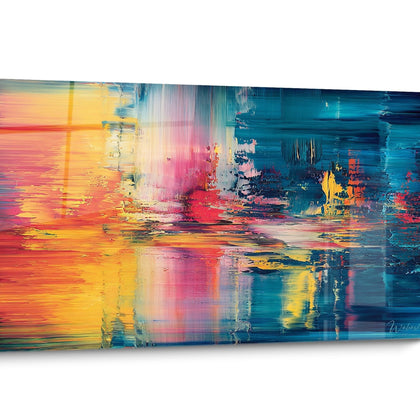
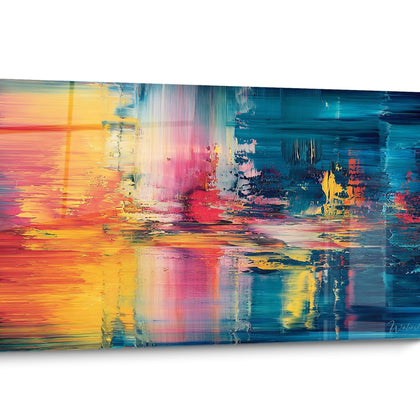


All about Modern Scraped Style Abstract Painting
- Presentation of Scraped Abstract Modern Artwork
- Scraped Graphic Aesthetics
- Contemporary Decorative Impact
- Modern Spatial Integration
The scraped style abstract artwork modern represents the avant-garde of contemporary wall art, combining a radical gestural technique with architectural minimalism. This pictorial expression is characterized by horizontal or vertical streaks obtained by methodical scraping of the pigment material, creating textured surfaces where natural light reveals unexpected depths. Unlike classic compositions, this approach favors controlled spontaneity and stratified chromatic superimpositions, generating evolving visual effects depending on the viewing angle and ambient light intensity. Designed for high-end residential spaces and demanding professional environments, this large format instantly transforms architectural volumes into affirmed aesthetic statements, perfectly suited to renovated industrial lofts, streamlined contemporary residences, and corporate reception areas.
The Art of Pictorial Scraping in Contemporary Abstraction
The gestural scraping technique applied to monumental format
The abstract artwork scraped style modern is built around a specific gesture where the metal or composite scraper becomes the preferred creation tool. This method generates continuous pigment trajectories, superimposed transparencies, and accumulations of material at the edge of passage which constitute the visual signature of this approach. Large formats fully exploit this dynamic, allowing broad movements that traverse the entire surface and create a rhythmic continuity impossible to reproduce on smaller dimensions. The chromatic strata revealed by successive scraping offer a stratigraphic depth reminiscent of geological formations, while variations in pressure intensity generate areas of differentiated density.
This radical gesture directly opposes traditional techniques by application, favoring subtraction over addition, unveiling over construction. Lovers of Scandinavian minimalist art particularly appreciate this economy of means combined with maximum visual richness. For those also exploring the aquatic variations of abstract scraping, the modern version is distinguished by its urban color palette, its architectural contrasts, and its rejection of fluid transitions in favor of sharp graphic statements.
What visual effects does the superposition of scraped layers generate?
The pigment stratification produces partial transparencies where the underlying layers emerge intermittently, creating polyphonic compositions where several chromatic levels coexist simultaneously. This structural complexity constantly evolves according to the position of the observer and variations in circadian natural lighting. Professional reception areas particularly exploit this chameleon effect, the artwork transforming its appearance between the flat morning lighting and the zenithal midday illumination. Peripheral accumulations form tactile reliefs that transform the two-dimensional surface into a topographic landscape, inviting close contemplation revealing micro-pictorial events invisible at a distance.
Industrial color palette and urban minerality
The scraped style abstract artwork favors color combinations inspired by contemporary architecture: nuanced concretes, oxidized metals, deep graphites, architectural whites, and anthracite accents. This mineral range guarantees immediate compatibility with current construction materials – polished concrete, brushed steel, tinted glass, natural stone – characteristic of high-end design interiors. Contrasting chromatic interventions – copper, aged brass, calcined ochres – function as visual punctuations without compromising the overall coherence. This studied chromatic restraint clearly distinguishes the modern style from saturated decorative interpretations, positioning these creations in the lineage of conceptual minimalism where each chromatic choice responds to a compositional intention rather than a search for immediate effect.
Spatial Dynamics and Architectural Presence of Modern Scraped Art
The visual impact of large formats in contemporary volumes
The monumental dimensions of the modern scraped style abstract painting establish an architectural scale relationship rather than a decorative one with their environment. In the open living spaces characteristic of contemporary housing, these generous formats visually structure functional zones without resorting to physical partitions. A 150x100cm format or larger generates a gravitational presence that anchors the gaze and defines a decorative influence perimeter, allowing to balance vertiginous volumes or counterbalance panoramic windows. Industrial lofts particularly benefit from this ability to humanize intimidating ceiling heights, the horizontal scraping creating soothing guidelines in potentially oversized spaces.
This controlled monumentality radically distinguishes the modern approach from standard formats, transforming the artwork into a structural element in its own right rather than a simple wall ornament. Interior architects specializing in premium residential consistently integrate these dimensions into their elevation plans, anticipating their interaction with architectural lighting and spatial circulations.
How does directional scraping influence spatial perception?
The orientation of the scraped trajectories – horizontal, vertical, or diagonal – substantially modifies the dimensional perception of the reception space. Horizontal scrapings visually extend the width of load-bearing walls, creating a lateral expansion effect particularly beneficial in linear spaces such as representative entrance hallways or circulation galleries. Conversely, vertical scrapings accentuate ceiling height and energize square spaces by introducing an upward tension. Diagonal compositions generate a perspective dynamic that combats the static nature of rigorous orthogonal architectures, introducing a directional energy into potentially rigid environments.
This gestural directionality also interacts with the dominant architectural lines – exposed beams, metal joists, expansion joints – either through harmonious concordance or deliberate contrast. Corporate spaces generally prefer reassuring concordances, while bold residential environments exploit productive visual tensions.
Focal positioning in multi-zone configurations
The modern scraped style abstract painting works ideally as a unique focal point in open spatial configurations, establishing a clear visual hierarchy. Positioned facing the main access of a reception area, it immediately captures attention and orients the spatial progression of visitors. In residential double-height configurations, a mid-height positioning creates a visual anchor point between levels, elegantly resolving the problem of disproportionate blank walls. Professional spaces exploit this focusing ability to visually identify representation zones – strategic meeting rooms, VIP reception areas – by conferring a distinctive visual identity on them without resorting to explicit signage. This spatial functionality transforms the acquisition of such a format into an architectural and aesthetic decision as much as it is, requiring integrated reflection from the spatial design stage.
What spatial configurations optimally enhance this scraped aesthetic?
Minimalist environments with neutral wall surfaces – architectural white, concrete gray, matte black – constitute the ideal exhibition context, allowing the scraped nuances to fully express themselves without chromatic competition. Spaces with adjustable directional lighting – orientable ceiling rails, architectural spotlights – progressively reveal the textural complexity according to lighting programs. Contemporary brutalist architectures, with their assumed raw materials and free volumes, establish a particularly coherent aesthetic dialogue with the radical gesturalism of modern scraping.
Aesthetic Investment and Decorative Permanence of the Scraped Style
Timelessness of Gestural Minimalism in the Face of Decorative Cycles
The modern scraped style abstract painting deliberately positions itself outside of ephemeral trends by its anchoring in the fundamentals of historical gestural abstraction – a movement born in the 1950s and constantly reinterpreted since. This artistic lineage guarantees lasting aesthetic relevance, immunizing the investment against the rapid decorative obsolescence characteristic of cyclical ornamental trends. Savvy collectors consistently favor these documented pictorial expressions rather than opportunistic decorative interpretations, ensuring progressive heritage valuation. The mineral chromatic sobriety traverses eras without identifiable temporal markers, unlike saturated palettes immediately datable.
This timelessness is particularly strategic in professional contexts where decorative renewal represents a significant investment. A modern scraped format retains its visual relevance for a minimum of two decades, substantially amortizing the initial acquisition cost.
Compatibility with evolving furniture and material changes
The controlled chromatic neutrality and non-figurative abstraction of modern scraping allow for complete furniture reconfigurations without requiring changes to wall mounting. Transition from light Scandinavian furniture to dark Italian design pieces, adoption of natural or synthetic textiles, evolution of metallic finishes – copper to brass, chrome to matte black – occurs without visual dissonance. This versatility represents a substantial economic advantage for professional environments subject to periodic restructurings or furnished rental residences requiring locative adaptations. Interior architects particularly appreciate this visual stability allowing to orchestrate progressive decorative evolutions around a constant focal point.
What heritage valuation for large-scale scraped abstract formats?
The market for contemporary wall art records a constant appreciation for authentic monumental abstract formats, driven by the scarcity of living spaces capable of accommodating them and the corresponding increase in their desirability. Dimensions greater than 120cm establish a clear economic boundary between accessible decoration and artistic investment, automatically positioning these acquisitions within a heritage category. Traceability of provenance – certificates of authenticity, professional photographic documentation – gradually transforms these pieces into valorizable assets, particularly for creations in limited edition numbered series. Heritage estates integrating such formats benefit from superior liquidity compared to undifferentiated decorative accumulations, specialized platforms guaranteeing international visibility for documented pieces.
Minimal maintenance and durable chromatic stability
Scraping techniques on prepared rigid supports generate surfaces resistant to photolytic chromatic alteration, unlike digital prints sensitive to UV rays. A simple dusting every six months with a dry microfiber cloth is sufficient to maintain visual integrity, eliminating the costs of specialized maintenance. The absence of yellowing varnish guarantees pluridecennial chromatic stability under standard exposure conditions – indirect lighting, normal residential hygrometry – characteristic of contemporary air-conditioned interiors. This material durability clearly distinguishes authentic creations from industrial reproductions with programmed obsolescence, justifying the initial price difference through superior durability.
Is a modern scraped style abstract painting suitable for demanding professional spaces?
Absolutely, its mineral chromatic neutrality and non-figurative abstraction ideally integrate into corporate environments, liberal offices and premium coworking spaces seeking a distinctive visual identity without a constraining iconic message. Controlled monumentality affirms a qualitative positioning without ostentation, particularly appreciated in the legal, financial and architectural sectors.
What dimensions to prioritize for optimal visual impact in a contemporary residence?
For main living spaces – open living rooms or dining rooms – formats of 120x80cm constitute the minimum perceptible, while dimensions of 150x100cm or 180x120cm establish a truly structuring architectural presence. Free-standing walls of 3 meters or more justify panoramic formats of 200x100cm creating a maximum immersive effect without visual saturation.
Does the modern scraped style harmonize with natural vegetation decoration?
Perfectly, the sober mineral palette of modern scraping establishes a balanced contrast with the organic vitality of large indoor plants – Monstera deliciosa, Ficus lyrata, Strelitzia – whose green foliage masses dynamize the composition without creating chromatic cacophony. This nature-minerality association precisely meets the expectations of contemporary biophilic design.
Further reading
Our articles on this topic
- Modern kitchen paintings: how to choose and where to hang them for a successful decor
- Why choose an abstract modern painting for a sleek modern kitchen?
- Modern Abstract Artwork: A Bold Choice for a Contemporary Zen Bedroom?
- Large-format modern abstract painting: the solution for unifying an open-plan living space
- Contemporary decor: the power of collage and abstract fragments
- Abstract or Figurative Artwork: Which One to Choose for Your Interior?
L'art qui suscite l'envie
Maison belge d'art mural grand format
14 jourspour changer d'avis*
Protection Walenskyincluse
Fabriquéen Italie
FormatXXL
Kit de fixationtoujours fourni
* Hors tableaux personnalisés et tailles personnalisées


