


Realistic Abyssinian Cat Wall Art
The Painting cat Abyssin Realistic captures all the nobility of this iconic feline breed. Our collection celebrates the natural elegance of the Abyssin through striking works of truth. Each creation highlights the fur golden of the Abyssin cat and its deep gaze with remarkable precision. These realistic feline portraits bring refinement and character to your interior decoration. Perfect for cat lovers and animal art collectors, this artistic universe transforms your space into a gallery dedicated to feline beauty.
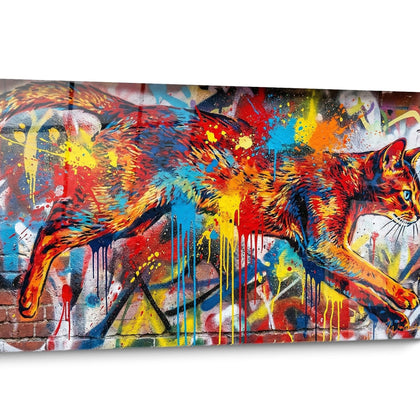
 Abyssinian Cat Gaze Painting - Intense Golden Eyes - Abyssinian Cat Edition242,90 €
 Abyssinian Cat Wall Art Kitchen - Hypnotic Gaze - Abyssinian Cat Edition273,90 €
 Contemplative Abyssinian Cat Painting - Golden Light - Abyssinian Cat Edition273,90 €
 Abyssinian Cat Stretching Painting - Morning Grace - Abyssinian Cat Edition273,90 €
 Abyssinian Cat Portrait Painting - Hypnotic Gaze - Abyssinian Cat Edition273,90 €
 Majestic Abyssinian Cat Painting - Feline Elegance - Abyssinian Cat Edition273,90 €
 Abyssinian Cat Portrait Painting - Contemplative Gaze - Abyssinian Cat Edition273,90 €
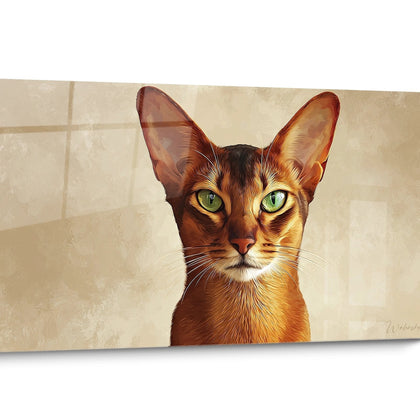
 Red Cat Portrait Painting with Green Eyes - Intense Gaze - Abyssinian Cat Edition228,90 €
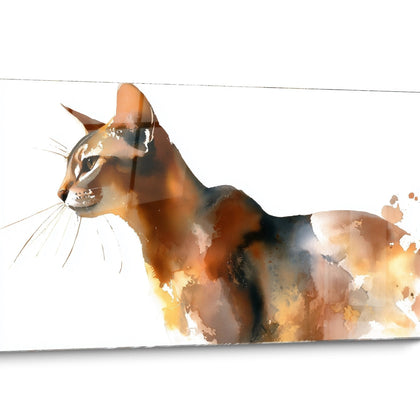
 Abyssinian Cat Painting Profile Portrait - Intense Golden Gaze - Abyssinian Cat Edition228,90 €
 Abyssinian Cat Portrait Painting - Captivating Golden Gaze - Abyssinian Cat Edition228,90 €
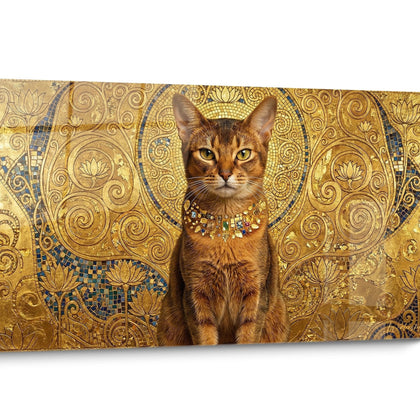
 Abyssinian Cat Portrait Painting - Golden Gaze - Abyssinian Cat Edition228,90 €
 Two Abyssinian Cats Tenderness Painting - Feline Complicity - Abyssinian Cat Edition228,90 €
Explore further
In Realistic Abyssinian Cat Wall Art
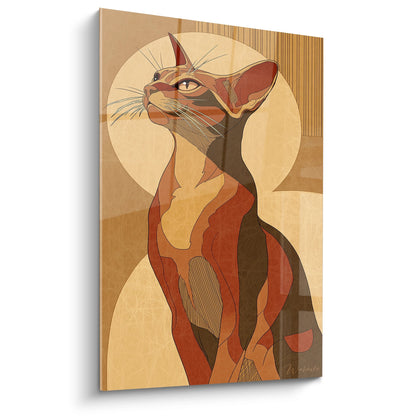
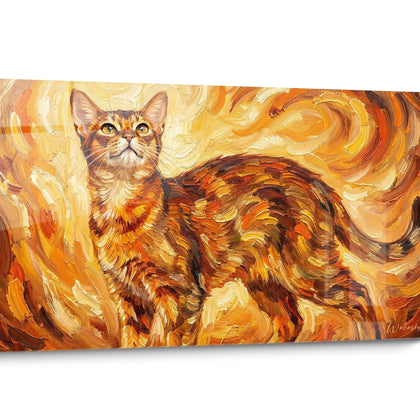
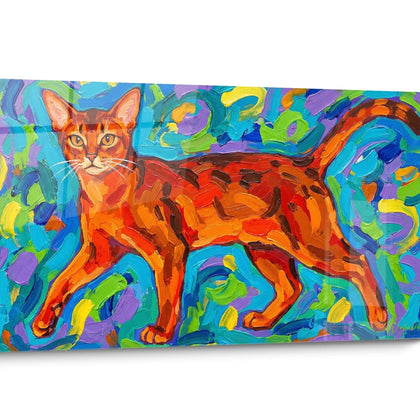
All about Realistic Abyssinian Cat Wall Art
- Realistic Abyssinian Cat Painting Presentation
- Photographic Rendering
- Faithful Reproduction
- Artistic Details
The realistic Abyssinian cat painting captures the photographic essence of this ancestral feline breed with striking precision. This hyperrealistic representation transcends mere wall decoration to offer an almost-living feline presence in your space. The meticulous reproduction of the Abyssinian's unique characteristics - its ticked coat, almond-shaped eyes with golden highlights, and intelligent expression - makes this work a vibrant tribute to the natural elegance of this Ethiopian-origin feline. Unlike stylized artistic interpretations such as the Abyssinian cat Pop Art painting or Abyssinian cat Geometric versions, the realistic approach prioritizes anatomical and behavioral fidelity to create an immediate emotional connection with the viewer.
Hyperrealism in Service of the Abyssinian Breed
The realistic Abyssinian cat painting reproduces with scientific accuracy the complex chromatic nuances of the ticked coat characteristic of this breed. Each individual hair displays alternating bands of warm colors - from sand beige to mahogany brown - creating this unique agouti effect that distinguishes the Abyssinian from other domestic felines. Artists specialized in this photographic rendering master pigment layering techniques to capture this undulating texture that changes depending on viewing angle.
Why choose a realistic representation of the Abyssinian over artistic stylization?
Realistic representation transcends the limits of creative interpretations to offer incomparable emotional authenticity. Unlike creations such as the Abyssinian cat Modern painting, the photorealistic approach allows instant recognition of the subtle facial expressions specific to this breed - that penetrating gaze filled with intelligent curiosity, those large ears alert and positioned forward, that slender posture evoking African wild felines. This anatomical fidelity particularly resonates with Abyssinian owners who recognize their companion's behavioral traits.
The micro-anatomical details that authenticate realism
Superior quality creations reproduce often-overlooked elements: individual whiskers with their specific implantation, the partially visible nictitating membrane, nasal pads with their unique granular texture, and luminous reflections in the vertical pupil. These micro-anatomical details transform a simple representation into a living portrait, particularly striking in large formats where each hair follicle becomes perceptible. The sub-cutaneous musculature of the Abyssinian - that athletic silhouette inherited from wild ancestors - is rendered with precision that captures dynamic tension even in static poses.
How does realism capture the Abyssinian's active temperament?
The choice of pose constitutes the central narrative element in a large-format realistic Abyssinian cat painting. Compositions favor moments of contemplative vigilance - that characteristic posture where the Abyssinian intensely fixes an invisible point, ears precisely oriented, body slightly leaning forward in frozen anticipation. This behavioral capture fundamentally differentiates realism from decorative approaches available in the general Abyssinian cat painting collection, by privileging the decisive moment when racial personality expresses itself fully.
Chromatic Fidelity of Abyssinian Varieties
The realistic Abyssinian cat painting must scrupulously respect the recognized coloration standards for this ancestral breed. The ruddy variety - the most emblematic - presents this red-brown coat with black ticking, while the sorrel variety offers coppery tones with cinnamon ticking. Museum-quality realistic versions also distinguish the blue varieties (blue-gray with slate ticking) and fawn (rosy beige with cream ticking). This chromatic accuracy requires deep understanding of feline genetics and pigmentations specific to each Abyssinian variety.
The importance of natural light in realistic rendering
Unlike works such as the Golden Abyssinian cat painting that uses artificial metallic effects, realistic rendering privileges authentic interaction between natural light and the multi-layered coat of the Abyssinian. Photorealistic artists study how raking light reveals the undulating texture of ticking, how zenith lighting intensifies contrasts between pigment bands, and how lateral lighting sculpts the elegant bone structure of the Abyssinian skull - that wedge-shaped profile with moderate stop evoking its Near Eastern origins.
Which realistic Abyssinian pose suits large residential spaces?
For imposing wall formats intended for spacious living rooms or entry halls, three-quarter view compositions simultaneously reveal the slender lateral anatomy and intense facial expression of the Abyssinian. This angle captures the graceful back curvature, the proportional length of hind limbs, and especially that characteristic oblique gaze that seems to follow the observer's movements. Large-format creations also favor blurred backgrounds that isolate the feline subject while suggesting its natural environment - warm stones, desert vegetation - reinforcing that connection to the breed's Ethiopian origins.
Reproduction of tactile textures in realistic art
Advanced realistic rendering techniques create an illusion of tactile three-dimensionality where the observer almost feels the silky softness of the Abyssinian's short coat. This virtual haptic sensation is achieved through meticulous stratification of tonal values - zones of direct light on the nasal ridge and skull summit, to deep cast shadows beneath the chin and inside the ears. Unlike approaches such as the Abyssinian cat Portrait painting that may simplify certain details, photographic realism demands faithful reproduction of hair density variations - thinner coat on the belly, denser on the back and tail.
The Distinctive Details of the Abyssinian in Realistic Reproduction
The large-format realistic Abyssinian cat painting reveals anatomical particularities invisible in reduced formats. The almond-shaped eyes bordered with natural kohl - that dark pigmented line surrounding the eyelids like ancestral makeup - constitutes a signature element that only photographic realism can reproduce with accuracy. Iris color varies from emerald green to intense copper, with golden radiant inclusions that capture light like precious gems, creating that hypnotic gaze characteristic of the breed.
How does realism translate the Abyssinian's ancient genetic heritage?
Genetic studies have demonstrated that the Abyssinian shares markers with feline populations from Indian Ocean and Red Sea coastal zones. The realistic painting captures this ancestral heritage visually through specific morphological details: disproportionately large ears adapted to warm climates, a slender silhouette optimized for thermoregulation, and especially that compact yet powerful musculature visible beneath the short coat. This historical fidelity fundamentally differentiates realism from creative interpretations such as the Abyssinian cat Watercolor that prioritizes atmospheric impression over zoological accuracy.
Which background elements enhance a realistic Abyssinian painting?
Sophisticated realistic compositions incorporate contextualized environments evoking the breed's geographical origins - ochre rock formations recalling Ethiopian highlands, xerophytic vegetation suggesting semi-arid zones, or mineral textures in earth tones that harmonize with the Abyssinian's warm coat. These geographically relevant backgrounds create narrative coherence while maintaining the feline subject as dominant focal point through sharpness and chromatic saturation contrasts.
Capturing transitory facial expressions
The Abyssinian presents a particularly rich expressive repertoire due to its legendary curiosity and interactive temperament. Quality realistic paintings favor these transitory micro-expressions - slightly asymmetrical ears indicating bilateral listening, moderately dilated pupils suggesting interest without alarm, whiskers oriented forward in an exploratory posture. These subtle behavioral details transform anatomical reproduction into psychological portrait, capturing not only physical appearance but also the intellectually active temperament that defines this breed.
FAQ - Realistic Abyssinian Cat Painting
Why does a realistic Abyssinian cat painting enhance contemporary spaces better?
The photographic precision of realistic rendering creates striking contrast with the streamlined lines and minimalist surfaces of contemporary interiors. The human eye immediately identifies visual authenticity, generating an almost-tangible feline presence that animates neutral spaces without decorative overload.
How do you identify a professional-quality realistic Abyssinian cat painting?
Technical indicators include faithful reproduction of multi-layered ticking with gradual chromatic transitions, presence of coherent specular reflections in the eyes indicating defined light source, and especially subtle sharpness variation reproducing photographic depth of field - precise focus on the eyes with progressive blur toward the background.
What is the optimal dimension for an impactful realistic Abyssinian cat painting?
Formats exceeding 80 centimeters allow appreciation of micro-anatomical details - individual hair texture, complex iris patterns, skin pigmentation variations - creating that living presence illusion impossible to achieve in reduced dimensions where these subtleties disappear.


