

Abyssinian Cat Geometric Wall Art
The Painting Abyssinian Cat Geometric revisits feline elegance through a contemporary artistic prism. This collection celebrates the natural grace of the Abyssinian by blending angular lines and a bold color palette. Each creation transforms this majestic feline into a geometric cat wall art, where colorful facets capture its intense gaze and slender silhouette. Perfect for lovers of modern feline wall decoration, this artistic universe brings sophistication and character to your living space.
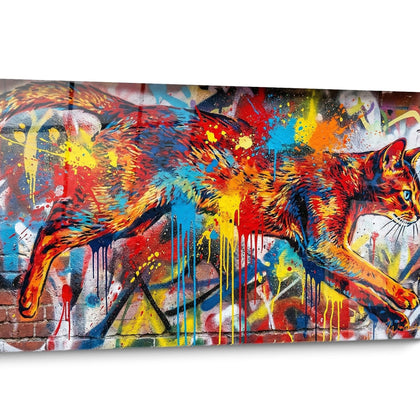
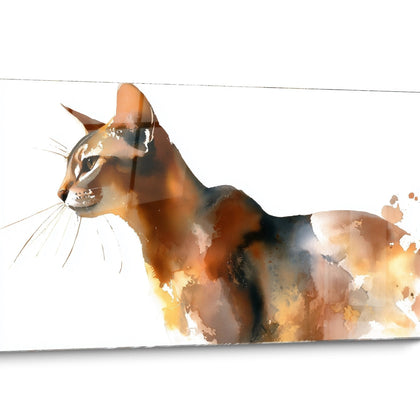
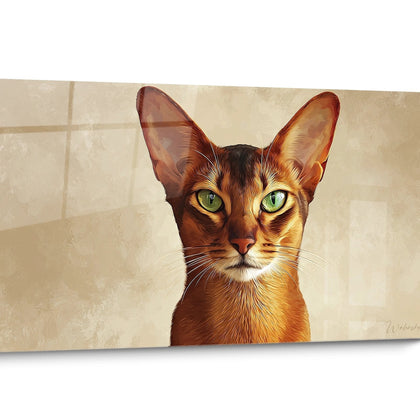
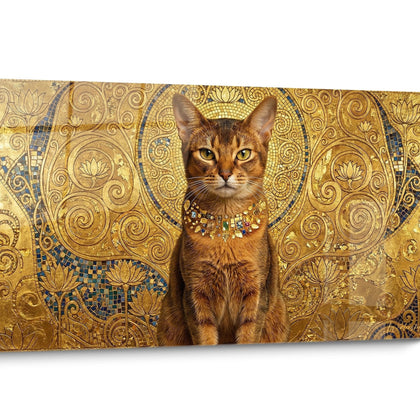
 Abyssinian Cat Art Deco Painting - Golden Feline Elegance - Abyssinian Cat Edition233,90 €
 Abyssinian Cat Polygonal Painting - Modern Geometric Art - Abyssinian Cat Edition233,90 €
 Abyssinian Cat Mosaic Painting - Golden Geometric Art - Abyssinian Cat Edition213,90 €
 Abyssinian Cat Polygonal Painting - Golden Geometric Portrait - Abyssinian Cat Edition213,90 €
Explore further
In Abyssinian Cat Geometric Wall Art
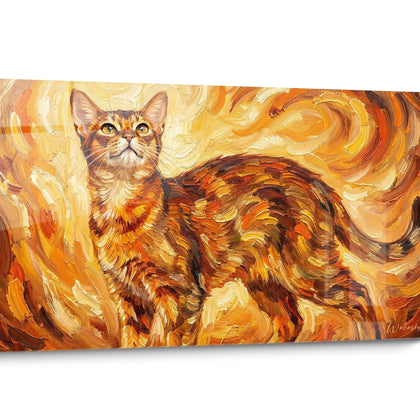
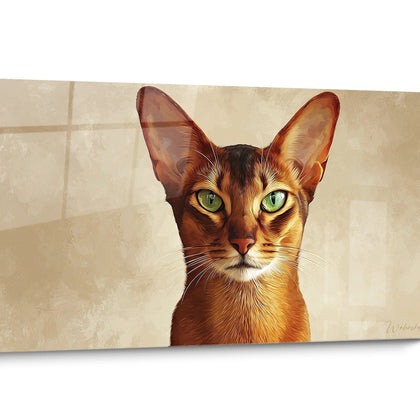
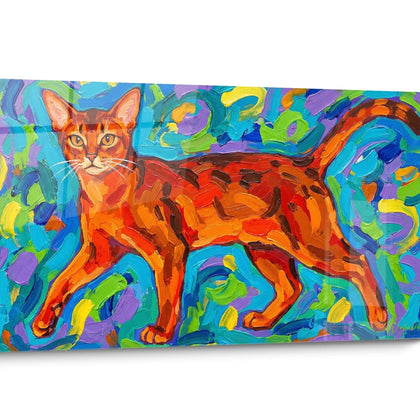
All about Abyssinian Cat Geometric Wall Art
- Geometric Abyssinian Cat Wall Art Presentation
- Architectural Aesthetics
- Visual Dynamics
- Decorative Integration
The geometric Abyssinian cat wall art revolutionizes contemporary decorative approach by merging feline elegance with the visual codes of structured abstraction. This avant-garde representation transforms the recognizable silhouette of the Abyssinian cat into a composition of polygons, angular lines, and refined forms, creating a decorative artwork that dialogues with modern interior architecture. The intersection between organic and mathematical elements generates a captivating visual tension, perfectly suited to spaces celebrating refined minimalism and graphic boldness.
The Intersection Between Pure Geometry and Feline Essence
The geometric Abyssinian cat wall art transposes the physiognomic characteristics of the feline into a radically contemporary visual language. Faceted triangles reconstruct the emblematic pointed ears of the breed, while interlocking diamonds evoke the animal's slender musculature. This analytical deconstruction respects natural proportions while sublimating them through a modernized cubist approach.
How does polygonal fragmentation amplify the expressiveness of the Abyssinian gaze?
The geometric fracturing technique concentrates attention on the almond eyes characteristic of the breed through converging pyramidal structures. The directional lines created by angular assembly naturally guide the eye toward the intensity of the feline gaze, reproduced through contrasting chromatic areas. This compositional strategy transforms a simple animal portrait into a structured contemplative experience, where each segment participates in the overall expression.
The chromatic palette architected for the ticked tabby coat
The variations of ochre, russet, and copper tones inherent to the Abyssinian coat are translated into distinct chromatic zones delimited by sharp edges. This colorimetric segmentation reproduces the characteristic agouti effect through superposition of differentiated geometric planes. Graduated nuances unfold according to a mathematical logic that respects the natural luminous vibration of the coat while amplifying it through geometric contrast.
The integration of golden or copper metallic tones on certain polygons creates light-capturing points that energize the composition. This approach recalls techniques used in the golden Abyssinian cat wall art while maintaining more pronounced structural rigor. Metallic sheen effects emphasize facial architecture and accentuate the precious dimension of the artwork.
The balance between formal symmetry and organic asymmetry
The geometric construction simultaneously exploits the bilateral symmetry of the feline face and the calculated introduction of irregularities that prevent rigidity. Polygons of varying dimensions create a visual rhythm that evokes natural movement without literal representation. This tension between mathematical order and organic spontaneity generates contained energy characteristic of the attentive posture of the Abyssinian.
Multidimensional Perspectives and Reconstructed Spatial Depth
The geometric Abyssinian cat wall art exploits isometric perspective principles to create an illusion of three-dimensionality from a flat surface. Angular facets suggest inclined planes that capture light differently, generating perceptual depth without recourse to traditional gradient techniques. This approach continues the visual research of the modern Abyssinian cat wall art by radicalizing the break with conventional figuration.
What kinetic effects arise from geometric fragmentation?
The multiplication of edges and changes in planar orientation creates an optical vibration effect that animates the pictorial surface. According to the observation angle and variations in natural or artificial lighting, certain polygons appear to advance while others recede, generating a controlled perceptual instability. This phenomenon transforms the artwork into a dynamic experience rather than a static image.
Interaction with ambient lighting becomes a compositional element in its own right. Angular surfaces directionally reflect light, creating zones of brilliance and shadow that continuously redefine themselves according to time of day and orientation of light sources. This changing quality evokes the graceful movement of the Abyssinian without narrative representation.
The vectorial mapping of feline anatomy
Unlike traditional pictorial approaches, the geometric method decomposes body volume into measurable and reproducible sections. Each polygon corresponds to a precise anatomical portion: the curve of the skull becomes a succession of ascending triangles, the line of the muzzle articulates in interlocking trapezoids. This structural rationalization offers a simultaneous analytical and aesthetic reading of Abyssinian morphology.
Transition zones between segments create lines of force that structure the composition according to dynamic diagonal axes. These directional vectors guide the visual journey while suggesting the muscular tension and elasticity characteristic of the breed. The whole generates an impression of potential energy comparable to stylized representations of the Abyssinian cat Pop Art wall art, but with increased chromatic sobriety.
Dimensional amplification through monumental formats
The geometric nature of the composition lends itself particularly to large formats where the multiplication of facets becomes truly immersive. At significant dimensions, the observer can perceive each polygon individually while comprehending the reconstructed silhouette globally, creating a dual reading scale. This visual granularity transforms the wall into an active architectural surface that restructures the surrounding space.
Harmonization with Structured Contemporary Environments
The geometric Abyssinian cat wall art establishes itself as an element of visual dialogue in architectural interiors characterized by refined lines and frank volumes. Spaces featuring metal fittings, glass partitions, or angular design furniture find in this artwork a coherent visual echo that reinforces overall aesthetic identity without redundancy.
What synergy to create between decorative geometry and architectural materiality?
Surfaces with pronounced textures such as raw concrete, brushed metal, or structured wood establish an enriching material contrast with the planarity of the artwork. This tactile opposition simultaneously values the roughness of constructive materials and the graphic precision of the wall art. Scandinavian minimalist or industrial environments particularly benefit from this association, which introduces an organic dimension without compromising formal rigor.
Integration into contemporary professional spaces such as creative offices, showrooms, or design studios amplifies the innovative dimension of these environments. The simultaneous reference to animality and mathematical rationality evokes a balance between creative intuition and structured thinking, values often sought in these contexts. The imposing format of the wall art creates a focal point that humanizes the space without introducing conventional figurative elements.
Chromatic combinations with extended monochrome palettes
In environments dominated by grays, whites, and blacks, the warm tones of the Abyssinian coat transposed into geometric segments bring calculated warmth. This injection of earthy colors avoids the pitfall of excessive coldness while maintaining restrained sophistication. The alternative also exists with monochrome versions of the geometric motif that preserve only the formal structure, thus creating a purely graphic artwork comparable to certain expressions of minimalist Abyssinian cat portrait wall art.
Environments with copper, gold, or rose metal accents find in the chromatic variations of the geometric Abyssinian coat a natural decorative continuity. These chromatic harmonies create visual fluidity between the wall artwork and functional elements of the space.
Association with other artistic expressions of the Abyssinian
Spatial juxtaposition with different stylistic approaches creates enriched visual narrative. A private exhibition wall could associate the geometric Abyssinian cat wall art with variations such as the Abyssinian cat watercolor wall art or the realistic Abyssinian cat wall art, creating a multi-perspective exploration of the breed. This thematic collection strategy transforms the space into a personal gallery celebrating the diversity of contemporary visual languages.
For a more comprehensive approach to this feline theme, exploring the complete Abyssinian cat wall art collection allows identification of stylistic and chromatic complementarities adapted to each specific spatial configuration.
Why choose a geometric Abyssinian cat wall art for an industrial loft?
The geometric aesthetic naturally dialogues with exposed metal structures, visible ducts, and raw volumes of converted industrial spaces. The angular lines of the wall art visually extend the structural architecture while introducing a reference to life that humanizes these potentially austere environments. The monumental format reinforces the decorative presence necessary in large volumes.
Is geometric Abyssinian cat wall art suitable for colorful interiors?
While particularly adapted to monochrome environments, this type of artwork can create controlled contrast in colorful interiors provided a chromatic coherence is respected. Versions using extended palettes beyond the natural tones of the coat allow chromatic adaptation to more expressive environments while maintaining characteristic geometric rigor.
How does geometric Abyssinian cat wall art influence spatial perception?
The multiplication of directional lines and fragmented planes creates a centrifugal visual dynamic that perceptually expands the surrounding space. Diagonal compositions suggest extension beyond the physical frame, while chromatic contrasts between polygons generate depth that visually compensates for restricted spaces. This capacity to optically restructure the environment constitutes a major asset in constrained spatial configurations.


