


Provence Village Wall Art
Our Painting Provence Village collection captures the authentic soul of Southern France. Each artwork celebrates the authentic Provençal villages with their ochre facades, cobbled streets and squares shaded by plane trees. The typical architecture, the colorful shutters and the Mediterranean sweetness of life invite themselves into your interior. These creations evoke the picturesque landscapes of Provence, from the Luberon to the Alpilles, offering a visual escape to these enchanting places where time seems to stand still.
 Provençal Village Painting - Mediterranean Charm - Provence Edition242,90 €
 Provençal Village Painting - Twilight at Les Baux-de-Provence - Provence Edition273,90 €
 Provençal Facade Painting with Blue Shutters - Mediterranean Charm - Provence Edition273,90 €
 Provençal Fountain Canvas - Charm of Yesterday - Provence Edition273,90 €
 Provençal Square Canvas with Fountain - Charm of the South - Provence Edition273,90 €
 Perched Provençal Village Wall Art - Gordes at Sunset - Provence Edition273,90 €
 Lively Provençal Square Painting - Café Under the Plane Trees - Provence Edition273,90 €
Explore further
In Provence Village Wall Art



All about Provence Village Wall Art
- Provence Village Painting Presentation
- Provencal Authenticity
- Mediterranean Atmosphere
- Village Decor
A Provence village painting captures the timeless essence of perched hamlets in southern France, where ochre facades and colorful shutters tell centuries of Mediterranean history. These large-format representations transform your interior into a true window overlooking the cobbled streets, shaded squares, and typical architecture of Provençal villages. Each composition celebrates the authenticity of golden stone constructions, ancient fountains, and panoramas of the Luberon valley or the Alpilles.
Traditional Architecture of Provençal Villages on Your Walls
A Provence village painting faithfully reproduces the vernacular architecture that makes this region renowned: limestone walls with warm tones, Roman tile roofs, elegant bell towers, and narrow streets designed to protect from the Mistral wind. These specific architectural elements create a visually immediately recognizable atmosphere, particularly sought after to dress contemporary interiors aspiring to an authentic southern touch. Discover also our collection of Provence watercolor paintings.
Why do Provençal facades bring a unique spatial depth?
Representations of villages such as Gordes, Roussillon, or Ménerbes play on the superimposition of steep constructions, creating a captivating vertical perspective . This natural amphitheater configuration generates an upward dynamic in your space, particularly effective for enhancing the high walls of living rooms or staircases. The stacking of dwellings with irregular facades brings a richness of successive planes that confers a rare three-dimensional immersion sensation.
The mineral chromatic nuances of Provençal constructions
The villages of the Vaucluse and Bouches-du-Rhône offer an exceptional color palette: ochres of Roussillon ranging from pale yellow to blood red, silvery gray of the surrounding lavender, off-white of the whitewashed plaster. A large-size Provence village painting allows you to exploit these subtle variations in earthy tones that naturally harmonize with noble materials such as natural stone, aged wood, or raw linen. This mineral chromatic coherence facilitates integration into refined or rustic chic decorative atmospheres.
The evocation of perched villages and their defensive symbolism
Fortified villages like Lacoste or Oppède-le-Vieux tell a story of protection against invasions, strategically positioned on rocky spurs. This narrative dimension adds cultural depth to your wall decor, evoking resilience and territorial anchoring. For professional spaces seeking a strong identity or interiors valuing cultural heritage, these compositions rich in history convey values of rootedness and longevity.
Architectural details such as génoises (rows of tiles forming a cornice), exterior stone staircases, or medieval arcades enrich the visual reading. A monumental format allows you to appreciate these constructive refinements, which bear witness to artisanal know-how passed down since the Middle Ages, particularly valuable in contemporary environments seeking a contrast between modernity and tradition.
Create an Immersive Mediterranean Atmosphere with Village Scenes
How does a Provence village painting influence the thermal perception of space?
The dominant warm tones – Sienna earth, Naples yellow, Venetian red – generate a scientifically proven sense of warmth that influences our perception of ambient temperature. In north-facing rooms or naturally cool spaces, a large-format Provence village painting compensates for the lack of warm natural light by diffusing this golden luminosity characteristic of the South. The psychological effect of welcome and conviviality associated with sunny villages transforms the atmosphere of living spaces.
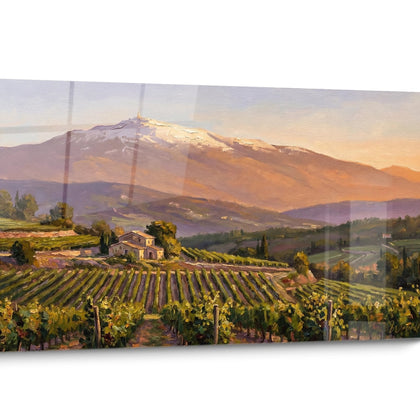
Representations including vertical cypresses, centuries-old olive trees , and surrounding lavender fields add a Mediterranean vegetal dimension. These specific natural elements create a visual continuity between interior and exterior, particularly sought after in second homes or wellness spaces aiming for a connection with Provence’s nature. The recognizable silhouette of the cypresses also provides vertical guidelines harmoniously structuring the composition.
The particular luminous atmosphere captured in the image of the Provence climate
Provençal light possesses a unique crystalline quality, a result of the dry Mediterranean air and the Mistral wind that cleans the atmosphere. A Provence village watercolor painting masterfully reproduces this luminous transparency, with sharp shadows and marked contrasts typical of sunny days in the South. This reproduction of the specific luminous atmosphere directly influences the perceived energy in the room, creating a visually stimulating dynamic without aggression.
Scenes depicting the golden hours – sunrise or sunset over the villages – capture this grazing light that magnifies the reliefs of the facades and makes the ochre tones vibrate. These privileged moments offer dramatic depth particularly appreciated in reception areas or master bedrooms, where the desired atmosphere combines sophistication and regional authenticity.
Elements of everyday Provençal life as narrative anchors
Colorful markets under plane trees, village cafes with their shaded terraces, wall fountains where the sound of water resonates – these scenes of daily life transform the painting into a visual narrative. This narrative dimension engages the observer in active contemplation, gradually discovering the human details that animate the composition. For commercial spaces in the hotel or restaurant sector, these evocations of Mediterranean conviviality reinforce the welcoming identity.
Integrating the Aesthetic Codes of the Provençal Village into Your Decoration
Which spaces benefit most from a representation of a Provençal village ?
Open country-style kitchens find their ideal decorative complement in a Provence village painting , creating a thematic consistency with natural materials such as exposed stone or oak beams. The panoramic format integrates particularly well above worktops or central islands, creating a focal point that visually structures the culinary space while evoking generous Mediterranean kitchens.
Dining rooms benefit from the convivial atmosphere conveyed by village squares, where outdoor meals and moments of sharing are culturally rooted. This subconscious association between village scenes and Provençal gastronomic traditions enriches the experience of family or friends' meals. The imposing format also creates a decorative presence strong enough to visually balance large reception tables.
Decorative associations that enhance Provence village paintings
Raw materials – the wrought iron of lighting fixtures, the terracotta of vases, the natural linen of textiles – resonate harmoniously with the rustic authenticity of village compositions. This material synergy creates a global sensory coherence, where each decorative element reinforces the Mediterranean narrative. Handcrafted objects like glazed pottery or woven baskets amplify this authentic dimension without falling into a museum-like reconstruction.
Mediterranean indoor vegetation - olive trees in pots, lavenders, rosemary - establishes a thematic continuity between the wall art and the living environment. These plants with silvery or grey-green foliage chromatically dialogue with the tones of the village, creating a coherent vegetal staging. For professional spaces in the wellness sector or lifestyle boutiques, this combination reinforces the sought-after Mediterranean identity.
The seasonal evolution perceived in village representations
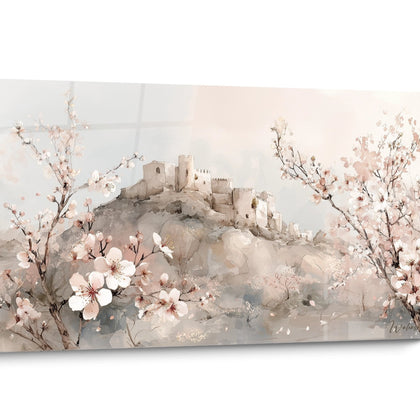
Provencal villages change their appearance according to the seasons: purple lavenders in summer, reddish vines in autumn, flowering almond trees in spring. Choosing a specific seasonal representation allows you to anchor your decoration in a particular period, creating a constant atmosphere that compensates for local climatic variations. A village under intense summer light brings a permanent energy particularly appreciated in Nordic regions.
Does a Provence village wall art suit modern minimalist interiors?
Absolutely. The contrast between the ancient architecture of the village and a refined contemporary environment creates a rewarding aesthetic tension. The geometric lines of the stacked facades dialogue with architectural minimalism, while the natural tones integrate into modern neutral palettes. This temporal juxtaposition brings the human warmth often absent from overly aseptic spaces.
What viewing distance is required for a large Provencal village wall art?
For a format exceeding 120 cm in width, allow a minimum distance of 2.5 to 3 meters to appreciate the overall composition without visual saturation. This distance also allows you to perceive the subtle chromatic nuances and the spatial depth of successive planes. In more restricted spaces, prioritize close-ups on a portion of the village rather than complete panoramas.
How to preserve the chromatic intensity of Provencal tones over time?
Avoid direct exposure to sunlight which accelerates the degradation of warm pigments, particularly sensitive to UV rays. Position your Provence village wall art on a wall perpendicular to windows rather than facing them. Controlling relative humidity between 40 and 60% also preserves the stability of materials and the vibrancy of the mineral colors characteristic of villages in the South.


