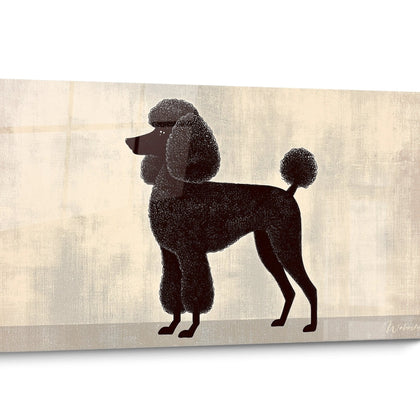
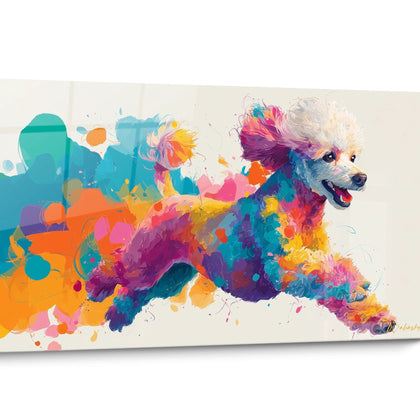
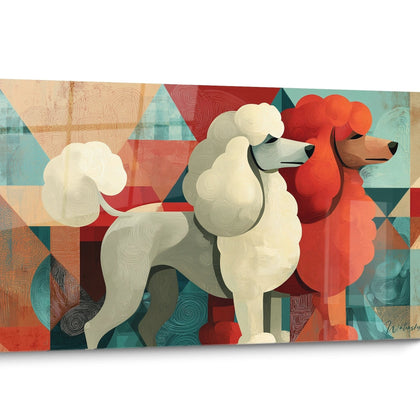
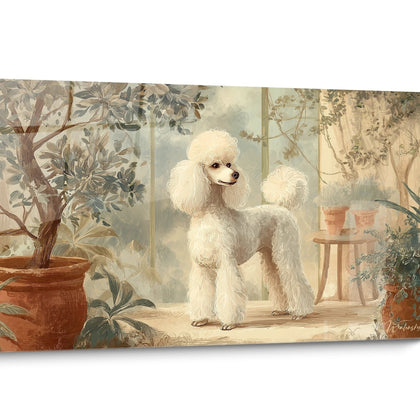
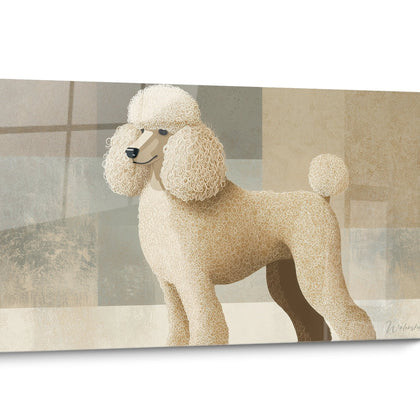
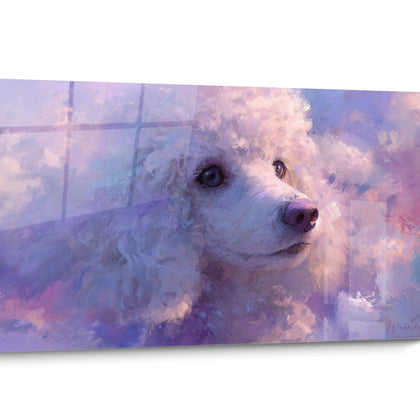
A poodle portrait wall art embodies the aristocratic elegance of this emblematic breed through visual representation centered on the individual expression of the dog. Unlike group scenes or narrative compositions, the portrait isolates the subject to capture its distinctive character, expressive facial features, and that natural nobility which characterizes poodles. These large-format artistic creations transform the pet into a genuine art subject, celebrating each poodle's unique personality through varied techniques ranging from photographic realism to contemporary artistic interpretations. Whether a standard poodle with its meticulously rendered curly coat or a stylized vision emphasizing the penetrating gaze, each canine portrait reveals a different facet of this refined breed, creating an imposing visual presence in your interior.
Excellence in Large-Format Canine Portraiture
The poodle portrait wall art distinguishes itself through its ability to immortalize the individuality of this iconic breed. In a generous format often exceeding 80 centimeters, these representations capture every characteristic morphological detail: the delicate curve of the muzzle, the sparkling intelligence in the gaze, the curly texture of the coat forming a natural crown around the face. The typical centered portrait composition eliminates all distraction to focus attention on facial expressiveness, transforming your poodle into a genuine decorative icon.
Which technique best highlights a poodle's facial features in portraiture?
Artists specialized in canine portraiture favor different approaches depending on the desired effect. Hyperrealistic rendering captures with photographic precision every curl of fur, every reflection in dark eyes, creating an almost tangible presence. This technical precision suits particularly those enthusiasts of detail who wish to celebrate their companion's anatomical beauty. Conversely, for those preferring to explore poodle watercolor wall art, the fluidity of dissolved pigments creates soft transitions between light and shadow zones, conferring upon the portrait an ethereal and poetic quality.
The psychology of gaze in contemporary canine portraiture
A successful poodle portrait wall art relies essentially on the direction of gaze and the captured expression. Frontal portraits where the animal establishes direct eye contact with the observer generate immediate emotional connection, ideal for welcome spaces and living rooms where you wish to create a warm atmosphere. Three-quarter profiles reveal more of the elegant head structure and allow sophisticated shadow play that sculpts volumes. This orientation suits particularly libraries and offices where silent contemplation takes precedence over direct interaction.
Vertical formats versus square compositions for canine portraits
Format choice considerably influences the visual impact of poodle portrait wall art. Vertical elongated compositions naturally extend the aristocratic silhouette of the poodle, accentuating its proud head carriage and distinguished stature. This format integrates perfectly in narrow corridors and between architectural openings. Square formats, more balanced, concentrate attention on the face itself and its expressive details, creating an intimate window into the subject's personality. For spaces above consoles or dressers, this symmetrical geometry offers immediate visual harmony without requiring complex wall composition adjustments.
Stylistic Variations in Modern Canine Portraiture
The universe of poodle portrait wall art extends far beyond classical realism to embrace bold artistic interpretations. Contemporary design enthusiasts turn toward poodle geometric wall art where the poodle's face decomposes into angular facets and colored planes, creating a modern cubist version that dialogues perfectly with minimalist interiors. This approach transforms the natural curves of curly coat into rigid architectural structures, offering striking visual contrast between the organic softness of the subject and the strict geometry of its representation.
How do chromatic contrasts transform canine portraiture?
The color palette constitutes a determining element in the emotional impact of a poodle portrait. Creations exploring black and white poodle wall art eliminate all color distraction to focus on tonal values, textures, and luminosity. This monochrome approach accentuates the dramatic dimension of the gaze, sculpts volumes through light and shadow interplay alone, and confers upon the portrait a timeless classical quality. Conversely, interpretations bursting with poodle pop art wall art saturate the composition with vibrant hues – electric fuchsia, luminous turquoise, lemon yellow – transforming the aristocratic portrait into an energetic visual manifesto.
Visual refinement in service of canine expression
For refined interiors privileging sobriety, minimalist poodle wall art offers representation reduced to essentials. Few lines suggest skull curvature, an ink spot evokes the muzzle, a simple flat shape defines general silhouette. This economy of means requires active viewer participation in mental reconstruction of the subject, creating a more intellectual than emotional contemplative experience. The minimalist poodle portrait wall art functions particularly well in Scandinavian, Japanese, or industrial environments where each decorative element must justify its presence through contribution to overall spatial balance.
Nostalgia and historical references in canine portraiture
Collectors sensitive to retro aesthetics will appreciate vintage poodle wall art reinterpreting visual codes from 18th and 19th-century aristocratic portraits. Artificial patinas, ornamental frames integrated graphically, sepia palettes recalling old daguerreotypes: these portraits inscribe themselves within historical continuity while celebrating a contemporary subject. This temporal fusion creates fascinating visual conversations, particularly in interiors blending antique furniture with modern touches, where the poodle portrait wall art becomes the connection between divergent epochs and aesthetic sensibilities.
Spatial Enhancement of Large-Format Canine Portraiture
Successful integration of a large-scale poodle portrait wall art requires strategic reflection on its architectural placement. Unlike panoramic or abstract compositions that can float in space, the portrait establishes direct eye contact that radically transforms a room's dynamics. In a reception living room, positioning the portrait facing the main entrance creates immediate personalized welcome, the poodle's gaze naturally intercepting that of visitors. This configuration works particularly well in transition spaces where contemplation time remains brief but intense.
Which architectural spaces magnify monumental canine portraiture?
Blank stairwell walls offer exceptional opportunities for vertical poodle portrait wall art that visually accompanies progressive ascent. The narrative dimension of the upward journey dialogues with the static dignity of the portrayed subject, creating enriched spatial experience. Alcoves and architectural recesses also benefit from this portraitist presence: the natural framing formed by side walls concentrates attention and transforms the portrait into genuine visual sanctuary. To maximize this theatrical effect, choose a format slightly smaller than the alcove width, allowing 15 to 20 centimeters visual breathing room on each side.
Coordination with low furniture and vertical composition creation
Above a buffet, entryway console, or loveseat, the poodle portrait wall art creates powerful visual anchor structuring the entire wall composition. The empirical rule suggests the portrait should cover approximately two-thirds of the underlying furniture width, establishing harmonious proportional relationship. For more sophisticated compositions, frame the poodle wall art main piece with two smaller complementary elements – framed photographs, sculpted objects, architectural plants – forming balanced triad. This strategy works particularly well in formal dining rooms where symmetry reinforces ceremonial atmosphere.
Depth-of-field management and viewing perspectives
An often-neglected aspect of poodle portrait wall art concerns optimal viewing distance. Large formats exceeding one square meter require minimum 2.5 to 3 meters distance to fully appreciate overall composition without the eye becoming overwhelmed by close-up details. This spatial constraint naturally orients toward spacious reception rooms rather than intimate bedrooms. In restricted spaces, favor portraits with more refined compositions where essential elements – gaze, facial expression – remain readable even from close viewing points. Expressive readability then becomes the determining criterion rather than richness of microscopic details.
Is poodle portrait wall art suitable for children's bedrooms?
Absolutely, particularly for children having developed affective relationship with poodles. Choose playful and colorful artistic interpretations rather than overly solemn photographic portraits. Benevolent gazes and gentle expressions create comforting presence accompanying the child daily without generating nighttime anxiety.
Can you combine multiple poodle portrait artworks in the same space?
This gallery approach works magnificently in corridors, staircases, and circulation spaces. Vary formats, styles, and framings to avoid monotony: a hyperrealistic frontal portrait dialogues with geometric interpretation, a classical profile contrasts with pop art vision. Maintain minimal chromatic or stylistic coherence to unify the ensemble despite diversity of artistic approaches.
Which orientation best enhances poodle portrait wall art display in a bright room?
In naturally light-filled spaces, avoid positioning the portrait directly facing windows to prevent reflections obscuring expressive facial details. Prefer a wall perpendicular to light sources, allowing angled light to sculpt visual reliefs and accentuate contrasts. This orientation subtly reveals tonal and textural variations that bring the portrait to life.


 Grey Poodle with Golden Collar - Aristocratic Portrait - Poodle Edition233,90 €
 White Poodle Portrait Artwork on Vibrant Red Background - Tender Gaze - Poodle Edition233,90 €
 White Poodle Wall Art with Golden Curls - Elegant Side Profile Portrait - Poodle Edition233,90 €
 Poodle Portrait Wall Art Red Background Yellow - Tender Gaze - Poodle Edition233,90 €
 Elegant Gray Poodle Painting with Gold Medallion - Aristocratic Portrait - Poodle Edition233,90 €
 Black and White Curly Poodle Portrait Wall Art - Tender Gaze - Poodle Edition233,90 €
 White Elegant Poodle Painting with Curly Coat - Refined Portrait - Poodle Edition233,90 €
 Poodle Portrait Canvas Beige on Golden Yellow Background - Canine Elegance - Poodle Edition233,90 €
 Elegant White Poodle Artwork in Cream Tones - Refined Portrait - Poodle Edition233,90 €
 Cream Poodle Wall Art with Silky Curls - Tender Portrait - Poodle Edition213,90 €
 Poodle Portrait Painting with Majestic Curls - Contemplative Gaze - Poodle Edition213,90 €