


Geometric Poodle Canvas
The Geometric Dachshund Painting transforms canine elegance into contemporary artwork. This collection celebrates the beauty of the dachshund through angular and colorful compositions, where geometric shapes enhance the majestic silhouette of this iconic dog. Perfect for lovers of modern dog wall decoration, each creation brings a sophisticated and artistic touch to your interior. The combination of geometric design and animal art creates a unique visual universe that will appeal to contemporary art enthusiasts and dog lovers.
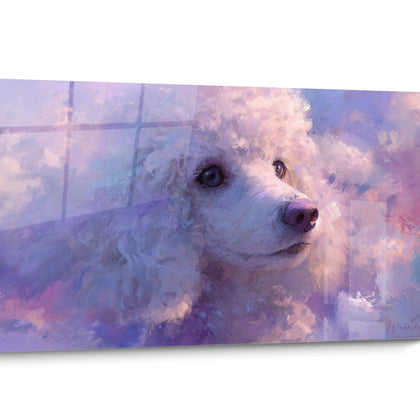
 Stylized Poodle Wall Art with Geometric Forms - Modern Elegance - Poodle Edition273,90 €
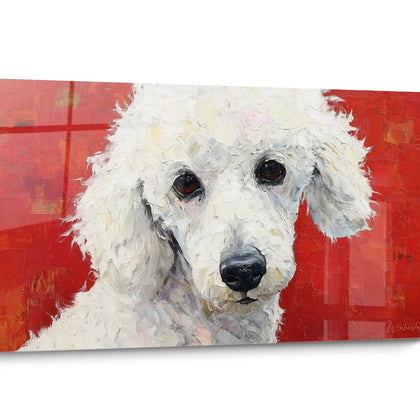
 Geometric Poodles Red and White Wall Art - Artistic Duo - Poodle Edition273,90 €
 Elegant Poodle Painting with Geometric Forms - Artistic Portrait - Poodle Edition228,90 €
 Poodle Geometric Wall Art with Rounded Shapes - Modern Portrait - Poodle Edition228,90 €
 Stylized Poodle Duo Wall Art with Geometric Textures - Modern Companionship - Poodle Edition228,90 €

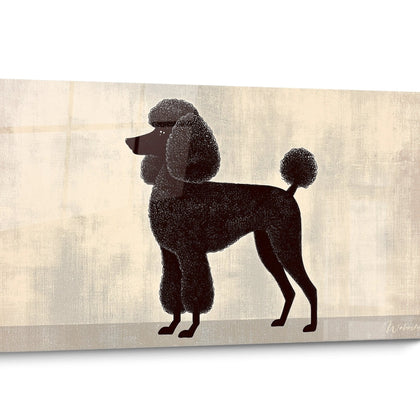
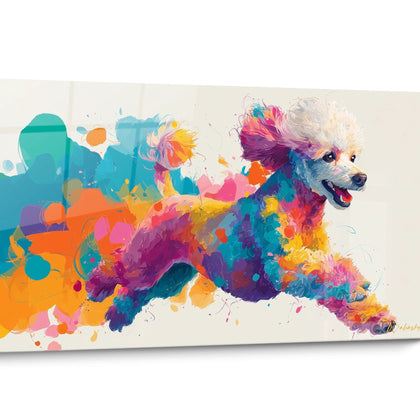
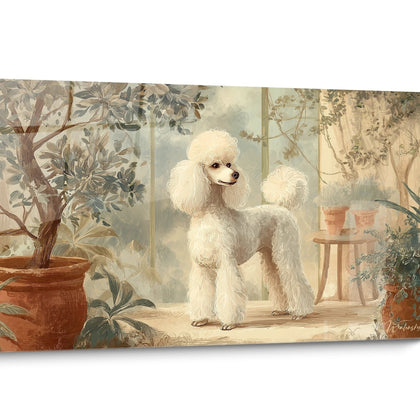
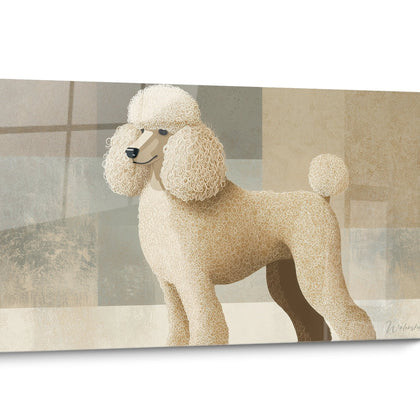
All about Geometric Poodle Canvas
- Presentation Painting Geometric Poodle
- Composition and Forms
- Visual Impact and Decoration
- Choice and Integration
The poodle painting geometric transforms the recognizable silhouette of this elegant breed into a structured visual composition where pure forms meet animal expressiveness. This contemporary artistic approach sublimates the natural curves of the poodle into assemblages of polygons, triangles and angular segments that capture the essence of the animal while creating a modern and architectural work. Unlike traditional representations such as a poodle watercolor painting or a vintage poodle painting, this geometric interpretation is part of a resolutely avant-garde aesthetic that dialogues with contemporary interior architecture and clean spaces.
Visual Architecture of the Geometric Poodle Painting
How does geometrization transform the morphology of the poodle?
The geometric decomposition of the poodle's silhouette is based on a precise structural analysis where each organic curve becomes an assemblage of angular facets creating a unique prismatic effect. The characteristic curly coat transforms into regular and irregular tessellations that generate depth and dynamism. Drooping ears become superimposed trapezoidal shapes, while the muzzle articulates into successive planes creating volume and dimension. This calculated fragmentation never denatures canine expressiveness but amplifies it through a contemporary reading where each polygon contributes to the overall balance of the composition.
The color palette in the geometric approach
The geometric poodle painting often exploits contrasting and saturated color combinations that accentuate the separation between the different planes. Monochromatic blocks alternate with subtle gradients contained within each geometric facet, creating a specific optical vibration. Some compositions favor a limited range of three to five colors strategically distributed to guide the eye through the structure, while others multiply nuances in a kaleidoscopic approach. This color management fundamentally distinguishes this approach from a black and white poodle painting which relies on tonal values rather than colored juxtaposition.
Geometric construction techniques applied to the poodle
Creating a geometric poodle painting involves different fragmentation methodologies: Delaunay triangulation produces organic compositions despite their geometry, low poly generates large facets reminiscent of digital origami, while orthogonal grids create a sophisticated pixelated effect. Each technique induces a distinct visual reading: fine triangulations offer fluidity and movement, large polygons produce impact and brutal modernity, cubist compositions superimpose multiple perspectives. This technical diversity allows the work to be adapted to different architectural environments according to their degree of spatial complexity and their dominant formal vocabulary.
Scales and proportions in the geometric composition
Generous formats accentuate the graphic power of the geometric poodle painting by allowing optimal readability of each facet while revealing the overall coherence. Large dimensions transform the work into an architectural element that visually structures the space, particularly in contemporary interiors with substantial volumes. Monumental size also allows for appreciation from a distance of the recognizable silhouette of the poodle, while the approach reveals up close the fascinating complexity of the geometric construction, creating a rewarding double reading that maintains visual interest.
Integrating the Geometric Poodle Artwork into Contemporary Spaces
What relationship can be established between geometric wall art and interior architecture?
The geometric poodle artwork naturally dialogues with modern architectural codes where pure lines and flat surfaces define the space. In converted industrial lofts, minimalist apartments, or contemporary villas with large bay windows, this artwork resonates with the surrounding geometric structure while introducing an organic dimension through its animal subject. It establishes a visual bridge between constructive rigor and living warmth, between formal abstraction and recognizable figuration. This duality allows to humanize potentially cold spaces without compromising their aesthetic coherence, creating a focal point that attracts the eye without weighing down the spatial composition.
Strategic positioning according to light circulation
The geometric facets react differently to natural and artificial lighting depending on their orientations and chromatic values. A perpendicular placement to the main light sources accentuates the contrasts between planes and reinforces the three-dimensional effect of the composition. Zenithal lighting particularly reveals the complexity of the geometric superimpositions, while a grazing light in the evening transforms the artwork by generating shadows that extend the geometry into the physical space. This specific light sensitivity distinctly differentiates the geometric poodle artwork from the minimalist poodle artwork whose impact relies more on simplicity than on structural complexity.
Decorative associations with other geometric elements
The successful integration of the geometric poodle artwork is enriched by formal correspondences with angular furniture, wireframe luminaires, tessellated pattern textiles, or exposed architectural elements. These geometric echoes create a sophisticated visual coherence without falling into literal repetition. A sofa with cubic lines, a hexagonal tabletop coffee table, or asymmetrical shelves extend the formal vocabulary of the artwork while maintaining their own identity. This decorative strategy differs radically from the approach required for a pop art poodle artwork which favors contrast and chromatic exuberance rather than structural consonance.
Creating an architectural focal point
In open-plan residential spaces, the geometric poodle artwork functions as a visual anchor that defines and delimits functional zones without physical partitions. Positioned behind a living room or office area, it creates a perceptual depth that structures the circulation of gazes and mentally organizes the space. Its strong graphic presence allows to mark a consistent decorative territory that radiates on the surrounding arrangement, guiding the chromatic and formal choices of adjacent accessories to create a harmonious and intentional overall composition.
Selection and Enhancement of the Geometric Poodle Artwork
What criteria determine the quality of a geometric composition?
The excellence of a geometric dachshund painting lies in the mathematical coherence of the underlying construction: regularity of subdivisions, balance of visual weights, harmonious progression of fragmentation scales from the center to the periphery. A successful composition maintains the immediate recognition of the canine silhouette despite the formal deconstruction, creating this fascinating tension between abstraction and figuration. Quality is also measured by chromatic sophistication: smooth transitions between adjacent areas, respect for color temperatures, subtle contrast management that guides the eye without visual violence. These technical criteria distinguish a thoughtful work from a simple application of automated digital effect.
Coordination with dachshund owner profiles
Dachshund lovers looking for a dachshund painting for their contemporary interior find in the geometric approach a modern celebration of their companion that goes beyond simple photographic reproduction. This artistic stylization testifies to a design sensitivity while honoring the emotional attachment to the breed. It is particularly suitable for urban owners working in creative or technological professional environments, where contemporary aesthetics dominate. The work becomes a conversation starter, simultaneously revealing a passion for dachshunds and a sophisticated visual culture, unlike a portrait dachshund painting which prioritizes the affective and memorial dimension.
Perceptual evolution and progressive discovery
The geometric dachshund painting offers a visual exploration richness that renews itself over time: the first perception captures the global silhouette and chromatic impact, attentive observation then reveals the constructive complexity and subtleties of each facet, while the daily life allows you to discover how variations in light constantly transform the appearance of the work. This perceptual depth maintains long-term decorative interest, avoiding the boredom that can be generated by more literal or decorative compositions. The work matures with the gaze that inhabits it, creating a rare evolving visual relationship in contemporary wall art.
Complementarity with other geometric canine styles
For collectors wishing to develop a coherent gallery wall, the geometric dachshund painting harmoniously combines with other canine representations sharing the same abstract formal language, creating a sophisticated thematic series. This curatorial approach allows celebrating different breeds through a unified stylistic prism that prioritizes aesthetic coherence while varying the subjects. The accumulation creates a contemporary gallery wall where each geometrized silhouette dialogues with the others in a symphony of shapes and colors that transcends traditional animal imagery to reach a truly artistic and architectural dimension.
Frequently asked questions about the geometric dachshund painting
Where to position a geometric dachshund painting to maximize its visual impact?
Prioritize a clear wall perpendicular to a natural light source in a space with contemporary architectural lines. The central height should align with the visual field from the main seating positions. Transition spaces such as entrance halls or wide corridors particularly benefit from this strong graphic presence that guides circulation while creating a memorable visual welcome.
How does the geometric dachshund painting integrate into an existing non-minimalist decor?
Its structuring character allows it to visually organize a busy space by creating a strong graphic anchor point. Geometry acts as a moderating element that brings order and contemporaneity without requiring a complete overhaul. Select a version whose colors echo tones already present in your interior to facilitate the progressive harmonization of the entire decorative scheme.
Would a geometric poodle painting be suitable for professional spaces such as offices or clinics?
Absolutely, its figurative-abstract dual nature is perfectly suited to contemporary professional environments. It humanizes the space with its animal subject while maintaining the formal sophistication expected in a professional context. Creative, technological, architectural, or design sectors particularly appreciate it as a distinctive visual signature that reflects innovation and aesthetic sensitivity without excessive decorative frivolity.
L'art qui suscite l'envie
Maison belge d'art mural grand format
14 jourspour changer d'avis*
Protection Walenskyincluse
Fabriquéen Italie
FormatXXL
Kit de fixationtoujours fourni
* Hors tableaux personnalisés et tailles personnalisées


