


Minimalist Poodle Wall Art
Our Minimalist Poodle Painting Minimalist Poodle Painting embodies pure elegance. This collection celebrates the grace of the poodle through minimalist wall art with clean and sophisticated lines. Each creation captures the essence of this iconic breed in a refined contemporary style. Perfect for enhancing your interior with designer dog decor, these works bring a touch of distinction and modernity. Explore an artistic universe where simplicity meets elegance.
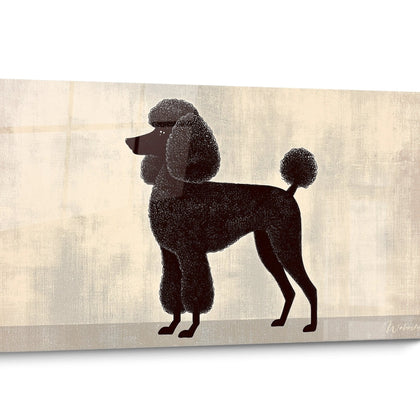
 Black Poodle Silhouette Elegant Wall Art - Minimalist Portrait - Poodle Edition273,90 €
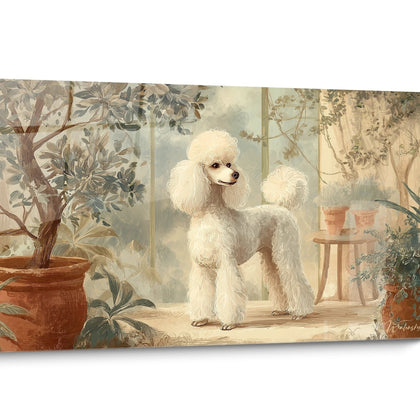
 Elegant Beige Poodle Painting in Modern Interior - Contemporary Grace - Poodle Edition273,90 €
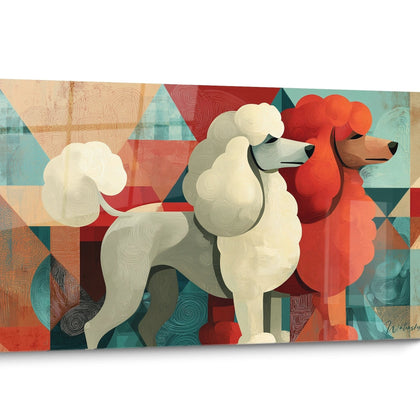
 Grey Poodle with Glasses on Coral Pink Background - Modern Portrait - Poodle Edition273,90 €
 White Poodle Canvas Powdered Tones - Muted Elegance - Poodle Edition273,90 €
 Black Poodle Silhouette Profile Wall Art - Elegant Portrait - Poodle Edition273,90 €
 Black Poodle Silhouette Backlit Wall Art - Feline Elegance - Poodle Edition273,90 €
 Poodle Sketched in Black Ink - Artistic Portrait Line Art - Poodle Edition228,90 €

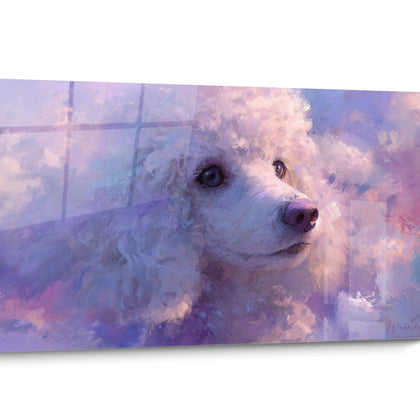
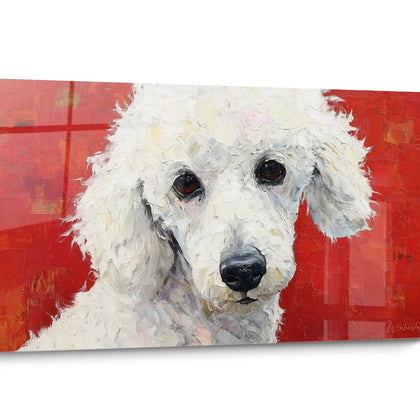
All about Minimalist Poodle Wall Art
- Minimalist Poodle Wall Art Presentation
- Clean Lines and Elegance
- Contemporary Integration
- Visual Impact
The minimalist poodle wall art embodies the very essence of contemporary sophistication by reducing the representation of this iconic breed to its fundamental lines. This artistic approach rests on the elimination of excess to preserve only what is essential: the characteristic silhouette, the elegant proportions, and the noble posture of the poodle. Designed for enthusiasts of refined aesthetics seeking large-scale wall decor, this style distinguishes itself by its ability to create maximum visual impact with minimal graphic elements. Unlike color-saturated pop art representations or vintage compositions rich in nostalgic details, the minimalist approach privileges negative space, simplified contours, and a restricted color palette that harmoniously dialogues with modern interiors featuring pure lines and affirmed geometric volumes.
The Art of Visual Reduction in Canine Representation
The minimalist poodle wall art rests on a fundamental principle: extracting the quintessence of the breed by eliminating all superfluous ornamentation. This artistic approach transforms the recognizable poodle silhouette into a graphic composition where each line matters. Artists specializing in this style work through successive subtraction, identifying the essential curves that define canine morphology while removing anecdotal details of coat or complex facial expressions.
Why does the refined silhouette enhance the natural elegance of the poodle?
The power of minimalism applied to canine representations lies in its ability to amplify the aristocratic characteristics of the poodle through surrounding void. An imposing format magnifies this approach: a large-scale composition creates a spatial dialogue between the dog's reduced form and the virgin expanse surrounding it. This visual tension generates a paradoxical monumental presence, where graphic discretion produces powerful decorative affirmation. The threadlike lines of the elongated muzzle, the distinctive curve of the neck, and the svelte proportions of the limbs express themselves with crystalline clarity.
Spatial typographies and geometric construction of form
The minimalist approach to the poodle resembles a geometric study where organic volumes translate into primary shapes. Contemporary creators mentally decompose anatomy into circles for the fluffy head, elongated rectangles for the tonic body, establishing a visual architecture that borrows as much from graphic design as from naturalistic observation. This radical simplification permits instantaneous reading even from considerable distance, an essential quality for large-scale wall works destined for generous spaces. Unlike geometric compositions that fragment the form into angular facets, minimalism preserves the fluidity of contours while reducing them to their most concise expression.
Strategic monochromatism and calculated contrasts
The restricted palette constitutes a pillar of effective minimalist poodle wall art. The most successful configurations often exploit maximum two tonalities: black on white contrast evoking line drawing, neutral gray on ivory suggesting softness without literal description. This chromatic economy amplifies perceived sophistication and facilitates integration into contemporary environments dominated by raw materials like polished concrete, brushed steel, or natural stone. The absence of vivid colors radically differentiates this aesthetic from watercolor interpretations with subtle gradations or pop chromatic explosions, creating an alternative for interiors adopting a subtractive decorative philosophy.
Harmonization with Demanding Contemporary Architectures
The integration of a minimalist poodle wall art large size requires fine understanding of contemporary spatial codes. These refined representations find their full expression in architectural environments characterized by generous volumes, significant ceiling heights, and fluid visual circulation. Rehabilitated industrial lofts, Haussmann apartments renovated according to radically modern aesthetics, or architect-designed homes with oversized glass panels constitute ideal settings for these graphic compositions with controlled impact.
How does canine minimalism dialogue with contemporary materials?
The graphic sobriety of the poodle reduced to its essential lines establishes subtle visual conversation with raw surfaces privileged by current architecture. On an exposed concrete wall, the simplified silhouette creates texture contrast between mineral roughness and drawing sharpness. Facing light wood cladding with linear veining, the drawing's refinement amplifies natural sensitivity without visual competition. This material compatibility explains why large-scale minimalist compositions impose themselves in high-end residential projects where each decorative element must justify its presence through measurable aesthetic added value rather than through decorative accumulation.
Strategic positioning in circulation spaces
Architectural transition zones—generous entrance halls, extended corridors, monumental stairwell landings—benefit particularly from an imposing minimalist poodle wall art. These intermediate spaces, often neglected in decorative strategy, gain strong visual identity through refined composition that captures attention without visual saturation. The rapid reading enabled by graphic simplification suits perfectly spaces traversed rather than occupied durably. A vertical format accentuates height perception, while horizontal orientation accompanies movement dynamic, creating visual continuity that naturally guides movement.
Complementarity with refined furniture and pure lines
The universe of Scandinavian, Japanese, or Italian minimalist contemporary furniture finds natural resonance in these poodle representations reduced to the essential. A sofa with straight lines upholstered in natural linen, a solid oak coffee table with threadlike legs, geometric light suspensions share with the minimalist poodle wall art a common philosophy: express function and beauty through economy of means. This aesthetic coherence generates a unified atmosphere where each element reinforces others' presence without visual competition, unlike detailed portraits that demand focused attention and can create visual saturation points in already laden interiors.
Visual Psychology and Optimized Spatial Perception
The efficacy of a minimalist poodle wall art transcends simple wall decoration to inscribe itself within a calculated spatial perception strategy. Neuroscience applied to interior design demonstrates that visually refined compositions reduce cognitive load, facilitating expanded mental space sensation. In urban residential environments where occupation density generates constant visual stimulation, introducing simplified graphic elements offers perceptual rest while maintaining sufficient aesthetic interest to avoid monotony.
Amplification through surrounding void
The fundamental minimalism principle—privileging negative space—finds particularly powerful application in large-scale canine representations. When a poodle silhouette occupies only 20 to 30% of total surface, the surrounding virgin expanse paradoxically amplifies the central form's presence. This perceptual amplification phenomenon functions on visual scarcity principle: the eye, deprived of details to explore, concentrates all attention on present graphic elements, conferring disproportionate importance relative to their actual surface. This dynamic suits ideally large walls requiring visual treatment without spatial crushing.
What psychological effects do the poodle's refined lines generate?
The minimalist representation of the poodle conveys specific psychological associations: refinement without ostentation, elegance without artifice, presence without domination. These qualities resonate particularly with demographic profiles valuing discreet luxury over ostentatious display. Freelance professionals, independent creatives, or technology sector executives frequently adopt this aesthetic reflecting mastered cultural sophistication. Unlike black and white photographic compositions that may evoke documentary classicism, minimalist abstraction suggests timeless modernity that will better resist trend evolution.
Adaptability to progressive decorative transformations
A major strategic advantage of the minimalist poodle wall art large dimension lies in its adaptation capacity to decorative evolution. Its chromatic neutrality and formal simplicity permit environment modification—chromatic, textile, or furniture—without creating visual dissonance. This flexibility represents durable decorative investment, particularly pertinent for imposing formats whose replacement implies substantial costs. While strongly colored or stylistically marked composition can quickly appear dated or incompatible with new aesthetic choices, minimalist refinement traverses trend cycles by relying on timeless formal principles validated from early twentieth-century avant-gardes to current contemporary movements.
Creating breathing points in multiple wall compositions
In gallery wall strategies or grouped mural compositions, the minimalist poodle wall art functions as a visual breathing element between potentially denser works. Its graphic simplicity creates perceptual pauses permitting the eye rest before approaching more laden compositions. This balancing function justifies its integration into sophisticated decorative ensembles where it plays a visual moderator role, comparable to silence in musical composition. For enthusiasts wishing to explore various artistic expressions around the canine theme, consulting the entire poodle wall art collection permits identifying possible complementarities between minimalist approaches and more elaborate interpretations.
Is minimalist poodle wall art suitable for professional spaces?
Absolutely. Contemporary professional environments—high-end medical practices, creative studios, architecture offices, premium coworking spaces—seek precisely this combination of discreet sophistication and measured visual impact. The minimalist poodle wall art brings touch of humanity and warmth without compromising professional seriousness, unlike excessively playful or colored compositions that might harm perceived credibility.
How to identify a minimalist poodle wall art of superior artistic quality?
Distinctive criteria include the precision of line revealing thorough anatomical study despite simplification, the subtle balance between filled and empty demonstrating advanced compositional mastery, and technical execution quality eliminating any approximation in lines. True minimalism results from demanding intellectual distillation process, not lazy simplification. Imposing formats mercilessly amplify defects: a hesitant line or compositional imbalance become glaring across several square meters.
Does large-size minimalist poodle wall art require specific maintenance?
Minimalist compositions, by their refined nature, reveal dust accumulation or surface alterations more than visually dense works. Gentle monthly dusting with dry microfiber cloth preserves contour sharpness. Distance from intense direct light sources prevents any progressive discoloration, particularly critical for monochrome compositions where any tonal variation becomes immediately perceptible. Regular monitoring ensures initial visual impact remains intact long-term.


