


Minimalist Wall Art for Law Office
The Minimalist Law Firm Artwork brings a touch of understated elegance and professionalism to your legal environment. This collection favors clean lines, geometric compositions, and monochrome palettes that reflect the seriousness and rigor of the profession. Each creation has been designed to blend harmoniously into a legal professional decor, creating an atmosphere of concentration and trust. Perfect for a modern law firm, this wall art combines discretion and refinement.
 Feminine Essence Wall Art - Sensual Abstract Edition273,90 €
 Black Sphere Balance Wall Art - abstract geometric edition273,90 €
 Cumulus Floating Pink Wall Art - Modern Abstract Edition242,90 €
 Structural Luminous Momentum Wall Art - Abstract Minimalist Edition242,90 €
 Passionate Momentum Black Canvas - Minimalist Abstract Edition273,90 €
 Poetic Escape Champagne Canvas - abstract geometric edition242,90 €
 Mechanical Energy Red Painting - Abstract Geometric Edition242,90 €
 Contemplative Ivory Dunes Canvas - Abstract Expressionist Edition242,90 €
 Wild Silver Foam Artwork - Abstract Expressionist Edition242,90 €
 Frozen Eternity Artwork - abstract spiral edition273,90 €
 Blue and White Painting - Abstract Still Life Edition273,90 €
 Intertwined Essences Wall Art - Figurative Abstract Edition273,90 €
 Line Dance Wall Art - Abstract Dancer Edition273,90 €
 Linear Softness Painting - Abstract Face Edition273,90 €
 Balanced Contrast Artwork - Abstract Body Edition273,90 €
 Abstract Essence Wall Art - Abstract Cubism Edition273,90 €
 Winter Elegance Wall Art - Minimalist Abstract Edition273,90 €
Explore further
In Minimalist Wall Art for Law Office
-
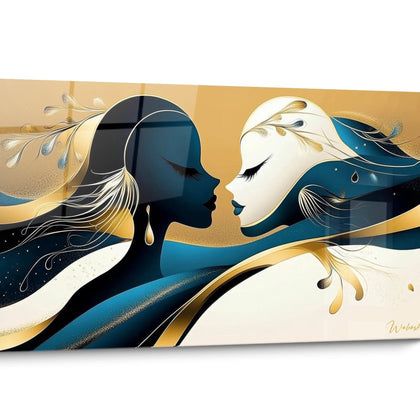 Wall Art for Law Office820
artworks
Wall Art for Law Office820
artworks
-
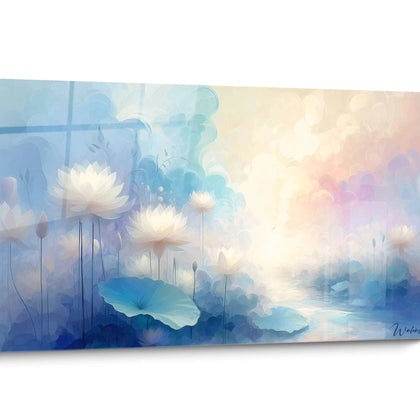 Abstract Art for Lawyer's Office | Professional Wall Art24
artworks
Abstract Art for Lawyer's Office | Professional Wall Art24
artworks
-
 Geometric Wall Art for Law Office24
artworks
Geometric Wall Art for Law Office24
artworks
-
 Golden Lawyer Office Wall Art24
artworks
Golden Lawyer Office Wall Art24
artworks
-
 Blue Legal Office Wall Art24
artworks
Blue Legal Office Wall Art24
artworks
-
 Wall Art for Orange Law Office24
artworks
Wall Art for Orange Law Office24
artworks
-
 Multicolor Artwork for Law Office24
artworks
Multicolor Artwork for Law Office24
artworks
-
 Expressionist Law Office Wall Art20
artworks
Expressionist Law Office Wall Art20
artworks
-
 Wall Art for Law Office Music11
artworks
Wall Art for Law Office Music11
artworks
-
 Portrait Painting for Law Office10
artworks
Portrait Painting for Law Office10
artworks
-
 Futuristic Law Office Wall Art7
artworks
Futuristic Law Office Wall Art7
artworks
-
 Spiral Wall Art for Law Office5
artworks
Spiral Wall Art for Law Office5
artworks


All about Minimalist Wall Art for Law Office
- Law Office Wall Art Presentation
- Minimalist Legal Elegance
- Refined Visual Impact
- Professional Decorative Architecture
A minimalist wall art for law offices embodies the very essence of contemporary professional legal rigor. This refined decorative approach meets the requirements of visual neutrality while projecting the silent authority essential in legal consultation spaces. The generous dimensions privileged magnify graphic sobriety, transforming institutional walls into surfaces of controlled expression where every visual element communicates professionalism and discretion.
The Art of Visual Restraint in Legal Spaces
A minimalist wall art for law offices represents far more than a simple aesthetic choice: it constitutes a strategic professional statement. In an environment where mental clarity and concentration are paramount, visual purification fosters the reflective atmosphere necessary for delicate legal consultations. Monumental formats amplify this philosophy of less-is-more, creating essential visual breathing room in spaces often saturated with documentation and legal materials.
What advantages does refined composition bring to a professional legal setting?
The chromatic reduction characteristic of minimalist works eliminates all cognitive distraction during client interviews. Monochromatic or two-toned palettes—deep blacks, anthracite grays, luminous whites—establish a neutral background allowing legal conversations to retain their primacy. This sobriety also guarantees remarkable stylistic longevity, escaping ephemeral trends that might compromise the institutional credibility of the firm.
The psychology of space applied to legal counsel
Sparse geometric compositions generate a sense of order and mental structuring particularly suited to legal reasoning. A minimalist wall art for law offices orchestrating horizontal and vertical lines subtly evokes regulatory frameworks, normative hierarchy, and procedural rigor. This unconscious visual resonance reinforces the perception of professional competence without resorting to explicit legal symbolism often perceived as redundant.
Strategic sizing for legal meeting rooms
Imposing formats—frequently exceeding 150 centimeters—radically transform the spatial perception of partner offices and negotiation rooms. This monumental scale visually compensates for the austerity inherent to minimalism, avoiding clinical effect while maintaining refined elegance. Substantial wall occupation also creates stabilizing visual anchors in environments where functional furniture and legal shelving traditionally dominate.
For an alternative approach exploring more dynamic visual compositions, discover our collection of abstract wall art for law offices combining professional sophistication and contemporary expressivity.
Discrete Materiality and Silent Presence
How does minimalist texture influence the perception of legal expertise?
A minimalist wall art for law offices subtly exploits surface variations to create a tactile richness invisible in photography yet perceptible during physical consultation. Micro-reliefs, subtle glazes, and matte-gloss contrasts generate sophisticated depth demanding attentive observation—a visual metaphor for meticulous legal analysis. This discrete complexity signals a level of refinement far exceeding standardized corporate decorative solutions.
Dimensional balance in multifunctional legal spaces
Contemporary firms integrating legal libraries, consultation zones, and videoconference areas require visual coherence spanning these heterogeneous functions. Large-scale minimalism unifies these diverse zones visually without imposing narrative themes that might seem out of place depending on usage contexts. This contextual versatility represents a decisive advantage in designing modern legal structures privileging spatial flexibility.
Monumental monochromatic compositions function particularly effectively as backdrops for professional digital communications. During the virtual consultations now common in legal practice, these refined surfaces avoid visual distractions while projecting an image of controlled modernity and professional seriousness.
Perceptual durability and decorative investment
Unlike seasonal decorative trends, a minimalist wall art for legal environments maintains its aesthetic relevance decade after decade. This stylistic permanence represents a strategic investment in the firm's visual identity, avoiding frequent decorative renewal costs. Minimalist timelessness also communicates institutional stability—a quality particularly valued by clients seeking long-term legal counsel.
Which visual elements reinforce professional authority without ostentation?
Compositions privileging controlled asymmetry and generous negative space evoke the silent confidence characteristic of legal excellence. This visual restraint deliberately contrasts with ostentatious decorative approaches, positioning the firm in a register of assured competence rather than superficial demonstration. Large dimensions amplify this paradoxical effect where sobriety itself becomes a powerful affirmation of distinctive professional identity.
Integration Strategies in Contemporary Legal Architecture
Architectural dialogue between visual minimalism and built materiality
A minimalist wall art for law offices of impressive scale establishes a sophisticated dialogue with architectural elements—woodwork, glass volumes, metal structures—characteristic of contemporary legal buildings. Expansive monochromatic surfaces resonate with architectural principles privileging transparency, rigorous geometry, and authentic materials. This continuity between wall decoration and architectural parti reinforces the global environmental coherence essential to exceptional professional spaces.
Firms occupying heritage buildings benefit particularly from this refined approach. The controlled contrast between historical ornamentation and contemporary minimalism generates productive visual tension evoking the constant dialectic between legal tradition and regulatory modernity.
Optimization of perceptual acoustics through visual presence
Beyond their aesthetic function, large minimalist formats subtly modify the acoustic perception of legal spaces. Expansive surfaces partially absorb reverberation, contributing to a reinforced confidentiality atmosphere particularly appreciated during sensitive consultations. This overlooked functional dimension adds substantial pragmatic value to the decorative investment.
What does minimalist choice reveal about the firm's strategic positioning?
Adoption of an imposing minimalist wall art immediately signals a contemporary professional positioning, differentiating the firm from decorative approaches still widespread in the legal sector. This visual modernity communicates adaptation to regulatory evolution, mastery of emerging legal technologies, and openness to international collaborative practices—attributes valued by demanding entrepreneurial and institutional clientele.
Refined compositions also facilitate evolution of the firm's visual identity without requiring complete decorative overhaul. Addition or rotation of complementary minimalist works enables progressive visual refreshment maintaining contemporaneity without abrupt rupture.
Luminous integration and circadian variations
Expansive monochromatic surfaces respond remarkably to variations in natural lighting throughout the legal day. Subtle transformations—contrast intensification in direct light, softening in diffuse light—create discrete visual dynamics animating spaces without distraction. This perceptual liveliness counterbalances the potential austerity of strict minimalism, humanizing the professional environment.
What budget should be planned for professional-quality minimalist wall art for a law office?
Investment for an imposing minimalist work suited to legal spaces varies considerably based on artist reputation, technical complexity, and dimensions. Formats exceeding 180 centimeters from reputed artists justify substantial budgets reflecting their impact on overall professional identity and exceptional perceptual durability.
How does minimalist wall art for law offices influence client experience during consultations?
The refined visual environment reduces anxiety often associated with legal consultations by creating an atmosphere of reassuring clarity and order. Chromatic neutrality favors concentration on substantive exchanges rather than environment, optimizing the perceived quality of the legal service itself.
Is minimalism suitable for all legal specialization domains?
While minimalism proves particularly appropriate for business law, intellectual property, and tax practices, its versatility enables adaptation to virtually all domains. The essential factor lies in selecting compositions whose chromatic temperature and visual dynamics resonate with the firm's specific values and its target clientele's expectations.
Further reading
Our articles on this topic
- Minimalist Painting for a Law or Accounting Firm Waiting Room: The Complete Guide
- How to avoid an overly imposing painting that overwhelms the space in a small law office?
- Military-style painting for a sober office: the abstract alternative that changes everything
- How to choose a painting that adds value without looking pretentious in a small office?
- Why do some law firms deliberately avoid any wall art for an ultra-minimalist look?
- Panoramic city painting: the ideal format for a law firm waiting room
L'art qui suscite l'envie
Maison belge d'art mural grand format
14 jourspour changer d'avis*
Protection Walenskyincluse
Fabriquéen Italie
FormatXXL
Kit de fixationtoujours fourni
* Hors tableaux personnalisés et tailles personnalisées


