


Minimalist Burmilla Cat Wall Art
The Painting Cat Burmilla Minimalist captures the graceful essence of this feline with silver eyes through a clean and contemporary style. This artistic collection celebrates the natural beauty of the Burmilla by favoring pure lines and understated compositions. Each minimalist cat Burmilla painting reveals the delicacy of this breed with a soft and harmonious palette. Perfect for cat lovers and those who appreciate minimalist cat design, this collection brings a touch of refinement and serenity to your interior decoration.
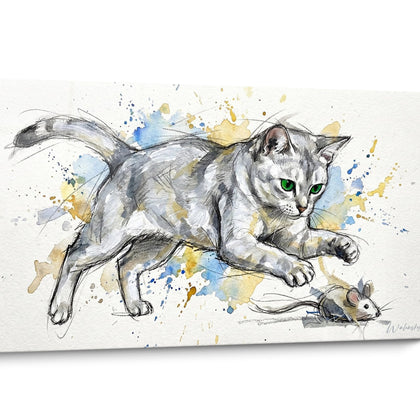
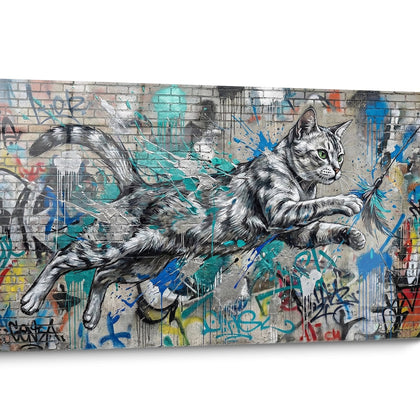
 Moving Cat Painting - Feline Grace - Burmilla Cat Edition242,90 €
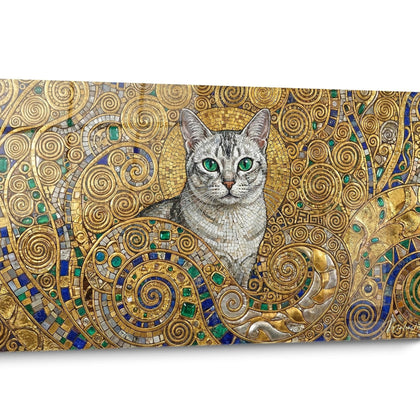
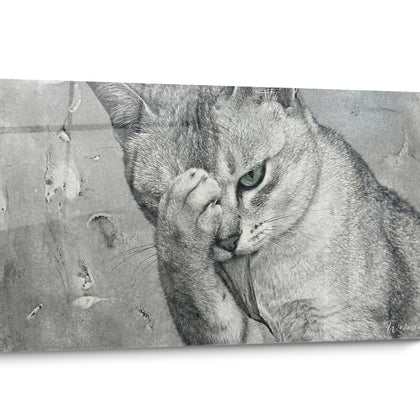
 Burmilla Cat Artistic Portrait Painting - Emerald Gaze - Burmilla Cat Edition273,90 €
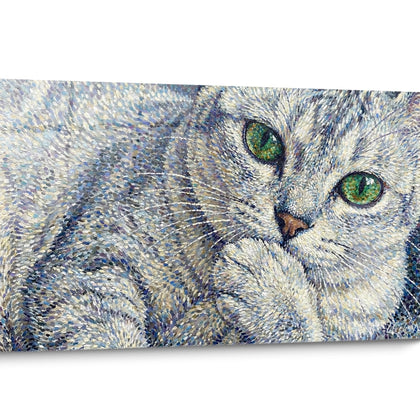
 Minimalist Cat Portrait Wall Art - Tender Gaze - Burmilla Cat Edition228,90 €
All about Minimalist Burmilla Cat Wall Art
- Presentation Cat Burmilla Minimalist Painting
- Clean Aesthetics
- Contemporary Spaces
- Choices and Complements
The minimalist Burmilla cat painting represents the perfect alliance between the natural grace of this refined feline breed and the visual codes of clean contemporary aesthetics. This artistic representation captures the delicate essence of the Burmilla through sober lines, controlled negative spaces and a chromatic economy that enhances the characteristic silhouette of this feline with silver fur. Designed for modern interiors where every decorative element must justify its presence by its visual strength without clutter, this type of large-format wall decoration stands out as a discreet but magnetic focal point in demanding contemporary living spaces.
Reduced Elegance to the Essential: Visual Composition of the Minimalist Burmilla Cat Painting
The minimalist Burmilla cat painting is based on a deliberately stripped-down visual architecture where every line, every zone of visual silence and every tonal contrast participate in the progressive revelation of the feline's personality. This purified aesthetic approach requires a thorough understanding of the distinctive morphological characteristics of the Burmilla in order to extract its essence: the gentle curve of the neck, the penetrating gaze of the green or amber eyes, the particular tipped fur texture that creates subtle chromatic variations.
What visual codes define an authentically minimalist Burmilla painting?
The minimalist authenticity of a Burmilla representation is measured by the ability of the work to suggest rather than exhaustively describe. Empty spaces become as expressive as worked areas, creating a visual breath that amplifies the impact of each retained detail. The restricted color palette – often limited to two or three harmonious tones – reinforces this economy of means while preserving the characteristic visual identity of the Burmilla with its silver nuances and delicate contrasts.
Simplified geometry at the service of feline expression
Unlike traditional representations that multiply anatomical details, the minimalist Burmilla cat painting favors simplified geometric shapes and continuous lines that capture the aristocratic attitude of this breed. This formal simplification does not impoverish the representation but condenses it, creating a paradoxically more intense visual presence thanks to the elimination of the superfluous. Large formats magnify this approach by transforming each purified curve into an architectural element that dialogues with the contemporary lines of the surrounding space.
Monochrome and subtle tonal variations
The chromatic restriction characteristic of minimalism finds a natural resonance with the particular fur of the Burmilla, whose subtle variations between the light undercoat and the tipped ends create sophisticated nuances. Black and white compositions masterfully exploit these delicate contrasts, while some interpretations retain the characteristic silver tones in a restricted range that preserves the visual purity while evoking the silky softness of the fur.
Architectural Integration: The Minimalist Burmilla Cat Painting in Contemporary Spaces
Integrating a minimalist Burmilla cat painting into a contemporary architectural environment is a thoughtful decorative strategy where the work's visual sobriety dialogues with the rigor of the purified lines characteristic of modern interiors. This aesthetic synergy transforms the wall decor into a structuring element of the space rather than a simple ornament, creating a visual continuity between the architecture, the furniture and the feline artistic expression.
How to maximize visual impact in minimalist interiors with generous volumes?
Contemporary spaces with high ceilings and large, bare wall surfaces provide the ideal setting for the imposing formats of minimalist Burmilla paintings. The masterful monumentality of these large-scale representations creates a visual anchor that structures the perception of space without creating sensory saturation. The deliberate isolation of the artwork on a clean wall, without immediate decorative competition, amplifies its impact while preserving the overall minimalist coherence.
Color relationships with contemporary neutral palettes
The shades of gray, beige, and white that dominate minimalist interiors find a natural extension in the silvery and cream tones characteristic of Burmilla representations. This chromatic continuity does not mean indistinct fusion but a subtle tonal dialogue where the artwork emerges through its variations in values and measured contrasts rather than violent opposition. This sophisticated harmony is particularly suitable for high-end professional spaces, urban lofts, and contemporary residences where discretion does not exclude distinction.
Positioning strategies in open spatial configurations
The open plans characteristic of contemporary architecture require visual zoning strategies where the minimalist Burmilla cat painting can play a spatial marker role. Strategically positioned, it subtly defines functional zones – separation between living room and dining room, for example – without resorting to physical partitions that would fragment the volume. The elegant verticality of the Burmilla in a seated position or the horizontal linearity of an elongated silhouette can be exploited to reinforce or counterbalance the dominant architectural orientations of the space.
Complementarity with contemporary raw materials
Polished concrete, brushed steel, untreated natural wood, and mineral surfaces that characterize minimalist interiors find in the clean representation of the Burmilla an organic counterpoint that humanizes without softening the material rigor. This creative tension between the hardness of architectural materials and the softness evoked of the feline fur enriches the sensory reading of the space. Works that incorporate gilded metallic touches can establish visual correspondences with architectural elements in patinated brass or copper.
Selection and Associations: Creating a Coherent Atmosphere around the Minimalist Cat Painting Burmilla
Acquiring a minimalist cat painting Burmilla is part of a global decorative approach where each visual element contributes to the overall atmosphere without creating redundancy or aesthetic cacophony. This thoughtful selection implies an understanding of the different stylistic variations available and their potential for association with other decorative elements sharing the same clean philosophy.
Stylistic variations within the minimalist Burmilla universe
The minimalist category itself encompasses several distinct approaches: linear representations with continuous lines that capture the essence of the feline in a few curves, geometric compositions that deconstruct the silhouette into recognizable abstract shapes, high-exposure photographic interpretations that eliminate details in favor of luminous masses and shadows. This diversity allows for refining the selection according to the desired degree of abstraction and the intensity of feline presence sought. Minimalist portrait approaches focus attention on facial expression and gaze, while full silhouettes exploit the characteristic posture of the Burmilla.
What decorative pairings preserve minimalist integrity?
The immediate visual environment of the artwork largely determines its expressive effectiveness. Successful pairings rely on the principle of formal coherence and quantitative restraint: prioritize furniture with clean lines, limit competing decorative elements in the nearby visual field, select solid or subtly geometric textiles. Introducing plant elements with architectural silhouettes – euphorbias, sansevierias, stripped branches – creates an organic resonance without decorative clutter.
Wall compositions and thematic series
Although minimalism favors the isolation of the unique work, certain generous spatial configurations allow for multiple compositions where several representations of the Burmilla in different postures or framing create a refined visual narrative. This serial approach works particularly well in extended linear spaces – wide hallways, longitudinal walls of lofts – where the rhythmic repetition of similar but not identical elements reinforces the impact without creating saturation. Exploring different interpretations of the Burmilla allows for the creation of coherent ensembles that tell the amplitude of expressive possibilities of this breed while maintaining visual purity.
Complementarity with other refined artistic expressions
Combining the minimalist Burmilla cat painting with other forms of contemporary artistic expression – filigree sculptures, pure-form ceramics, black and white abstract photographs – creates a coherent aesthetic constellation that reinforces the minimalist reading of the space. This curatorial strategy transforms the interior into a personal gallery where each piece dialogues with the others through formal affinities rather than narrative themes. Minimalist watercolor interpretations of the Burmilla introduce a fluid delicacy that subtly contrasts with pieces with more defined contours, creating a measured visual dynamic. For a more energetic approach while preserving sophistication, refined color versions provide controlled chromatic accents that activate the space without compromising its minimalist character.
Where to position a minimalist Burmilla cat painting to maximize its visual impact?
The optimal positioning is on a clear wall benefiting from direct visibility from the main circulation and rest areas of the space, at a height where the visual center of the work is slightly above the eye level of a standing person, creating a natural incentive for contemplation. Walls perpendicular to natural light sources reveal tonal subtleties without creating disturbing reflections.
Is a minimalist Burmilla cat painting suitable for demanding professional spaces?
Absolutely, the formal sobriety and discreet sophistication of these representations perfectly match the aesthetic codes of contemporary professional environments – architecture firms, design studios, high-end reception areas – where artistic expression must demonstrate cultural refinement without excessive familiarity. The feline presence brings an organic and soothing dimension while maintaining an elegant reserve compatible with professionalism.
How to identify a minimalist Burmilla cat painting of superior artistic quality?
Distinctive features include a mastery of economy of means – the ability to evoke rather than exhaustively describe –, anatomical accuracy despite formal simplification, the quality of compositional balances and negative spaces, as well as the subtlety of tonal variations that create depth and relief without resorting to the multiplication of details. The immediate visual impact combined with a progressive richness of reading during repeated contemplations signals a truly accomplished work.


