


Black and White Burmilla Cat Wall Art
Our painting Burmilla cat Black and White collection celebrates feline elegance through exceptional artistic creations. These works capture the natural grace and distinctive charm of this breed with a timeless black and white aesthetic. Perfect for cat lovers and animal art enthusiasts, these creations bring a touch of sophistication to your interior. Each decorative painting Burmilla cat reveals the delicate beauty of this captivating-eyed feline, ideal for creating a refined atmosphere.
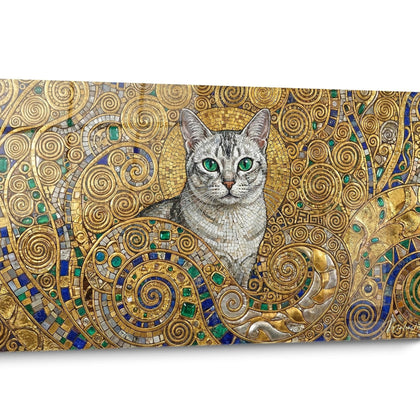
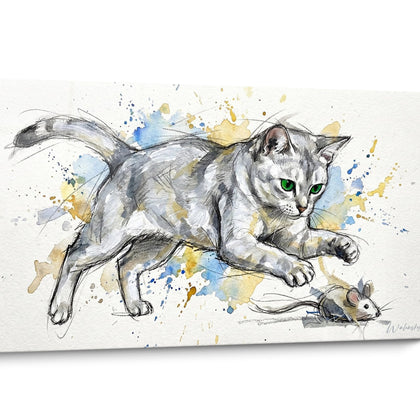
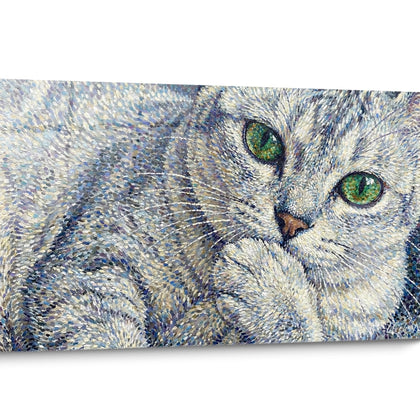
 Burmilla Cat Painting Green Eyes - Deep Gaze - Burmilla Cat Edition273,90 €
 Green-Eyed Cat Painting - Piercing Gaze - Burmilla Cat Edition273,90 €
 Minimalist Cat Portrait Wall Art - Tender Gaze - Burmilla Cat Edition228,90 €
Explore further
In Black and White Burmilla Cat Wall Art
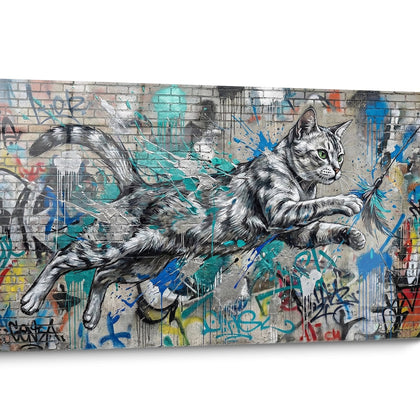
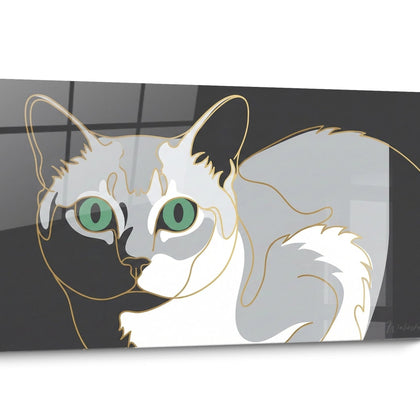
All about Black and White Burmilla Cat Wall Art
- Painting Presentation Burmilla Cat Black and White
- Monochrome Aesthetic
- Decorative Integration
- Selection and Enhancement
The painting of the black and white Burmilla cat represents the perfect alliance between feline elegance and chromatic sobriety. This breed, with its distinctive silver coat, finds a particular artistic expression in a large-format monochrome representation, where shades of grey capture the natural luminosity of its fur. Lovers of minimalist decor specifically seek this graphic interpretation that transcends simple photographic reproduction to offer a striking visual presence in contemporary spaces.
The Monochrome Aesthetic of the Burmilla in Large Dimension
The painting of the black and white Burmilla cat draws its visual strength from translating the subtleties of the silver characteristic of this breed into a sophisticated range of greys. The tonal variations between the light undercoat and the shaded ends naturally create exceptional graphic depth when transposed into large-format monochrome. This particularity makes each representation unique, especially in areas where the fur presents this distinctive tipping characteristic of the Burmilla.
How does monochrome contrast reveal the identity of the Burmilla?
The chromatic restriction paradoxically amplifies the morphological characteristics of this hybrid breed resulting from the Persian-Burmese cross. The eyes, underlined with natural kohl, a distinctive feature of the Burmilla, acquire a dramatic intensity in black and white. The imposing format allows to enhance these expressive facial details that define the visual identity of this relatively recent breed. Areas of light and shadow sculpt the delicate muzzle and high cheekbones with architectural precision.
The silver gradation in bichromatic interpretation
The shaded or tipped effect of the Burmilla coat is translated into monochrome by smooth transitions between bright whites and deep greys. This natural gradation offers an unsuspected visual richness in an expansive wall format where each nuance becomes perceptible. For collectors seeking an alternative to a color Burmilla cat painting, this refined version focuses attention on texture and structure rather than the color palette.
The graphic expression of distinctive feline markings
The phantom markings typical of young Burmillas and the rings of the tail find a reinforced graphic expression in black and white. These elements, sometimes discreet in a polychrome representation, become major compositional guidelines. The large format transforms these details into structuring elements of the composition, creating a visual balance between dense areas and breathing spaces. This minimalist approach differs substantially from a watercolor Burmilla cat painting where chromatic fluidity dominates.
Decorative Integration of a Monochrome Feline Representation
A painting of a black and white Burmilla cat of large size naturally fits into contemporary architectural environments that value clean lines and restricted palettes. This chromatic neutrality facilitates association with raw materials such as polished concrete, brushed steel or bleached wood, creating sophisticated textural dialogues. The absence of saturated colors allows for remarkable decorative flexibility while maintaining a affirmed visual presence thanks to the imposing dimensions.
What spaces particularly value this monochrome aesthetic?
Industrial lofts, architect's offices, and gallery spaces are privileged environments for this type of representation. The chromatic sobriety harmonizes with design concepts that prioritize functionality and material authenticity. In Scandinavian minimalist residences, this feline iconography brings an organic touch that subtly contrasts with the ambient geometric rigor without creating a stylistic break.
Color associations and decorative complements
The monochrome feline acts as a stabilizing element in environments with concentrated color accents. Facing furniture in muted tones (taupe, anthracite, desaturated terracotta), the wall art establishes a visual bridge without entering into chromatic competition. This strategic neutrality allows for the easy introduction or modification of seasonal color accents in the space without requiring readjustment of the main wall element, unlike a colored version which would dictate the surrounding palette more.
Dialogue with natural and artificial lighting
The variations of gray react dynamically to daily changes in light, revealing different depths depending on the solar orientation. This photometric sensitivity creates an evolving work that subtly transforms between dawn and dusk. Artificial directional lighting selectively accentuates certain tonal areas, allowing the atmosphere to be modulated according to the time of day. For those who appreciate metallic light effects, a golden Burmilla cat painting would offer a distinct reflective alternative.
Selection and Enhancement of a Monochrome Feline Representation
Acquiring a black and white Burmilla cat painting requires evaluating several criteria specific to this particular artistic expression. The quality of rendering of the half-tones is a crucial indicator: a nuanced representation presenting at least seven to nine distinct tonal values guarantees satisfactory visual depth. Imposing formats require high graphic resolution to maintain the sharpness of subtle transitions between light and shaded areas, particularly in the rendering of the characteristic silky fur.
How to identify a balanced composition for large format?
A successful composition for expansive wall dimensions strategically distributes dark and light masses according to the rule of thirds or the golden spiral. The Burmilla's gaze, a natural focal point, should ideally be positioned on a compositional strength point. Negative spaces (areas of white or very light gray) play an essential aerating role that prevents the visual saturation inherent in large surfaces. A too dense representation would lose readability from a distance, while a too refined version would lack substance.
Technical criteria for durable monochrome rendering
The pigment stability of the grays is a major issue for the visual longevity. Archival quality inks or pigments resist yellowing and maintain chromatic neutrality over time, avoiding greenish or sepia drifts. The support should have a non-reflective surface to preserve the reading of subtle nuances from different viewing angles. For those seeking a different approach to the breed, the Burmilla cat portrait painting prioritizes close-up facial expressiveness.
Strategic positioning in residential space
The imposing dimensions require a minimum visual distance equivalent to 1.5 times the diagonal of the wall art for optimal appreciation of the whole. Locations facing areas of circulation (wide hallways, entrance areas) rather than static living areas take advantage of this spatial requirement. The placement height should align the optical center of the subject (usually the eyes) with the average eye level, creating a direct connection with the viewer. The complete collection painting cat Burmilla offers various stylistic interpretations of this breed.
Associations with other wall representations
Integration into a wall gallery requires stylistic consistency: associating exclusively with other monochromes, silver photographs or engravings preserves the visual unity. The imposing format works best as a unique centerpiece rather than in a symmetrical grid that would fragment its impact. To create a balanced visual dialogue, smaller complementary pieces in a minimalist painting cat Burmilla style can flank the main composition.
Is a black and white cat Burmilla painting suitable for colorful interiors?
Absolutely. The monochrome acts as a visual neutralizer that tempers chromatically saturated environments. It offers a visual resting point in spaces dominated by bright colors, creating an essential perceptual balance. This stabilizing function works particularly well in eclectic interiors where chromatic diversity requires a neutral anchor.
What is the visual difference between a matte or glossy black and white cat Burmilla painting?
The matte finish preserves the readability of the nuances from all angles of light, eliminating parasitic reflections that obscure details in dark areas. The glossy version intensifies contrasts and gives a quasi-three-dimensional depth, but requires precise positioning outside of direct light reflection paths to avoid glare.
How to maintain a large-format black and white cat Burmilla painting?
A monthly dusting with an antistatic microfiber cloth is usually sufficient. Avoid liquid cleaning products that may create visible halos on light areas. For imposing wall formats, prefer a vacuum cleaner with a soft brush attachment in low power mode, maintaining a safe distance to prevent accidental suction of the support.
Further reading
Our articles on this topic
- Turkish Van cat painting in white: how to pair it with light walls without a washed-out effect
- Black and white Lykoi cat painting: the monochrome gothic touch for your interior
- Oriental Shorthair Cat Painting in Black and White: The Ideal Choice for an Adult Bedroom
- Nebelung Cat Painting in Black and White: Artistic Photography That Captures Its Gaze
- Turkish Angora cat watercolor painting: which model to choose based on your room and style
- American Bobtail Cat Painting in Watercolor on White Background: The Portrait That Showcases the Breed
L'art qui suscite l'envie
Maison belge d'art mural grand format
14 jourspour changer d'avis*
Protection Walenskyincluse
Fabriquéen Italie
FormatXXL
Kit de fixationtoujours fourni
* Hors tableaux personnalisés et tailles personnalisées


