


Burmilla Cat Portrait Wall Art
The Painting cat Burmilla Portrait captures the refined essence of this exceptional breed with silky fur and expressive eyes. This collection highlights the unique beauty of the Burmilla through carefully crafted artistic compositions. Each portrait of cat Burmilla reveals the gentle personality and aristocratic charm of this endearing feline. Perfect for cat lovers and collectors of contemporary feline art, this gallery transforms your interior into an elegant space.
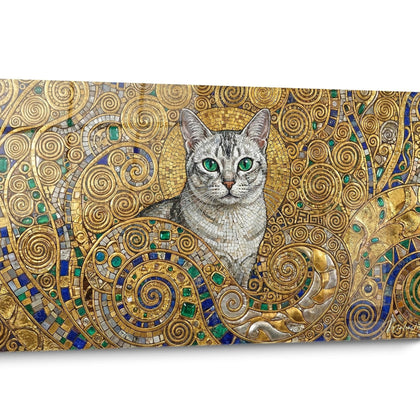
 Burmilla Cat Painting Green Eyes - Captivating Gaze - Burmilla Cat Edition273,90 €
 Burmilla Cat Artistic Portrait Painting - Emerald Gaze - Burmilla Cat Edition273,90 €
 Green-Eyed Cat Painting - Piercing Gaze - Burmilla Cat Edition273,90 €
 Burmilla Cat Artwork with Green Eyes - Elegant Portrait - Burmilla Cat Edition273,90 €
 Burmilla Cat Artwork with Green Eyes - Silver Elegance - Burmilla Cat Edition273,90 €
 White Cat with Heterochromatic Eyes Artwork - Hypnotic Gaze - Burmilla Cat Edition273,90 €
 Burmilla Cat Wall Art Green Eyes - Emerald Gaze - Burmilla Cat Edition228,90 €
 Minimalist Cat Portrait Wall Art - Tender Gaze - Burmilla Cat Edition228,90 €
 Cat Painting Green Eyes - Mysterious Gaze - Burmilla Cat Edition228,90 €
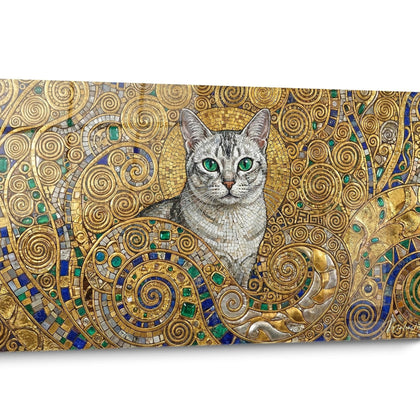
 Cat Painting Green Eyes - Golden Marble - Burmilla Cat Edition228,90 €
All about Burmilla Cat Portrait Wall Art
- Burmilla Cat Portrait Painting Presentation
- Capturing Feline Expression
- Large Format Portrait
- Sophisticated Animal Decor
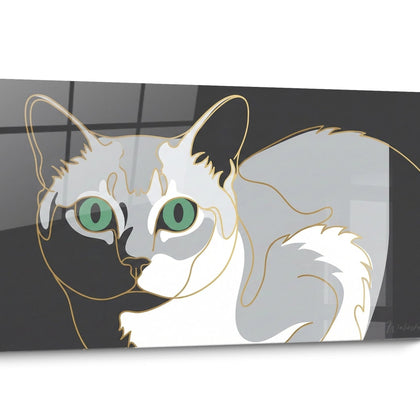
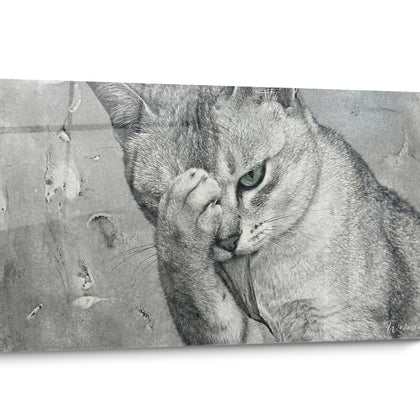
The Burmilla cat portrait painting captures the very essence of this majestic breed through striking visual rendering. This artistic representation highlights the Burmilla's unique physiognomy: its green eyes naturally lined with kohl, its luminous silver coat and its expression that is both gentle and mischievous. Unlike action scenes or multiple compositions, the portrait focuses exclusively on the face and penetrating gaze of this refined feline, creating an immediate emotional connection with the viewer. This intense focus transforms your space into an intimate gallery where the Burmilla's personality fully expresses itself, bringing a contemplative dimension to your wall decor while celebrating the natural elegance of this lesser-known breed.
The Intensity of the Burmilla Gaze in Wall Portrait
The Burmilla cat portrait painting reveals the unique emotional depth of this breed through tight framing that magnifies every expressive detail. The Burmilla's eyes, true emerald or aquamarine green jewels depending on lineage, constitute the absolute focal point of these wall creations. The natural black line that outlines their eyelids, a genetic heritage of the breed, creates a natural makeup that the artist amplifies to produce a hypnotic effect.
How does the portrait enhance the Burmilla's distinctive features?
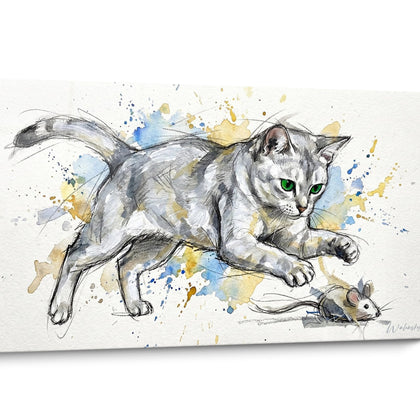
Portrait representation allows exploration of the subtle nuances of the tipped or shaded coat characteristic of this breed. Unlike a full-body composition, portrait format concentrates attention on the delicate transition between the clear silver base and the shadowed black or chocolate-tipped points. This gradient zone, particularly visible around the muzzle, cheeks and forehead, constitutes the visual signature of the Burmilla. Representations in Burmilla cat watercolor painting exploit these natural color transitions particularly well.
The psychology of animal portraiture in contemporary decoration
Positioning a Burmilla portrait in a professional office or reception space transmits specific values: discreet refinement, elegance without ostentation, affirmative but non-aggressive character. The feline's direct gaze establishes a living presence in the room without dominating the space, unlike portraits of more imposing wild animals. This subtlety is particularly suited to environments where sophistication and accessibility must coexist.
Balance of proportions in the close-up portrait
Monumental Burmilla portrait formats create striking visual impact by amplifying the natural proportions of the feline head. The slightly inclined ears, medium-large with rounded extremities, harmoniously frame the face. The moderately short muzzle, neither flat like Persians nor elongated like Orientals, offers perfect balance for a centered composition. These intermediate proportions allow representation that avoids morphological extremes while remaining immediately recognizable.
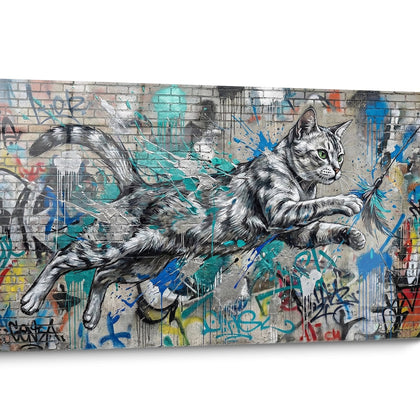
Variations in Burmilla cat colored painting transform this classic portrait into a vibrant contemporary artwork, where natural silver tones meet bold palettes.
Monumental Format Serving the Feline Portrait
Why choose large format for a Burmilla portrait?
The imposing dimension of a Burmilla cat portrait painting in large format radically transforms the perception of the animal. At monumental scale, every detail becomes visual architecture: individual whiskers metamorphose into directional lines, iris reflections become luminous constellations, coat texture reveals its complex structure. This amplification does not seek photographic realism but creates a sculptural presence that dialogues with the architectural volumes of the room.
Spaces with high ceilings, extended gallery walls or spacious circulation areas find in these monumental portraits a powerful visual anchoring element. The Burmilla's eye, enlarged to several dozen centimeters in diameter, becomes graphic meditation and natural point of convergence for the gaze in large volumes.
Asymmetrical composition in the close-up portrait
Unlike classical centered portraits, some representations exploit the natural asymmetry of the feline pose: slightly tilted head, gaze directed toward a point outside the frame, ears oriented differently. These compositional choices create narrative dynamics where the Burmilla seems to react to an invisible element, suggesting a story beyond the frame. This narrative approach fundamentally distinguishes artistic portrait from simple photographic reproduction.
Lovers of graphic compositions will appreciate versions in Burmilla cat black and white painting that intensify structural contrasts.
The psychological impact of enlarged feline gaze
At human dimension or larger, the Burmilla's gaze acquires a quasi-hypnotic quality. The characteristic vertical pupils, captured at a precise moment of dilation, create an effect of living presence. This visual intensity works particularly in relaxation or meditation spaces, where silent connection with the image fosters mental calm. The portrait then becomes contemplative companion rather than mere decorative element.
Background management in large format portrait
At large dimensions, background treatment acquires paramount importance. Solid backgrounds enhance silhouette and concentrate attention on features, while textured backgrounds create atmospheric depth. Some creations integrate subtle geometric patterns that dialogue with the organic curves of the feline face, creating sophisticated visual tension particularly suited to contemporary design interiors.
Integration of Burmilla Portrait in Refined Spaces
The Burmilla cat portrait painting naturally fits into decors where discreet elegance and refinement come together without ostentation. Unlike representations of wild or exotic animals, the Burmilla evokes domestic sophistication and accessible luxury. Its silver coat with changing reflections harmoniously dialogues with noble materials: brushed steel, smoked glass, limed wood, silken textiles.
Which spaces particularly value Burmilla portrait?
Spacious entrance halls benefit from the silent welcome effect offered by this portrait: the feline's gaze creates a warm presence without the intrusion of human presence. Private libraries and reading spaces find in this representation a contemplative companion coherent with the studious atmosphere. Dressing rooms and beauty spaces resonate with the Burmilla's natural elegance, a breed often called "feline model" by specialized breeders.
For environments requiring graphic sobriety, interpretations in Burmilla cat minimalist painting offer a refined approach retaining the essence of the subject.
Association with other animal decorative elements
The Burmilla portrait can initiate a thematic feline gallery or function as a solo statement piece. Associated with other portraits of short-haired breeds with gentle expression (Tonkinese, Burmese), it creates a coherent collection around the theme of Asian feline elegance. Alternatively, positioned alone facing abstract compositions or minimalist landscapes, it brings the organic and living touch that humanizes overly conceptual spaces.
Temporality in the perception of static portrait
A fascinating aspect of animal portraiture lies in its capacity to capture a suspended moment. The Burmilla, seized at the precise moment when its attention focuses, creates temporal tension: the observer unconsciously anticipates the next movement, the impending blink, the ear rotation. This perpetually unsatisfied expectation keeps the work alive in daily perception, avoiding the familiarization effect that progressively neutralizes static decorative elements.
Sophisticated versions like the Burmilla cat gold painting add a luxurious dimension particularly suited to classical interiors reinvented.
Portrait as cultural identity marker
Choosing a Burmilla rather than a Maine Coon, Persian or Bengal communicates precise aesthetic preferences. The Burmilla, a relatively confidential breed resulting from an accidental cross between Burmese and Chinchilla Persian in the 1980s, signals in-depth feline knowledge. This iconographic choice positions the owner as an enlightened connoisseur rather than trend follower, appreciating discreet rarity rather than obvious popularity. To discover all available stylistic variations, explore the complete collection Burmilla cat painting.
Is a Burmilla portrait suitable for minimalist modern interiors?
Absolutely. The Burmilla's refined profile, its soft lines without morphological exaggeration and its naturally sober color palette integrate perfectly into minimalist spaces. The portrait acts as an organic focal point that softens geometric rigor without creating stylistic rupture.
How does the Burmilla cat portrait painting influence room atmosphere?
The Burmilla's direct gaze and serene expression generate a contemplative and soothing ambiance. Unlike representations of animals in action that energize the space, the static portrait invites calm and introspection, particularly suited to decompression zones.
Can a Burmilla portrait be combined with abstract artwork?
This combination works remarkably well. The figurative realism of the portrait dialogues with abstraction by creating balance between representation and interpretation. The Burmilla's silver tones harmonize particularly with monochrome or metallic palettes of contemporary abstract compositions.


