


Colorful Crazy Animals Wall Art
The Colorful Crazy Animals Wall Art transforms your space into a contemporary art gallery. This collection celebrates wildlife with a bold and energetic color palette. Each artwork captures the wild spirit through vibrant animal portraits that awaken the senses. Brilliant lions, multicolored elephants and flamboyant birds come to life in a festival of hues. Perfect for lovers of modern animal art, this series brings dynamism and character to any interior.
 Abstract Tiger Painting - Psychedelic Color Explosion - Color Frenzy Edition273,90 €
 Multicolor Fox Painting - Color Explosion - Color Frenzy Edition273,90 €
 Psychedelic Lioness Wall Art - Colorful Explosion - Wild Color Edition273,90 €
 Psychedelic lion painting - Multicolor mane - mad color edition273,90 €
 Abstract lion painting - Psychedelic fusion - mad color edition273,90 €
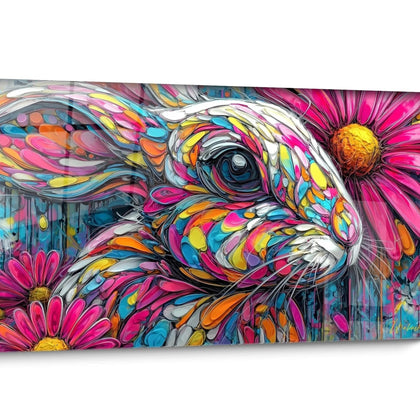
 Colorful rabbit painting - Psychedelic floral harmony - color gone wild edition273,90 €
 Llama with sunglasses painting - Psychedelic explosion - mad color edition273,90 €
 Psychedelic Cat Painting - Hypnotic Eye - Wild Color Edition273,90 €
 Psychedelic Lion Wall Art - Colorful Explosion - Wild Color Edition228,90 €
 Psychedelic goat painting - Cosmic colorful vision - mad color edition273,90 €
Explore further
In Colorful Crazy Animals Wall Art


All about Colorful Crazy Animals Wall Art
- Colorful Animal Wall Art Presentation
- Animal Color Universe
- Visual Dynamism for Family Spaces
- Animal Decorative Expressivity
The colorful animal wall art radically transforms your interior atmosphere by combining the vitality of wildlife with an audacious chromatic explosion. These large-scale wall creations capture the wild essence of fauna through a multicolored artistic prism that transcends conventional naturalistic representations. Intended for generous spaces seeking an energetic focal point, these psychedelic animal paintings reinvent wall decoration by offering a vibrant alternative to traditional compositions. Each artwork celebrates animal majesty from a contemporary angle where saturated hues dialogue with organic forms to create immediate visual impact.
Polychrome Explosion and Animal Representation
The colorful animal wall art establishes itself as an aesthetic revolution in the world of contemporary wall decoration. Unlike classical zoological illustrations that prioritize naturalistic fidelity, these wall compositions exploit an unleashed chromatic palette to magnify animal presence. Acidic tones overlap with neon nuances, creating striking contrasts that transform each depicted creature into a genuine visual manifesto.
Which animal species benefit most from this intense chromatic treatment?
Majestic felines like lions and panthers gain symbolic power when their manes or coats are adorned with fuchsia, turquoise and bright yellow gradients. Exotic birds find a second decorative life when their naturally colored feathers are transcended by fluorescent blocks that amplify their tropical character. Imposing mammals such as elephants or rhinoceroses acquire an unexpected pop art dimension under the effect of multicolored stripes crossing their monumental silhouette.
Psychology of colors applied to decorative fauna
The association between representative animals and exuberant chrominance generates specific emotional resonances. A wolf in violet and orange tones simultaneously evokes primitive savagery and artistic avant-garde, creating stimulating visual tension for creative spaces. Primates treated in rainbow gradients bring a sophisticated playful touch, particularly suited to family living rooms seeking to reconcile dynamism and refinement. This uninhibited chromatic approach frees animal representations from their documentary context to elevate them to the rank of decorative icons bearing positive energy.
Complementarity with other multicolored artistic expressions
These animal compositions are part of an expanded family of works exploiting chromatic saturation as a creative principle. For collectors appreciating this uninhibited visual approach, exploring a colorful abstract wall art enables creating coherent wall dialogues where organic and geometric forms share the same colorimetric intensity. This decorative strategy promotes visual circulation between different zones of the same space while maintaining aesthetic unity founded on chromatic exuberance.
The monumental formats of these wall creations impose an architectural presence that visually restructures interior volumes. A large-scale psychedelic animal painting creates an immersion effect comparable to a contemporary mural, transforming a neutral wall into a portal to a fantastic universe where nature meets pop imagination.
Designing Energizing Living Spaces with Colorful Fauna
The integration of colorful animal wall art into a domestic environment addresses precise decorative objectives that exceed mere wall ornamentation. These large-scale artworks function as ambiance catalysts, particularly effective in family spaces seeking to stimulate creativity and intergenerational exchanges. A living room equipped with a composition depicting a panda in electric pink and blue tones immediately generates a welcoming and uninhibited atmosphere.
How do these animal representations transform spatial perception?
Large-scale multicolored animal formats create unexpected depth effects through chromatic stratification. An elephant treated in superpositions of magenta, cyan and solar yellow attracts the gaze toward successive visual planes, perceptually increasing room volume. This property proves valuable in square or rectangular spaces lacking architectural relief, where the painting becomes the primary structuring element.
Functional zoning through chromatic animality
Animal compositions with unbridled colors excel at defining activity zones within open spaces. A dining area can be visually defined by a gorilla in green and violet tones suspended above the furniture, creating psychological intimacy without physical partitioning. Reading corners benefit from an owl treated in acidic pastel gradients that establishes a concentrated atmosphere while maintaining playful character accessible to younger household members.
These wall artworks perfectly meet the needs of families seeking large-scale decorative paintings capable of visually withstanding daily agitation. Their chromatic complexity naturally masks micro-traces of wear while maintaining their aesthetic impact over time.
Furniture association strategies with psychedelic fauna
Contemporary furniture with clean lines forms the ideal partnership with these colorful animal explosions. Modular sofas in solid pearl gray or natural linen fabric allow the painting to monopolize visual attention without chromatic competition. Light natural wood furniture creates an appeasing organic counterpoint that balances the intensity of the animal mural. For bolder interiors, accent chairs picking up a secondary hue from the painting establish sophisticated chromatic echoes throughout the space.
Play spaces for children find in these representations a decorative solution that is intellectually stimulating. A multicolored lion or rainbow shark feeds children's imagination while offering artistic quality appreciated by adults, avoiding the aesthetic divide frequently found in rooms dedicated to the younger generation.
Artistic Expressivity and Contemporary Animal Symbolism
The colorful animal wall art transcends its decorative function to become a vector of personal expression and cultural positioning. These wall creations are part of an artistic lineage that reinterprets animal representation codes by freeing them from academic conventions. Owning such a work signals a contemporary sensibility open to crossovers between popular culture and scholarly artistic references.
What message does choosing a specific animal in unleashed chromatic version convey?
Selecting a fox in neon orange and deep mauve tones expresses identification with values of adaptability and cunning intelligence, reinterpreted through an optimistic aesthetic prism. A polar bear treated in technicolor defies representational conventions while subtly evoking environmental concerns through the gap between its natural icy representation and its blazing incarnation. These personalized totem animals allow owners to display their symbolic affinities without resorting to conventional figurative codes.
Emotional impact of color-creature associations
Decorative neuropsychology demonstrates that certain animal-chrominance combinations generate amplified emotional responses. An eagle in golden and purple gradients simultaneously stimulates feelings of freedom and nobility, creating an inspiring climate in home offices. Aquatic creatures like jellyfish or tropical fish, when rendered in electric blue and bubblegum pink gradients, bring a paradoxical dynamic serenity particularly sought in modern master bedrooms.
These large-scale animal wall artworks function as conversation triggers during receptions. Their unusual character naturally invites commentary and impression sharing, facilitating social interactions in reception spaces. This relational dimension adds social use value to intrinsic aesthetic qualities.
Perceptual evolution and renewed visual engagement
Unlike monochrome or two-tone compositions that quickly reveal their entire visual content, multicolored animal paintings offer renewable perceptual richness. Depending on natural lighting varying throughout seasons and hours, different chromatic layers emerge in turn. A tiger treated in superpositions of turquoise, coral and lemon reveals unexpected nuances under the raking morning light, then deploys other chromatic depths under noon zenith lighting. This perceptual mutability maintains visual interest over time, avoiding the aesthetic saturation frequent with static décor.
Where to place colorful animal wall art to maximize decorative impact?
Prioritize main walls facing room entrances, where the painting benefits from immediate visibility creating a memorable surprise effect. Spaces above central sofas or behind bed headboards also offer strategic locations where the artwork structures the complete arrangement.
Are these paintings suitable for minimalist or Scandinavian interiors?
Absolutely, they create precisely the dramatic focal point that stripped-down aesthetics seek. In a minimalist environment with neutral tones, an explosive animal painting brings the dose of personality and boldness that prevents coldness, while respecting furniture simplicity principles.
How to maintain colorful animal wall art to preserve its chromatic brilliance?
Biweekly dusting with a dry microfiber cloth generally suffices. Avoid prolonged direct sun exposure which can gradually alter certain intense pigmentations. For imposing formats, light annual cleaning with a product specific to printed surfaces maintains original saturation.


