









Colorful Black and White Zebra Wall Art
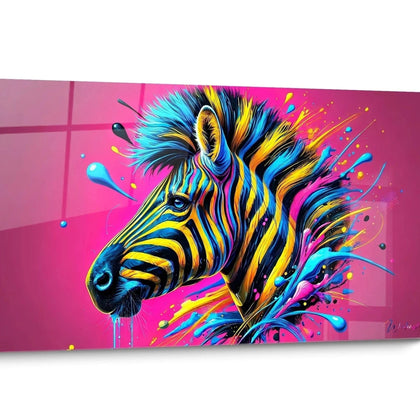
Our Zebra Painting Colorful Black and White collection celebrates the majesty of the wild animal through a bold artistic interpretation. These wall artworks play on the powerful contrasts between classic black and white, enhanced with splashes of contemporary colors. Perfect for contemporary zebra wall decorations, these creations bring a wild touch and elegance to your interior. Each painting artistic zebra colorful transforms your space into a modern gallery, blending refinement and animal character.
 Zebra Serenity Monochrome Painting - Zebra Edition273,90 €
 Burden in Black and White Canvas - Abstract Surrealism Edition273,90 €
 Simplicity Striped Canvas - Zebra Animals Edition273,90 €
 Striped Harmony Canvas - Zebra Animals Edition273,90 €
 Striped Elegance Canvas - Animals Edition273,90 €
Explore further
In Colorful Black and White Zebra Wall Art



All about Colorful Black and White Zebra Wall Art
- Colorful Zebra Wall Art Black and White Presentation
- Two-Tone Striped Decor
- Contrasted Animal Art
- Large Format Visual Impact
The colorful zebra black and white wall art represents a bold fusion between monochrome elegance and chromatic energy. This large-format mural artwork transforms the emblematic savanna animal into a genuine contemporary artistic statement, where the zebra's natural stripes become a canvas for vibrant and saturated hues. Unlike traditional exclusively two-tone representations, this interpretation integrates strategically placed color nuances that dialogue with the iconic black and white contrast of the wild equine. Perfectly suited to modern interiors seeking a dramatic focal point, this type of wall decoration combines the sophistication of monochrome with the emotional intensity of color, thus creating a rare and captivating visual balance for demanding contemporary living spaces.
The Strategic Alliance of Monochrome and Color in Zebra Art
The colorful zebra black and white wall art is based on a bold aesthetic principle: preserve the powerful graphic identity of zebra stripes while infusing chromatic accents that awaken the composition. This enriched two-tone approach transforms each stripe into an expression opportunity, where touches of electric blue, incandescent orange or deep purple punctuate the natural rhythm of black and white bands.
How do color touches redefine the perception of zebra stripes?
In large-format murals, the selective insertion of colors on certain stripes creates exceptional visual depth. Vibrant hues instantly attract the eye to specific areas of the coat, generating a dynamic visual journey that the eye naturally follows. This technique transforms a simple animal representation into an emotional map, where each color conveys different intensity depending on its saturation and placement.
Psychology of chromatic contrasts in domestic environments
The neurological impact of a colorful zebra black and white wall art differs fundamentally from either entirely monochrome or fully colored work. The brain processes simultaneously the rigorous graphic structure of the stripes and the punctual chromatic explosions, creating balanced visual stimulation. This duality is particularly suited to creative workspaces or contemporary living rooms where visual energy must be present without becoming oppressive.
Typological variations of color insertions
Some compositions favor subtle gradients that progressively tint the stripes from pure white toward colored pastels, while others opt for bold splashes of saturated colors that starkly contrast with the monochrome base. Premium versions sometimes use layering techniques where colors appear to show through beneath the black stripes, creating a three-dimensional depth effect. To discover different chromatic approaches to this theme, explore our colorful zebra wall art collection which presents various interpretations of this artistic fusion.
Adaptation to existing decorative palettes
The strategic advantage of this category lies in its chromatic adaptability. An interior dominated by gray tones will benefit from a model incorporating gold or copper touches, while a minimalist Scandinavian environment will be enriched by versions with turquoise or powder pink accents. The black and white structure guarantees visual coherence, with colors serving as harmonic bridges to surrounding decorative elements.
The Zebra as Medium for Contemporary Graphic Expression
Beyond its animal dimension, the colorful zebra black and white wall art establishes itself as an artistic medium exploiting the unique optical properties of natural stripes. This organic geometry offers a rhythmic structure that few other animal subjects possess, transforming each representation into a genuine visual score where monochrome silences and chromatic accents alternate.
The natural architecture of stripes as artistic foundation
The zebra's vertical bands create an upward movement that visually amplifies ceiling height, particularly effective in spaces with standard proportions. Unlike horizontal patterns that widen, these lines generate a vertical dynamic that artists strategically exploit by orienting the animal. A head turned upward accentuates perceived elevation, while a profile posture stretches the space laterally.
Why does the zebra surpass other animals for enriched two-tone compositions?
The regularity of zebra stripes offers a predictable canvas where color variations can be inserted without compromising immediate subject recognition. A lion or elephant does not possess this intrinsic graphic structure that allows systematic alternation between neutral and colored zones. This alternation creates a hypnotic visual rhythm that the eye naturally follows, generating prolonged observation time rare in wall decoration.
Selective colorization techniques and their perceptual effects
Premium versions use masking techniques where only certain stripes receive color treatment, creating secondary patterns within the zebra structure. This approach generates dual reading: a global animal perception from a distance, then progressive discovery of chromatic subtleties upon close approach. This depth of interaction perfectly suits spaces of passage where the artwork will be observed from different angles and distances.
Impact of warm versus cool tints on spatial ambiance
A colorful zebra black and white wall art incorporating reds and oranges injects stimulating energy ideal for social spaces, while versions with blue and violet accents establish a contemplative atmosphere suited to bedrooms or libraries. This emotional versatility allows adjusting the artwork's psychological impact according to room function, with the black and white skeleton ensuring stylistic coherence regardless of chosen palette.
Monumental dimensions and sculptural presence
Formats exceeding 120 centimeters transform the artwork into quasi-wall sculpture, where colored stripes acquire almost tactile materiality. At this scale, each band becomes an architectural element that dialogues with the structural lines of the room – baseboards, door frames, wall junctions. This monumentality is particularly suited to lofts, duplexes or commercial spaces requiring affirmed visual presence without resorting to complex three-dimensional installations.
Integration Strategies to Maximize the Impact of Colored Zebra Contrast
Installing a colorful zebra black and white wall art in a contemporary environment requires fine understanding of the visual dynamics created by interaction between the striped structure and existing architectural elements. Unlike uniformly colored works, this category generates optical interference with certain decorative patterns that should be anticipated to optimize overall harmony.
Which chromatic environments amplify the power of zebra contrast?
Solid wall backgrounds constitute the ideal canvas for these compositions, whether immaculate whites that exalt black stripes and color touches, or anthracite grays that reverse visual hierarchy by bringing forward white areas. Walls with neutral tints – beige, taupe, greige – create a soothing context where the artwork's dynamism expresses itself without visual competition. Conversely, patterned wallpapers or textured walls generate counter-productive visual saturation that dilutes the impact of the main subject.
Management of reflections and ambient luminosity
Large format finishes drastically influence perception of colors integrated into stripes. Matte surfaces absorb light and intensify saturated hues, creating velvety depth particularly effective in spaces with indirect lighting. Semi-gloss versions capture and reflect natural light, generating subtle chromatic variations depending on time of day that animate the artwork with organic life mimicking the changing savanna environment.
Furniture associations and compositional balance
A sofa with clean lines in tones coordinated to the artwork's color accents creates sophisticated thematic continuity. If the artwork incorporates turquoise touches, cushions in this same shade establish chromatic dialogue without excessive redundancy. Furniture with marked geometric forms – modular shelving, linear consoles – echo the graphic structure of stripes, while organic shapes – rounded armchairs, curved coffee tables – offer softening counterpoint that tempers visual intensity.
What decorative density around a zebra-striped masterpiece?
The principle of visual breathing applies fully: a large-format colorful zebra black and white wall art requires a decompression space of at least 40 centimeters on its immediate peripheries. This neutral zone allows the eye to fully capture the composition without parasitic distractions. Adjacent decorative elements – photo frames, mirrors, lighting fixtures – must be proportionally smaller to maintain visual hierarchy and avoid attentional competition.
Orientation and optimal observation perspectives
The viewing angle radically transforms perception of colored stripes. Positioning facing main circulation maximizes initial impact, with the artwork serving as visual anchor upon entering the space. Lateral placement creates progressive discovery effect, with stripes gradually revealing themselves during movement. In multifunctional spaces, this second approach maintains visual interest without imposing constant presence potentially fatiguing upon prolonged exposure.
Is colorful zebra black and white wall art suitable for children's bedrooms?
Absolutely, provided versions with soft colors are prioritized – pastels, desaturated hues – rather than violent contrasts. Stripes stimulate visual development while introducing educational animal themes. Medium formats (80-100 cm) offer significant presence without dominating resting space, and color accents can coordinate with bed linens or accessories to create reassuring thematic coherence.
How to maintain vivid colors of colorful zebra black and white wall art exposed to natural light?
Current printing technologies guarantee extended UV resistance, but positioning avoiding direct sun exposure during peak intensity hours (11am-4pm) optimally preserves chromatic saturation. Anti-UV glazing on adjacent windows provides ultimate protection for discerning collectors. Monthly dusting with dry microfiber cloth maintains surface brilliance without altering pigments.
Does colorful zebra black and white wall art work in industrial interiors with raw materials?
This association generates particularly successful stylistic contrast: the organic softness of the animal tempers the rawness of concrete, steel or exposed brick, while the graphic structure of stripes echoes industrial geometry. Color touches inject the emotional warmth often absent from raw material spaces, creating balance between architectural rigor and natural vitality characteristic of the most accomplished contemporary urban lofts.


