



Minimalist Colorful Zebra Wall Art
Our Colorful Zebra Painting Minimalist collection celebrates wild elegance through a refined contemporary aesthetic. These artistic creations combine the majesty of the zebra with a bold color palette and clean lines. Perfect for enhancing a modern living room, a design office, or a trendy bedroom, these works bring dynamism and sophistication to your decor. The alliance of zebra art minimalist and vibrant colors contemporary design creates a striking visual impact that transforms each space into a modern art gallery.
 Simplicity Striped Canvas - Zebra Animals Edition273,90 €
 Golden Stripes Wall Art - Zebra Animals Edition273,90 €
 Striped Harmony Canvas - Zebra Animals Edition273,90 €
 Striped Elegance Canvas - Animals Edition273,90 €
Explore further
In Minimalist Colorful Zebra Wall Art



All about Minimalist Colorful Zebra Wall Art
- Description Wall Art Colored Zebra Minimalist
- Refined Aesthetics and Chromatic Impacts
- Visual Balance and Graphic Variations
- Decorative Integration and Characteristics
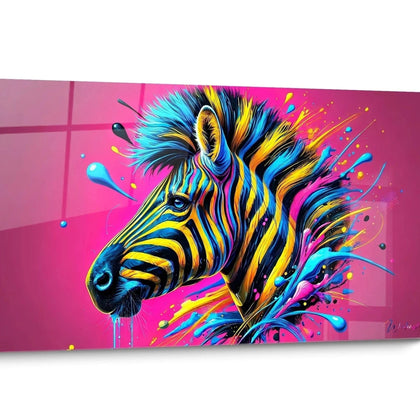
A wall art colored zebra minimalist represents the perfect alliance between the symbolic strength of the wild animal and the contemporary sobriety of refined design. This graphic variation favors essential lines, clear surfaces and a reduced but striking color palette, creating a wall artwork with maximum visual impact with a remarkable economy of means. Unlike saturated or complex representations, this minimalist approach to the colored zebra focuses on the precision of the line, the balance of masses and the accuracy of color touches to capture attention without overloading the space. Each visual element is thought for its essential contribution to the whole, eliminating all superfluous decorative elements in favor of a rigorous and breathable composition. The emblematic animal is thus stylized, reduced to its fundamental characteristics while retaining its evocative power and natural dynamism.
The Minimalist Expression of the Zebra in Contemporary Decoration
What is the graphic philosophy of the minimalist colored zebra wall art?
The minimalist colored zebra wall art is based on a fundamental principle: to say more with less. This graphic approach eliminates complex textures, multiple gradients and ornamental details to retain only the structural essence of the animal. The zebra's characteristic stripes are simplified into sharp geometric bands, creating a hypnotic visual rhythm without ever tilting into decorative confusion. The silhouette can be reduced to a refined profile, a stylized frontal portrait or even a partial abstraction where only a few lines evoke the animal.
This formal economy allows chromatic accents to deploy all their expressive power. A single electric blue running through the composition, a golden touch on the eye or muzzle, a monochrome background violently contrasting with the natural black and white: each colored intervention becomes a calculated visual event. Negative space occupies a predominant place, allowing the eye to breathe and reinforcing the impact of graphically dense areas. To discover other creative approaches, our wall art zebra colored collection presents various visual interpretations ranging from absolute minimalism to richer compositions.
The specific visual codes of chromatic animal minimalism
The minimalist approach to the colored zebra is part of a distinct visual vocabulary where each formal choice has a precise meaning. The original black-and-white contrast of the animal is voluntarily unbalanced by the measured introduction of bright hues: a copper orange, a fuchsia pink, an emerald green applied sparingly. These chromatic touches do not seek to reproduce reality but to create emotional anchor points, guiding the gaze through the composition according to a controlled visual path.
The geometrization of forms constitutes another essential marker: the organic curves of the animal's body are rationalized, the volumes simplified into successive planes, the stripes transformed into repetitive modules. This graphic systematization brings the work closer to contemporary graphic design and geometric abstraction, while maintaining the immediate recognition of the subject. The large format amplifies this tension between formal simplification and monumental presence, transforming the wall into a support for an assumed aesthetic statement where less is truly more.
Psychological impacts of colored visual purification
A colorful minimalist zebra painting generates a distinct psychological effect compared to saturated or realistic representations. Formal purification induces a sense of mental clarity, spatial order, and intellectual sophistication. Graphic breathing spaces, pure color blocks, and clean lines create a visually soothing environment despite the dynamism inherent in the subject. This productive contradiction between the suggested wild energy and the displayed formal calm constitutes the heart of the aesthetic experience.
Chromatic accent interventions function as dosed visual stimuli, present enough to avoid monotony but rare enough to never tip into decorative agitation. This color economy allows for a harmonious integration into minimalist interiors where every visual element counts, where decorative accumulation is proscribed in favor of a rigorous selection of meaningful objects.
Graphic Compositions and Chromatic Balance of the Zebra Minimalist Painting Zebra Minimalist
How do visual masses organize themselves in a minimalist composition?
The spatial organization of a colorful minimalist zebra painting obeys rigorous compositional principles where each element occupies its position for precise structural reasons. The asymmetrical distribution of masses creates a dynamic tension: the subject can be decentered, cut by the edges of the frame, or fragmented into several discontinuous zones. This deliberate break with academic centering generates a visual movement, a sensation of captured instantaneity that contrasts with the overall formal rigor.
The zebra's stripes, stylized as regular geometric modules, establish a predictable visual rhythm that chromatic accents punctuate unexpectedly. A bright red segment interrupting the black-and-white sequence, a turquoise zone negatively occupying the background, golden lines highlighting certain curves: these color interventions function as musical counterpoints, introducing variety into the repetition. The large format allows for the development of these scale games where purified zones coexist with intense graphic concentrations, creating a layered visual reading.
Reduced color palettes and their maximum expressive power
Chromatic minimalism imposes a drastic selection of hues used, generally limited to two or three colors beyond the fundamental black and white. This voluntary restriction amplifies the impact of each color choice: a lemon yellow becomes a pure visual event, a Klein blue affirms a quasi-spiritual presence, a millennial pink infuses instantly identifiable modernity. The purity of the blocks, without modulation or texture, reinforces this raw power of color used for itself.
Monochromatic harmonies constitute a frequent approach: tonal variations of a single blue from the palest to the most saturated, gray gradient enriched with a single orange accent, a camouflaged green traversed by a golden thread. These controlled color progressions create an immediate visual coherence while maintaining enough variation to avoid flatness. The absence of blurred transition, replaced by sharp boundaries between colored zones, accentuates the graphic and contemporary character of the whole, visual dialogue between formal rigor and chromatic vitality.
Which spaces particularly benefit from a colorful minimalist zebra?
Contemporary design environments with a dominant neutral tone find in the colorful minimalist zebra painting the ideal visual accent. A Scandinavian interior with white walls and light wood furniture perfectly welcomes this graphic punctuation that brings personality without breaking the purified balance. Industrial lofts with generous volumes and raw surfaces gain a sophisticated dimension thanks to this measured artistic intervention that softens the material brutality without denying it.
Contemporary professional spaces are precisely looking for this balance between affirmed presence and formal discretion: waiting rooms of architecture firms, halls of technology companies, conceptual fashion boutiques. The large format transforms these passageway areas into memorable visual experiences while maintaining the required professional sobriety. Private offices of executives who prefer an inspiring work environment without excessive distraction find in this colorful minimalist approach the perfect aesthetic solution, controlled and elegant affirmation of personality and assumed contemporary elegance.
Distinctive Features and Integration of the Colorful Minimalist Zebra
What are the graphic techniques specific to minimalist animal art?
Geometric stylization constitutes the fundamental technique: the zebra's organic curves are rationalized into linear segments, volumes translated into successive planes, creating an almost architectural reading of animal anatomy. The naturally irregular stripes are standardized into parallel bands of uniform thickness, establishing a hypnotic repetitive pattern. This graphic systematization can go as far as partial pixelation, fragmentation into geometric facets, or reduction to an almost symbolic pictogram.
The strategic use of positive-negative contrast amplifies the visual impact: inversion of light and dark areas, use of unpainted space as an active compositional element, games of figure-ground ambiguity where the zebra emerges and dissolves simultaneously into its environment. Chromatic accents intervene according to various logics: transparent overprinting modifying the perception of stripes, controlled dripping traversing the composition, a pure geometric area of saturated color contrasting with the adjacent black-and-white, creating a productive visual tension between abstraction and figuration.
Optimal decorative associations for aesthetic coherence
The ideal furniture environment for a colorful minimalist zebra painting favors clean lines, noble materials, and discreet textures. A sofa with simple geometric shapes in solid velvet, a marble coffee table with black veining echoing the graphic game, sculptural lighting in matte black metal: each element reinforces the minimalist aesthetic without visual competition. Limited reflective surfaces avoid the optical multiplication that would compromise the readability of the work.
Vegetal elements bring a welcome organic counterpoint: a lyrata ficus with large structured leaves, birch branches in a transparent cylindrical vase, a solitary columnar cactus. This controlled natural presence dialogues with the stylized animal representation without introducing decorative confusion. The accompanying textiles ideally take up the restricted color palette: cushions in the exact shades present in the work, a monochrome plaid creating a visual resting zone, a minimal geometric pattern rug extending the formal language of the wall composition, a coherent decorative orchestration where each element reinforces the overall impact.
Monumental dimensions and controlled architectural presence
The large format of the colorful minimalist zebra painting transforms the work into an architectural element in its own right, visually structuring the space rather than simply decorating it. With generous dimensions, the composition acquires an imposing physical presence that redefines the perceived proportions of the room. A vertical format accentuates the ceiling height, creating a sensation of elevation and spatial nobility. A panoramic horizontal format visually stretches the width of the wall, particularly effective behind a sofa or in a hallway to amplify the perceived depth.
This controlled monumentality avoids visual crushing: despite its imposing size, the work remains breathable thanks to the compositional voids, pure color planes, and structural clarity. The eye can embrace the whole immediately while discovering the graphic subtleties during close observations. This double reading, macroscopic and microscopic, enriches the daily experience and prevents visual fatigue, a monumental work that remains stimulating without ever becoming overwhelming.
Is a colorful minimalist zebra painting suitable for small spaces?
Paradoxically, a large colorful minimalist zebra painting can perfectly function in a reduced space by creating a sense of visual depth. The formal purification and breathable areas avoid saturation, while the monumental presence diverts attention from the actual physical limitations of the room, transforming a spatial defect into a bold decorative asset.
How to choose the color palette of a minimalist zebra painting according to your interior?
The color selection should either create harmony by taking up tones already present in the space, or generate a deliberate contrast that energizes a too neutral environment. For an interior with warm beige and wood tones, a minimalist zebra with turquoise or blue accents brings freshness. For a gray and white space, touches of coral or mustard yellow infuse vitality without breaking the balance.
What is the visual durability of a colorful minimalist zebra painting in the face of trends?
The minimalist approach transcends ephemeral trends through its timeless formal rigor. Unlike overloaded styles quickly dated, the graphic purification and reduced palette maintain their aesthetic relevance through decorative evolutions. The classic animal subject combined with a contemporary treatment ensures remarkable decorative longevity, a durable aesthetic investment rather than a trendy purchase.


