

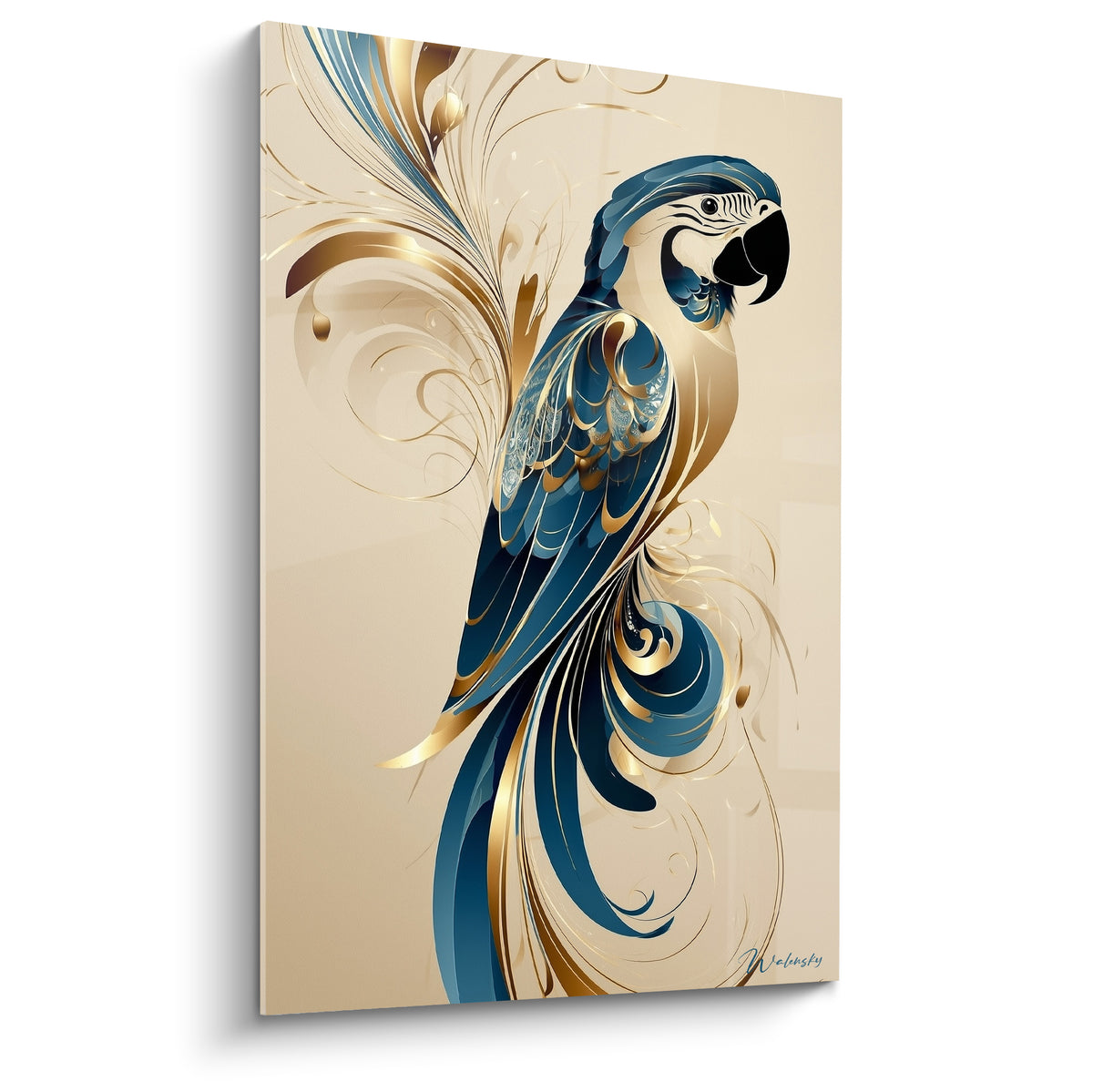






How to “express your personality” without changing everything?
October 11, 2025 · 19 min read · by Walensky
The cushions you’ve changed three times are lying in a corner, the throw blanket meant to “brighten up” the atmosphere looks more cluttered than anything else, and that famous vase everyone advised you to buy seems completely out of place on your shelf.
You’ve tried following advice found on Pinterest, bought some “trendy” accessories, but in the end, your interior still looks like an impersonal catalog that doesn't tell your story.
It's normal to feel lost: most decor tips assume you’re starting from scratch, when in reality, we have to work with what already exists and find solutions that integrate harmoniously.
By the end of this article, you’ll know exactly how to imprint your personal style into your current space, with simple but precise gestures that will transform the atmosphere without upsetting your budget or daily routine.
Why does your decor personality matter so much now?
In a world where we spend more time at home than ever, our interior has become our main refuge. Waiting for “the right moment” to express who you really are is like wearing a mask in your own house. Imagine the energy you lose every day by not feeling aligned with your environment - that subtle but constant sensation that something’s wrong.
💡 Personal experience : Sarah, 34, had been living with the previous owner's beige sofa for two years and never really managed to relax at home. A simple colorful painting above the sofa and two cushions in her favorite tones were enough to transform her relationship with her living room - she now hosts parties that she wouldn’t have dared to propose before.
Conversation with a decor expert
The golden rule of successful personalization: Your personality doesn't oppose what already exists, it reveals it. Like lighting that transforms the perception of a room, your personal choices will give a new reading to your space in just 2 to 4 weeks.

Our highlight
Big Bang Artistic Dazzling Wall Art - Limited Edition🥇
233,90€
Discover this artwork →Understanding What Really Prevents You From Expressing Yourself
You hesitate before each decor purchase, you circle your living room knowing that something is missing but not knowing what, or you accumulate small objects without a guiding thread hoping magic will happen.
What's really happening is that you are trying to impose your personality on a space without understanding its existing visual language. It’s like trying to sing a duet without listening to the basic melody.
Imagine a chef who wanted to add his favorite spices to a dish without first tasting the base: the result would be cacophonous. Your interior works exactly the same - you must first understand its current personality before infusing yours.
The fear of "too much" that paralyzes your choices
Contrary to what one might think, it's not boldness that creates visual clutter, but constant hesitation. When you don’t dare affirm your choices, you accumulate half-measures that neutralize each other.
It’s like trying to say something important while whispering: no one hears you. Your interior needs a few clear statements rather than multiple timid suggestions.
This fear prevents you from experiencing moments of daily happiness: that satisfaction of coming home and saying "here, this is really my place", that natural pride when you receive guests who spontaneously compliment your taste.
🔍 Quick test: Look at your main room and count how many items really make you smile when you see them. If it's less than 3, your personality is still looking for its place - and that’s exactly what we’re going to fix.
The illusion of the "uniform style" that extinguishes your uniqueness
Many people think they have to choose ONE style and stick to it religiously. This approach creates interiors technically correct but emotionally empty, like a beautiful showcase that tells no personal story.
Your personality is multifaceted: you can love vintage softness AND contemporary boldness. Wanting to confine it to a single category is like always wearing the same outfit for fear of seeming inconsistent.
This rigidity deprives you of that creative freedom that makes an interior endearing: those little assumed contradictions that reveal your inner richness and create a unique atmosphere that no catalog can reproduce.
The trap of waiting for the "perfect moment"
You’re putting your desires on hold, thinking you need to change the sofa first, repaint the walls, or have more budget. It's like waiting to lose 10 kilos before buying clothes you like: you deprive yourself of present enjoyment for a hypothetical future.
In reality, your space can reveal your personality right now with the right strategic touches. An interior that reflects you isn't a final destination; it’s a living process that evolves with you.
This wait makes you miss what matters: the positive psychological impact of a space that emotionally nourishes you daily, the creative energy that is born when you truly feel at home.
The 3 signals your personality is looking for its place:
- You photograph the outside more often than your interior: Subconsciously, you don't find your space representative enough of who you are to share it. You’re more relaxed at some friends’ places than at yours: Their interiors express a personal coherence that puts you at ease, unlike yours, which leaves you in anticipation. You often postpone invitations: Deep down, you're not entirely proud of hosting in a space that doesn’t tell your story
What really makes the difference is when you stop asking everyone's opinion and trust your aesthetic instinct. Like a domino effect, this first assumed choice will unleash your creativity and give you the confidence for the following ones. You’ll recognize it easily: it’s that element to which your gaze naturally returns when you enter the room.
Universal rule of personalization: A single element that truly reflects you will have more impact than ten “correct” but neutral elements. Test it immediately: what’s the first thing you would change if you were sure it would work?
| ❌ Limiting belief | ✅ Liberating reality | 💡 Why it works | 🎯 Immediate benefit |
|---|---|---|---|
| You have to redo everything for it to be consistent | A strong element can reveal the entire spaceThe human eye seeks a visual anchor pointVisible transformation from the first additionMy tastes will clash with what already exists | Your tastes will create an enriching dialogueControlled contrast creates depthUnique atmosphere impossible to reproduceI don’t know if I have good taste | Your personal taste is your best assetAuthenticity touches more than perfectionIncreased self-confidence on a daily basisIt’s too risky to make a mistake | Mistakes can be adjusted, blandness is enduredA living interior evolves naturallyFreedom to experiment without pressure

The progressive method to reveal your personal style
Don't worry, we won't disrupt your daily life. This approach works like a photographic developer: your personality is already there, we will simply make it emerge layer by layer. In three logical steps, you will go from a neutral space to an interior that tells your story, with visible results from the first week.
🎯 Overview of your transformation: Step 1 - Identify your "visual signature" (the colors and shapes that move you), Step 2 - Create your first anchor points (the elements that will guide the eye), Step 3 - Harmonize the whole thing (connect your additions to what already exists). Each step gives you more creative confidence for the next.
Before buying anything, you need to identify that "visual language" that makes you vibrate. It's like discovering your vocal range before choosing a song: when you know your natural notes, everything becomes more fluid. This step avoids impulsive purchases that end up in cupboards and gives you that delicious clarity that people have who know exactly what they like.
What you need for this exploration
- A notebook or your phone: To capture your spontaneous visual emotions, not to make beautiful lists. The idea is to note what makes you react positively without thinking, like a visual diary. Avoid complex applications that turn the exercise into a technical chore. Your five favorite photos on your phone: Those that make you smile every time, not the most "successful" technically. These images reveal your natural emotional palette - the colors, atmospheres, energies that nourish you. Ignore "useful" or family photos, focus on those that touch you aesthetically. An object from your childhood that you still like: Even if it doesn't "go" with anything in your current decor, this object carries your original aesthetic DNA. It reveals your deep tastes, not influenced by trends or the opinions of others, and gives you valuable clues about your authentic style.
How to identify your true visual triggers
The spontaneous gaze exercise: For a week, note what attracts your eye positively in the street, magazines, at others' homes. Don't try to analyze, just to record your emotions. The goal is to bypass your mind that filters according to what it believes is "correct" and to rediscover your natural aesthetic instinct.
⏱️ Time: 5 minutes per day | ✅ Successful when: You have noted 15-20 items without forcing yourself | ⚠️ Attention: Do not judge your tastes - note even what seems "bizarre" to you, it is often the most revealingDecoding your favorite photos: Look at your 5 favorite photos and identify what comes back: warm or cool dominant, straight or curved lines, clean or rich spaces. These unconscious patterns reveal your personal visual grammar. It's your compass for all your future decor choices.
⏱️ Time: 15 minutes | ✅ Successful when: You identify 2-3 clear constants | ⚠️ Attention: Look for similarities in atmosphere, not subject - a sunset photo and a portrait can share the same softness
The witness object test: Place your childhood object in different places in your main room and observe where it seems "in its place". This exercise reveals what type of environment highlights your natural sensitivity: rather staged or integrated, rather focal point or discreet detail.
⏱️ Time: 10 minutes | ✅ Successful when: A position makes you smile naturally | ⚠️ Attention: Trust your first impression, not practical logic
✨ Validation of your visual signature: You should be able to describe in 2-3 words the atmosphere that suits you (e.g., "modern softness", "warm energy", "natural elegance”). If it's blurry, repeat the photo exercise - your signature is there, it just needs a little more kind attention. Once found, you will see that your future choices will flow effortlessly.
— Our selection


OUR RECOMMENDED PRODUCTS
Step 2: Create your first personal anchor points
Now that you know your visual language, it's time to translate it concretely into your space. This step is more rewarding because you will see your tastes take shape and notice their immediate impact. It’s the moment when your interior really starts to speak to you and when your guests feel they are discovering something about you.
Your transformation tools
- An artistic element that moves you: Painting, photograph, sculpture... The important thing is that it translates your visual signature and that you want to look at it every day. This item will become your "visual tuning fork" - everything else will naturally harmonize with it. Avoid neutral decorative art that tells nothing. A personal textile touch: Cushion, throw, rug that picks up your color palette or preferred textures. Textiles bring the tactile emotion and human warmth that furniture alone cannot create. It should make you want to settle in comfortably.
- A functional object with character: Lamp, vase, mirror that combines utility and aesthetics in your style. This object proves that you can be practical AND have personality - it transforms everyday gestures into small aesthetic pleasures.
Strategic installation of your visual anchors
Positioning of your main artwork: Place it facing the first view when entering the room, at eye level (150-160cm from the floor for the center of the work). This position gives it status as an invitation - it immediately announces the atmosphere you want to create and guides the eye towards your personal universe.
⏱️ Time: 20 minutes | ✅ Successful when: The artwork naturally attracts the gaze without dominating the room | ⚠️ Attention: Avoid "hiding" it in a corner out of modesty - it must assume its role as a visual guide
Creating a textile cocoon: Arrange your textiles to create a comfortable zone that invites you to settle in. The idea is to materialize your visual signature in a tactile and warm way. These elements transform the space into a personal refuge where you feel totally yourself.
⏱️ Time: 15 minutes | ✅ Successful when: This zone makes you want to spontaneously sit down in it | ⚠️ Attention: Arrange them for actual use, not for the photo - comfort takes precedence over visual effect
Integrating the character object: Place it where it will be naturally used while being visible. It must prove that function and beauty can coexist in your universe. This object humanizes the space by showing that your aesthetics accompany your daily life.
⏱️ Time: 10 minutes | ✅ Successful when: It embellishes a daily gesture | ⚠️ Attention: It must remain accessible, not just become decorative
🎯 Test of the impact of your anchors: Invite someone to your home or take a photo: do these elements tell something about you? If the person can guess a trait of your personality by seeing them, you've won. Otherwise, adjust their positioning or combination - the goal is for them to speak of you without betraying you.
Step 3: Harmonize and connect everything
This final step transforms your personal additions into a coherent ecosystem that dialogues with the existing. This is the level where you go from "someone who added their tastes" to "someone who masters their environment". The final result? A space that tells your story in a fluid and natural way, where each element finds its reason for being.
Ambient Connectors
- Visual Transition Elements: Small objects, books, plants that create colorful or formal links between your additions and the existing decor. They avoid a "collage" effect and create a harmonious conversation between your personality and the architecture of the space.
- Ambient Lighting: Accent lamps, candles, string lights that unify the atmosphere and highlight your personal choices. Lighting is your "mood corrector" - it can soften what is too sharp or energize what is too conservative.
- A Controlled Surprise Element: Something unexpected but consistent with your universe, which shows your ability to take assumed aesthetic risks. This element proves that you master your style to the point of being able to play intelligently with it.
Creating Your Personal Visual Ecosystem
Installing Visual Links: Arrange 3-4 small elements that subtly pick up the colors or shapes of your main anchors. These "visual echoes" create a rhythm in the space and prevent your personal additions from seeming isolated or plastered onto the existing decor.
⏱️ Time: 25 minutes | ✅ Success when: The eye naturally travels from one element to another | ⚠️ Attention: These echoes should be subtle - avoid systematic repetition which becomes heavy
Orchestrating Personalized Lighting: Create multiple light sources that highlight your personal choices and soften elements you cannot change. Lighting becomes your "real-time Instagram filter" that sublimates your visual signature.
⏱️ Time: 30 minutes | ✅ Success when: The atmosphere in the evening makes you smile spontaneously | ⚠️ Attention: Test different times of day - your lighting should be beautiful in the morning AND in the evening
Integrating Your Signature Element: Add this unexpected detail that shows your creative mastery - without overdoing it. It should surprise positively and make people want to know more about you. This is your "personal wink" that makes your interior memorable and endearing.
⏱️ Time: 15 minutes | ✅ Success when: It intrigues without shocking | ⚠️ Attention: One surprise element is enough - several would become clutter
✨ Final Harmony Test: Spend a full day in your transformed space and observe your spontaneous reactions. Do you feel more yourself? Does the space tell your story without shouting it? If so, you have succeeded in asserting your personality with elegance. Otherwise, adjust the intensities rather than questioning everything.
Personalized progression rule: You're ready for the next step when the current one feels natural and obvious. Never force the pace - your creative confidence builds gradually, like a muscle developed with kindness and patience.
Congratulations, you now master the subtleties of personal expression in a constrained space! These advanced techniques will give you that natural ease that people who seem to have a "gift" for decor have - while in reality, they are simply applying these universal principles with confidence.
🎨 Professional decorator's secret: The art of "visual breathing" - always leave empty space near your strong elements so that the eye can fully appreciate. It’s like silences in music: they give relief to notes. A painting cluttered with objects around it will lose 70% of its impact.
"What if I get tired of my choices after a few months?"
"I'm afraid of committing to a style and quickly getting bored, especially if I have invested in pieces..."
This fear is very human and reveals your emotional intelligence! In reality, when you choose according to your deep visual signature (and not according to a trend), you create a lasting attachment. It's like falling in love with someone for their deep qualities rather than their look of the moment. Moreover, the progressive method allows you to adjust along the way without questioning everything. Start small, observe your reactions, then confirm - it’s the secret of a decor that ages well with you.
💡 Anti-boredom test: Before any major purchase, live for a week with the image of the object placed in its future location. If you continue to love it after 7 days, your choice is emotionally solid.
— You may also like


Pitfalls to avoid to preserve harmony
Now that you know how to assert your style, let's protect your success from common mistakes that can ruin everything. These mistakes are tempting and normal - even experienced decorators sometimes make them! The important thing is to recognize them in order to avoid them.
- 🚫 Accumulation of "love at first sight" pieces that are not connected: You fall in love with an object and buy it impulsively, then another... In the end, you have lots of beautiful things that don't talk to each other. It’s like inviting wonderful people who don't know each other: the atmosphere remains artificial. Always take a photo of your space before buying and check that the new element dialogues with the existing one. 🚫 Trying to reproduce Pinterest exactly: You see a magnificent interior online and try to copy it at home. Problem: it wasn't telling your story but someone else’s. Result? A beautiful space but which leaves you emotionally cold. Get inspired by atmospheres, never by exact copies. 🚫 Over-explaining your choices: You justify each item by its price, origin, trend... This attitude reveals a lack of confidence that is felt in the space. A successful interior stands on its own; it doesn't need to be "defended". Assume your tastes without intellectualizing them.
- 🚫 Obsession with external opinions: You ask everyone around you for their opinion before each purchase. Too many conflicting opinions create confusion and dilute your personal vision. Your interior should please you first - it's you who live daily. Choose 1-2 trusted people with good taste, no more.
- 🚫 Changing too quickly when things don’t work immediately: A new item sometimes takes a few days to "settle in" visually and emotionally. Moving or constantly changing prevents this natural familiarization. Allow at least one week before definitively judging a change.
🔍 Anti-error control points: Each week, check that you smile spontaneously when returning home, that you want to spend time in your main space, that you are proud to receive someone unexpectedly, and that your choices always seem consistent with who you are. If any of these points are off, it's a signal of a necessary adjustment.
— In the same vein


Frequently asked questions about expressing your personality in decor
You can achieve visible results with €150-300 distributed intelligently: one artwork (60-120€), personalized textiles (40-80€), and small connectors (50-100€). The trick is to prioritize a strong element rather than several means. Start with what vibrates most - the effect will be immediate and motivating for the rest.
The first impacts are visible from the first week with a strong element well placed. For a complete transformation that makes you feel totally at home, allow 4-6 weeks applying the progressive method. The secret is not to do everything at once - your eye and emotions need time to integrate each change.
Authentic style has that rare quality of being recognizable without being aggressive. When you truly express who you are (and not a caricature of your tastes), people feel this sincerity and are touched, even if it's not their personal style. Test with someone you trust who knows you well - if they say "that’s you!", you’re on the right track.
Small spaces and rentals are even more receptive to this approach! Each personal element has a greater visual impact, and you don't need major renovations. Focus on removable elements: wall art, textiles, lighting, objects. A 25m² studio can express a stronger personality than a neutral large apartment.
That's a richness, not a problem! The key is to find the emotional "common thread" that connects your varied tastes: perhaps you always love human warmth, or discreet sophistication, or assumed originality? This emotional signature will naturally unify your eclectic choices and create that fascinating and endearing interior.
Your transformation: from a space endured to a cocoon that resembles you
In a few weeks, when you return home, you will feel that deep satisfaction of someone who finally finds themselves in their environment. Your guests will immediately notice this particular atmosphere that makes them want to stay, and they will surprise you with spontaneous compliments on your taste. This natural pride will definitively replace the vague discomfort you felt before.
More importantly, you will have developed that creative confidence that will allow you to evolve with your space over time. You will instinctively know what works for you, you will dare to make choices you never imagined before, and this assurance will reflect in other areas of your life - because someone who masters their environment naturally radiates.
Understanding your visual signature was the most delicate step - now that you have identified it, everything will flow easily. Start today by observing your space with your new eyes and identify the place that calls to you for your first personal gesture. Your interior is waiting to tell your story - it's up to you to give it the words.
🌟 Your first step towards authenticity: Your personal style already exists within you, we have simply given you the method to reveal it. Trust what you feel - it’s your most reliable compass for creating a space that nourishes you emotionally every day.
Also read: 💎 Read more articles on art and investment
</div
More selected pieces
Trace Artwork in Gold and Jade - Abstract Painting Edition
233,90€
Discover this artwork →Explore our collections


