

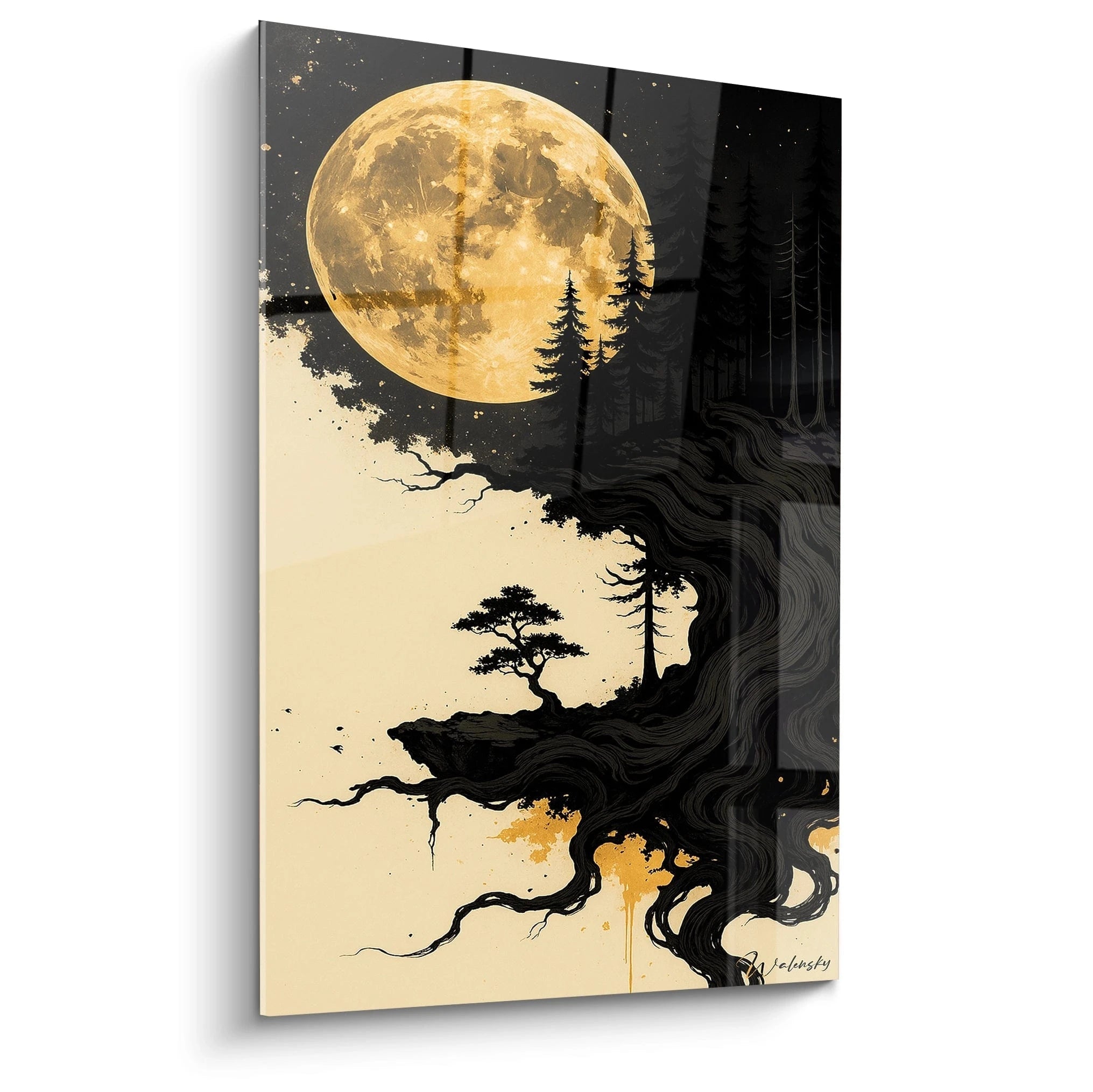






MicroLED e-ink screen artwork, new display artistic technologies
October 11, 2025 · 18 min read · by Walensky
You’ve been staring at your blank wall for months, searching for the perfect artwork that will transform your living room into an exceptional space. But every time you find a piece you like, it seems either too static or too energy-intensive for your ecological conscience.
You imagine this evolving work of art that adapts to your mood, the daylight, the seasons... A creation that combines the timeless elegance of a traditional painting with the subtle magic of modern technology.
You may have already tried classic LED screens, but they consume too much energy and emit that aggressive light that strains your eyes. Traditional digital frames lack that artistic presence you’re looking for.
This is perfectly normal: until recently, technology hadn't yet reached this point of perfect balance between technical performance and refined aesthetics. Innovations were either too energy-intensive or insufficiently high quality.
By the end of this article, you will master the new display microLED and e-ink technologies that are revolutionizing wall art, and you will know exactly how to choose the perfect screen to transform your interior into a modern and eco-responsible art gallery.
Why next generation artistic screens are redefining wall art today?
Digital wall art is no longer just a futuristic trend - it's an aesthetic revolution that is now imposing itself in the most demanding interiors. If you’re still waiting, you risk missing this unique opportunity to create a truly personalized living space before these technologies become mainstream and lose their exclusive character.
🎨 Testimony of a Parisian collector: "I installed my first e-ink artistic screen 6 months ago. My guests think I change my paintings every week! In reality, my microLED screen automatically adapts the works according to the ambient lighting and time of day. It has become the focal point of my living room, and my electricity bill hasn't even moved."
Conversation with a decor expert
The silent revolution is underway: Low-energy artistic screens now combine the elegance of a traditional painting with the flexibility of digital. Observable result: an interior that constantly renews itself, with energy consumption lower than a classic LED bulb.

Our highlight
In the Shadow of Giants Painting - Mountain Landscape Edition
233,90€
Discover this artwork →How to recognize when your wall decor needs to evolve?
You feel this decor fatigue when you come home, this lack of surprise in front of your always identical walls. Your guests no longer notice your decoration, and you yourself feel that your interior lacks that unique personality that makes the difference.
This isn't a problem of taste or budget - it’s simply that traditional wall art can no longer meet modern expectations for personalization and adaptability. The real solution lies in these new technologies that combine aesthetics and innovation.
Think about your smartphone: it displays thousands of different images, but you never perceive it as "artificial". Next-generation artistic screens operate on the same principle of natural integration.
The microLED revolution: when technology becomes invisible
Unlike classic screens that dazzle, microLED technology produces a soft and natural light, close to that reflected by a traditional canvas. This innovation completely changes the game: no more tired eyes or annoying reflections.
Imagine thousands of micro-diodes lighting up individually to create perfect blacks and colors of unparalleled purity. It's like having an ultra-miniaturized cinema projector behind each pixel.
Concrete impact: your digital artworks gain in depth and realism, creating that aesthetic emotion you are looking for, with the added bonus of being able to change the atmosphere as desired.
🔍 Instant test: Look at your turned off television screen, then on. Do you see this difference in "material"? MicroLEDs eliminate that artificial effect even when operating. Test by bringing your hand close: no heat generated!
Artistic e-ink: the revolution of fatigue-free display
E-ink technology doesn't work with emitted light, but with ink particles that physically reorganize. Result: a display that perfectly imitates the appearance of paper, without any aggressive brightness.
It’s exactly like those display panels in train stations that remain readable even in full sun. But applied to art, this gives artworks with perfect readability under all lighting conditions.
Practical consequence: you can install your e-ink artwork facing a window without any annoying reflections, and it only consumes electricity when the image changes.
The perfect synergy: high definition and ultra-low consumption
These new technologies achieve 4K and 8K resolutions while consuming less than a 10W light bulb. This is the fascinating paradox: the more technology evolves, the more economical and environmentally friendly it becomes.
You can now display high-resolution artworks 24/7 without impacting your energy bill, while enjoying an image quality that rivals the best photographic prints.
Impact on your daily life: your wall decoration becomes living and economical, automatically adapting to lighting conditions and your aesthetic preferences.
5 signals that confirm your need for technological evolution:
- You avoid certain lighting due to reflections: Your current artworks become unreadable from certain angles, unlike e-ink screens which remain perfectly clear
- You hesitate before buying a new artwork: The fear of getting bored indicates that you need the flexibility offered by digital collections
- Your guests no longer comment on your decoration: Sign that your interior lacks the surprise and personalization that artistic screens allow
The trigger factor: perfect architectural integration
What really makes the difference is this ability of new artistic screens to integrate perfectly into existing architecture. They don't "add" technology to your decoration - they become your decoration, with the discretion and elegance you are looking for. The domino effect is immediate: a single well-chosen screen transforms the atmosphere of the entire room.
Golden rule of modern wall art: The best technology is the one that disappears while sublimating the artwork. Check it immediately: if you think "technology" before "beauty", then the integration has not been successful.
| ❌ Classic screens | ✅ Artistic MicroLED/E-ink | 💡 Why it changes everything | 🎯 Benefit for your interior |
|---|---|---|---|
| Aggressive blue light that causes fatigue | Soft, natural display like paper | No aggressive backlight | Optimal visual comfort 24/7 |
| High continuous consumption | Ultra-low consumption (3-10W) | Technology optimized for static art | No impact on electricity bill |
| Annoying reflections depending on lighting | Perfect readability from all angles | Matte surface similar to a canvas | Total freedom of placement |
| Obvious "screen" appearance | Natural architectural integration | High-end finishes and frames | Discreet elegance and prestige |

How to transform your wall into a smart art gallery (step-by-step method)
Rassurez-vous, créer votre espace d'art numérique ne nécessite aucune compétence technique particulière. C'est comme aménager une bibliothèque : il faut d'abord comprendre l'espace, puis choisir les bons supports, et enfin organiser le contenu. Le résultat ? Un intérieur qui évolue avec vous, créant cette surprise quotidienne qui transforme votre relation à votre espace de vie.
🎯 Vision d'ensemble de votre transformation : Étape 1 - Analyser votre espace et définir vos besoins esthétiques | Étape 2 - Sélectionner et installer votre écran artistique | Étape 3 - Créer et organiser votre collection digitale personnelle. À chaque étape, vous gagnez en autonomie créative et en satisfaction décorative.
Étape 1 : Analyser votre espace for a perfect integration
Commencer par cette étape vous évite les erreurs coûteuses et vous garantit un résultat harmonieux. C'est comme choisir l'emplacement d'une fenêtre : l'orientation, la lumière et les proportions déterminent tout le reste. Une fois cette étape terminée, vous ressentez cette confiance tranquille de savoir exactement où vous allez.
Ce dont vous avez besoin pour cette analyse
- Un mètre ruban et un niveau à bulle : Pour mesurer précisément les dimensions disponibles et vérifier l'horizontalité. Disponible dans tout magasin de bricolage. Le critère qualité : un niveau avec bulle centrale bien visible. Évitez les applications smartphone, moins précises pour cet usage.
- Un luxmètre ou simplement votre smartphone : Pour mesurer l'éclairage ambiant à différents moments de la journée. Principe : un écran e-ink fonctionne mieux avec éclairage indirect, un microLED s'adapte à tout. Impact : choisir la bonne technologie selon votre configuration lumineuse.
- Des photos de votre pièce sous différents éclairages : Prises depuis l'angle de vue principal (votre canapé, par exemple). Pourquoi c'est important : visualiser l'intégration avant l'achat évite les déceptions et vous aide à choisir la taille optimale.
Maintenant, passons à l'action concrète
Actions précises pour réussir votre analyse
Mesurez votre espace d'affichage optimal : Placez-vous à votre point de vue principal (canapé, table) et tendez le bras. L'écran doit occuper environ 30% de votre champ de vision à cette distance. Raison : respecter cette proportion garantit un impact visuel fort sans saturation. Détail crucial : comptez 10cm de marge de chaque côté pour l'intégration architecturale.
⏱️ Temps : 15 minutes | ✅ Réussi quand : Vous visualisez clairement les dimensions sans hésitation | ⚠️ Attention : Beaucoup sous-estiment la taille nécessaire - un écran trop petit perd son impact décoratif
Assess your natural lighting: Note the orientation of your wall (north, south, east, or west) and observe the variations in light between morning, noon, and evening. Why it's decisive: a south-facing wall requires an anti-glare screen, while a north-facing wall can accommodate any technology. Simply test: hold a mirror in place - if it dazzles, opt for e-ink.
⏱️ Time: One day of observation | ✅ Successful when: You know the moments of intense lighting | ⚠️ Attention: Not taking into account natural lighting is mistake #1 - it determines the technology to choose
Define your artistic style: List 10 works you like (paintings, photos, drawings) and identify common points: dominant colors, style (abstract/figurative), era. Objective: understand your preferences to create a coherent collection. Technical tip: artworks with vibrant colors excel on microLED, black and white creations enhance on e-ink.
⏱️ Time: 30 minutes | ✅ Successful when: You identify your aesthetic "common thread" | ⚠️ Attention: Wanting to display everything creates a collection without personality - it is better to have a coherent selection
✅ Validation of your analysis: You have the exact dimensions, you know which technology suits your lighting, and you clearly visualize your artistic style. If an area remains unclear, revisit this point - it is the guarantee of a choice without regret. Encouragement: this step is the most important, the rest will be much smoother!
— Our selection


OUR RECOMMENDED PRODUCTS
Step 2: Selecting and installing your artistic screen
Now that you master your space, you move to the next level: choosing the perfect screen. This step is more rewarding because you see your project take shape concretely. The snowball effect begins: each informed decision brings you closer to that exceptional interior you imagine.
Technologies to consider for your project
- Artistic microLED screen: Premium look with integrated frame, minimum 4K resolution, matte anti-glare panel. Where to find it: specialist display artists or high-end distributors. Quality criterion: check the depth of blacks and the absence of light halo. Why not classic LCD: the rendering difference is striking, especially for art. High-resolution e-ink screen: Display technology by ink particles, almost zero consumption, perfect paper look. Principle: the particles reorganize only during image change. Quality index: refresh time less than 3 seconds for a complex image. Impact: ideal for static art and very bright environments. Custom management and framing system: WiFi control box, dedicated app, personalized framing. Why it's essential: architectural integration makes the difference between a "screen" and a "work of art". Visible benefit: complete disappearance of the technological aspect in favor of aesthetics.
Selection and installation process
Choose your display technology: MicroLED if you want vibrant colors and versatile use, e-ink if you prioritize a natural look and ultra-low consumption. Decisive criterion: your lighting analyzed in step 1. Simple rule: lots of direct light = e-ink, variable lighting = microLED. Rest assured: both technologies offer exceptional quality.
⏱️ Time: 2 hours of research | ✅ Successful when: You have identified 2-3 models that meet your criteria | ⚠️ Attention: Do not focus solely on price - display quality determines your long-term satisfaction
Plan the technical installation: Check for a nearby power outlet and stable WiFi access. Allow for wall mounting system suitable for weight (usually 3-8kg depending on size). Why it's crucial: clean installation guarantees safety and aesthetics. Important detail: artistic screens require more stable fixing than televisions, as they remain permanently switched on.
⏱️ Time: 1 hour of preparation + 2 hours of installation | ✅ Successful when: The screen is perfectly level and stable | ⚠️ Attention: Underestimating the importance of fixing can lead to vibrations that alter the experience
Configure your management system: Install the dedicated app, connect the screen to your WiFi network, and test the display with a few demo images. Objective: master the interface before creating your collection. Tip: start with simple images to validate display quality, then progress to more complex works.
⏱️ Time: 45 minutes | ✅ Successful when: You can easily change images from your smartphone | ⚠️ Attention: Many neglect this step - mastering the interface from the beginning avoids frustration
Step 3: Create your personal digital collection
You are now reaching the level of mastery: become your own curator. This step reveals the real difference between amateur and connoisseur - you no longer suffer from your decor, you consciously create it. Final result: an interior that tells your story and evolves with your sensitivity, creating that discreet pride of the informed collector.
Resources for building your collection
- High-resolution art image banks: Specialized platforms for digital art, virtual museums, photographer collections. Quality criterion: minimum 4K resolution, RAW or TIFF formats for optimal quality. Avoid low-quality compressed JPEG images - the difference is visible on high-definition screens. Image editing and optimization software: To adjust colors, contrast and cropping according to your screen. Principle: each display technology has its own colorimetric characteristics. Tip: e-ink screens excel with marked contrasts, microLEDs sublimate subtle gradients. Classification and programming system: Organization by theme, color, season or mood. Why it's decisive: a well-organized collection saves you time and avoids boredom. Benefit: your decoration automatically adapts to your desires.
Creating and managing your personal gallery
Select your foundational works: Choose 20 images that represent your style, varying the atmospheres (energetic, soothing, sophisticated). Rule of gold: 60% of artworks you like immediately, 30% that intrigue you, 10% that challenge you. Why this distribution: guarantee immediate pleasure and evolution of your taste. Technique: test each image for a minimum of 48 hours to validate your attachment.
⏱️ Time: 3 hours of selection | ✅ Successful when: Each image evokes a specific emotion | ⚠️ Attention: Avoid copying existing collections - your personality must shine through
Organize your artistic programming: Create thematic playlists (energetic morning, contemplative evening, seasons...) and schedule automatic changes. Advanced tip: synchronize with your connected lighting for perfect coherence. Result: your decoration lives at the rhythm of your daily life without manual intervention.
⏱️ Time: 2 hours of programming | ✅ Successful when: Your screen naturally changes atmosphere | ⚠️ Attention: Too many changes are tiring - prioritize a maximum of 2-3 transitions per day
Collector's progression rule: Master 20 perfectly integrated artworks before expanding your collection. Objective criteria: each image must move you after 1 week of display. Balance: patience for curation + ambition for artistic evolution.
You now have a solid foundation. Here are the expert subtleties that transform a beautiful installation into a true integrated work of art. These details make the difference between a simple decorative screen and an architectural element that inspires admiration.
🎨 Curator's secret: Create "coherent series" of 3-5 artworks that visually respond to each other, then schedule their rotation over a week. Why it’s so effective: your eye perceives a narrative continuity instead of a random change. Concrete example: a series of urban landscapes evolving from morning to evening, creating the feeling of having a "window" onto another world.
Frequent question from our readers
I understand this hesitation - that’s exactly what I felt before discovering this technology. The fundamental difference with classic electronic gadgets is that these screens are designed to last and evolve. Concrete example: the best models offer software updates that enrich functionality, and display quality remains excellent for years. It's like a good camera: internal technology can evolve, but optical quality remains remarkable.
💡 Tip to ensure durability: Choose a screen with a minimum 3-year warranty and evolving software support. Test the responsiveness of customer service before purchase - it's a guarantee of long-term support.
— You may also like


The mistakes that can ruin your project (and how to avoid them)
I’ve seen too many promising installations fail due to avoidable errors. These errors are natural when discovering this technology, but I want to spare you these disappointments by sharing the most common pitfalls.
- ⚠️ Choosing screen size based on available space instead of desired visual impact: It’s tempting to "maximize" space, but a screen that's too large in a small living room creates a feeling of oppression. Consequence: you no longer dare to display colorful or expressive artworks. Solution: prioritize harmonious proportions - a slightly smaller screen that is well integrated will have more impact. Rest assured: this mistake even affects professionals at the beginning.
- 🔌 Neglecting energy optimization for cost savings: Buying a cheaper but more electricity-hungry screen costs more in the long run. Real impact: a 50W difference represents €100/year of electricity. Alternative: investing in a recent low consumption model saves you money over 5 years. It's a very common miscalculation.
- 🎨 Creating an overly eclectic collection without a guiding thread: The desire to try everything can create an inconsistent collection that fatigues the eye. Result: you end up displaying only 3-4 "safe" images and lose interest in the system. Method: first define your "signature style" in 3 keywords, then enrich around this theme. This structured approach is liberating.
- 📱 Underestimating the importance of the management interface: A poorly designed application turns pleasure into a daily chore. Practical consequence: you abandon personalization and the screen remains on the same image for weeks. How to avoid it: absolutely test the interface before purchasing, or read user reviews on this specific point. Ergonomics determines your long-term satisfaction.
- 🏠 Ignoring integration with existing lighting: A beautiful screen can appear artificial if the ambient lighting does not accompany it. Visible effect: the artwork seems "stuck" to the wall instead of being integrated. Simple solution: add indirect lighting behind the screen or adapt your existing luminaires. This finishing touch makes all the difference aesthetically.
✅ Pre-finalization verification system: Your screen naturally integrates into the room (no "added" effect) | Display quality remains excellent under all lighting conditions | You change images easily and regularly | Your electricity consumption remains reasonable. Warning signs: if you hesitate to show your installation or use it less after 1 month, revisit these points.
— In the same vein


Your questions about next-generation artistic screens
Allow between €800 and €2500 for a 32-55 inch screen with management system and installation. e-ink models start around €600, high-end microLEDs reach €3000. Budget optimization: start with an intermediate model and evolve - the technology improves with experience. Concrete example: a 43" e-ink screen at €1200 installed offers equivalent satisfaction to 5-6 classic artworks of the same range.
e-ink screen consumes 2-5W (less than an ambient LED), artistic microLED 15-30W depending on brightness. Comparison: your television consumes 100-200W. Annual impact: less than €50 of electricity for 24/24 use. Tip: recent models automatically adapt to ambient lighting, further optimizing consumption.
No, it's easier than installing a television on the wall. You need an electrical outlet, WiFi access, and know how to use a drill. The configuration is done via smartphone in 10 minutes. Real difficulty: equivalent to assembling a complex IKEA furniture. If you hesitate, many specialized installers offer this service for €150-€250.
Absolutely! It's even one of the main advantages. You can display personal photos, artistic creations, or even NFTs. Technical tip: respect the native resolution of your screen (4K recommended) and adjust colors according to the display technology. Many users create "family galleries" that alternate with works of art - it's very moving on a daily basis.
e-ink screens have an exceptional lifespan (10-15 years), recent microLEDs last 7-10 years with intensive use. Unlike classic screens, there's no "burn-in" problem with static images. Standard warranty: 2-3 years, extensions possible. Safety tip: choose an established brand with after-sales service in France - it's your assurance of peace of mind.
Your new life with an interior that evolves with you
Imagine in 3 months: you come home and your wall art automatically adapts to the golden light of sunset. Your guests consistently stop in front of what seems to be a traditional painting, until they realize the magic of this invisible technology. This discreet pride of the pioneer who knew how to anticipate the evolution of decorative art, this satisfaction of living in an interior that is like no other.
You've gained much more than just a screen: you now master the codes of digital art, you know how to distinguish display technologies, and you consciously create the atmosphere of your space. This confidence is felt in the way you welcome, decorate, and even advise your loved ones. The art is no longer imposed but chosen, controlled, personalized according to your moods and desires.
Understanding the technologies was the most difficult - now you know exactly what to look for and how to integrate it. First concrete step: measure your main wall and visualize the impact of a 32 or 43 inch screen. You have all the keys to transform your interior into an evolving art gallery - all that remains is to take the plunge!
🚀 Your transformation starts now: Every day you postpone this decision, is a day less to enjoy this decorative revolution. You deserve this exceptional interior that tells your story and evolves with your artistic sensitivity. The future of wall art is already here - seize it!
Also read: 🎨 Read more articles on art and technology
</div
More selected pieces
When the Day Falls Asleep Wall Art - Beach Landscape Edition
233,90€
Discover this artwork →Explore our collections


