


Weimaraner Dog Painting Black and White
The Weimaraner Dog Painting Black and White celebrates the natural elegance of this noble breed. Our collection captures the grace and intense gaze of the Weimaraner through exceptional artistic monochrome canine portraits. Each artwork showcases the athletic silhouette and unique character of this German hunting dog. Perfect for lovers of elegant pedigree dog paintings, this wall art brings a refined and contemporary touch to your interior decoration.
 Dog Portrait Painting with Piercing Eyes in Black and White - Intense Gaze - Weimaraner Edition273,90 €
 Black and White Weimaraner Duo Wall Art - Canine Complicity - Weimaraner Edition273,90 €
 Dog Portrait with Melancholic Gaze in Black and White - Contemplative Portrait - Weimaraner Edition273,90 €
Explore further
In Weimaraner Dog Painting Black and White
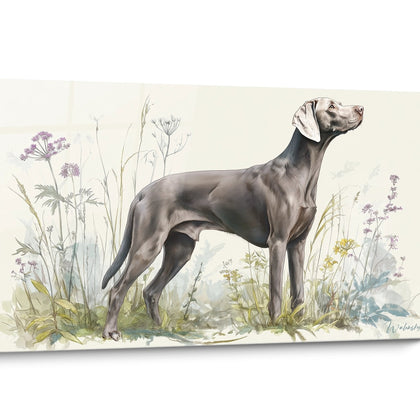


All about Weimaraner Dog Painting Black and White
- Weimaraner Monochrome Painting Presentation
- Canine Monochromatic Aesthetics
- Minimalist Architectural Integration
- Symbolism of the Two-Tone Pointer
The black and white Weimaraner dog painting embodies the refined elegance of this aristocratic hunter through a striking monochromatic interpretation. This pared-down representation captures the natural nobility of the Weimaraner pointer in a visual contrast that magnifies every anatomical detail. The absence of color transforms this emblematic breed into a graphic icon, where shades of gray reveal the silky texture of the coat and the intensity of the gaze. Perfectly suited to sophisticated contemporary interiors, this large format imposes a majestic wall presence that dialogues with minimalist architectures and luminous spaces seeking distinguished canine decoration.
The Graphic Expression of the Weimaraner in Monochrome
The black and white Weimaraner dog painting reveals an artistic dimension rarely explored in decorative canine representation. The removal of color accentuates the pure lines of this legendary German breed, transforming each sculpted muscle, each aristocratic curve into a play of shadows and light. This pure graphic approach allows for appreciation of the Weimaraner's athletic anatomy without color distraction, creating visual focus on the exceptional physical structure of this elite hunter.
Why choose a monochromatic representation for a Weimaraner?
The decision to acquire a black and white Weimaraner dog painting responds to a search for decorative timelessness. Unlike golden or silver versions that echo the breed's natural coloring, the monochromatic rendering transcends simple realistic reproduction to achieve a sculptural dimension. Contemporary animal art collectors favor this version for its adaptability to sophisticated neutral palettes, where each shade of gray dialogues with raw materials like polished concrete, brushed steel, or veined marble.
Visual hierarchy in black and white compositions
The spatial organization of a large-scale monochrome Weimaraner painting creates a natural visual pyramid. The gaze is immediately drawn to areas of maximum contrast – typically the elongated muzzle and amber eyes rendered in deep gray – before progressively exploring the entire silhouette. This controlled visual navigation transforms the display wall into a narrative space, where each viewing session reveals previously imperceptible details in coat texture or facial expression.
The psychological impact of achromatic canine representations
Studies in environmental psychology demonstrate that black and white animal representations generate different emotional responses than their colored versions. A black and white Weimaraner dog painting evokes vintage photographic memory more strongly, creating a sophisticated nostalgia associated with historical canine portraits from the 1950s-1960s. This temporal connection adds narrative depth that enriches daily decorative experience, particularly appreciated in private libraries or executive offices seeking a reflective ambiance.
For those who also appreciate chromatic renderings, a golden Weimaraner dog painting offers a complementary alternative that captures the natural luminosity of the coat, creating an interesting dialogue between realism and graphic abstraction within a coherent wall collection.
Integration of the Monochrome Weimaraner in Modern Architectural Spaces
How to position a large-scale canine format in an industrial loft?
Installing a large-scale black and white Weimaraner dog painting in an industrial environment requires understanding spatial dynamics. Double-height spaces with exposed metal beams benefit from strategic placement on the main wall visible from the entrance. The Weimaraner's monochromie resonates with raw textures – exposed brick, visible ducts, workshop windows – creating material coherence where canine elegance softens architectural rigor without compromising the authenticity of the space.
Loft owners generally favor intermediate-height positioning, allowing the gaze of the depicted Weimaraner to establish natural visual contact with occupants. This psychological interaction transforms passive decoration into active presence, particularly sought-after in open living spaces lacking physical separations.
The structuring function in residential galleries
Hallways and residential galleries constitute strategic locations for a monumental black and white Weimaraner dog painting. These often-neglected decorative transition spaces gain a visual destination through the imposing presence of the pointer. The naturally vertical silhouette of the Weimaraner, when depicted in hunting-point position, guides movement through architectural space, creating visual rhythm that accompanies circulation.
Dialogue with contemporary materials
The association of a monochrome Weimaraner painting with reflective surfaces amplifies its decorative impact. Positioned facing glass panels, black lacquered surfaces, or architectural mirrors, the black and white rendering generates partial duplications and reflection play that multiply the canine presence. This strategy, particularly effective in compact spaces, creates illusory depth while maintaining the chromatic coherence essential to minimalist interiors.
Which decorative elements ideally accompany a graphic Weimaraner?
The immediate environment of a black and white Weimaraner dog painting directly influences its perception. Interior designers recommend association with architectural plant elements – tree ferns, monstera with cut leaves – whose organic forms contrast with the graphic rigor of monochromatic rendering. This nature-culture juxtaposition reinforces the Weimaraner's character as a hunter while softening the potential coldness of overly pared-down environments.
Directional accent lighting radically transforms visual experience. Variable temperature LED projectors allow for modulating ambiance according to moments of the day, revealing different details in gray gradations and creating temporal dynamics in a static space.
Symbolism and Narratives of the Weimaraner Pointer in Two-Tone Representation
The historical symbolic charge of the Weimaraner
The black and white Weimaraner dog painting conveys cultural heritage deeply rooted in European aristocracy. Developed at the Weimar court in the 19th century for big game hunting, this pointer represented privilege and refined cynological taste. Monochromatic representation updates this historical nobility by adapting it to contemporary aesthetic codes, where graphic minimalism replaces baroque ornamentation without diluting the inherent prestige of the breed.
Animal art collectors specifically seek this temporal connection, where decorative acquisition becomes also cultural affirmation. Owning such a painting signals knowledge of exceptional canine lineages and attachment to European hunting traditions, even in urban contexts far removed from hunting practices.
Why does the Weimaraner fascinate animal art enthusiasts?
The specific appeal of a black and white Weimaraner dog painting is explained by the unique combination of physical characteristics rarely found together. The Weimaraner's light eyes – amber, gray-blue, or gray-green depending on the individual – create striking contrast with the uniform coat, generating an almost hypnotic intensity of gaze in frontal representation. This genetic trait, fixed through rigorous selection, offers animal artists a subject of exceptional emotional depth, captured with amplified force in monochromatic renderings where the gaze becomes the absolute focal point.
Mental associations with animal art photography
The black and white rendering of the Weimaraner inevitably evokes the photographic work of William Wegman, American artist who dedicated decades to immortalizing his Weimaraners in surrealist compositions. This cultural reference, even if unconscious, enriches the painting's reception by cultivated visitors, creating implicit dialogue with the history of animal photography art. The acquisition of such a piece thus inscribes itself within a documented artistic lineage, conferring cultural legitimacy to the purchase decision.
The emotional dimension in private spaces
In primary or secondary residences, a black and white Weimaraner dog painting frequently assumes a discreet commemorative function. Owners who shared their existence with this breed use the monumental representation as a permanent visual tribute, transforming the domestic wall into an elegant memorial space. Chromatic neutrality allows this emotional charge without falling into sentimentality, maintaining aesthetic dignity appropriate to reception spaces.
Is a black and white Weimaraner dog painting suitable for colorful interiors?
Paradoxically, the integration of a black and white Weimaraner dog painting proves particularly effective in chromatically rich environments. Monochromatic neutrality functions as a visual pause in color-saturated spaces, offering a resting point where the gaze stabilizes. This chromatic balancing function explains the growing popularity of these representations in eclectic interiors blending bohemian and contemporary influences.
Which size should be favored to maximize the decorative impact of the Weimaraner?
Monumental formats exceeding 120 centimeters in their greatest dimension fully exploit the expressive potential of the black and white Weimaraner dog painting. At this scale, anatomical details – neck folds, ear texture, hindquarters musculature – become legible at middle distance, creating a multi-level observation experience. Spaces with sufficient visual distance benefit from these imposing formats that transform the wall into a narrative window toward the canine universe.
How to maintain visual perception of a large-scale monochromatic format?
The perceptual durability of a black and white Weimaraner dog painting requires thoughtful management of the luminous environment. Seasonal variations in sunlight subtly modify the reading of gray shades, creating renewed experience according to time of year. Discerning owners integrate this temporal dynamic into their appreciation, considering the painting as a living element whose expression evolves with atmospheric and luminous conditions, rather than as a static decorative object.


