

Geometric Weimaraner Dog Wall Art
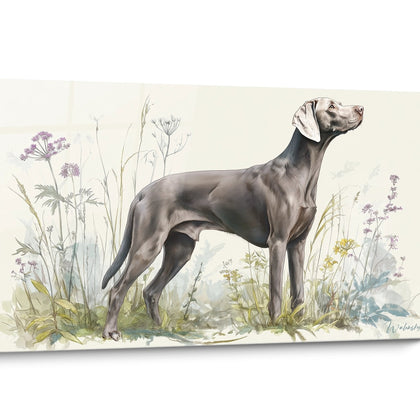
The Painting Weimaraner dog Geometric transforms the natural elegance of this noble breed into a fascinating contemporary artistic composition. This collection celebrates the Weimaraner in geometric art through clean lines and structured shapes that magnify the graceful silhouette of the dog. Perfect for lovers of modern canine wall decoration, each work captures the essence of this majestic companion in a minimalist and sophisticated style, ideal for enhancing your interior with character.
 Multicolor Geometric Dog Painting - Modern Artistic Portrait - Weimaraner Edition228,90 €
 Grey Dog Painting on Colorful Geometric Background - Contemporary Portrait - Weimaraner Edition228,90 €
 Geometric Multicolour Dog Sitting Portrait - Elegant Contemporary Artistic Portrait - Weimaraner Edition273,90 €
Explore further
In Geometric Weimaraner Dog Wall Art


All about Geometric Weimaraner Dog Wall Art
- Weimaraner Geometric Wall Art Presentation
- The Angular Aesthetics of the Pointer
- Magnifying Canine Elegance
- Architectural Decoration
The geometric Weimaraner dog canvas embodies a remarkable fusion between the natural elegance of the Weimar Pointer and the contemporary abstraction of polygonal forms. This artistic representation exalts the refined silhouette of the Weimaraner through a geometric prism that fragments and reconstructs its anatomy into angular facets, creating a visual dialogue between animal realism and graphic modernity. Each crystalline plane captures the very essence of this noble breed, transforming its sleek musculature and penetrating gaze into a fascinating mathematical composition. The geometric approach bestows upon the work a sculptural dimension that magnifies the aristocratic presence of the silver-grey dog while inscribing itself within the aesthetic codes of contemporary design interiors.
Polygonal Architecture at the Service of Weimaraner Morphology
The geometric Weimaraner dog canvas transcends simple canine representation by decomposing the Pointer's anatomy according to angular facets that reveal its exceptional bone and muscle structure. This fragmentation into multiple planes accentuates the natural verticality of the Weimaraner, a breed recognized for its athletic build and dignified carriage. The broken lines emphasize the length of the characteristic muzzle, while superimposed triangles restore the straight nasal ridge so typical of this German hunting dog.
How does geometrization amplify the nobility of the Weimar Pointer?
The polygonal technique confers upon the portrait an architectural monumentality that perfectly corresponds to the majestic temperament of the Weimaraner. Each crystalline facet captures a different reflection, mimicking the nuances of the mouse-grey coat that varies from deep charcoal to silvery beige depending on lighting. This multiplicity of planes creates a visual depth that the XXL format exploits fully, transforming the piercing amber gaze of the dog into a constellation of luminous triangles that seem to follow the observer through space.
The specific chromatic palette for geometric Weimaraner representations
Unlike the golden Weimaraner dog canvas which exploits warm tonalities, the geometric version privileges metallic grey gradients, ranging from slate to graphite shades that respect the breed's natural pigmentation. The faceted zones alternate between cool and warm greys, creating a play of shadows and light that structures the volume without resorting to traditional modeling techniques. This minimalist chromatic approach reinforces graphic impact while preserving the phenotypic authenticity of the Pointer.
Optimizing visual impact in large spaces
The monumental format of a geometric Weimaraner dog canvas demands appreciation from sufficient distance so that the eye reconstructs the fragmented image. In an industrial loft or spacious entrance hall, individual facets merge into a recognizable silhouette from 4 to 6 meters away, creating a striking optical effect. This transformational property makes the geometric canvas an architectural element that structures visual space rather than merely serving as wall decoration.
The Polygonal Weimaraner as a Contemporary Decorative Signature
Incorporating a geometric Weimaraner dog canvas into a design interior constitutes a bold aesthetic choice that affirms sensitivity toward digital art and algorithmic visual codes. The faceted representation of the Pointer resonates particularly within environments marked by refined lines, raw materials such as polished concrete or brushed steel, and a neutral chromatic palette where greys decline into varied tonalities. This artwork becomes the focal point that humanizes minimalist austerity while maintaining stylistic coherence.
Why does the Weimaraner lend itself particularly to geometrization?
The Weimaraner's morphology presents characteristics that harmonize naturally with geometric deconstruction: skull with balanced proportions, moderate stop forming a precise angle, triangular ears high and broad, arched neck describing an elegant mathematical curve. These anatomical attributes translate easily into angular segments without losing their breed identity. The long, straight muzzle becomes a succession of inclined planes, while the intense gaze crystallizes into concentric polygons evoking a faceted precious stone.
Association with contemporary materials and industrial textures
The geometric Weimaraner dog canvas dialogues remarkably with reflective surfaces such as stainless steel, tinted glass, or black lacquered finishes. In a director's office or corporate reception space, this representation of the Pointer projects values of precision, refined performance, and intellectual sophistication. Large dimensions permit assertive presence that requires no adjacent decorative elements – the artwork is self-sufficient and structures the visual environment through its geometry alone.
Creating sophisticated monochromatic ambiances
The use of a geometric Weimaraner canvas anchors a decorative strategy centered on tonal variations of grey, allowing exploration of the full richness of this non-color. Combined with pearl-grey textiles, dove-grey wall coverings, and anthracite-grey accents, it becomes the centerpiece of a refined monochrome composition. This approach avoids excessive coldness by introducing animal presence – a symbol of loyalty and nobility – which instills measured emotional dimension within otherwise strictly functional spaces.
- Amplification of visual depth in height-restricted spaces
- Creation of visual rhythm through repetition of angular forms in surrounding furnishings
- Valorization of contemporary architectures with exposed beams and open-plan volumes
- Establishment of dialogue with geometric pendant lighting fixtures
Fragmented Canine Iconography: Between Digital Art and Cynological Heritage
The geometric Weimaraner dog canvas inscribes itself within the low-poly algorithmic art movement that emerged with 3D modeling capabilities, while paying homage to a breed developed in the 19th century by German nobility. This temporal duality – resolutely contemporary technique applied to a historical subject – creates a captivating narrative tension. Weimaraner enthusiasts immediately recognize distinctive breed markers, while digital art aficionados appreciate the technical mastery of triangulation and polygon optimization.
What symbolism does a geometric Weimaraner portrait convey?
Beyond aesthetics, this faceted representation symbolizes complexity beneath apparent simplicity – a characteristic of the Weimaraner itself whose multifaceted temperament combines intellectual independence, emotional sensitivity, and physical power. Each polygon can be perceived as a personality facet, a behavioral trait, a working quality. The whole reconstructs the totality of being from fragments, a metaphor for the human-dog relationship built fragment of experience upon fragment of experience.
Integration in spaces dedicated to cynophile enthusiasts
For Weimaraner owners, canine art collectors, or hunting professionals, the geometric canvas offers a sophisticated alternative to traditional realistic portraits. In a high-end breeding kennel, specialized veterinary practice, or canine exhibition hall, this monumental artwork asserts modernity while celebrating the breed. Its imposing dimension confers museum-quality presence that elevates the status of the space and communicates premium positioning.
The advantages of geometric style for large wall formats
Polygonal simplification permits optimal legibility even in very large dimensions, where a photographic portrait might lose clarity or reveal pixelated imperfections. A geometric Weimaraner dog canvas of 150x100cm or larger maintains its graphic clarity and visual impact regardless of viewing distance. The sharp lines and chromatic flats resist visual aging – unlike subtle gradients which may deteriorate – guaranteeing aesthetic permanence.
- Coherence with professional spaces requiring distinctive yet sober decoration
- Visual resistance in environments with strong natural lighting
- Compatibility with directional lighting systems that accentuate facets
- Ease of integration into multi-panel wall compositions
FAQ: Geometric Weimaraner Dog Canvas
Does a geometric Weimaraner dog canvas suit classical interiors?
While naturally oriented toward contemporary spaces, a geometric Weimaraner canvas can create remarkable contrast in a classical interior, particularly when framed with subtle molding. This tradition-modernity juxtaposition generates sophisticated decorative tension especially appreciated in heritage renovations seeking to introduce current touches without altering original architecture.
What minimum distance is needed to fully appreciate a large-format geometric Weimaraner dog canvas?
For formats exceeding 120cm in width, an observation distance of 3 to 5 meters allows the eye to synthesize individual facets into a coherent image. Below this, the observer primarily perceives the abstract composition of polygons; beyond it, the Weimaraner silhouette emerges with clarity. This transformational property enriches spatial experience and justifies placement in spacious rooms.
How does a geometric Weimaraner dog canvas influence perception of architectural volumes?
The accentuated verticality of the Weimaraner in geometric representation – with its sleek neck and dignified head carriage translated into ascending lines – creates a visual elevation effect particularly effective in standard-ceiling spaces. The diagonals formed by facets generate directional dynamism that can guide sight toward specific architectural elements or counterbalance overly marked horizontals.
L'art qui suscite l'envie
Maison belge d'art mural grand format
14 jourspour changer d'avis*
Protection Walenskyincluse
Fabriquéen Italie
FormatXXL
Kit de fixationtoujours fourni
* Hors tableaux personnalisés et tailles personnalisées


