


Turkish Angora Oriental Cat Wall Art
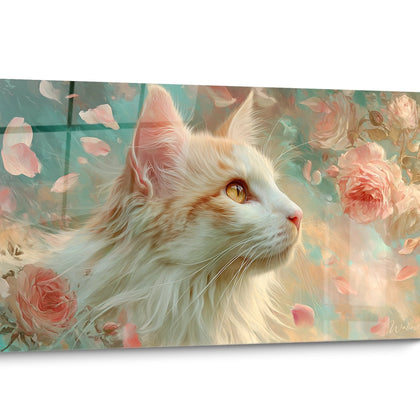
Our Painting Turkish Angora Oriental captures the legendary grace of this majestic feline breed. Each work in this collection celebrates the timeless elegance of the Turkish Angora cat, with its silky fur and mesmerizing gaze with oriental influences. These artistic creations transform your interior into a true gallery dedicated to the beauty of oriental cat breeds. Perfect for lovers of refined feline wall decoration, these paintings bring a touch of exoticism and sophistication to your space.
 Turkish Angora Cat Zen Garden Painting - Floral Contemplation - Turkish Angora Cat Edition273,90 €
 White Turkish Angora Cat Painting - Oriental Symphony - Turkish Angora Cat Edition273,90 €
 Turkish Angora Cat Portrait Painting - Oriental Majesty - Turkish Angora Cat Edition273,90 €
 Turkish Angora Cat Asian Temple Painting - Oriental Serenity - Turkish Angora Cat Edition273,90 €
Explore further
In Turkish Angora Oriental Cat Wall Art
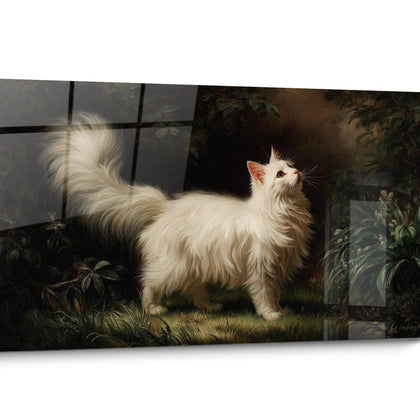
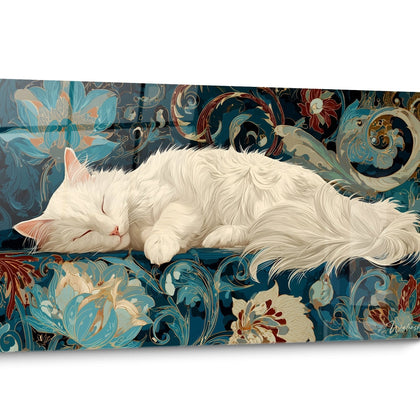
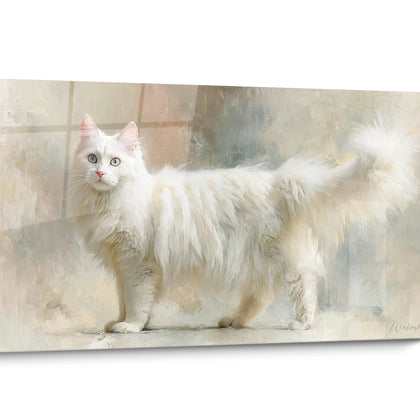
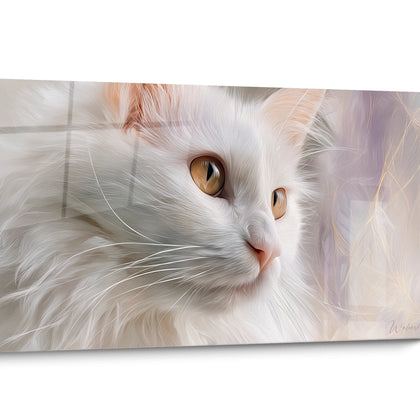
All about Turkish Angora Oriental Cat Wall Art
- Painting Presentation Cat Turkish Angora Oriental
- Oriental Feline Aesthetics
- Exotic Ambiances
- Symbolism & Decoration
The painting cat Turkish Angora Oriental represents a captivating artistic fusion between the legendary elegance of the Turkish Angora and the refined aesthetics of Oriental decorative arts. This unique convergence transforms your living space into a private gallery celebrating feline grace through the prism of visual traditions from Asia and the Middle East. Each large-scale composition captures the mystical essence of this iconic breed while adorning it with geometric patterns, sophisticated arabesques, and color palettes inspired by Persian miniatures, Japanese screens, or Ottoman ceramics. This decorative approach particularly appeals to collectors seeking an alternative to conventional feline representations, eager to infuse their interior design with a cultural and narrative dimension. The alliance between the purity of the Angora coat and the Oriental aesthetic codes generates a striking visual impact, perfect for anchoring a contemporary living room, a personal library, or a meditation space in an atmosphere that is both soothing and sophisticated.
Oriental Art Meets the Majesty of the Turkish Angora
The painting cat Turkish Angora Oriental transcends the simple animal representation to become a narrative decorative work. Contemporary artists deliberately integrate visual elements borrowed from Islamic illuminated manuscripts, Japanese ukiyo-e prints, or ancestral Chinese frescoes. This approach transforms each composition into a visual meditation where the slender silhouette of the feline dialogues with ornamented backgrounds of stylized peonies, Mudéjar geometric patterns, or stylized waves reminiscent of Hokusai.
Why associate the Turkish Angora with Oriental influences?
This artistic synergy draws its roots from the geographical history of the breed itself, originating in Ankara, Turkey, a historical crossroads between East and West. The creations exploit this natural connection by adorning the silky coat with ornamentation inspired by Kilim rugs, Iznik ceramics with deep blues, or Persian paradise gardens. The integration of Arabic calligraphy, stylized floral motifs according to Ottoman canons, or asymmetrical compositions typical of Japanese wabi-sabi aesthetics confers a very rare cultural depth. For interiors seeking a connection with Asian and Middle Eastern artistic traditions, these wall murals are essential visual anchors, particularly suitable for zen spaces, contemporary Moroccan lounges, or libraries adorned with literary journeys.
Oriental Chromatics and Immaculate Coat
The color palettes favored in these compositions exploit the striking contrasts between the virgin whiteness of the Turkish Angora and the saturated hues characteristic of Oriental decorative arts. Cobalt blues and turquoise evoking the mosques of Istanbul, vermilion reds of Chinese lacquers, warm golds of Mughal miniatures, or imperial jade greens create hypnotic visual dynamics. This chromatic juxtaposition generates a decorative balance where the feline remains the central subject while being inscribed in a broader visual narrative. Creators also exploit traditional coloring techniques such as the subtle gradations of Japanese sumi-e or the flat areas of Ottoman compositions to structure the pictorial space. To discover other aesthetic interpretations, explore the vintage cat Turkish Angora paintings which offer a different nostalgic approach.
Integration into Multicultural Contemporary Spaces
These large-scale wall artworks find their optimal expression in interiors that value intercultural dialogue and refined eclecticism. They naturally harmonize with dark wood furniture inspired by China, Uzbek suzani textiles, Moroccan metal latticework lighting, or Japanese raku ceramics. Installing them in an open living room allows for a visual transition between different thematic spaces, with the oriental feline gaze serving as a narrative thread. Interior designers frequently recommend these compositions to soften the austerity of Scandinavian minimalism while preserving aesthetic consistency, or to enrich bohemian contemporary arrangements requiring a structuring focal point. The inherent contemplative dimension of these representations also makes them ideal candidates for yoga spaces, massage rooms, or holistic therapy practices.
Creating Exotic Atmospheres with the Angora Cat
Adopting a painting cat Turkish Angora Oriental in your interior design is a powerful decorative lever to establish a traveler's atmosphere without falling into pastiche. These wall compositions act as narrative windows instantly transporting the viewer to fragrant Persian gardens, Kyoto tea pavilions, or millennial Ottoman libraries. The majestic presence of the feline with heterochromatic or golden eyes, framed by stylized oriental architectural elements, generates spatial depth enriching even the most compact urban spaces.
How do these artworks transform spatial perception?
The composition techniques employed in these creations deliberately exploit the principles of Chinese atmospheric perspective or the superimposed planes characteristic of Persian miniatures. This visual structuring creates an illusion of depth visually amplifying the available wall space. Repetitive ornamental motifs guiding the eye towards the central feline subject establish a soothing visual rhythm, particularly beneficial in urban environments saturated with stimuli. The generous scale of the available formats allows for occupying entire wall panels, transforming a bare wall into an affirmed decorative manifesto. Collectors particularly appreciate integrating these artworks into asymmetrical wall galleries combining different representations of the painting cat Turkish Angora, thus creating a multicultural visual narrative around this iconic breed.
Decorative synergies with oriental elements
To maximize the aesthetic impact of these compositions, interior designers recommend orchestrating a consistent decorative dialogue. Association with authentic oriental textiles such as Central Asian ikats, Indonesian batiks, or Japanese silks reinforces the overall visual narrative. Adding plant elements such as sculpted bonsai trees, phalaenopsis orchids, or lucky bamboo establishes a natural continuity with the floral motifs frequently integrated into these compositions. Indirect lighting solutions, favoring Japanese paper lanterns or Moroccan hammered copper sconces, create shadow play sublimating ornamental details. Libraries can be embellished with handcrafted objects such as lacquered boxes, painted fans, or bronze incense burners to complete the cultural universe evoked. This strategy of thoughtful accumulation transforms the space into a contemporary cabinet of curiosities celebrating oriental artistic traditions.
Seasonality and decorative renewal
Unlike neutral monochrome compositions, paintings cat Turkish Angora Oriental allow for subtle seasonal variations in the surrounding decor. During autumnal periods, the emphasis on copper tones and velvety textiles enriches the visual warmth of compositions with orange and gold hues. Spring seasons invite you to reinforce complementary floral elements, with arrangements inspired by Japanese ikebana dialogues with the stylized botanical motifs of the wall art. This decorative adaptability constitutes a significant economic advantage, allowing you to refresh the interior atmosphere without substantial investments. Lovers of more naturalistic representations can complete their collection with paintings cat Turkish Angora floral to alternate according to moods and seasons.
Cultural Symbolism and Decorative Power of the Oriental Feline
Beyond their immediate aesthetic value, paintings cat Turkish Angora Oriental convey a multi-layered symbolic richness drawing on Asian and Middle Eastern cultural traditions. In Ottoman Islamic cultures, the white cat embodied purity and enjoyed particular reverence, often depicted in illuminations accompanying scholars. Japanese traditions, for their part, associate the white feline with maneki-neko lucky charms and spiritual protection of homes. This convergence of symbolism transforms these wall compositions into modern talismans, particularly appreciated by collectors sensitive to the metaphysical dimensions of interior design.
Odd-eyed cats: Eastern mystery and duality
The distinctive genetic characteristic of the Turkish Angora, its odd eyes combining blue and gold, resonates deeply with Eastern philosophies valuing harmonious duality. This anatomical peculiarity evokes the Taoist yin-yang, the balance between lunar and solar energies or the complementarity of opposites dear to Sufi traditions. Artists deliberately exploit this dimension by structuring their compositions around this hypnotic gaze, often emphasized by golden halos recalling the halos of Byzantine icons or Buddhist mandorlas. For collectors specifically seeking this visual characteristic, paintings cat Turkish Angora gold eyes offer a focused alternative on this chromatic particularity. Integrating these works into meditation or contemplative practice spaces amplifies their symbolic power, the feline gaze serving as a focal point for concentration exercises.
Cultural storytelling and social conversation
These wall compositions function as sophisticated conversation starters during receptions, inviting guests to explore the intertwined cultural influences. Unlike the omnipresent reproductions of classic Western art, these contemporary creations demonstrate a broadened cultural sensitivity and an interest in non-European artistic traditions. Cultured hosts particularly appreciate explaining the visual references integrated, whether it is Islamic geometric motifs based on sacred mathematical proportions, Japanese asymmetrical compositions reflecting impermanence or Persian palettes evoking the Koran’s paradisiacal gardens. This educational dimension enriches the decorative experience beyond simple visual pleasure. For a complementary approach emphasizing the feline's individual dimension, explore paintings cat Turkish Angora portrait favoring psychological intimacy.
Sustainable and timeless decorative investment
Unlike fleeting decorative trends, the combination of feline representation and oriental aesthetics constitutes a timeless decorative choice. Millennial Asian and Middle Eastern artistic traditions, continuously reinterpreted, guarantee long-term aesthetic relevance. The growing cultural attachment to oriental philosophies, Buddhist-inspired mindfulness, or holistic wellness practices ensures a lasting contemporary resonance. The generous formats of these compositions also allow for adaptation to different spaces over moves and residential evolutions, from urban studio to extended family home. This spatial versatility, combined with symbolic richness and aesthetic sophistication, positions these works as judicious decorative investments for wall art enthusiasts seeking beauty, cultural significance, and decorative practicality.
Frequently Asked Questions about Turkish Angora Oriental Cat Paintings
Why choose a Turkish Angora Oriental cat painting over a classic representation?
This aesthetic approach fuses the natural elegance of the feline with the refined visual codes of oriental artistic traditions, creating a multicultural decorative work impossible to reproduce with conventional representations. It is aimed at collectors seeking narrative and symbolic depth enriching their space beyond simple visual appeal.
How to integrate a Turkish Angora Oriental cat painting into a modern interior?
These compositions work remarkably well as contrasting focal points in contemporary minimalist interiors, bringing chromatic warmth and visual complexity. Their association with furniture with clean lines, natural textiles, and indirect lighting creates a balanced aesthetic dialogue between Western modernity and oriental refinement.
Which spaces benefit most from a large Turkish Angora Oriental cat painting?
Main living rooms, personal libraries, meditation spaces, and master bedrooms are the preferred locations. These environments allow for prolonged contemplation and benefit from the soothing atmosphere generated by these compositions. Practitioners of alternative therapies, yoga studios, or architecture firms integrating multicultural references also frequently adopt these works for their distinctive atmospheric power.
Further reading
Our articles on this topic
- Turkish Angora cat panoramic painting for a hallway: a guide to the right dimensions
- Where to hang a Turkish Angora cat painting in a Parisian apartment?
- Where to hang an American Curl cat painting in your home?
- Korat Cat Wall Decor: The Perfect Ally for Minimalist Scandinavian Style
- Pairing several Burmese cat paintings in a wall gallery
- Persian or Himalayan Cat on Canvas: Spotting the Differences Before Choosing Your Painting
L'art qui suscite l'envie
Maison belge d'art mural grand format
14 jourspour changer d'avis*
Protection Walenskyincluse
Fabriquéen Italie
FormatXXL
Kit de fixationtoujours fourni
* Hors tableaux personnalisés et tailles personnalisées


