


Tonkinese Cat Wall Art Zen
The Painting Siamese Cat Zen captures the very essence of feline grace in a universe of absolute tranquility. This collection celebrates the majestic beauty of the Siamese through artistic creations that combine oriental elegance and zen living room decor. Each work reveals the hypnotic gaze and meditative posture of this exceptional breed. Perfect for lovers of contemplative cats in wall art, this collection transforms your space into a harmonious haven of peace.
 Tonkinese Cat and Goldfish Painting - Aquatic Harmony - Tonkinese Cat Edition273,90 €
 Tonkinese Cat Meditation Painting - Contemplative Serenity - Tonkinese Cat Edition273,90 €
 Tonkinese Cat with Blue Eyes - Serenity in the Garden - Tonkinese Cat Edition273,90 €
 Tonkinese Cat in the Sun - Morning Serenity - Tonkinese Cat Edition273,90 €
 Contemplative Tonkinese Cat Painting - Feline Serenity - Tonkinese Cat Edition228,90 €
Explore further
In Tonkinese Cat Wall Art Zen
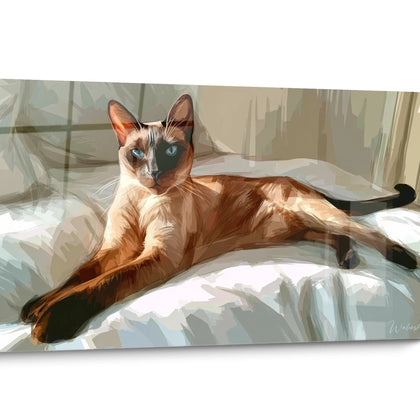
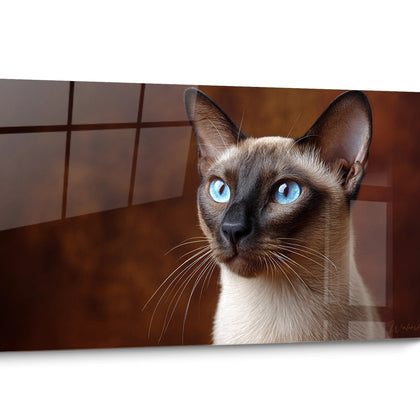
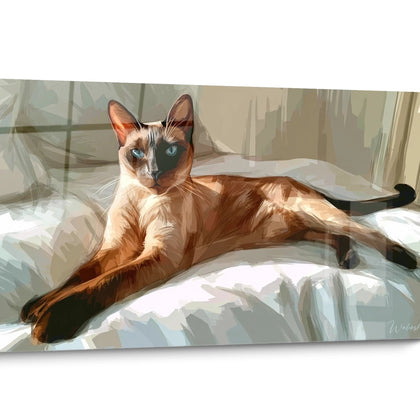
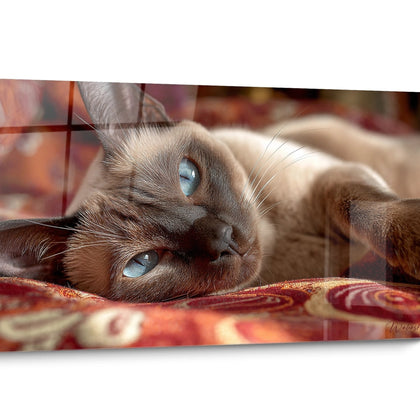
All about Tonkinese Cat Wall Art Zen
- Painting Presentation Siam cat Zen
- Meditative feline atmosphere
- Clean design and serenity
- Inner spiritual harmony
The painting Siam cat Zen embodies the fusion of feline elegance and Eastern contemplative philosophy. This artistic representation captures the meditative essence of the Siam cat in clean compositions that invite mental calm and inner reconnection. Designed for relaxation and meditation spaces, this type of wall décor transcends simple animal representation to become a true tool for spiritual centering. Generous formats allow for total visual immersion in the soothing world of the zen feline, transforming your environment into a sanctuary of tranquility.
The Contemplative Art of the Siam cat in your meditation space
The Siam cat Zen painting is distinguished by its unique ability to transform an ordinary space into a true meditative refuge. The representations privilege the characteristic seated postures of zazen meditation, where the Siam cat appears in perfect stillness, half-closed eyelids, embodying conscious presence. These visual compositions exploit the Siam cat’s aquamarine gaze as a focal point of concentration, similar to the mandalas used in contemplative practices.
How does the Siam cat embody Zen principles?
The Siam cat’s silky fur, with its subtle nuances between colored tips and a light body, naturally evokes the balance of yin and yang. Artists specializing in Realistic Siam cat painting capture this harmonious duality to create works where the visual texture itself becomes meditative. Monumental formats amplify this feeling of calm by creating an enveloping feline presence that naturally slows down the mental rhythm.
Integration into spiritual practice spaces
For yoga studios, meditation rooms, or personal retreat corners, the Siam cat Zen painting serves as a visual anchor facilitating entry into a meditative state. Unlike dynamic representations, these creations prioritize the emptiness of the background, often in minimalist shades of off-white, sand beige, or pearl gray. This chromatic sobriety allows the eye to rest without excessive stimulation, favoring inner descent.
Zen symbols integrated into the compositions
Contemporary creators sometimes enrich these paintings with subtle symbolic elements: purified cherry branches, delicately traced enso circles, or Japanese calligraphy evoking mu (emptiness). The Siam cat then appears as a silent guardian of these ancestral wisdoms, its serene presence reinforcing the spiritual dimension without falling into decorative overload. Generous dimensions allow you to appreciate each contemplative detail even from a meditative viewing distance.
Chromatic minimalism and visual purification of the Siam cat
The Siam cat Zen painting masterfully exploits the principles of minimalist design to create compositions that visually purify the space. Monochromatic palettes dominate, with infinitely subtle tonal variations that reflect the wabi-sabi philosophy of accepting imperfection. The Siam cat’s mink natural fur then becomes a pretext to explore soothing gradients that facilitate detachment from everyday concerns.
What shades promote mental tranquility?
Zen interpretations favor earthy tones – warm sand, deep greige, light taupe – that resonate with natural environments conducive to contemplation. Some creations incorporate touches of sage green or very desaturated cerulean blue, evoking traditional Japanese gardens where the Tonkinese might meditate. This chromatic restraint transforms the painting cat Tonkinese Moderne into an emotional regulation tool, particularly effective in bedrooms or relaxation spaces.
The importance of empty spaces in the composition
Faithful to the Japanese concept of ma (the interval), these paintings give as much importance to the void as to the subject represented. The Tonkinese often occupies only one-third of the total surface, allowing the composition to breathe and enabling the eye to wander freely. This visual breathing space contrasts sharply with saturated approaches, offering a valuable cognitive respite in our overloaded environments. Imposing formats amplify this effect by creating veritable windows of serenity on your walls.
Soothing textures and contemplative finishes
Matte surfaces dominate in the world of the Tonkinese Zen cat painting, eliminating distracting reflections and creating a soft light absorption. Some artists experiment with light haze effects or selective artistic blur, placing the Tonkinese in a dreamlike atmosphere that dissolves the boundaries between wakefulness and meditation. These technical choices transform the work into a visualization support comparable to traditional sumi-e paintings.
Ritualization of everyday space through zen feline presence
Integrating a Tonkinese cat Zen painting into your environment goes beyond simple decoration to become a true ritual of presence. These representations act as constant reminders to return to the present moment, exploiting the natural symbolism of the cat as a master of effortless attention. Generous dimensions create an impossible-to-ignore presence, transforming each passage in front of the work into a micro-moment of conscious reconnection.
How to create a visual altar around the Tonkinese?
In contemporary contemplative practices, the painting becomes the center of a ritualized space. Positioned above a low console where natural candles, meditative stones, or Japanese incense are aligned, the painting cat Tonkinese Portrait in its zen version creates a focal point for morning or evening practices. The Tonkinese's eyes, positioned at eye level when seated, establish a silent connection that anchors the practice.
The Tonkinese as guardian of daily transitions
Strategically placed in transition zones – entrance, hallway leading to the bedroom – the zen painting marks an energetic boundary between active spaces and havens of calm. This visual demarcation subconsciously signals to the brain the transition to a more relaxed mode of operation. Imposing formats reinforce this symbolic threshold effect, creating a presence significant enough to automatically trigger a respiratory slowdown.
Evolution of meditative perception over time
Unlike complex visual stimuli that quickly lose their impact, the Tonkinese Zen cat painting reveals new depths with repeated contemplation. The subtleties in the rendering of the fur, the micro-expressions of facial serenity, the variations in light on the fur become subjects of observational meditation. This richness in apparent simplicity justifies the investment in monumental formats that support years of visual exploration without exhaustion of contemplative interest.
Why choose a Tonkinese rather than another breed for zen iconography?
The Tonkinese possesses a naturally gentle facial expression and balanced proportions that avoid physical extremes. Its aquamarine gaze combines depth and brightness without the disturbing intensity of some breeds with very light eyes. The complete collection of cat painting Tonkinese explores these unique qualities, but the zen variation specifically amplifies them to serve contemplative intentions.
Is a Zen Tonkinese cat painting suitable for professional wellness spaces?
Absolutely, therapists, holistic medicine practitioners, and life coaches are increasingly integrating these representations into their offices. The soothing feline presence immediately creates an atmosphere of trust and relaxation without the sometimes cliché connotations of traditional zen imagery. Generous formats allow visibility from any point in the room, establishing a global energetic consistency.
How to maintain the meditative impact of a Zen Tonkinese cat painting over the long term?
Subtle seasonal rotation – slightly moving the artwork or modifying its immediate environment – renews perception without losing the soothing familiarity. Some practitioners associate the painting with specific meditative intentions that evolve quarterly, transforming the same representation into support for different contemplative practices throughout the year.
Does the Zen Tonkinese cat painting work for children or only for adults?
Children instinctively respond to the serenity conveyed by these representations. In anxious or overstimulated children's rooms, a large zen painting creates a visual island of calm that naturally facilitates the transition to sleep. The Tonkinese then becomes a gentle protective figure, a welcome alternative to omnipresent digital stimuli.
Further reading
Our articles on this topic
- Which animal paintings create a zen atmosphere?
- Zen cat and nature wall decor: creating a cozy atmosphere at home
- Why Do Zen Wall Art Pieces Favor Monochromatic Tones?
- How a Zen Artwork Transforms the Atmosphere of a Living Room?
- Zen Asian painting for a minimalist living room: the art of emptiness and line
- Minimalist or Detailed Zen Artwork: Which for a Bedroom?
L'art qui suscite l'envie
Maison belge d'art mural grand format
14 jourspour changer d'avis*
Protection Walenskyincluse
Fabriquéen Italie
FormatXXL
Kit de fixationtoujours fourni
* Hors tableaux personnalisés et tailles personnalisées


