




Tonkinese Cat Portrait Wall Art
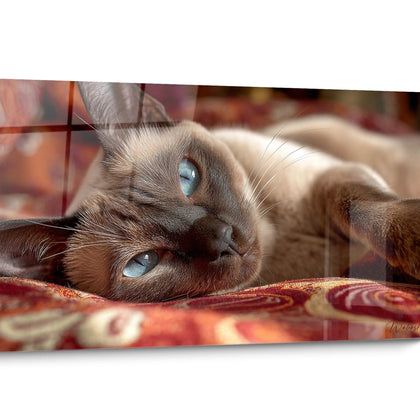
The Painting cat Tonkinese Portrait captures all the nobility of this exceptional breed. This collection highlights the captivating gaze and natural grace of the Tonkinese through artistic cat portraits of remarkable finesse. Each work reveals the endearing personality and unique charm of this feline with silky fur. Ideal for cat lovers and collectors of contemporary animal art, this gallery transforms your space into a true tribute to feline elegance.
 Tonkinese Cat Painting Blue Eyes - Elegant Portrait - Tonkinese Cat Edition273,90 €
 Tonkinese Cat with Blue Eyes Painting - Captivating Gaze - Tonkinese Cat Edition273,90 €
 Tonkinese Cat Meditation Painting - Contemplative Serenity - Tonkinese Cat Edition273,90 €
 Tonkinese Cat Painting with Blue Eyes - Elegant Portrait - Tonkinese Cat Edition273,90 €
 Tonkinese Cat with Blue Eyes Painting - Modern Turquoise Portrait - Tonkinese Cat Edition228,90 €
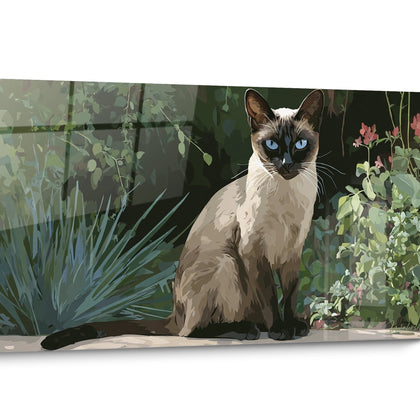
 Seated Tonkinese Cat Painting - Elegant Portrait - Tonkinese Cat Edition228,90 €
 Contemplative Tonkinese Cat Painting - Feline Serenity - Tonkinese Cat Edition228,90 €
Explore further
In Tonkinese Cat Portrait Wall Art
All about Tonkinese Cat Portrait Wall Art
- Tonkinese Cat Portrait Wall Art Presentation
- Capturing Tonkinese Expression
- Morphology and Visual Characteristics
- Enhancing Feline Portrait Value
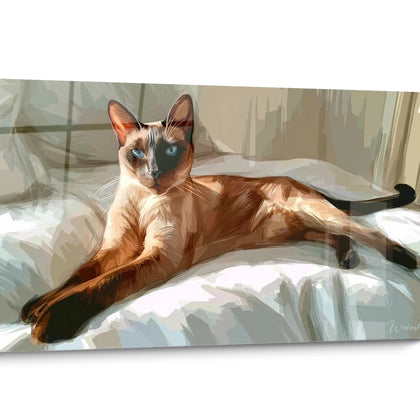
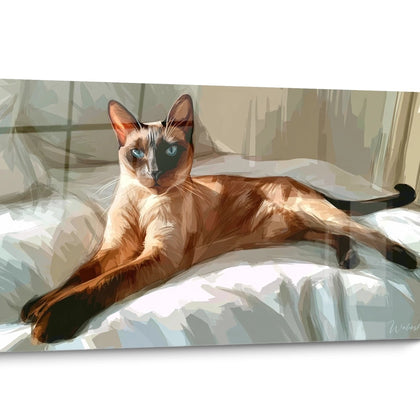
The Tonkinese Cat Portrait wall art celebrates the singular beauty of a hybrid breed resulting from the crossing of Siamese and Burmese cats. This type of artistic representation captures the intensity of aqua-colored eyes, the silky texture of mink-colored fur, and the enigmatic expression characteristic of the Tonkinese. Unlike generic feline representations, the Tonkinese cat portrait focuses on distinctive breed traits: the oval shape of aquamarine-colored eyes, slightly inclined ears, and the characteristic athletic musculature. For collectors and enthusiasts of this specific breed, investing in a large-format wall art piece allows you to immortalize these morphological particularities that only a close-up portrait can reveal with precision.
The expressive intensity of the Tonkinese gaze in portrait
The Tonkinese Cat Portrait wall art stands out for its ability to capture one of the most emblematic characteristics of this breed: its aquamarine-colored eyes. This unique chromatic shade, oscillating between turquoise blue and emerald green, represents a major artistic challenge for creators of wall art pieces. A successful portrait must reproduce this particular hue that changes depending on the angle of light, a genetic specificity inherited from the Siamese-Burmese mixture.
Why does the portrait format suit the Tonkinese better?
Unlike panoramic compositions, portrait format allows focus on the Tonkinese cat's facial expression. This vertical orientation enhances the modified triangular shape of the head, the characteristic spacing between the eyes and medium-sized ears. For buyers seeking an authentic representation, a Tonkinese Cat Realistic wall art in portrait orientation offers morphological accuracy impossible to achieve in other compositions.
The psychological depth of the feline portrait
The Tonkinese possesses interactive personality and remarkable social intelligence. A quality portrait must convey this intellectual liveliness visible in the gaze. Large dimensions allow revelation of micro-expressions, the characteristic slight head tilt, or subtle whisker movement that betrays the natural curiosity of this breed. Discerning collectors seek these behavioral details in their wall art acquisitions.
Capturing the variations in mink coat color
The mink pattern of the Tonkinese presents subtler color points than in Siamese, with a gradual transition between dark and light areas. A large-format portrait allows appreciation of these chromatic nuances: natural mink (warm brown), champagne mink (golden beige), blue mink (slate gray), or platinum mink (pearl gray). This pigmentary complexity requires detailed representation that only a substantial format can faithfully render.
The morphological particularities of the Tonkinese in wall art representation
How does the portrait enhance the unique bone structure?
The Tonkinese Cat Portrait wall art reveals a distinctive facial architecture: high cheekbones, slightly rounded muzzle (neither pointed like the Siamese nor flat like the Persian), and well-defined jaws. This intermediate conformation constitutes the visual identity of the breed. Large vertical formats accentuate the elegance of this balanced bone structure, particularly appreciated by feline show judges and specialized breeders who immediately recognize these breed standards.
The representation of athletic musculature
Unlike extreme cobby or longiline breeds, the Tonkinese presents a semi-foreign build: muscular without being massive, sleek without being thin. A portrait framed on the bust and head allows suggestion of this compact musculature visible in neck thickness and shoulder width. To enhance these racial proportions, a Tonkinese Cat Modern wall art can play with shadow and light contrasts to visually sculpt this distinctive anatomy.
The importance of framing in visual hierarchy
An effective Tonkinese portrait applies the rule of thirds by placing the eyes in the upper third of the composition. This technique immediately directs attention to the gaze, the central element of breed identity. The ears, positioned in the upper angles, create a dynamic triangle that guides the viewer's eye. Large dimensions reinforce this compositional hierarchy, transforming the work into a dominant focal point in any space.
The texture of short and silky fur
The Tonkinese possesses short, fine, and exceptionally silky fur with characteristic natural luster. In wall art representation, capturing this textile quality involves treating light reflections on salient areas: forehead, cheekbones, shoulders. Buyers seeking visually tactile works can opt for supports that reproduce this natural shine, creating an illusion of depth in fur areas.
Integrating a Tonkinese portrait into your environment
What is the optimal placement for a vertical feline portrait?
The Tonkinese Cat Portrait wall art requires strategic positioning that respects the subject's gaze direction. Ideally, the cat should appear to observe the main space of the room, creating visual interaction with occupants. In an office, placing the portrait facing the work desk generates a soothing presence that reminds of the Tonkinese's companionable nature. In a bedroom, positioning it facing the bed reproduces the natural tendency of this breed to observe its owners.
Harmonize the chromatic tones of the mink coat
Mink coat variations present warm tones (natural, champagne) or cool tones (blue, platinum) that must dialog with the existing palette. A natural mink with sepia tones naturally integrates into interiors using light wood, linen, and rattan. A blue mink with gray nuances harmonizes with industrial, Scandinavian, or contemporary decors. This chromatic compatibility transforms the acquisition of a Tonkinese Cat Zen wall art into a strategic decorative decision.
Create a focal point in open spaces
In open-plan architectures, a large-format feline portrait serves as visual anchor. Positioned on a wall perpendicular to the main entrance, it immediately attracts the gaze and structures spatial perception. The portrait format's verticality generates an upward dynamic that compensates for the dominant horizontal lines of contemporary low furniture. This compositional tension creates an architectural balance prized by interior designers.
Enhance investment in specialized feline art
Unlike generic cat representations, a Tonkinese portrait addresses a niche market: breeders, passionate owners, breed-specific collectors. This specialization confers patrimonial value on the work. Pairing the portrait with other breed-related decorative elements (exhibition photographs, framed pedigrees, show medals) creates a coherent thematic staging. To expand this collection, exploring stylistic diversity with a Tonkinese Cat wall art in different artistic expressions enriches the visual narrative.
Is a Tonkinese Cat Portrait wall art suitable for small spaces?
Paradoxically, a large vertical portrait works remarkably in restricted spaces by creating an illusion of ceiling height. The vertical composition draws the eye upward, giving an impression of spaciousness. In a narrow hallway or compact entryway, the portrait transforms an architectural constraint into a personalized gallery.
How to choose between an adult Tonkinese or kitten portrait?
The adult portrait highlights mature breed conformation, fully colored eyes, and developed character expression. The kitten portrait captures juvenile roundness and innocence, but with less pronounced breed characteristics. Collectors generally favor adult subjects for morphological authenticity, while sentimental owners prefer immortalizing tender age.
Can you pair a Tonkinese Cat Portrait wall art with other feline breeds?
Association works if it respects stylistic coherence (same artistic technique, same palette) and thematic unity (related Oriental breeds such as Siamese, Burmese, Oriental). Avoid mixing with morphologically opposite breeds (Persians, Exotics) that would create visual dissonance. A wall gallery of related breed portraits generates a coherent and educational collection.


