


Diverse Abstract Street Art Canvas
The Street Art Painting Collection Abstract celebrates the raw energy of contemporary urban culture. Each artwork captures the essence of the graffiti movement with dynamic compositions and vibrant colors. Perfect for lovers of contemporary urban art, these creations bring character and modernity to your interior. The abstract street art aesthetic transforms your spaces into vibrant galleries of artistic expression.
 Fuchsia Explosion Canvas - Street Art Edition273,90 €
 Digital Waves Painting - Street Art Edition242,90 €
 Cubic City Painting - street art edition242,90 €
 Convergence Purple Painting - street art edition242,90 €
 Urban Fragments Wall Art - Street Art Edition242,90 €
 Spectrum Burst Wall Art - street art edition242,90 €
 Street Art Wall Art N°4 - Street Art Diverse Edition273,90 €
Explore further
In Diverse Abstract Street Art Canvas
-
 Diverse Street Art Wall Art41
artworks
Diverse Street Art Wall Art41
artworks
-
 Diverse Street Art Portrait Canvas5
artworks
Diverse Street Art Portrait Canvas5
artworks
-
 Diverse Multicolor Street Art Canvas6
artworks
Diverse Multicolor Street Art Canvas6
artworks
-
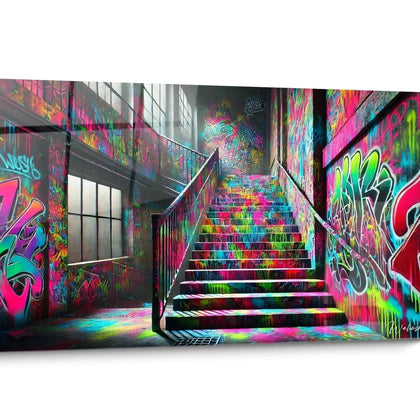 Diverse Pink Street Art Canvas12
artworks
Diverse Pink Street Art Canvas12
artworks
-
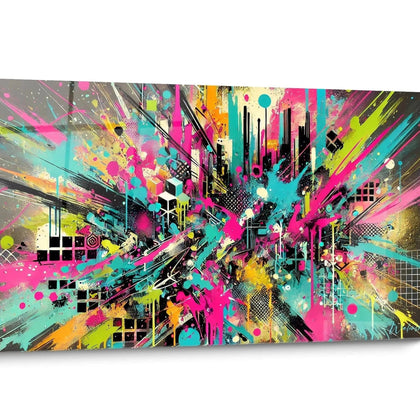 Turquoise Diverse Street Art Canvas9
artworks
Turquoise Diverse Street Art Canvas9
artworks
-
 Orange Street Art Diverse Wall Art15
artworks
Orange Street Art Diverse Wall Art15
artworks
-
 Urban Diverse Street Art Canvas10
artworks
Urban Diverse Street Art Canvas10
artworks


All about Diverse Abstract Street Art Canvas
- Street Art Abstract Presentation
- Abstract Urban Energy
- Visual Decryption
- Architectural Integration
Discover our exclusive selection of paintings street art diverse abstract, where the effervescence of urban alleys meets the most daring formal experimentation. These large-format mural creations capture the raw essence of the graffiti movement while deconstructing its traditional codes to create resolutely contemporary visual compositions. Each artwork is a unique synthesis between the spontaneity of artistic vandalism and the sophistication of non-figurative art, transforming your spaces into visual manifestos of unparalleled aesthetic power.
Abstract Urban Energy in Your Living Space
The painting street art diverse abstract transcends the conventional boundaries between underground culture and artistic refinement. These monumental pieces carry within them the DNA of nocturnal metropolises, that creative tension that is born of concrete, superimposed tags and ephemeral interventions. Unlike the classic figurative representations of the graffiti movement, these compositions dissolve letters, silhouettes and symbols into a purely visual language made of explosive gestures, voluntary drips and chromatic saturation.
How do deconstructed forms amplify spatial impact?
Abstraction in street art operates a total liberation of the gaze. The large formats typical of these mural creations generate a sensory immersion comparable to that felt in front of a freshly painted wall in the middle of the night. Areas of bright color dialogue with gestural splashes, creating areas of tension and breathing that literally redefine the volumetric perception of an industrial loft or a contemporary living room. This visual dimensionality transforms a simple wall into a portal to the creative effervescence of alternative neighborhoods.
Layering as an aesthetic signature
These paintings take up the fundamental principle of the urban palimpsest: the infinite superposition of gestures, materials and intentions. Each colored layer evokes the successive bombardments that cover the facades of metropolises, creating a condensed visual archaeology. For avant-garde professional spaces such as creative agencies or production studios, this narrative depth brings immediate cultural legitimacy. The drips, projections and mastered runs recall the urgency of the nocturnal gesture while benefiting from the permanence of a work intended to permanently structure your environment.
What is the relationship between conceptual graffiti and architectural minimalism?
The alliance between a painting street art abstract large format and a refined architecture generates a fascinating visual dialectic. The monumental formats we offer naturally dialogue with the generous volumes of converted industrial spaces, urban penthouses or double-height lofts. This controlled opposition between colored chaos and structural rigor creates exactly the type of visual counterpoint sought by discerning buyers. The artwork becomes the necessary disruptive element that humanizes and dynamizes spaces that otherwise risk clinical coldness.
Visual Decryption of the Codes of Non-Figurative Street Art
The stylistic markers of abstract artistic vandalism
An authentic street art abstract painting features specific visual signatures that radically distinguish it from traditional academic abstraction. It consistently incorporates elements borrowed from street vocabulary: trails of aerosol bombs, intentional smudges, brutal contrasts between saturated areas and negative spaces, fragmented typography to the point of illegibility. These markers create a unique aesthetic tension, a precarious balance between technical control and expressive release that characterizes spontaneous urban intervention.
The formats we market amplify these characteristics to create true immersive environments. Monumental scale allows splatters, drips, and superimpositions to reveal their full gestural dimension. For collectors seeking maximum impact in generous spaces, this monumentality is precisely the differentiating factor between a simple wall decoration and a true artistic intervention transforming the very nature of the room.
Why does geometric abstraction meet organic chaos?
This hybrid category fuses two seemingly contradictory traditions: the angular precision of geometric forms and the controlled anarchy of expressionist gesture. Compositions frequently combine clean blocks of color, sharp cuts, and crisp angles inherited from Suprematism, with random projections, unpredictable drips, and textures characteristic of wild intervention. This duality resonates particularly in contemporary interiors where designer furniture and raw materials coexist.
The color palette as an urban manifesto
The colors of a street art abstract painting never result from decorative chance. They draw directly from the saturated range of professional aerosol bombs: electric magenta, radical cyan, acidic yellow, fluorescent orange. These ultra-vivid hues, often considered aggressive in conventional art, constitute an assumed aesthetic claim. Their luminous intensity transforms even dimly lit spaces into zones of visual energy. For those also exploring more vibrant chromatic variations, our multicolored street art abstract painting collection offers variations where this colorful exuberance reaches its peak.
The rhythmic balance between void and saturation
Unlike the horror vacui of some narrative graffiti, street art abstraction masters the art of strategic void. Breathing zones, often left raw or treated in matte monochrome, allow chromatic explosions to deploy their full impact. This alternation creates a hypnotic visual rhythm, a pulsation comparable to the circulatory flow of a metropolis between moments of effervescence and nocturnal breaths.
Architectural Integration of Monumental Abstract Street Art
What environments amplify the power of these compositions?
The large-format street art abstract painting requires an architectural context worthy of its visual ambition. Spaces with generous volumes constitute its preferred terrain of expression: lofts with a minimum ceiling height of 3.5 meters, converted artist studios, reception areas of innovative companies, entrance halls of contemporary residences. In these configurations, the work does not merely decorate a wall: it redefines the perceptual geometry of the entire space, creating visual axes, generating magnetic focal points, and redistributing mass balances.
Discerning buyers generally prefer walls free of bulky furniture, allowing for a visual distance of at least 4 to 5 meters. This critical distance allows for a global appreciation of the composition while enabling a progressive approach revealing gestural details, happy material accidents, and chromatic subtleties invisible at a distance.
The interaction with raw materials and industrial textures
The urban aesthetic of these abstract creations naturally resonates with certain specific architectural materials. Exposed concrete, far from stifling the work, provides it with the ideal neutral setting, recalling the original supports of graffiti. Exposed brick, exposed metal beams, visible industrial pipes create an authentic material dialogue with street imagery. This environmental coherence avoids the "imported room" effect that weakens so many artistic installations in unsuitable contexts.
Lighting strategies to reveal gestural depth
Contrary to popular belief, these abstract compositions benefit from powerful directional lighting rather than diffuse illumination. Adjustable spotlights with neutral color temperature (4000-5000K) accentuate material reliefs, reveal superimposed transparencies, and dramatize chromatic contrasts. For formats exceeding 150 centimeters in width, a multi-source system with variable incidence angles prevents shadow areas while creating a luminous micro-topography that evolves according to the time and ambient natural intensity.
Wall composition and series effects
Although each painting has its own autonomous strength, some collectors opt for diptych or triptych installations, creating fragmented visual narratives on the scale of an entire wall. This serial approach amplifies the feeling of immersion while allowing tonal or gestural variations between panels. The spacing between elements (generally 10 to 20 centimeters) should be sufficient to affirm the individuality of each piece while preserving the rhythmic continuity of the whole.
FAQ - Frequently Asked Questions about diverse street art abstract paintings
Is a diverse street art abstract painting suitable for classic residential spaces?
Absolutely, provided you accept that it will become the dominant element of the room. In a traditional bourgeois interior, this work acts as a bold contemporary counterpoint, creating exactly the type of aesthetic tension sought by lovers of mastered eclecticism. The essential thing is to assert this choice boldly rather than attempting a timid harmonization.
How does the perception of a large-format street art abstract painting evolve on a daily basis?
Unlike figurative compositions whose reading quickly becomes exhausted, gestural abstraction continuously reveals new details depending on the lighting, the angle of observation, and even the state of mind of the viewer. Owners frequently report discovering new strata, new chromatic dialogues, or new compositional tensions several months after installation, thus maintaining a dynamic relationship with the work.
What is the durability of pigments in a street art abstract painting exposed to natural light?
Contemporary creations use professional-grade pigments offering excellent photochemical resistance. Nevertheless, as with any work, prolonged direct exposure to intense sunlight is still not recommended. A location receiving indirect light or glazing with UV filter preserves the initial chromatic intensity for several decades, guaranteeing the permanence of your aesthetic investment.
Further reading
Our articles on this topic
- Abstract art in public spaces: artistic democratization
- Abstract Art in Urban Planning: Beautifying the City
- Why is an abstract painting perfect for an industrial decor?
- Vintage Abstract Wall Art: Do Artistic Movements Really Matter?
- Artistic Upcycling: Creating Abstract Paintings with Recycled Materials
L'art qui suscite l'envie
Maison belge d'art mural grand format
14 jourspour changer d'avis*
Protection Walenskyincluse
Fabriquéen Italie
FormatXXL
Kit de fixationtoujours fourni
* Hors tableaux personnalisés et tailles personnalisées


