Artistic upcycling revolutionizes the creation of abstract paintings by transforming recycled materials into authentic works of art. This sustainable approach transcends simple recycling to create a new contemporary aesthetic that combines creativity and ecological awareness.
Upcycling artistic techniques for abstract paintings
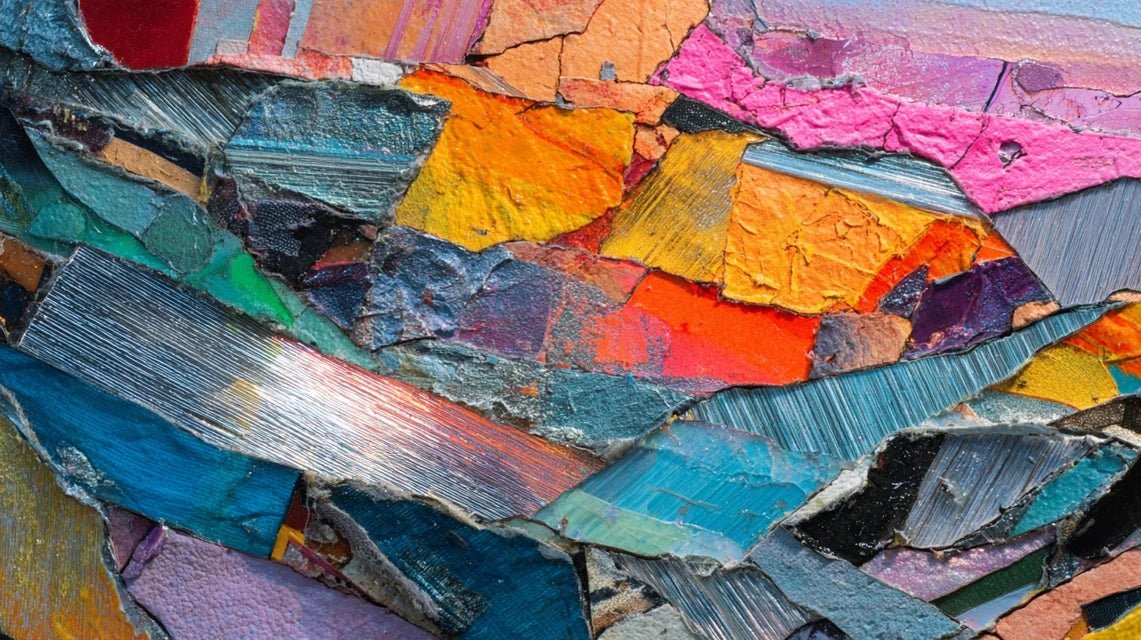
Abstract art finds in artistic upcycling a revolutionary field of expression. The collage of recycled materials becomes the preferred technique, allowing elements to be assembled directly without prior chemical transformation. This method preserves the authenticity of the materials while creating unexpected compositions of abstract paintings.
The assembly of varied textures offers an incomparable visual richness. Artists skillfully exploit contrasts between smooth and rough surfaces, transparent and opaque, to construct dynamic abstract paintings. According to a recent study, 66% of millennials discover upcycling as a new form of artistic expression (Source: Ifop Institute).
The technique of direct application fundamentally distinguishes artistic upcycling from traditional recycling. Instead of chemically transforming recycled materials, the artist integrates them in their natural state, preserving their material memory and authentic character.
Essential recycled materials for abstract paintings
Magazine and newspaper papers form the foundation of many upcycled abstract paintings. Their vibrant colors and printed texts create rich narrative backgrounds, particularly suited to contemporary abstract expression. These elements naturally bring striking chromatic and typographic contrasts.
- Fashion magazines for their saturated colors and glazed surfaces
- Newspapers for their gray textures and characteristic grain
- Advertisements for their bright finishes and vibrant colors
- Pages of old books for their authentic aged patina
Used textiles introduce an exceptional tactile dimension into creations. Denim, cotton, silk, each textile material brings its own personality to abstract paintings. British artist Ian Berry brilliantly demonstrated the creative potential of old jeans by creating stunning portraits using only shades of denim blue.
Furthermore, packaging cardboard and recovered metal elements complement this diverse palette of recycled materials. Corrugated cardboard generates structuring geometric reliefs while metal fragments add precious luminous reflections to abstract compositions.
Methods for combining recycled materials in abstract art
The creative layering reveals the expressive richness of artistic upcycling. Each layer of recycled materials dialogues organically with others, creating a visual depth characteristic of contemporary abstract paintings. This technique allows for subtle play on transparencies and opacities.
Aesthetic harmony is born from the combination of complementary textures/colors. The artist skillfully orchestrates contrasts between raw materials and refined elements, creating a dynamic balance. Recycled materials naturally dialogue, their individual stories merging into a coherent collective abstract narrative.
This harmonious integration transforms the apparent disparity of heterogeneous elements into a surprising aesthetic coherence. This creative alchemy is the distinctive strength of upcycled abstract paintings, where each fragment organically finds its place in the overall composition.
Concrete applications of artistic upcycling on abstract paintings
The creation of reliefs by assembly fully exploits the three-dimensional potential of recycled materials. Artists meticulously construct sculpted surfaces where crumpled papers, pleated textiles and metallic elements create a captivating play of light and shadow.
Games of transparencies reveal the unsuspected poetry of everyday materials. Layered tracing paper, openwork fabrics, plastic films create veiling effects that sublimate abstraction. These techniques allow to reveal and conceal simultaneously, creating a multi-level interpretative reading.
Visual effects by contrast of materials constitute the very essence of artistic upcycling. The calculated juxtaposition of materials with opposite properties - matte/shiny, smooth/textured, old/modern - generates a characteristic creative tension of contemporary upcycled abstract paintings.
Optimization of upcycling creations for abstract paintings
Compositional balance with recycled materials requires an intuitive and developed approach. The artist must meticulously orchestrate the visual weight of each element, creating a fluid flow of gaze despite the heterogeneity of materials. Each fragment strategically finds its place according to its intrinsic expressive strength.
The chromatic harmonization of recovered elements truly reveals the talent of the upcycling artist. You have to know how to master the existing colors of recycled materials to build a coherent palette. This creative constraint paradoxically becomes a source of inspiration, pushing towards unexpected color combinations.
Finally, durable mounting techniques guarantee the longevity of upcycled abstract artworks. Specialized adhesives, reinforced staples, artistic stitching – each material requires a specific technical approach adapted to it. France produces 345 million tonnes of waste annually, of which only 46% are recycled (Source: Service des données et études statistiques), highlighting the crucial importance of valuing these materials through art.