


Modern Boxer Dog Wall Art
Our collection Modern Boxer Dog Wall Art celebrates the power and elegance of this iconic breed through captivating contemporary creations. Each decorative boxer wall painting captures the intensity of the gaze and the noble character of this exceptional dog. Perfect for enhancing your interior, these modern canine art pieces combine sophistication and emotion. Transform your spaces with these artistic representations that pay tribute to the Boxer's loyal temperament in a decidedly contemporary style.
 Reclining Dog Painting Coral Tones - Contemplative Rest - Boxer Edition233,90 €
 Dog Portrait Painting with Orange and Violet Tones - Expressive Gaze - Boxer Edition233,90 €
 Dog Portrait Canvas with Turquoise and Red Tones - Deep Gaze - Boxer Edition233,90 €
 Dog Painting with Neon Colors and Geometric Contrasts - Urban Portrait - Boxer Edition233,90 €
 Boxer Portrait Painting with Ochre Tones - Noble Gaze - Boxer Edition233,90 €
 Tricolor Boxer Dog Wall Art Behind Turquoise Barriers - Tender Gaze - Boxer Edition233,90 €
 Modern Geometric Dog Painting in Bright Interior - Contemporary Elegance - Boxer Edition233,90 €
 Fawn Boxer with Piercing Gaze in Modern Sunroom - Canine Nobility - Boxer Edition233,90 €
 Boxer Dog Painting Fawn Color in Modern Interior - Light and Serenity - Boxer Edition213,90 €
 Dog Portrait Wall Art Fawn and Gray Tones - Expressive Gaze - Boxer Edition213,90 €
 Boxer Portrait with Amber Eyes Painting - Intense Gaze - Boxer Edition213,90 €
Explore further
In Modern Boxer Dog Wall Art
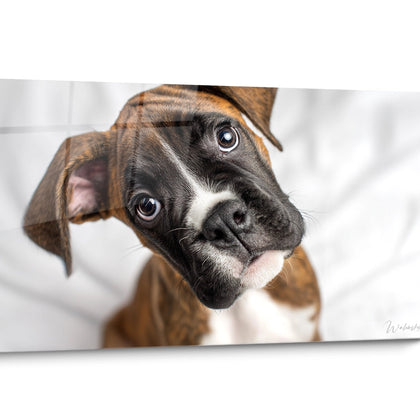
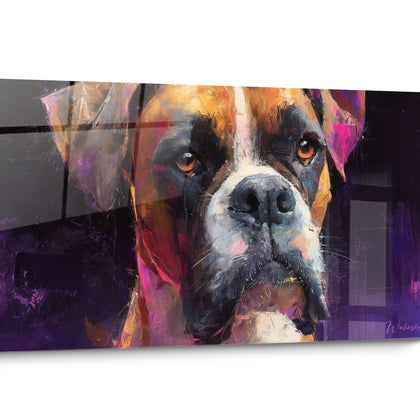
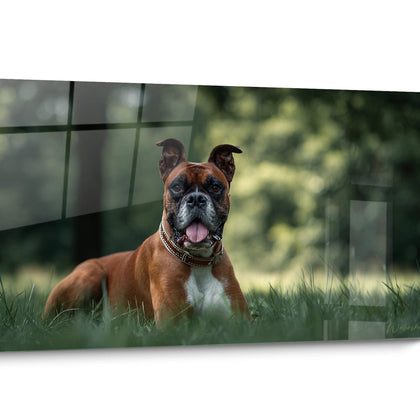


All about Modern Boxer Dog Wall Art
- Modern Boxer Dog Painting Presentation
- Refined Design and Minimalism
- Contemporary Architectural Integration
- Visual Impact and Current Decoration
The modern Boxer dog painting represents the perfect alliance between the power of an emblematic breed and the refined aesthetics of contemporary design. These large-format wall creations transform the raw energy of the Boxer into sophisticated visual compositions, adapted to modern living spaces that value clean lines and expressive simplicity. Unlike traditional representations, the modern Boxer dog painting favors a minimalist graphic approach where every visual element is conceived to maximize impact while maintaining elegant sobriety.
The Refined Aesthetics of the Boxer in Contemporary Version
The modern Boxer dog painting distinguishes itself through its minimalist graphic treatment that captures the essence of the breed without superficial decorative artifice. This approach privileges sharp contrasts, sober color fields and geometric compositions that highlight the characteristic musculature of the Boxer as well as its penetrating gaze. Large-format creations particularly exploit this aesthetic by amplifying visual presence while maintaining perceptual lightness thanks to strategically placed negative spaces.
What visual codes define the modern style for a Boxer?
The modern interpretation of the Boxer rests on several distinctive aesthetic principles. The color palette is generally limited to a maximum of three or four hues, often in neutral tones enhanced with a strategic color accent. The lines of the Boxer are simplified into essential forms that maintain immediate breed recognition while eliminating secondary details. This formal reduction paradoxically amplifies the expressive force of the animal, creating visual tension between abstraction and figuration.
Controlled monumentality in large formats
The generous dimensions of modern Boxer dog paintings allow an immersive visual experience without decorative saturation. In XXL format, the refined treatment avoids the pitfall of visual heaviness often associated with large animal representations. The composition breathes thanks to calculated empty zones that balance the Boxer's muscular mass, creating a spatial dynamic particularly suited to contemporary architectural volumes like lofts or double-height spaces.
How does minimalism enhance the Boxer's morphology?
Minimalism reveals the Boxer's athletic structure by eliminating any visual distraction. Contemporary artists exploit the marked angles of the jaw, the powerful curve of the chest and the alert posture characteristic of the breed as compositional foundations. This formal reduction transforms the Boxer into a modern graphic icon, a symbol of mastered vigor perfectly adapted to interiors seeking animal presence without decorative folklorism.
Dialogue with Contemporary Architecture and Open Spaces
The modern Boxer dog painting naturally fits into current architectural environments characterized by spatial fluidity and transparency. These large-format works function as visual anchor points in open-plan residential spaces, where they structure zones without physical partitioning. The verticality often privileged in these compositions responds to the elongated proportions of bay windows and glass walls typical of modern architecture.
Integration with contemporary materiality
The refined surfaces of the modern Boxer painting create a harmonious dialogue with the raw materials privileged in current architecture. The simplified graphic treatment accords particularly well with exposed concrete, brushed steel and large glass surfaces. This material compatibility is explained by a shared philosophy: reveal the essential by eliminating the superfluous. The monochromatic nuances often employed in these Boxer representations echo the refined industrial palettes of high-end contemporary spaces.
Why does the modern Boxer suit bright spaces?
Contemporary interiors often maximize natural light, and the modern colored Boxer dog painting or monochrome adapts remarkably to these changing light conditions. Unlike overcrowded representations that lose legibility under intense lighting, the graphic simplicity of the modern style maintains its visual force throughout the day. Sharp contrasts and areas of pure color react dynamically to variations in light intensity, creating an evolving work that renews itself according to the hours.
The functionality of the Boxer as a visual separator
In open-plan layouts, a large format depicting a modern Boxer can subtly delimit different functional zones without resorting to partitioning. Strategically positioned, it marks the transition between living space and work area for example, while preserving the visual continuity essential to open-plan interiors. This ability to structure space while maintaining fluidity is a major asset for contemporary arrangements that refuse traditional spatial fragmentation.
The elongated proportions frequently used in these creations reinforce this architectural function. A Boxer presented in vertical format accentuates ceiling height, while a horizontal panoramic composition accompanies the architectural linearities of longitudinal spaces. This formal adaptability explains why modern Boxer dog portrait paintings integrate fluidly into highly varied spatial contexts.
The Contemporary Expression of Vigor and Current Decorative Impact
The modern Boxer dog painting visually translates contemporary values of authenticity and controlled energy. At a time when interiors seek expressions of character without ostentation, the stylized Boxer perfectly embodies this tension between raw force and refinement. Large-format creations amplify this duality by offering monumental presence contained by graphic refinement, thus avoiding any invasive decorative effect.
The spatial psychology of the refined Boxer
The psychological impact of a large format depicting a Boxer in modern treatment differs radically from realistic or ornamental approaches. The graphic refinement generates an impression of dynamic calm particularly sought in current living spaces overexposed to visual stimuli. The direct gaze of the Boxer, reduced to its graphic essence, establishes an emotional connection without excessive dramatization. This expressive sobriety is particularly suited to urban buyer profiles who value contained emotional intensity rather than overflowing expressiveness.
How does the modern style renew decorative canine imagery?
Modern representations of the Boxer break with traditional codes of decorative animal art. Rather than celebrating the breed from a sentimental or hunting perspective, they extract its iconic dimension to make it an autonomous contemporary motif. This conceptual transformation explains why these creations attract both passionate Boxer owners and contemporary design enthusiasts with no particular connection to the breed. The work transcends its animal dimension to become a spatial composition element in its own right.
Chromatic balance in neutral interiors
The monochromatic or bichrompatic palettes privileged in modern interpretations of the Boxer naturally harmonize with the neutral decorative bases of current interiors. A Boxer treated in graphic black and white fits perfectly into a gray and white environment, while a version with a strategic color accent can subtly pick up a tone present in furniture or textiles. This chromatic flexibility facilitates decorative integration without requiring a complete recomposition of the existing color scheme.
For contemporary spaces that dare to use color, Boxer dog pop art paintings offer a vibrant alternative while preserving the graphic clarity of the modern style. These colored versions maintain the formal refinement characteristic while injecting chromatic energy that energizes neutral spaces without visually destabilizing them.
The statutory dimension of the modern large-format canine
Investing in a large-format modern Boxer painting constitutes a marker of assumed decorative positioning. These monumental pieces signal a thoughtful aesthetic choice that privileges graphic quality and measured spatial presence rather than decorative accumulation. In contemporary professional environments like executive offices or high-end reception areas, the modern Boxer brings a note of affirmed character without the aggressive connotation sometimes associated with realistic representations. Realistic Boxer dog paintings serve a different purpose, but the modern version offers graphic sophistication particularly valued in demanding professional contexts.
FAQ - Frequently asked questions about the modern Boxer dog painting
Does a modern Boxer dog painting suit small urban spaces?
Contrary to common assumptions, large modern formats work remarkably well in compact spaces thanks to their refined treatment that avoids visual saturation. The absence of superfluous details and graphic breathing spaces create an impression of spatial openness rather than confinement, particularly effective in studios or urban apartments with limited surface area.
What is the main difference between a modern Boxer and other representation styles?
The modern style is characterized by formal reduction and chromatic refinement, where realistic approaches privilege anatomical detail and traditional decorative styles multiply ornamentations. This graphic simplification gives the modern Boxer superior timelessness and spatial adaptability, making it compatible with the evolution of decorative trends without requiring frequent renewal.
How does a modern Boxer dog painting evolve with decorative changes?
The stylistic refinement of the modern Boxer guarantees remarkable decorative permanence. Unlike pieces strongly marked by current trends, the minimalist approach traverses decorative evolutions without becoming outdated. This aesthetic stability represents a lasting decorative investment, particularly relevant for large-format acquisitions that constitute a significant spatial and financial commitment.


