


Boxer Dog Pop Art Wall Art
Our Boxer Dog Pop Art Wall Art celebrates the boundless energy of this iconic breed through vibrant and dynamic creations. Inspired by the pop art movement, this collection transforms the playful character of the boxer into striking murals with bold colors and daring contrasts. Each artistic boxer wall decoration captures the endearing personality of this faithful companion in a unique contemporary style. Perfect for dog lovers and modern canine art enthusiasts.
 Dog Portrait Painting with Orange and Violet Tones - Expressive Gaze - Boxer Edition273,90 €
 Dog Portrait Canvas with Turquoise and Red Tones - Deep Gaze - Boxer Edition273,90 €
 Dog Painting with Neon Colors and Geometric Contrasts - Urban Portrait - Boxer Edition273,90 €
 Dog Portrait Painting Retro Tricolor Style - Modern Canine Art - Boxer Edition273,90 €
 Colored Boxer Dog Painting in Orange and Violet Tones - Modern Artistic Portrait - Boxer Edition273,90 €
Explore further
In Boxer Dog Pop Art Wall Art
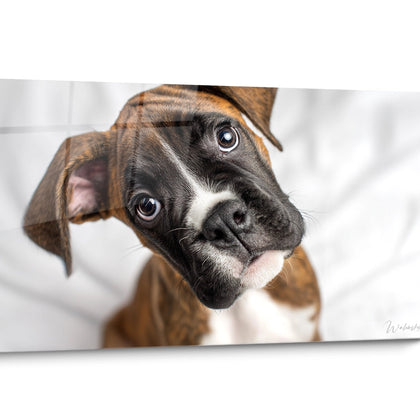
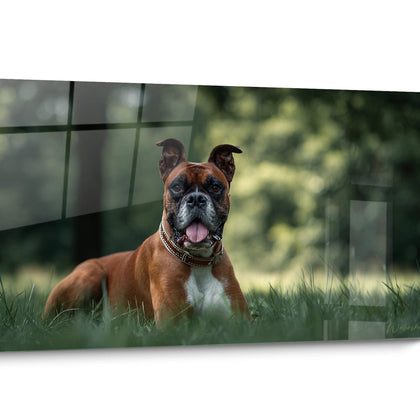


All about Boxer Dog Pop Art Wall Art
- Painting Presentation Boxer Dog Pop Art
- Chromatic Explosion
- Psychology & Impact
- Contemporary Integration
The painting Boxer Dog Pop Art embodies the rebellious and playful spirit of an artistic movement that revolutionized the perception of contemporary art. This bold graphic representation of the Boxer translates the raw energy of this iconic breed into an explosive chromatic universe, where saturated hues and stark contrasts dialogue with the powerful musculature and determined expression of this four-legged companion. Inspired by the visual codes established by the masters of Pop Art, this wall format transforms the recognizable silhouette of the Boxer into a true decorative icon, capable of imbuing contemporary living spaces with a strong personality.
The Oversized Chromatic Aesthetic of the Boxer Pop Art
The painting Boxer Dog Pop Art is distinguished by its radical chromatic treatment, borrowing from the multi-layered screen printing techniques popularized in the 1960s. Saturated primary color blocks - electric magenta, vibrant cyan, solar yellow - fragment the Boxer's natural fawn coat to create a striking visual mosaic. This deliberate chromatic saturation amplifies the visual impact from a distance, particularly suited to large wall formats that dominate contemporary open spaces.
The Graphic Segmentation of the Square Muzzle
The distinctive morphology of the Boxer - this squashed muzzle, these powerful jaws, these expressive eyes - becomes a terrain for graphic experimentation. Thick black contour lines fragment the face into juxtaposed color zones, creating a duotone or four-color effect that recalls commercial printing techniques. This graphic approach transforms the Boxer's characteristic facial wrinkles into geometric elements, reinforcing the visual reading from several meters away.
Why Do Fluorescent Glazes Dynamize the Athletic Silhouette?
The Boxer's muscular anatomy finds a second life under the fluorescent glazes that delineate its protruding shoulders and arched chest. Acidic hues - green apple, mandarin orange, candy pink - create luminous halos that give the composition an almost holographic dimension. For collectors seeking a Colorful Boxer Painting capable of visually structuring a large wall, these chromatic superimpositions generate optical depth without resorting to traditional chiaroscuro techniques.
Repetitive Sequences and Warhol Variation
Some compositions multiply the portrait of the Boxer according to a principle of serial repetition, each iteration presenting a different color palette - cobalt blue, vermilion red, aubergine purple. This variation transforms the Boxer into a reproducible graphic symbol, evoking mass culture and industrial production dear to the Pop Art movement. Panoramic formats particularly exploit this approach, creating a narrative frieze that captures the eye along the entire length of a space.
The Psychological Impact of Pop Visual Codes on Canine Perception
The painting Boxer Dog Pop Art performs a visual transubstantiation of the domestic companion into a cultural icon. By applying the codes of consumer culture to the recognizable traits of the Boxer, this representation questions our emotional relationship with pets while asserting an assumed decorative presence. Graphic simplification and chromatic exaggeration create an ironic distance that does not exclude affection, but reformulates it according to a contemporary visual grammar.
How Does Stylization Enhance the Playful Temperament?
The playful and energetic character of the Boxer finds a perfect echo in the exuberance of color of Pop Art. The vibrant hues visually translate this contagious vitality, this canine zest for life that Boxer owners know intimately. The graphic approach simplifies the facial expression to its essential components - a sparkling gaze, a lolling tongue, erect ears - creating an immediate emotional readability even on monumental formats that dominate contemporary residential spaces.
The Democratization of Animal Portraiture
Historically reserved for academic compositions, canine portraits find new accessibility through Pop Art codes. This aesthetic democratization perfectly corresponds to the popular spirit of the Boxer, a working breed that has become a universal family companion. The painting Boxer Pop Art celebrates this social transition by applying techniques associated with popular culture - comic books, advertising, urban signage - to a subject traditionally elevated. This hybridization creates works that dialogue as well with trendy interiors as with relaxed family spaces.
Which Residential Spaces Amplify this Graphic Expression?
Industrial lofts with bare walls, minimalist open spaces, generous circulation areas are privileged territories for these large-format compositions. The contrast between the chromatic explosion of the painting modern Boxer and the architectural sobriety of the clean spaces generates a productive visual tension. In domestic environments where chromatic neutrality dominates - polished concrete, bleached floors, Scandinavian furniture - this injection of saturated colors functions as a sculptural focal point capable of restructuring spatial perception.
Scenographic Integration in Contemporary Urban Environments
The painting Boxer Pop Art naturally fits into environments that celebrate decorative boldness and stylistic affirmation. Creative professional spaces - communication agencies, design studios, showrooms - exploit this dynamic imagery to convey values of innovation and nonconformism. The immediate recognition of the Boxer combined with the distinctive graphic treatment creates a memorable visual signature that contributes to the spatial identity.
Complementarity with Raw Industrial Materials
Brushed metallic surfaces, exposed steel structures, black cast iron elements create a fascinating material dialogue with the chromatic saturation of Pop Art. This juxtaposition of the raw and the playful, the functional and the exuberant, generates a characteristic urban sophistication of contemporary interiors. The imposing formats allow for harmonious reading even in generous volumes with high ceilings, where a painting Boxer Portrait classic would risk getting visually lost.
How to Orchestrate a Layered Mural Composition?
The accumulation of visual elements according to the "more is more" principle characteristic of Pop Art suggests complex mural compositions. The main painting can anchor a gallery wall integrating other graphic references - vintage typography, urban signage, advertising fragments - creating an eclectic visual narrative. This maximalist approach contrasts with the dominant minimalist restraint, offering an alternative decorative for personalities who assume an uninhibited inner expression.
Directional Lighting as a Chromatic Amplifier
Rail lighting systems with adjustable spotlights allow for selective intensification of certain color zones. A beam directed at the fluorescent planes generates a neon-like luminescence, while grazing light reveals surface textures. This lighting design transforms the wall art into an evolving installation whose appearance varies according to daily cycles and desired atmospheres, multiplying the visual readings of a single composition.
Convergence with Retro-Futuristic Trends
The Pop Art aesthetic naturally dialogues with the vintage resurrections of the 60s, 70s, and 80s that influence contemporary design. Organic-shaped furniture, colorful geometric luminaires, and graphic-patterned textiles create a consistent stylistic continuum. In this context, the painting dog Boxer treated in Pop Art functions as a unifying element that legitimizes and unifies bold decorative choices, transforming potential eclecticism into an assumed bias.
Why choose a Pop Art dog Boxer painting for a professional space?
Creative professional environments benefit from this energetic imagery that conveys dynamism, originality, and a nonconformist approach. The Boxer symbolizes determination and loyalty, while the Pop Art treatment signals an open and innovative corporate culture, creating a memorable visual identity for clients and collaborators.
Is a Pop Art dog Boxer painting suitable for existing animal collections?
This graphic representation integrates perfectly into eclectic collections that mix varied artistic approaches. Its chromatic saturation and marked stylization create a productive contrast with painting dog Boxer Realistic, generating a visual tension that enriches the whole rather than creating dissonance, provided that consistency is maintained in formats and spatial balance.
What chromatic durability for the saturated tones of Pop Art?
The contemporary pigments used for high-definition reproductions offer remarkable resistance to UV rays and atmospheric oxidation. Mineral-based inks retain their saturation for several decades without perceptible alteration, especially when direct sunlight exposure is avoided. This durability guarantees that the initial visual impact remains intact over the long term.
Further reading
Our articles on this topic
L'art qui suscite l'envie
Maison belge d'art mural grand format
14 jourspour changer d'avis*
Protection Walenskyincluse
Fabriquéen Italie
FormatXXL
Kit de fixationtoujours fourni
* Hors tableaux personnalisés et tailles personnalisées


