


Hunting Forest Wall Art
Our Hunting Paintings Forest collection celebrates the art of hunting in all its splendor. Immerse yourself in the authentic universe of ancestral forest hunting through works that capture the intensity of the hunted, the majesty of the game and the mystical atmosphere of the undergrowth. These hunting scene paintings reveal the complicity between hunter and nature, ideal for enhancing a living room, dining room or office. Explore this gallery that pays homage to forest traditions with elegance and character.
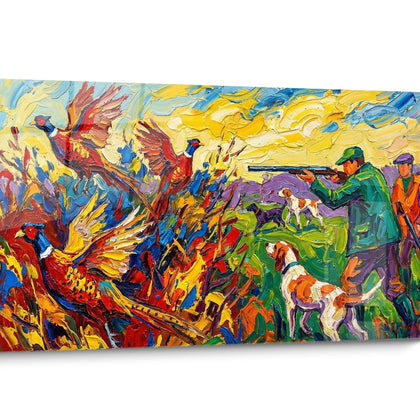
 Hunter in Forest Painting - The Hunter's Dawn - Hunting Edition242,90 €
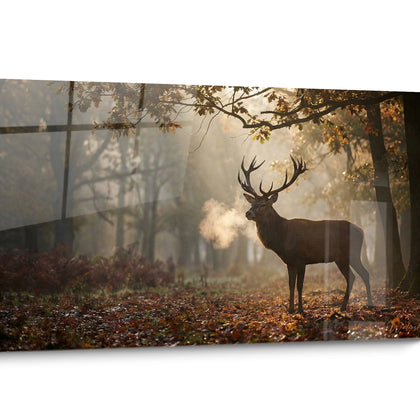
 Deer in Autumn Forest Painting - Majesty in the Mist - Hunting Edition273,90 €
 Hunter and Pack of Dogs Painting - Forest Hunting Scene - Hunting Edition273,90 €
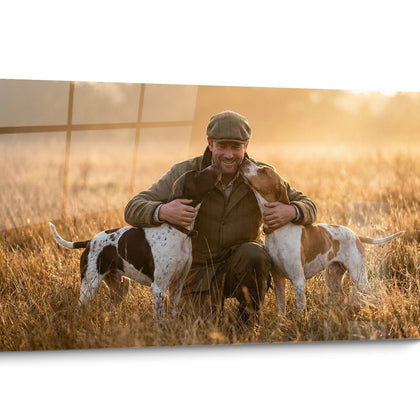
 Hunter with Hunting Dogs Painting - The Spirit of the Forest - Hunting Edition273,90 €
 Walk in Autumn Forest - Hunters and Dogs - Hunting Edition273,90 €
 Hunter and Dog Painting at Sunset - Complicity in Forest - Hunting Edition273,90 €
 Hunter and Dog Painting - Autumn Forest Break - Hunting Edition228,90 €
Explore further
In Hunting Forest Wall Art
All about Hunting Forest Wall Art
- Presentation Hunting painting Forest
- Undergrowth Atmosphere
- Forest Hunting Scenes
- Naturalistic Decoration
The hunting painting forest celebrates the woodland universe and hunting art in all their authenticity. These large-format creations capture the essence of deep groves, mysterious clearings, and intense moments experienced by hunters at the heart of the woods. Designed to enhance the interiors of those passionate about hunting traditions, these monumental visuals transform hunting rooms, rustic libraries, and reception areas into true sanctuaries dedicated to wildlife and forest rituals. Each composition restores the depth of the undergrowth, the particular atmosphere of misty mornings in the forest, and the intensity of encounters with game in its natural habitat.
The Atmosphere of Groves and Undergrowth in the Hunting Forest Painting
An authentic hunting painting forest above all reveals the architectural complexity of the wooded environments where major hunting traditions take place. The large-format forest compositions highlight the characteristic vegetation stratification: the filtering canopy that modulates the light, the shrub layer that offers refuge to game, and the forest floor strewn with dead leaves where animal trails are read. This vertical representation of woodland environments creates exceptional visual depth, particularly sought after in hunting lodges and forest manors.
How do forest light games enhance these hunting representations?
Light breakthroughs through the foliage constitute the major dramatic element of these monumental works. The oblique rays of the morning sun through the branches, the backlighting revealing animal silhouettes, and the mysterious shadow zones compose a specific visual grammar. These light contrasts evoke the lived experience of the hunter at dawn, when the forest awakens and every movement in the thickets becomes perceptible. For contemporary interiors inspired by the hunting autumn painting, these chromatic effects bring warmth and authenticity.
Forest tree species as territorial markers
Each forest composition reveals a precise hunting geography through the tree species represented. Majestic oak forests evoke territories with deer, dense beech forests signal wild boar refuges, while conifers symbolize Nordic hunts. This botanical reading considerably enriches the visual experience for connoisseurs, transforming the visual into a true territorial map of hunting biotopes. Large formats allow you to appreciate the details of bark, mosses and lichens that authenticate the forest scene.
Depth of field and immersion in the woodland ecosystem
The spatial construction of these representations uses the successive planes characteristic of wooded landscapes: detailed foregrounds with stumps and low vegetation, intermediate planes revealing vertical trunks creating a visual rhythm, and vaporous backgrounds suggesting the forest infinity. This stratification generates a feeling of total immersion, as if the observer were actually standing at the lookout on the edge of the forest. Generous dimensions accentuate this visual enveloping effect, particularly effective in vaulted rooms and high-ceilinged spaces in character homes.
Hunting Scenes and Hunting Moments in a Forest Environment
The painting hunting forest captures the decisive moments of hunting practice at the heart of wooded massifs. Unlike scenes of plain or mountain, forest compositions favor the dramatic tension created by dense vegetation: a stag in pursuit in an impenetrable thicket, the pack giving voice between centuries-old trunks, or a wild boar emerging from a lush hallier. These frozen moments convey the adrenaline of hunts in covered terrain, where each encounter remains unpredictable until the last instant.
What place does the pack occupy in these woodland representations?
The representation of hounds in the forest environment constitutes a major artistic challenge brilliantly resolved in large-scale compositions. Packs scattered among the trees, some hounds on the scent, others awaiting the relay, create a complex narrative dynamic. Traces of movement – leaves raised, splashes of streams crossed, postures of alertness – animate the entire composition. This kinetic dimension fundamentally differentiates these scenes from static representations, offering hunting enthusiasts a rich reading of technical details on the phases of the hunt.
Forest game in its natural territory
The integration of game species into their authentic woodland habitat constitutes the signature of successful forest compositions. The majestic red deer crossing an ancient scree, the roe deer on the twilight edge, or a company of wild boars in a bed reveal a precise knowledge of animal behavior. These ethologically correct representations particularly seduce experienced hunters capable of appreciating the veracity of postures, proportions and interactions with the environment. To complete a hunting gallery, combining these forest scenes with a painting hunting sunset creates a complete temporal narrative.
The heritage elements of forest hunting
Monumental compositions often integrate the traditional attributes of hunting in the forest: hunting horns hanging from branches, stone mossy hunting relays, forest markers marking the enclosures, or even hunting parties in traditional attire evolving on riding paths. These heritage details anchor the scene in a pluricentennial historical continuity, evoking the great royal hunts of the domain forests. This memory dimension resonates particularly in interiors attached to French and European hunting traditions.
Decorative Integration of Hunting Forest Painting in Dedicated Spaces
The installation of a painting hunting forest of large format radically transforms the atmosphere of reception rooms and private spaces dedicated to hunting passions. These monumental compositions function as architectural focal points, visually structuring volumes and creating a thematic continuity with solid wood furniture, wall trophies and naturalist libraries. The generous scale of these visuals allows them to effectively dialogue with imposing architectural elements – exposed beams, stone fireplaces, wood paneling – characteristic of hunting lodge style interiors.
What environments particularly enhance these forest representations?
Trophy rooms and hunting libraries constitute the natural setting for these compositions. In these spaces, the forest visual extends the collections of venerated works, mounted deer antlers, and hunting memories. Living rooms with a monumental fireplace particularly benefit from installation above the mantelpiece, creating a visual counterpart to the flames evoking forest bivouac fires. Distribution corridors and galleries of longères allow for the installation of multiple formats in series, narrating different moments of the same hunting day. Exploring the complete painting hunting collection allows you to identify complementary compositions.
Color harmony with natural materials
The dominant tones of the forest compositions – deep greens of mosses, warm browns of bark, ochres of autumnal foliage, silvery greys of morning mists – naturally harmonize with the raw materials preferred in chic rustic interiors. The solid oak of the furniture, the natural linen textiles, the patinated leathers, and the exposed stones find a chromatic echo in these vegetal palettes. This color consistency creates an enveloping and authentic atmosphere, avoiding the visual breaks of contrasts that are too marked.
Wall composition and thematic staging
The installation of a monumental forest composition is ideally conceived as the center of a larger wall scenography. Arrangements including antique forest cartography, decorative forestry measuring instruments, vintage botanical engravings, and animal art objects create a coherent visual narrative. Libraries framing the main visual, stag antlers sconces, and consoles presenting binoculars or hunting notebooks complete the thematic immersion. This curatorial approach transforms a simple wall into a true cabinet of curiosities dedicated to the forest hunting universe.
Why choose a large-format forest hunting painting for your interior?
Generous dimensions allow for faithful reproduction of the visual complexity of forest environments, with their multiple planes of depth and botanical details. An imposing format also creates an immediate decorative impact, structuring the space and clearly affirming the occupants' hunting passion. The monumental scale corresponds to the majesty of the subjects represented – imposing deer, numerous packs, centuries-old groves – avoiding the miniaturization that would weaken their presence.
How to combine different hunting paintings in the same room?
The key lies in varying the moments and atmospheres while maintaining a consistent forest theme. Combining a morning hallali scene, a twilight composition, and a moment of pack rest creates a complete temporal narrative. Prioritizing harmonious color palettes – autumnal tones or misty atmospheres, for example – ensures visual unity despite the diversity of scenes. Alternating vertical and horizontal formats energizes the arrangement.
Is a forest hunting painting suitable for contemporary interiors?
Absolutely, provided you opt for compositions that are purified, prioritizing the graphic strength of the wooded and animal silhouettes. Minimalist interpretations of forest scenes, with their marked contrasts and geometric compositions, integrate perfectly into contemporary interiors that blend raw materials and clean lines. The neo-rustic style, which is very popular, particularly values these naturalistic references in modern architectural contexts.
L'art qui suscite l'envie
Maison belge d'art mural grand format
14 jourspour changer d'avis*
Protection Walenskyincluse
Fabriquéen Italie
FormatXXL
Kit de fixationtoujours fourni
* Hors tableaux personnalisés et tailles personnalisées


