







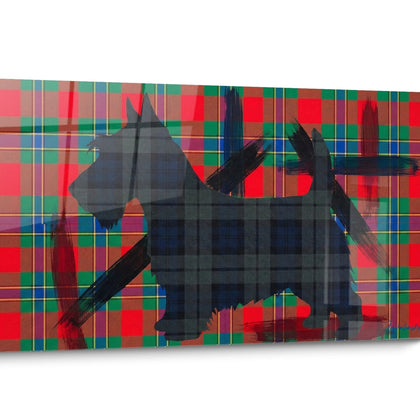
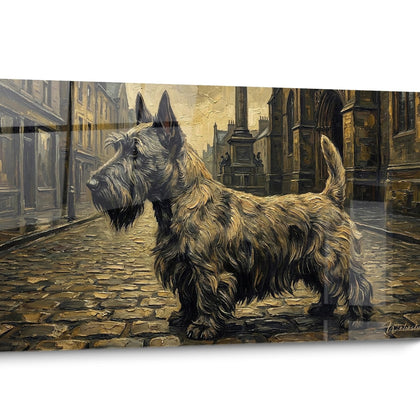
Scottish Terrier Dog Vintage Wall Art
Our Painting Scottish Terrier Vintage celebrates the timeless elegance of this iconic breed. Each piece in our collection captures the distinguished character and recognizable silhouette of the Scottie in an authentic retro style. Perfect for lovers of vintage dog decor and enthusiasts of this Scottish breed, these artistic creations bring a touch of refined nostalgia to your interior. Whether you are a collector or simply a dog lover, our wall art Scottish Terrier will transform your walls into a personal gallery.
 Scottish Terrier on Fishing Pier in the Mist - Nostalgic Waiting - Scottish Terrier Edition273,90 €
 Black and White Scottish Terrier Painting on Rocks - Faithful Companion - Scottish Terrier Edition273,90 €
 Gray and White Scottish Terrier Duo Canvas - Faithful Companions - Scottish Terrier Edition273,90 €
 Black Dog in the Rain on a Paved Street - Urban Melancholy - Scottish Terrier Edition273,90 €
 Gray Dog Urban Walk Wall Art - City Promenade - Scottish Terrier Edition273,90 €
Explore further
In Scottish Terrier Dog Vintage Wall Art
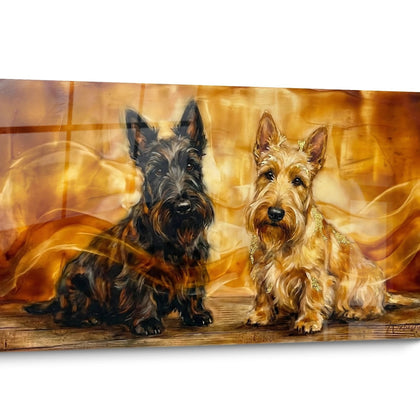
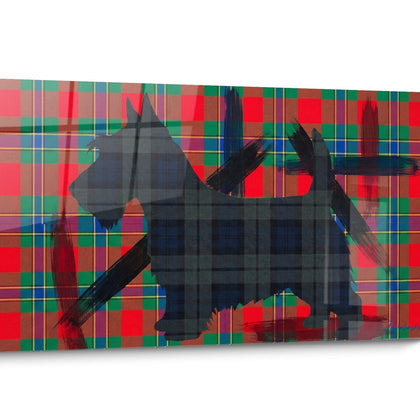
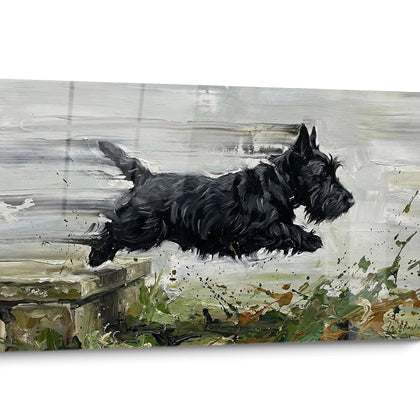
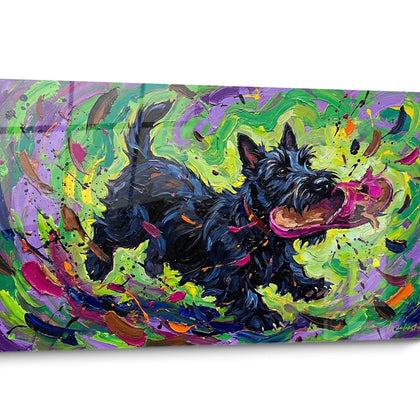
All about Scottish Terrier Dog Vintage Wall Art
- Vintage Scottish Terrier Wall Art Presentation
- British Retro Authenticity
- Scottish Gentleman Spirit
- Victorian Atmosphere
A vintage Scottish Terrier dog canvas celebrates the elegance of a breed emblematic of Scottish and British aristocracy. These large-scale wall art representations capture the nostalgic essence of the 1920-1950 era, when the Scottie embodied refinement and distinction in bourgeois homes. The vintage aesthetic instantly evokes English clubs, Scottish mansions, and the golden age of retro advertising when this recognizable silhouette adorned posters and luxury packaging. These monumental creations transform your home into a true heritage gallery, particularly appreciated by collectors of classic British décor and enthusiasts of European canine history.
The Graphic Heritage of Scottish Terrier's Golden Years
The vintage Scottish Terrier dog canvas draws its authenticity from advertising iconography of the 1920-1960s, an era when this breed symbolized social standing. Large-scale reproductions are directly inspired by Scottish whisky promotional posters, British biscuit labels, and illustrations from aristocratic magazines. This retro sepia aesthetic, with its ochre, parchment beige, and deep black hues, recreates the atmosphere of period printing houses.
Why did the Scottish Terrier dominate retro visual culture?
Between the wars, the Scottie became a British national mascot, symbolizing tenacity during global conflicts. Advertising campaigns exploited its compact and recognizable silhouette to sell luxury products and transatlantic travel items. A large-scale vintage Scottish Terrier dog canvas captures these visual codes: art deco typography, decorative borders inspired by Victorian ironwork, geometric compositions characteristic of British modernism. These wall art pieces are particularly suited to private libraries, smoking rooms arranged like London clubs, or entries with colonial furniture.
The chromatic codes of vintage British imagery
Authentic vintage creations favor desaturated palettes: sepia tones reminiscent of albumen photographs, forest greens evoking Scottish highlands, burgundy reds of traditional tartans. Unlike contemporary representations, the retro approach uses subtle gradations and artificial patinas simulating natural paper aging. These visual characteristics harmonize ideally with aged oak flooring, dark wood paneling, and patinated leather typical of classic English interiors.
How to identify a genuinely vintage-inspired composition?
The most convincing vintage Scottish Terrier dog canvases reproduce period printing techniques: visible halftoning imitating lithography, slightly blurred contours characteristic of chromolithography, inclusions of retro English slogans or fictional handwritten annotations. Monumental formats amplify the nostalgic impact, transforming these historical references into true decorative statements. Particularly sought-after: compositions combining the Scottie with heritage elements such as Big Ben, Highland castles, or British steam locomotives.
Gentleman Spirit and Affirmative Character of Retro Scottie
A vintage Scottish Terrier dog canvas represents more than simply an animal—it embodies an entire system of British values: unwavering loyalty, disproportionate courage, and natural dignity. Period representations consistently show the Scottie in a noble posture, ears erect, determined gaze, reproducing the aesthetic standards of Victorian canine portraits. This vintage iconography instantly conveys distinction and cultural refinement.
What historical symbolism does this breed carry in vintage imagery?
During the Victorian and Edwardian era, owning a Scottish Terrier signaled membership in the cultured elite. Animal painters represented it alongside owners in hunting attire, in wood-paneled libraries or English gardens. A large-format vintage Scottish Terrier dog canvas reactivates this aristocratic symbolism, particularly prized in executive offices, law firms, or secondary residences with manor-style decor. The retro imagery also evokes American presidents and celebrities who adopted this breed as a personal emblem.
The decorative attributes of gentleman aesthetics
Vintage compositions frequently associate the Scottie with emblematic accessories: pipes, Times newspapers, leather briefcases, tartan bow ties. These contextual elements reinforce the British club atmosphere and transform the canine representation into a complete genre scene. Large formats allow appreciation of vestment details and accessories, creating true narrative wall art. This styling approach is ideally suited to traditional masculine spaces: billiard rooms, cigar lounges, vintage automotive collector garages.
Why does vintage Scottie appeal to British history enthusiasts?
Beyond the animal, these representations visually document a pivotal period in European history. They evoke the British Empire at its zenith, luxurious transatlantic crossings, and the emergence of modern advertising. For collectors of British memorabilia, a vintage Scottish Terrier dog canvas naturally complements collections comprising vintage timepieces, period globes, or railway miniatures. Screen-printed versions imitating original promotional posters create thematic coherence in interiors dedicated to heritage anglophilia. To enrich this atmosphere with a softer touch, some owners pair these compositions with a Scottish Terrier watercolor canvas that offers a gentler interpretation of the same emblematic breed.
Victorian and Edwardian Atmosphere Recreation
The vintage Scottish Terrier dog canvas excels at recreating precise historical atmospheres, particularly the late Victorian and Edwardian periods (1880-1920). These decades witnessed the birth of aesthetic standards still referenced today: cluttered interiors, textural layering, a blend of Oriental and Celtic influences. Vintage canine representations fit perfectly within this maximalist decorative logic, bringing unmistakable British character.
How to integrate these artworks into neo-Victorian décor?
Large formats work ideally above marble fireplaces, framed by dark woodwork and flanked by patinated brass sconces. The pairing with damask-patterned wallpapers, thick velvet, and upholstered furniture reinforces stylistic coherence. Well-informed collectors position these canvases in gallery-like corridors organized chronologically, creating a visual journey through British canine history. Wide staircases also constitute privileged locations, with the vertical composition naturally accompanying upward progression.
Which decorative associations reinforce period authenticity?
A vintage Scottish Terrier dog canvas gains impact when paired with thematic collections: antique pewter, Victorian botanical engravings, period colonial globes. Authenticity-seeking enthusiasts search for solid wood frames with mahogany or walnut finishing, sometimes adorned with engraved brass plaques reproducing Latin nomenclature. Lighting plays a crucial role: adjustable brass sconces or library lamps with emerald green shades create dramatic lighting reminiscent of gas lighting in Victorian mansions. These museographic strategies transform domestic space into a true cabinet of historical curiosities.
The aesthetic evolution of Scottie in British visual culture
From aristocratic painted portrait to screen-printed advertising poster, the Scottish Terrier's representation has traversed major artistic revolutions. Large-scale vintage canvases document this evolution: idealized Pre-Raphaelite styles, meticulous Victorian realism, geometric art deco stylization. For art history enthusiasts, these works constitute true visual archives testifying to transformations in British sociocultural heritage. Their installation in cultural salons or professional reception spaces systematically generates erudite conversations about European canine heritage and period aesthetics.
Where to place a vintage Scottish Terrier dog canvas to maximize historical authenticity?
Spaces with period architecture constitute natural placements: restored Victorian homes, Haussmann apartments, traditional British cottages. In contemporary constructions, these artworks create deliberate contrast when positioned in rooms dedicated to retro style: private bars designed as 1920s speakeasies, offices arranged in colonial style, or themed guest rooms. Monumental scale imposes instant aristocratic presence.
How do these vintage representations distinguish themselves from contemporary Scottish Terrier illustrations?
Vintage creations prioritize historical narrative and explicit cultural references over pure artistic expressivity. They incorporate period typography, authentic advertising slogans, geometric compositional frames characteristic of the early twentieth century. This historical visual documentation contrasts radically with minimalist or abstract modern interpretations, offering semantic density appreciated by British heritage collectors.
Which buyers specifically seek large-format vintage Scottish Terrier dog canvases?
Primary purchasers include passionate anglophiles, British memorabilia collectors, Scottish Terrier owners wishing to celebrate their companion's historical lineage, and decorators specializing in period reconstructions. High-end hospitality professionals also seek these artworks for themed establishments: authentic pubs, manor-style boutique hotels, or private clubs. The monumental format guarantees commercial visual impact while conveying values of tradition and historical excellence.


