


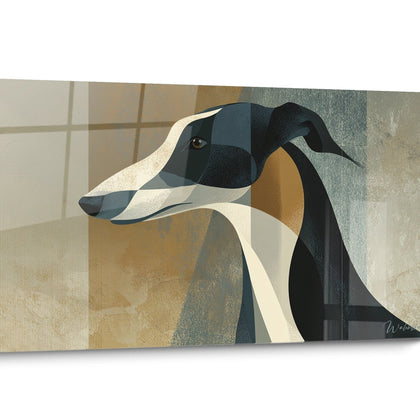
Sakuki Dog Portrait Wall Art
The Painting dog Sakuki Portrait celebrates the elegance and charm of canine companions through a striking artistic representation. This collection offers an emotional and authentic vision of our four-legged friends, capturing their unique personality and expressive gaze. Ideal for dog lovers, this artwork brings warmth and character to your interior. The artistic dog portraits transform your space into a gallery dedicated to canine loyalty. Adopt this wall decoration dog Sakuki for an interior filled with tenderness and authenticity.
 Amber-Eyed Greyhound Painting on Fuchsia Pink Background - Modern Portrait - Saluki Edition273,90 €
 Greyhound Portrait Canvas with Vibrant Colors - Majestic Profile - Saluki Edition273,90 €
 Greyhound Painting Golden Eyes - Elegant Portrait - Saluki Edition273,90 €
 White Dog Wall Art with Turquoise Jewelry on Red Background - Noble Portrait - Saluki Edition273,90 €
 Stylized Greyhound Canvas in Beige and Black Tones - Geometric Portrait - Saluki Edition273,90 €
 Greyhound Portrait Wall Art in Black and White - Silent Nobility - Saluki Edition273,90 €
 Greyhound Wall Art in Vibrant Colors - Contemporary Artistic Portrait - Saluki Edition273,90 €
 Greyhound Portrait Canvas with Warm Tones and Melancholic Gaze - Canine Nobility - Saluki Edition273,90 €
 Golden Saluki with Ornate Oriental Collar Portrait - Elegant Edition Saluki273,90 €
 Greyhound Profile Painting with Red and Orange Tones - Noble Portrait - Saluki Edition228,90 €
 Grey Greyhound Painting with Amber Eyes on Green Background - Elegant Portrait - Saluki Edition228,90 €
 Sighthound Portrait Canvas with Golden Eyes on Purple Background - Intense Gaze - Saluki Edition228,90 €
Explore further
In Sakuki Dog Portrait Wall Art


All about Sakuki Dog Portrait Wall Art
- Sakuki Canine Portrait Presentation
- Contemporary Animal Iconography
- Modern Canine Portrait Aesthetics
- Sakuki Artistic Variations
The painting Sakuki Portrait dog stands out as a contemporary artistic representation that sublimates canine nobility through a sophisticated visual treatment. This exclusive creation captures the essence of man's best friend in a graphic composition that transcends simple animal illustration. Each Sakuki portrait reveals a magnified canine personality through a recognizable artistic style, combining precise features and immediate visual impact. The generous dimensions of these wall artworks transform any living space into a true cynophile gallery, where the universal attachment to dogs finds a refined decorative expression. This artistic approach to canine portraiture meets the expectations of enthusiasts seeking an elegant alternative to traditional photographs or conventional illustrations.
The Visual Identity of the Sakuki Canine Portrait
The Sakuki Portrait dog painting is part of an artistic approach that reinvents traditional canine iconography. Unlike classic representations, this collection favors a graphic stylization where each breed finds a distinctive visual interpretation. The strength of these compositions lies in their ability to capture the archetype of each canine morphology while maintaining a recognizable stylistic consistency.
Which canine breed best suits the Sakuki Portrait style?
Breeds with distinctive features find a particularly successful enhancement in the Sakuki treatment. Large dogs such as the German Shepherd, Siberian Husky, or Golden Retriever benefit from a majestic presence amplified by the monumental dimensions of these wall creations. The graphic simplification inherent in the Sakuki style accentuates the natural nobility of these companions, transforming their physical particularities into powerful compositional elements. Generous proportions are available to appreciate every expressive detail of the canine gaze, the central focal point of these portraits.
The chromatic palette at the service of canine emotion
The strategic use of hues in a Sakuki Portrait dog painting creates a distinct emotional atmosphere. Tone variations do not merely reproduce the animal's coat faithfully, but explore chromatic registers that reinforce the work's affective dimension. Subtle contrasts between light and shadow areas give the portrait a three-dimensional depth, while certain color touches introduce a welcome modernity. This chromatic approach radically differentiates these creations from simple photographic reproductions, offering an artistic interpretation that dialogues with the contemporary interior environment.
The psychological impact of the monumental canine gaze
In a large format, the gaze of the represented dog acquires an unparalleled emotional power . Sakuki portraits capitalize on this instinctive connection we establish with the animal gaze. Installed in a main living space, this type of wall creation generates a visual convergence point that instantly humanizes the atmosphere. For dog owners or passionate cynophiles, this permanent canine presence responds to a deep emotional need, creating an emotional continuity even in the absence of the real animal. Visitors invariably react to this magnified canine presence, triggering conversations and sharing of experiences around the human-dog relationship.
Spatial Positioning of the Canine Portrait in the Modern Habitat
Successfully integrating a dog painting Sakuki Portrait requires strategic consideration of its placement within the interior architecture. These large-format creations demand a spatial environment that respects their proportions while maximizing their decorative impact. Ceiling height is a determining parameter: spaces with generous volumes allow for full exploitation of the verticality of these compositions.
How to integrate a monumental dog portrait into a family living room?
The living room represents the preferred location to enhance a dog painting Sakuki Portrait, particularly above a main sofa or opposite the circulation area. This central position transforms the portrait into a unifying element of the decoration, around which the other aesthetic components gravitate. For dog-loving families, installing this canine representation in the collective living space symbolically affirms the dog's place within the family unit. The imposing dimensions create a reassuring presence, evoking the loyalty and protection associated with man's best friend. Pairing with furniture with clean lines accentuates the modernity of the whole, while a more traditional environment benefits from the contrast provided by the contemporary treatment of the subject.
The alternative of a private study or home office
Domestic professional spaces gain character with the installation of a Sakuki dog portrait. Unlike abstract works often favored in these contexts, the representation of a faithful companion introduces a personal dimension that humanizes the work environment. Breeds evoking leadership and determination – such as the doberman or rottweiler – subtly reinforce an atmosphere of benevolent authority. For professionals receiving clients at home, these portraits are excellent conversation starters, creating a relaxed atmosphere conducive to exchanges. The dog painting Sakuki Doré collection offers a chromatic variation particularly suited to interiors seeking an additional touch of prestige.
What wall composition to associate with a main dog portrait?
Although a dog painting Sakuki Portrait is strong enough to dominate an entire wall alone, certain associative compositions create sophisticated decorative effects. The option of a thematic triptych, grouping three different breeds in a consistent format, transforms a panel of wall into a veritable personal canine gallery. Alternatively, association with botanical elements or natural landscapes evokes the original environment of dogs, recalling their ancestral connection with nature. Commercial spaces related to the canine world – high-end grooming salons, premium accessory boutiques, specialized veterinary clinics – exploit these monumental portraits to create a distinctive visual identity that celebrates their area of expertise.
Symbolic and Cultural Value of Contemporary Dog Portraiture
Beyond its purely decorative dimension, the dog painting Sakuki Portrait is part of a millennial tradition of canine representation that crosses cultures and eras. From Egyptian frescoes to European aristocratic portraits, the dog has always occupied a privileged place in artistic iconography. The Sakuki contemporary version updates this heritage by adapting it to current visual codes, responding to the evolution of the dog's status in our modern societies.
The dog as a mirror of personal values
The choice of a specific canine portrait reveals profound psychological dimensions. Lovers of Nordic breeds such as the husky often express an affinity with values of freedom and adventure, while portraits of French bulldogs translate an appreciation of character and individuality. A Sakuki Portrait painting thus becomes an identity extension, a silent declaration about the qualities we admire and aspire to embody. This projective dimension explains the particular attachment that buyers develop towards these works, far exceeding simple aesthetic satisfaction.
How does a canine portrait influence the domestic atmosphere?
Research in environmental psychology confirms that animal representations in the habitat generate measurable effects on the well-being of occupants. A large-scale canine portrait creates a benevolent presence that softens the atmosphere of living spaces, particularly in urban environments where contact with nature and animals becomes scarce. For children growing up in these interiors, these representations normalize the presence of animals and cultivate empathy towards non-human creatures. People living alone frequently report that these artistic canine presences alleviate feelings of loneliness, creating a form of symbolic companionship.
The canine portrait as a meaningful gift
Offering a Sakuki Portrait painting representing the breed of a deceased companion is a gesture of rare delicacy. This approach allows to prolong the presence of the missing animal without the painful aspect of a direct photograph. Similarly, to celebrate the arrival of a puppy in a family, immortalizing its breed in a durable wall art marks symbolically this significant family event. Passionate breeders also use these portraits to visually celebrate their favorite lineages, transforming their professional space into a tribute to their breeding work. These emotional uses radically differentiate these creations from simple interchangeable decorative elements.
Which Sakuki Portrait painting best suits a Scandinavian interior?
Scandinavian interiors, characterized by their bright minimalism and neutral tones, particularly welcome portraits of Nordic breeds such as the Siberian husky or the Alaskan malamute. These representations create a natural thematic consistency with Scandinavian aesthetics while introducing the necessary focal point for these clean environments.
Is a Sakuki Portrait painting suitable for commercial spaces?
Absolutely, especially in establishments welcoming a canine clientele: pet-friendly hotels, dog-friendly restaurants, coworking spaces allowing dogs. These monumental portraits immediately affirm the positioning of the establishment and create a warm atmosphere that reassures dog owners of their effective welcome.
How to durably maintain a large-scale Sakuki Portrait painting?
Monumental formats require maintenance adapted to their dimensions. Monthly dusting with an anti-static duster preserves the sharpness of the details. Keeping away from direct heat sources and controlling sun exposure significantly prolongs the vibrancy of the colors, particularly important for works intended to become permanent elements of the domestic environment.
Further reading
Our articles on this topic
- Gift idea for a schipperke-loving teacher: how to get a custom painting right
- Ink painting of a Japanese dog in black and white for a hallway: the layout guide
- White Japanese Spitz Painting in Scandinavian Style for the Living Room: How to Integrate It Well
- Shiba Inu painting: how to showcase a welcoming, bright entrance
- Dog-lover gift idea: toy poodle painting for owners, the guide to choosing well
- Dog-lover gift idea: collie wall art, which model to choose?
L'art qui suscite l'envie
Maison belge d'art mural grand format
14 jourspour changer d'avis*
Protection Walenskyincluse
Fabriquéen Italie
FormatXXL
Kit de fixationtoujours fourni
* Hors tableaux personnalisés et tailles personnalisées


