


Rottweiler Dog Portrait Wall Art
The Rottweiler Dog Portrait Wall Art captures the very essence of this majestic breed. Our collection highlights the power, intelligence, and loyalty of the Rottweiler through contemporary artistic works. Each Rottweiler portrait reveals the noble and protective character of this emblematic dog. Perfect for canine enthusiasts, this collection of decorative dog wall art transforms your space into a personalized art gallery, celebrating the unique bond between humans and their faithful companion.
 Rottweiler Black and Tan Portrait Canvas with Amber Eyes - Intense Gaze - Rottweiler Edition273,90 €
 Black and Tan Rottweiler with Melancholic Gaze - Intimate Portrait - Rottweiler Edition273,90 €
 Majestic Rottweiler Canvas with Golden Highlights - Canine Nobility - Rottweiler Edition273,90 €
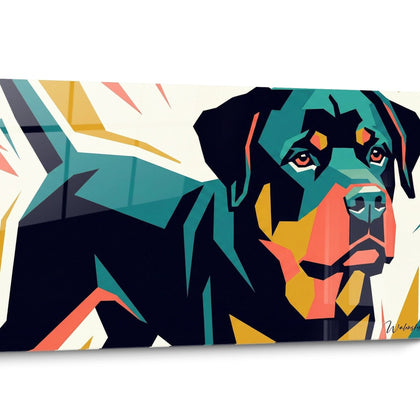
 Black Dog Painting with Turquoise and Orange Reflections - Geometric Portrait - Rottweiler Edition273,90 €
 Stylized Dog Wall Art Art Deco Gold and Black - Geometric Portrait - Rottweiler Edition273,90 €
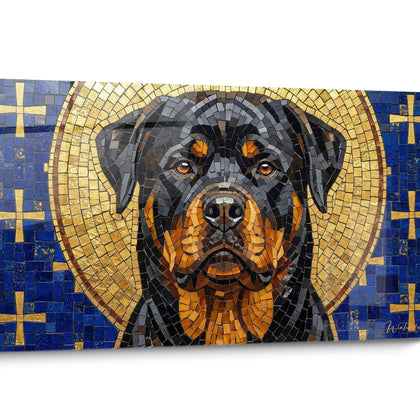
 Rottweiler Portrait Painting in Golden and Blue Mosaic - Saint Canine - Rottweiler Edition273,90 €
 Mosaic Canine Portrait Painting with Blue and Orange Hues - Captivating Gaze - Rottweiler Edition228,90 €
Explore further
In Rottweiler Dog Portrait Wall Art


All about Rottweiler Dog Portrait Wall Art
- Painting Rottweiler Dog Portrait Presentation
- Imposing Portrait of a Rottweiler
- Feline Expression and Rottweiler Gaze
- Enhancing the Portrait
The painting Rottweiler dog portrait captures the very essence of this majestic breed through a striking frontal representation. This wall decor immortalizes the penetrating gaze and imposing stature of the Rottweiler, offering a remarkable visual presence in any living space. Unlike dynamic or action representations, the portrait format focuses attention on the distinctive facial features of this German molossus: its deep eyes, its characteristic fire markings, and its powerful jaw. This type of painting responds to a specific aesthetic search for breed enthusiasts who want to celebrate the nobility and dignity of the Rottweiler in their interior decoration.
The Visual Impact of the Frontal Rottweiler Portrait
The Rottweiler dog portrait painting is distinguished by its ability to establish direct eye contact with the viewer. This frontal composition creates an immediate emotional connection, transforming a simple decorative element into a true conversation starter. The large dimensions of these wall reproductions allow to capture every characteristic anatomical detail: the width of the skull, the set of drooping ears, and above all those mahogany markings above the eyes that give the Rottweiler its so recognizable expression.
Why choose a portrait rather than an action scene?
The portrait format eliminates any contextual distraction to focus exclusively on the subject's personality. This minimalist approach is particularly suitable for contemporary interiors where visual clarity is paramount. Unlike representations in situ, the timeless portrait of the Rottweiler transcends decorative trends without losing its aesthetic relevance. Passionate collectors prefer this approach for its emotional authenticity: the dog's gaze becomes the silent narrator of the space.
The psychology of canine gaze in wall art
Neuroscience confirms that the human brain instinctively reacts to faces looking directly at us. A Rottweiler portrait painting exploits this cognitive mechanism to create an almost physical presence in the room. This daily visual interaction establishes a particular affective bond, explaining why Rottweiler owners or breed admirers specifically seek this format. To discover other artistic interpretations of this breed, the Rottweiler golden dog painting offers a more luxurious and stylized approach to the same subject.
Monumental dimensions and spatial presence
Large formats amplify the presence effect of the Rottweiler. A representation at almost life-size transforms the wall into a symbolic window, as if the animal were kindly watching over the home. This monumentality is particularly suitable for generous volumes: entrance halls, spacious living rooms or professional offices where the image of the Rottweiler reinforces an affirmed visual identity. The imposing size also prevents the work from being drowned among other decorative elements, guaranteeing its status as a centerpiece.
Anatomical and Symbolic Decryption of the Rottweiler Portrait
The Rottweiler dog portrait painting becomes a true graphic manifesto when it highlights the unique morphological characteristics of the breed. The Rottweiler's massive and square head, with its pronounced stop, constitutes an immediately identifiable visual signature. Artists specializing in this type of representation know how to subtly accentuate these traits to reinforce the decorative impact without falling into caricature.
How fire markings structure the composition?
The reddish spots above the eyes, on the cheeks and chest are not just anatomical details: they create visual anchor points that naturally guide the gaze. In a well-composed portrait, these chromatic contrast zones balance the dark mass of the black fur and avoid visual monotony. This black-tan alternation generates a graphic dynamic that maintains interest even during prolonged exposure, unlike monochromes which quickly tire the eye.
Facial expression as decorative language
A Rottweiler portrait painting communicates a specific atmosphere depending on the captured expression. An alert gaze and erect ears project vigilance and protection, ideal for an office or professional entrance. Conversely, a relaxed expression with half-closed eyes creates a soothing atmosphere for relaxation areas. This emotional versatility explains why buyers carefully scrutinize the expression before purchase: it will determine the daily energy of the room.
What environments enhance this type of portrait?
The neutral or abstract backgrounds of the painting allow for harmonious integration into various decorative contexts. A dark background creates a dramatic effect highly prized in industrial or masculine interiors, while a light background softens the subject's power for family atmospheres. Rottweiler owners particularly appreciate installing these portraits in passageways where the dog seems to symbolically guard, perpetuating the breed's historical function as property guardian.
Strategies for Integrating the Rottweiler Portrait into the Habitat
The installation of a Rottweiler portrait painting requires spatial reflection to maximize its decorative impact. Unlike multi-subject compositions, the single-subject portrait requires privileged treatment: it works best isolated rather than immersed in a wall gallery. Its intrinsic visual power struggles to compete with other adjacent works, creating a counterproductive attention competition.
Strategic Placement According to Interior Architecture
Bearing walls or spaces between large openings offer ideal locations. The Rottweiler portrait particularly benefits from a position facing the main entrance of the room, immediately establishing the visual hierarchy of the space. Long hallways transform the portrait into a visual vanishing point, magnetizing the gaze towards that visual destination. For double-height spaces, a vertical format accentuated enhances the proportions of the subject while harmonizing the architectural scale.
Color Associations with Existing Furniture
The Rottweiler's bicolor coat (dominant black with tan accents) naturally harmonizes with earth tones, dark woods and aged leathers. This color compatibility facilitates integration into rustic, industrial or contemporary masculine decors. Scandinavian interiors create a striking contrast that visually isolates the painting as a bold statement piece. Textiles in rust or cognac tones establish subtle echoes with the dog's fire markings, weaving a sophisticated decorative coherence.
Enhancement through Ambient Lighting
The Rottweiler's black coat absorbs a considerable amount of light, a crucial parameter for the painting's positioning. Areas benefiting from indirect natural lighting enhance the nuances of the fur without creating annoying reflections. For dark spaces, a dedicated lighting system becomes essential: adjustable spotlights or wall sconces create the necessary relief to distinguish facial details. Side lighting particularly dramatizes the muscular contours of the head, amplifying the subject's three-dimensional presence.
Why is the Rottweiler dog painting portrait suitable for professional offices?
The Rottweiler traditionally symbolizes reliability, protection, and loyalty - values transferable to a professional context. An imposing portrait communicates authority and stability, subconsciously reinforcing the perceived credibility of the workspace.
What is the difference between a photographic and an artistic Rottweiler portrait?
A photographic portrait prioritizes hyperrealism and anatomical fidelity, appealing to the breed's purists. Artistic interpretations (painting, digital illustration) allow for greater stylistic freedom and emotional emphasis, creating more decorative works than documentary ones.
How to maintain a large-format Rottweiler dog painting portrait?
A monthly dusting with a dry microfiber cloth is usually sufficient. Avoid chemical products that may alter the pigments. For hard-to-reach areas, an anti-static duster prevents dust accumulation in the corners of the frame without direct contact with the printed surface.
Further reading
Our articles on this topic
- Rottweiler Painting Size for an Entryway: A Guide to Getting the Proportions Right
- Black and white Weimaraner painting: the perfect gift idea for a couple who love dogs
- Custom American Cocker Spaniel portrait painting: the original gift that touches the heart
- Decorating an entrance with a dog portrait painting: ideas, tips and inspiration
- Vintage Weimaraner wall art: matching your painting to a rustic living room
- German Mastiff Oil Painting Portrait: Elevate an Adult Bedroom
L'art qui suscite l'envie
Maison belge d'art mural grand format
14 jourspour changer d'avis*
Protection Walenskyincluse
Fabriquéen Italie
FormatXXL
Kit de fixationtoujours fourni
* Hors tableaux personnalisés et tailles personnalisées


