









Realistic Pomeranian Spitz Dog Painting
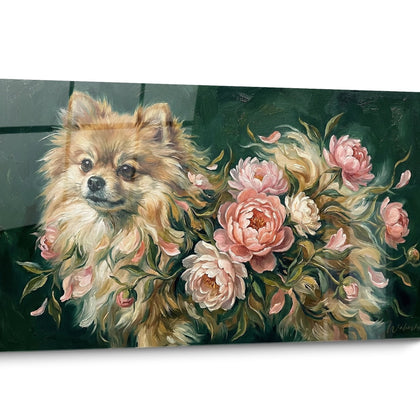
The Painting Spitz Pomeranian Realistic captures all the majesty of this iconic breed. Our collection celebrates the elegance of the Spitz Pomeranian in artistic portrait with stunning details: silky fur, lively and expressive gaze. Each work enhances the natural beauty of this adorable companion. Perfect for lovers of dog wall decoration Spitz, this collection transforms your space into a canine art gallery. Treat yourself to a unique piece that celebrates the love of dogs and enhances your interior decoration with refinement.
 Two Pomeranian Spitz Facing Each Other in Golden Light Canvas - Canine Companionship - Pomeranian Spitz Edition273,90 €
 Pomeranian Spitz in Golden Tones Sleeping - Morning Tenderness - Pomeranian Spitz Edition273,90 €
 Golden Portrait Painting with Blue Eyes in the Light - Warm Gaze - Pomeranian Spitz Edition273,90 €
 Pomeranian Spitz Reclining Canvas in Golden Tones - Cuddly Tenderness - Pomeranian Spitz Edition273,90 €
 Duo of Pomeranian Spitz in Golden Tones Scratching - Canine Complicity - Pomeranian Spitz Edition273,90 €
 Golden Pomeranian Spitz Wall Art with Expressive Eyes - Luminous Portrait - Pomeranian Spitz Edition228,90 €
 Red Pomeranian Spitz Receiving a Treat - Complicit Moment - Pomeranian Spitz Edition273,90 €
 Pomeranian Spitz Orange Painting with Blue Butterfly - Touching Portrait - Pomeranian Spitz Edition273,90 €
 Pomeranian Spitz Sleeping in Tender Grass - Pastoral Softness - Pomeranian Spitz Edition273,90 €
 Immaculate White Spitz Painting with Black Eyes - Winter Softness - Pomeranian Spitz Edition273,90 €
 Pomeranian Spitz Portrait Painting with Expressive Eyes - Tender Gaze - Pomeranian Spitz Edition228,90 €
 Duo Pomeranian Spitz Canvas - Orange and Cream Canine Tenderness - Pomeranian Spitz Edition273,90 €
 Fluffy Puppy in the Snow Painting - Winter Tenderness - Pomeranian Spitz Edition228,90 €
 Red Dog at Window with Reflection - Morning Contemplation - Pomeranian Spitz Edition228,90 €
 Pomeranian Spitz Reddish Canvas with Golden Tones - Contemplative Portrait - Pomeranian Spitz Edition273,90 €
Explore further
In Realistic Pomeranian Spitz Dog Painting


All about Realistic Pomeranian Spitz Dog Painting
- Pomeranian Spitz Wall Art Presentation
- Realistic Display Enhancement
- Canine Immersion
- Selection and Integration
The realistic Pomeranian Spitz dog wall art represents the perfect alliance between authentic animal artistry and passion for this emblematic breed. These large-format mural creations capture with precision the unique characteristics of the Pomeranian: its dense and voluminous coat, its lively and intelligent expression, and its confident posture. Each anatomical detail is meticulously reproduced to offer exceptional photographic fidelity. These artworks constitute an ideal artistic tribute for Pomeranian Spitz owners who wish to extend the presence of their four-legged companion in their interior decoration. Through hyperrealistic rendering, these mural artworks transform any living space into a gallery dedicated to this majestic breed originating from Pomerania.
The Art of Realistic Rendering for the Pomeranian Spitz
The realistic representation of a realistic Pomeranian Spitz dog wall art requires remarkable technical mastery from animal artists. Unlike stylized or caricatural interpretations, realistic rendering demands meticulous observation of the Pomeranian's specific morphology: the texture of its double coat, the characteristic brilliance of its almond-shaped eyes, and the delicacy of its facial features. The chromatic nuances in red, cream, black, or white tones require an extended palette to faithfully restore every color variation present in this breed's luxuriant coat.
Why choose realistic representation over abstract?
The realistic approach offers immediate emotional connection for Pomeranian Spitz enthusiasts. By capturing the expressive gaze and sparkling personality of this small dog, these mural artworks create an almost living presence in domestic space. Precise anatomical details - the erected triangular ears, the fine muzzle, the feathered tail curved over the back - are elements instantly recognizable by breed lovers. This photographic fidelity transforms the artwork into a true canine portrait, comparable to a family portrait.
Capturing characteristic facial expressions
The Pomeranian Spitz possesses a particularly rich repertoire of facial expressions: mischief, curiosity, affection, vigilance. A superior quality realistic artwork succeeds in capturing one of these typical expressions, creating a narrative piece. Artists specialized in this field study canine behavior to seize these authentic moments - the slight lip curling evoking a smile, the questioning head tilt, or the intensity of the gaze fixed on its owner. These expressive elements constitute the soul of the artwork.
Techniques of depth and texture
To faithfully reproduce the abundant coat of the Pomeranian, realistic creations use advanced layering and shading techniques. Each hair appears individually distinct, creating an illusion of three-dimensional volume on a two-dimensional surface. Natural lighting also plays a crucial role: the reflections on the silky coat, the shadow zones under the compact body, and the brightness variations depending on the viewing angle considerably enrich the visual perception of the mural artwork.
The importance of realistic environmental context
Some realistic Pomeranian Spitz artworks integrate subtle environmental elements - a blurred background evoking a garden, a plush cushion, or a warm interior ambiance. These contextual details reinforce the authenticity of the scene without distracting from the central element: the dog itself. The balance between the main subject and its environment determines the compositional quality of the whole, creating a visually harmonious atmosphere particularly appreciated in living spaces dedicated to rest and relaxation.
Create a Canine Atmosphere with Realistic Large Format Wall Art
The integration of a realistic Pomeranian Spitz dog wall art of large dimension radically transforms the ambiance of an interior. These imposing formats, often exceeding standard dimensions, create an immediate focal point in the living room, office, or space dedicated to pets. The monumental presence of a Pomeranian represented at life-size or enlarged generates a visual impact comparable to that of a sculpture, while maintaining the practicality of a mural installation. This majestic scale worthily celebrates a breed often considered "miniature" by conferring upon it the grandeur it deserves in the hearts of its admirers.
How does a large realistic artwork influence domestic space?
A large-size realistic Pomeranian Spitz artwork functions as a visual window opening onto the canine world. In often minimalist contemporary interiors, this animal presence brings warmth and personality. For Pomeranian owners, the artwork establishes thematic continuity between their cynophile passion and their daily environment. Visitors are immediately informed of the importance of this breed to the occupants, transforming decoration into identity expression. Generous dimensions also allow full appreciation of the minute details of the coat and facial features, even from a distance.
The therapeutic effect of visualized canine presence
Research in environmental psychology demonstrates that realistic animal representations in domestic habitat provide benefits similar - though attenuated - to the actual presence of pets. A realistic Pomeranian Spitz artwork offers constant visual comfort, particularly appreciated by people temporarily separated from their companion or those who, for allergy or residential constraint reasons, cannot welcome a dog. The benevolent and affectionate expression characteristic of the Pomeranian, immortalized in the artwork, generates a welcoming and soothing atmosphere.
Coordination with animal-dedicated spaces
In homes with a Pomeranian Spitz, the realistic artwork harmonizes naturally with functional areas dedicated to the dog: rest corner with basket, feeding station, or grooming area. This thematic coherence visually unifies these different elements into an intentional decorative ensemble rather than utilitarian. Some owners thus create true sanctuaries dedicated to their favorite breed, where the artwork constitutes the centerpiece around which photographs, canine exhibition trophies, and accessories are organized. For those who also appreciate other artistic styles, a Baroque Pomeranian Spitz dog wall art can offer a decorative alternative while celebrating this same emblematic breed.
The valorization of the breed in contemporary mural art
The rise of realistic artworks dedicated to the Pomeranian Spitz reflects the growing popularity of this ancestral breed. Once reserved for European royal courts, this lineage today benefits from artistic recognition equal to larger breeds traditionally represented in classical animal art. Monumental formats correct the perception of "lap dog" by emphasizing the nobility and assertive character of the Pomeranian. This artistic revaluation accompanies the evolution of mentalities concerning companion breeds, now considered worthy artistic subjects deserving the greatest formats.
Select and Integrate Your Realistic Pomeranian Spitz Wall Art
The acquisition of a realistic Pomeranian Spitz dog wall art constitutes a significant decorative investment that deserves careful consideration. Selection criteria differ substantially from those applied to generic animal representations. Breed-specific anatomical fidelity, coat rendering quality, and expression authenticity must take priority over purely general aesthetic considerations. Pomeranian enthusiasts immediately recognize anatomically correct representation from approximate interpretation, hence the importance of choosing works created by artists familiar with breed standards.
What priority criteria for evaluating realistic authenticity?
Meticulous examination of body proportions constitutes the first quality indicator: the Pomeranian Spitz presents a compact body slightly longer than tall, a fundamental morphological characteristic. The representation of the stop (angle between forehead and muzzle), the precise shape of the triangular ears, and the characteristic tail position constitute other diagnostic elements. Premium realistic artwork will also reproduce the subtle nuances of the coat - the dense undercoat versus the longer outer coat hairs - creating this signature texture that visually distinguishes the Pomeranian from other Spitz breeds.
Adapt color choice to your personal Pomeranian
Pomeranian Spitz owners frequently seek artworks corresponding to their companion's specific color. Recognized color varieties - orange, cream, black, white, blue, chocolate, or parti-color - offer palette diversity. This color personalization reinforces emotional connection with the artwork, transforming the generic artwork into a quasi-personalized portrait. Some passionate collectors even assemble multiple artworks representing different standard colors, thus creating a complete celebration of the phenotypic diversity of the breed in their domestic gallery.
Integration into canine art collections
For animal art collectors, a realistic Pomeranian Spitz artwork naturally fits into a thematic accumulation approach. Some enthusiasts specialize exclusively in representations of Nordic and Spitz breeds, creating coherent ensembles where the Pomeranian neighbors its larger genetic cousins. Others prioritize a stylistic approach, associating only hyperrealistic renderings of different breeds. Curatorial coherence between the different pieces - format harmony, technique uniformity, or narrative continuity - transforms mere accumulation into thoughtful and valuable collection.
Practical considerations for large formats
Large-dimension realistic Pomeranian Spitz artworks require appropriate spatial planning. Prior identification of the definitive wall location allows optimization of orientation (portrait versus landscape) and exact dimensions. Available viewing distance also conditions maximum viable size: a monumental format requires sufficient observation space to be appreciated in its entirety. Architectural constraints - presence of electrical outlets, switches, or structural elements - must be mapped before acquisition to guarantee harmonious installation without aesthetic compromises.
Is a realistic Pomeranian Spitz dog artwork suitable for professional spaces?
Absolutely. In veterinary clinics specialized in miniature breeds, canine grooming salons, or breeders' professional offices, these artworks reinforce thematic identity and demonstrate sectorial expertise. Their presence also reassures clients by visually confirming the establishment's specialization. Imposing formats create a welcoming atmosphere while asserting professionalism.
How to maintain color vibrancy of a realistic canine artwork?
Preservation of the subtle nuances of represented coat requires protection against direct exposure to solar radiation which progressively degrades pigments. Strategic positioning away from south-facing windows or use of UV films for glazing constitute effective preventive solutions. Gentle regular dusting with a dry microfiber cloth also preserves detail sharpness without altering the surface.
Are there realistic artworks showing multiple Pomeranian Spitz simultaneously?
Multi-subject compositions representing several Pomeranians - often a litter of puppies or a family group - offer enriched narrative dynamics. These collective scenes capture the characteristic social interactions of the breed: play, mutual grooming, or attentive alignment. They are particularly suited for professional breeders or households housing multiple representatives of this gregarious breed that appreciates the company of its congeners.
Further reading
Our articles on this topic
- How to Position and Size a Pomeranian Spitz Painting in Your Bedroom
- Havanese in a painting: realistic portrait or watercolour, which style to choose?
- Weimaraner portrait painting: realistic vs watercolour illustration, which to choose?
- Realistic bloodhound dog painting for living room: how to integrate it well at home
- Which wall decor to choose for a Beauceron lover?
- English Pointer painting: how to stage it in a modern living room
L'art qui suscite l'envie
Maison belge d'art mural grand format
14 jourspour changer d'avis*
Protection Walenskyincluse
Fabriquéen Italie
FormatXXL
Kit de fixationtoujours fourni
* Hors tableaux personnalisés et tailles personnalisées


