


New York Times Square Wall Art
A Painting New York Times Square captures the vibrant essence of the world's most famous crossroads. Immerse yourself in the nocturnal effervescence of Manhattan with this wall decoration Times Square that illuminates your interior. Giant screens, shimmering neon lights and intense traffic: every detail evokes the incomparable energy of NYC. Perfect for lovers of urban art New York, this painting transforms your space into a window open onto Broadway. Ideal for living room, office or modern loft.
 Painting Times Square in the Rain - Urban Reflections - New York Edition N°2273,90 €
 Times Square in the Rain Canvas - New York Urban Ambiance - New York Edition273,90 €
 Times Square Abstract Canvas - Nocturnal Lights - New York Edition273,90 €
 Times Square Urban Wall Art - Manhattan Lights - New York Edition273,90 €
 Times Square in the Rain Wall Art - Urban Reflections - New York Edition228,90 €
 Times Square in the Rain Wall Art - Urban Reflections - New York Edition242,90 €
 Times Square Urban Wall Art - Broadway Lights - New York Edition228,90 €
 Times Square Manhattan Painting - Panoramic Urban Lights - New York Edition242,90 €
 Times Square Wall Art No. 1 - New York Around the World Edition273,90 €
Explore further
In New York Times Square Wall Art
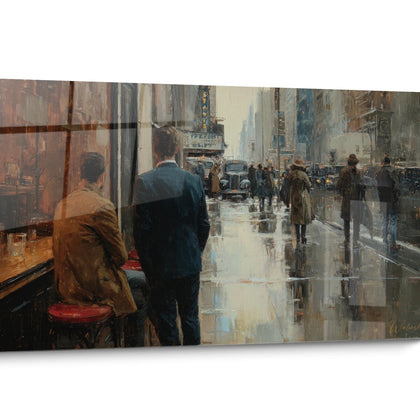
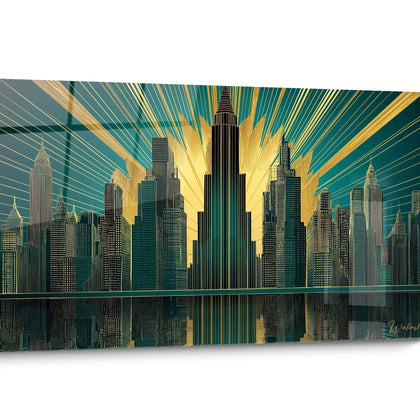
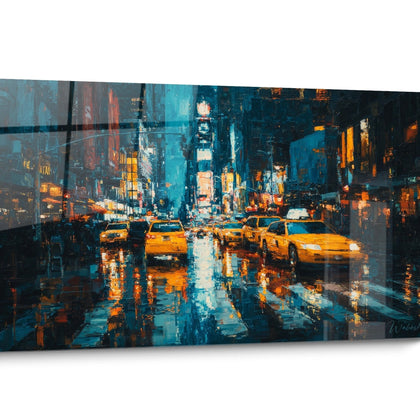

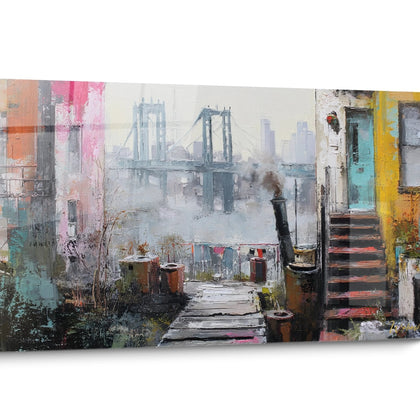
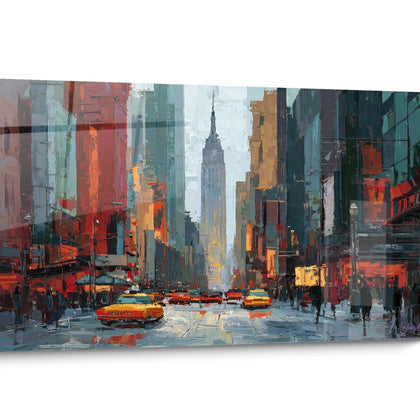
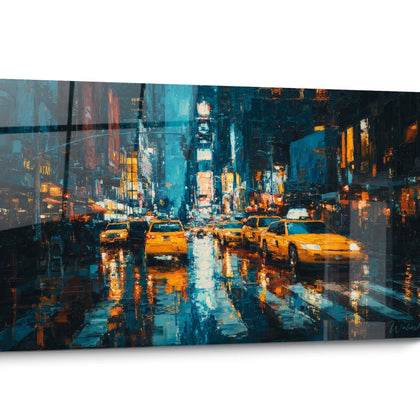
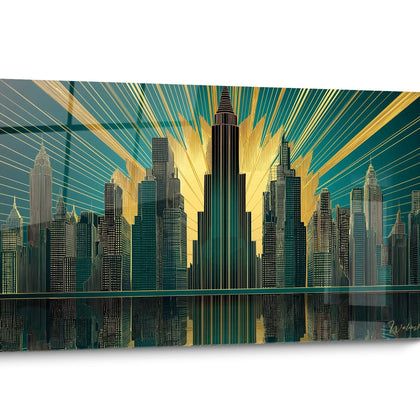
All about New York Times Square Wall Art
- Painting Presentation New York Times Square
- Urban Decoration Times Square
- Nocturnal luminous atmosphere
- Symbol of modern metropolis
A New York Times Square painting instantly transforms your interior into an extension of the most electric American metropolis. This representation of Manhattan's most famous intersection captures the constant effervescence of a place where Broadway theaters, giant illuminated signs, and an uninterrupted flow of visitors converge. Choosing such a wall art anchors your living space in the imaginary of a mythical destination, a symbol of urban dynamism and the limitless energy that characterizes the Big Apple.
The energy of Manhattan's iconic intersection in your living room
Times Square embodies the visual identity of New York, this concentration of monumental advertising screens, colorful neon lights, and shimmering facades that define the vibrant heart of Midtown Manhattan. A New York Times Square painting reproduces this characteristic light saturation, this visual density where every square meter broadcasts messages, brands, and shows in a continuous chromatic symphony. For an urban loft, a professional open space, or a commercial space seeking a cosmopolitan identity, this representation acts as an ambiance catalyst, projecting the New York effervescence directly onto your walls.
Which spaces benefit most from a representation of Times Square?
Social and dynamic environments find in this type of visual a valuable ally. Waiting rooms of technology startups, coworking spaces oriented towards creativity, showrooms of urban fashion, or private rooms with contemporary accents exploit this iconography to suggest modernity, international connection, and a sustained pace. The universal recognition of Times Square instantly generates a mental geographical anchoring, symbolically placing your space within the ecosystem of major global cities. Large-format panoramic dimensions amplify this immersive effect, transforming a simple wall into a virtual window onto Broadway.
The psychological impact of nocturnal illuminated signs
The particularity of Times Square lies in its total absence of darkness, this permanent photoluminescence that defies the day-night cycles. A painting capturing this specificity injects a dose of visual adrenaline into interiors that sometimes lack stimulation. The dominant tones – electric blues, neon yellows, scarlet reds – activate mental associations with entertainment, innovation, and opportunity. For marketing, communication, or entertainment professionals seeking to materialize their universe in their office, this decorative choice acts as a coherent extension of their professional identity, daily reminding them of the ambition and international scale of their projects.
Decorative combinations with the theatrical and musical universe
Times Square being the nerve center of the Broadway theater district, wall compositions integrating this theme naturally enrich themselves with scenic elements. Combining your New York Times Square painting with vintage posters of legendary musicals, photographs of illuminated marquee signs announcing shows, or even graphic elements inspired by New York jazz and swing creates a coherent decorative narrative. This approach works particularly well in home theaters, private music rooms, or reception areas where the festive and cultural atmosphere must be palpable. The aesthetics of live performance naturally dialogue with the visual effervescence of Times Square.
The visual signature of giant advertising screens
How do XXL formats amplify the Times Square experience?
A New York Times Square painting reaches its full decorative potential when respecting a monumental scale, like the billboards that characterize the real place. Formats exceeding 150 centimeters in width faithfully restore the architectural scale of this intersection, allowing the eye to explore multiple details – reflections on wet pavements, silhouettes of passersby in motion, typographies of iconic signs like Coca-Cola or Nasdaq. This generous dimension transforms the wall into an immersive portal rather than simple decoration, establishing a dominant visual presence that structures the entire room. In the entrance halls of high-end residential buildings or the receptions of urban hotels, this scale affirms a premium and international positioning.
The depth of field characteristic of Times Square photographs or illustrations also requires sufficient visual distance. Installing such a work in a narrow corridor dilutes its impact, while positioning it facing a sofa bed in a studio, or as a focal point in a spacious living room, allows one to appreciate the complexity of the composition. Nocturnal versions, where multiple light sources create halos and colored trails, particularly gain intensity on a large surface, reproducing this sensory saturation that captures every visitor discovering Times Square for the first time.
Why Times Square surpasses other New York views in intensity?
Unlike representations of the Brooklyn Bridge, Central Park, or the skyline from the water, Times Square offers an incomparable density of information and color. Where other views privilege architecture or urban nature, this intersection presents an explosion of simultaneous visual stimuli. For professional environments related to digital, retail, or media, this characteristic resonates with their own ecosystem of multiple contents, competing messages, and fragmented attention. The New York Times Square painting then becomes a visual metaphor for their daily activity, an aesthetic validation of the complexity they navigate professionally.
Synergy with the codes of contemporary urban art
The visual universe of Times Square shares its DNA with street art, pop art, and urban graphic trends. Neon signs, oversized advertising typography, saturated colors recall the works of Keith Haring or Warhol's silkscreens. This stylistic proximity facilitates integration into interiors already adorned with urban works, framed graffiti, or compositions inspired by the pop movement. Some collectors build gallery walls where Times Square dialogues with representations of Shibuya Crossing in Tokyo or Piccadilly Circus in London, creating a visual anthology of iconic global intersections. For those who appreciate the New York Art Deco Painting, the transition to Times Square represents a natural evolution towards luminous modernity, while retaining the New York geographical anchor.
Investing in the iconography of a place in perpetual mutation
The symbolic value of Times Square in global culture
Beyond its geographical reality, Times Square functions as a universal cultural icon, instantly recognizable by billions of people who have never physically visited it. This omnipresence in cinema, television series, music videos, and news reports transforms its representation into a common visual language transcending borders. Owning a painting New York Times Square is equivalent to integrating this international vocabulary into your decor, signaling cultural openness and connection to global cultural flows. For expatriates, multicultural professionals, or simply cosmopolitan minds, this decorative choice materializes a belonging to the global community rather than a specific terroir.
This symbolic dimension explains why many entrepreneurs and creators choose Times Square for their personal offices. The crossroads represents ambition, fierce competition, a permanent show – all values that these profiles cultivate in their activity. Each glance at the wall art functions as a motivational reminder, a mental anchor in a philosophy of surpassing and excellence. Versions capturing the famous New Year's Eve countdown reinforce this aspirational dimension, evoking renewal, collective celebration, and decisive turning points.
Evolution of aesthetics: from vintage Times Square to contemporary
Representations of Times Square vary according to different eras, each carrying its own decorative message. Versions from the 1970s-1980s, with their analog signs, their porn cinemas, and their shady atmosphere, seduce lovers of raw urban nostalgia and gritty authenticity. Conversely, ultra-contemporary compositions capturing high-definition LED screens, glass facades, and complete gentrification speak to those who prioritize technological modernity and urban luxury. Between these two poles, versions from the 1990s-2000s offer a balance between character and sophistication, a period when Times Square was completing its transformation without completely losing its edge.
What stylistic variations exist for Times Square?
Beyond the historical period, the artistic treatment multiplies the options. Hyperrealistic high-definition photographs prioritize documentation and total immersion. Stylized vector illustrations, with blocks of bright colors and clean lines, adopt a contemporary pop art approach ideal for minimalist interiors. Mixed compositions integrating typography, collage, and motion blur effects create an abstract interpretation of the place's energy, perfect for avant-garde spaces. Some artists even offer monochrome or reduced palette versions, extracting the compositional essence of Times Square from its usual chromatic profusion.
FAQ about the New York Times Square painting
Does a New York Times Square painting suit calm residential interiors?
Although Times Square evokes effervescence and stimulation, its integration into residential spaces works when strategically positioned. A home office, a games room, a teenage space, or even a contemporary living room with clean lines can welcome this visual energy as a dynamic counterpoint. The key is balance: neutral surrounding surfaces and understated furniture allow the painting to shine without overwhelming the atmosphere.
What is the difference between a painting Times Square daytime and nighttime?
The daytime versions, which are rarer, depict Times Square in natural light with a visible sky, offering more architectural context and atmospheric depth. The nighttime compositions, which are far more common, exploit the luminous magic of the signs, creating a more theatrical and mysterious atmosphere. The choice depends on your decorative intention: realistic urban documentation versus a celebration of New York's luminous excess.
How to care for a large New York Times Square wall art?
Monumental formats require regular dusting with a dry microfiber cloth to preserve the sharpness of the details and the intensity of the colors. Avoid direct exposure to sunlight, which could gradually alter the pigments, particularly critical for the neon shades characteristic of Times Square. Positioning it on a wall perpendicular to windows rather than facing them ensures optimal longevity without compromising the visibility of the artwork.
L'art qui suscite l'envie
Maison belge d'art mural grand format
14 jourspour changer d'avis*
Protection Walenskyincluse
Fabriquéen Italie
FormatXXL
Kit de fixationtoujours fourni
* Hors tableaux personnalisés et tailles personnalisées


