









New York Empire State Wall Art
Our Painting New York Empire State collection captures the majesty of the most iconic skyscraper in Manhattan. Explore a unique artistic selection celebrating this iconic monument through different perspectives: nighttime panoramic views, illuminated New York skyline, and contemporary urban compositions. Each Empire State Building painting reflects the vibrant energy of the Big Apple and the legendary Art Deco architecture. Perfect for New York wall decoration, this collection transforms your interior into a tribute to the city that never sleeps.
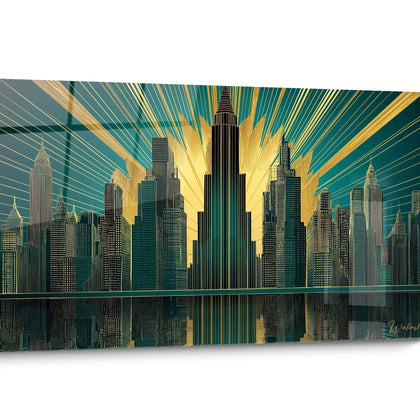
 Empire State Building Wall Art - Golden Manhattan - Art Deco Edition273,90 €
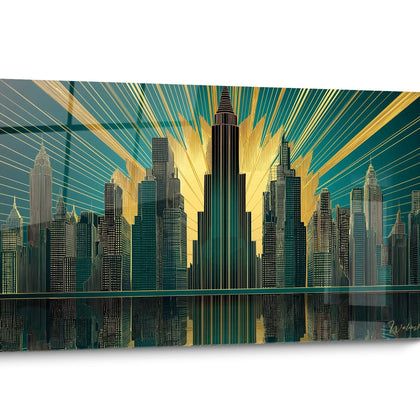
 Empire State Building Painting - Golden Rays - Art Deco Edition228,90 €
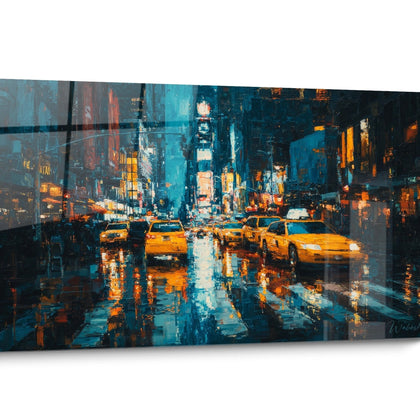
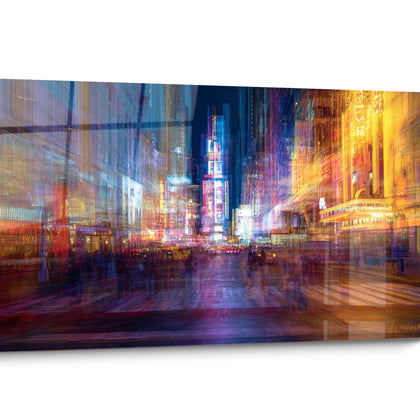
 Empire State Building Painting - Contemporary Urban Vision - New York Edition273,90 €
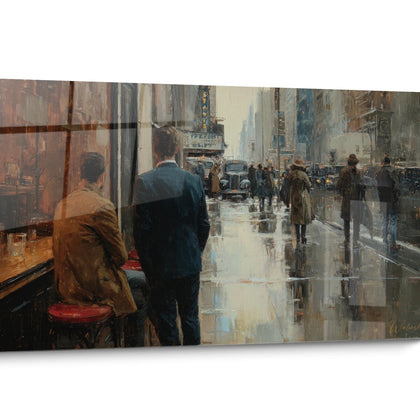
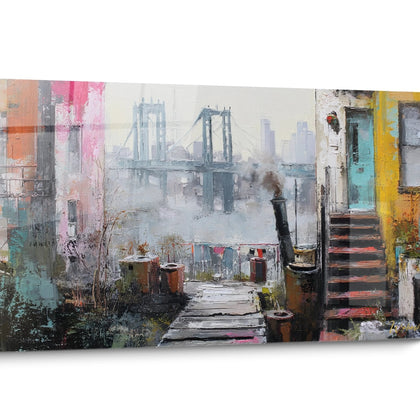
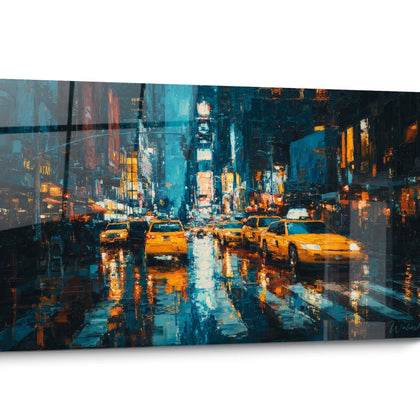
 New York Street Painting with Empire State Building - Manhattan Street - New York Edition273,90 €
 Empire State Building Painting No.1 - New York Edition Around the World273,90 €
Explore further
In New York Empire State Wall Art
All about New York Empire State Wall Art
- New York Empire State Building Wall Art Presentation
- Monumental Architectural Symbol
- Urban Photographic Perspectives
- Metropolis Decor Integration
A New York Empire State wall art captures the very essence of Manhattan through its most emblematic skyscraper, immortalized since 1931 as the vertical icon of American architecture. This large-scale mural representation instantly transforms a professional or residential space into a visual celebration of urban ambition, offering a spectacular window onto the mythic silhouette of Midtown. Each large format reproduction highlights the building's 381 meters in height, its characteristic Art Deco lines and its monumental presence in the New York skyline, creating an architectural focal point of exceptional visual intensity for enthusiasts of urbanism and contemporary urban photography.
The Empire State Building as a Monumental Architectural Statement
The New York Empire State wall art represents far more than a simple urban view: it embodies extreme verticality and the constructive audacity of a bygone era. Monumental photographic compositions capture all 102 floors in their entirety, revealing the characteristic steel structure and ornamental details that distinguish this building from modern glass towers. Low-angle shooting perspectives accentuate the sensation of vertiginous elevation, transforming each wall into a visual portal toward the beating heart of Manhattan.
Which photographic perspectives sublimate the vertical architecture of the Empire State?
Tight framings from adjacent streets — notably from Fifth Avenue or West 34th Street — create dramatic compositions where the building seems to pierce the sky literally. These full plunging perspectives, privileged in large format reproductions, exploit the natural vanishing lines created by surrounding facades to guide the eye toward the emblematic spire. Night photography capturing the summit's illumination — varying by events and seasons — adds a spectacular chromatic dimension particularly sought after for contemporary professional spaces.
Stylistic integration with historic Art Deco aesthetics
Each New York Empire State wall art naturally dialogues with the New York Art Deco wall art movement of which the edifice represents the architectural apex. The ornamental details visible in close-up compositions — geometric patterns of entrances, stylized bas-reliefs, successive setback designs characteristic of Art Deco — resonate with the aesthetic codes of the 1930s. This stylistic coherence allows visual anchoring of an interior in a precise historical reference, creating a sophisticated atmosphere particularly suited to executive offices, architecture firms or refined industrial lofts.
Atmospheric conditions as visual amplifier
Representations capturing the Empire State emerging from low fog banks, piercing storm clouds or standing out against flaming twilight skies generate considerable emotional impact. These meteorological variations transform the structure into a solitary urban beacon, reinforcing its mythic dimension and sculptural presence in the display space. For collectors seeking a monumental masterpiece, these atmospheric compositions offer narrative depth absent from standard sunny views.
Distinctive Photographic Compositions and Urban Framings
A New York Empire State wall art draws its visual power from bold photographic choices that reveal lesser-known facets of this architectural giant. Ultra-wide panoramic compositions integrating the building within the complete Midtown skyline context create complex urban narrative, where the Empire State dialogues with the Chrysler Building, One Vanderbilt and the new glass towers of Hudson Yards. These contextualized comprehensive views particularly suit large corporate spaces requiring complete representation of New York's economic ecosystem.
How do aerial perspectives renew the classical vision?
Shots from One World Trade Center or captured by drone reveal the Empire State within its dense urban environment, offering a fascinating topographic reading of Manhattan. These plunging perspectives unveil the rigorous geometry of New York's street grid radiating around the building, transforming each reproduction into a three-dimensional urban map. Observation of the skyscraper's shadow cast on surrounding neighborhoods according to time and season adds sophisticated temporal dimension, particularly appreciated in environments where architecture and urbanism constitute professional references.
Close-up structural details as visual language
Certain compositions concentrated on the building's middle or upper sections isolate repetitive window patterns, creating abstract architectural textures of remarkable graphic power. These tight architectural framings transform the facade into a rhythmed visual score, where solids and voids alternate in geometric symphony. For minimalist interiors or spaces with refined design, these conceptual photographic approaches function as abstract works while maintaining New York iconic anchoring.
Chromatic exploitation of nighttime illuminations
Summit lighting variations — red and green for Christmas, rainbow for Pride, blue and white for the Yankees — offer unique chromatic opportunities rarely exploited in other urban subjects. A large format wall art capturing these specific moments becomes testimony to precise cultural events, adding memorial narrative layer. Long-exposure night compositions simultaneously revealing office interior lights and decorative illumination create stratified light depth, particularly effective in dimly-lit environments like hotel lobbies or private lounges.
Integration Strategies in Contemporary Professional and Residential Spaces
Installing a New York Empire State wall art in a professional environment constitutes a strategic choice conveying ambition, structural solidity and reference to triumphant American capitalism. Monumental formats exceeding 150 centimeters in width function optimally in conference rooms, corporate reception halls or high-end coworking spaces, where the subject's verticality resonates with entrepreneurial aspirations. The building's universally recognizable iconic nature eliminates any need for explanation, creating immediate impact with international visitors.
Which surrounding color palette enhances these urban compositions?
Black and white representations, privileging dramatic contrasts and architectural texture, naturally integrate into sophisticated monochrome environments dominated by anthracite gray, off-white and metallic tones. For versions capturing orange twilight skies or colored illuminations, decorative accents repeating these tones — cushions, rugs, lighting fixtures — create harmonious chromatic continuity. Spaces with raw steel furnishings, polished concrete or reclaimed dark wood establish pertinent material dialogue with the skyscraper's constructive aesthetic.
Empire State wall art as thematic narrative anchor
In sectors related to commercial real estate, architecture, finance or urban development, this visual functions as implicit professional manifesto. It instantly establishes symbolic affiliation with values of sustainable construction, long-term investment and premium positioning. For private residences of urbanism enthusiasts, architectural photography lovers or New York history passionate, it constitutes the central piece around which to organize a coherent thematic collection including historical plans, construction-era photographs or technical documentation.
Decorative complements reinforcing metropolitan identity
Association with elements evoking urban infrastructure — industrial street lamp-style lighting, vintage station clocks, New York subway-inspired metal signage — amplifies thematic coherence. Raw materials like oxidized steel, industrial glass or exposed brick create contextual environment reinforcing the subject's urban authenticity. For advanced collectors, juxtaposition with photographs showing other emblematic vertical monuments — Burj Khalifa, Eiffel Tower, Willis Tower — establishes intellectually stimulating international architectural conversation.
Does a New York Empire State wall art suit residential spaces with modest dimensions?
Contrary to assumptions, vertical compositions exploiting portrait format function effectively in narrow hallways, stairwells or interstitial walls, where the subject's verticality visually amplifies ceiling height. Close framings on upper sections allow spatial adaptation without compromising immediate monument identification.
Which shooting period to privilege for a timeless New York Empire State wall art?
Compositions capturing the building during golden hours — dawn or dusk — offer warm luminosity transcending decades without appearing dated. Winter versions showing the building emerging from a snowy blanket create rare seasonal contrast in New York urban imagery, bringing singularity sought by collectors.
How to integrate a New York Empire State wall art into refined Scandinavian interior design?
Minimalist photographic versions in black and white, privileging negative space and streamlined silhouette against uniform sky, naturally harmonize with Nordic aesthetics. Framing in untreated light wood or brushed matte aluminum reinforces this stylistic convergence, transforming the dense urban subject into graphically compatible element with Scandinavian simplicity.


