


Mosaic Street Art Wall
The painting Mosaic Street Art collection celebrates the explosive energy of contemporary urban art. Each artwork captures the rebellious and creative spirit of global metropolises, blending vibrant colors, bold typography, and fragmented compositions. These mosaic street art urban creations transform your spaces into modern galleries where authenticity meets elegance. Perfect for lovers of contemporary urban art decor, these paintings bring character and dynamism to your interior.
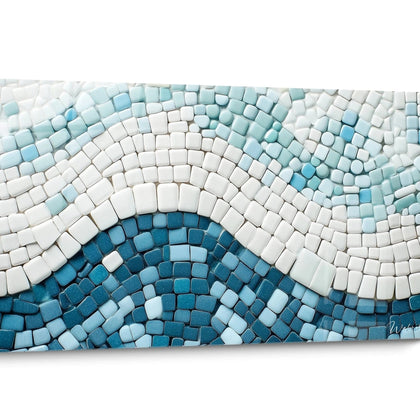
 Ceramic Flow Canvas - Mosaic Edition273,90 €
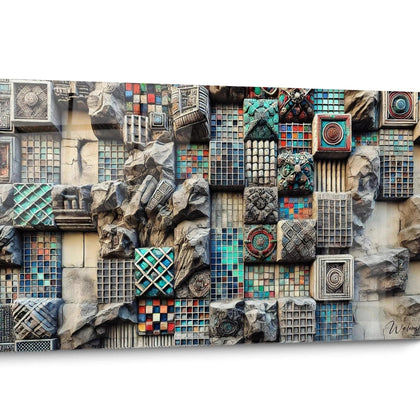
 Stone Traveler Painting - Mosaic Street Art Edition273,90 €
 Resilience Face Painting - Mosaic Street Art Edition273,90 €
 Urban Throne Painting - Mosaic Street Art Edition273,90 €
 Reverie Floral Wall Art - Mosaic Street Art Edition273,90 €
 Wall of Secrets - Mosaic Street Art Edition273,90 €
 The Traces of the Past Wall Art - Mosaic Street Art Edition273,90 €
 The Colors of the Pavement Painting - Mosaic Street Art Edition273,90 €
 The Mark of Sin Painting - Mosaic Street Art Edition273,90 €
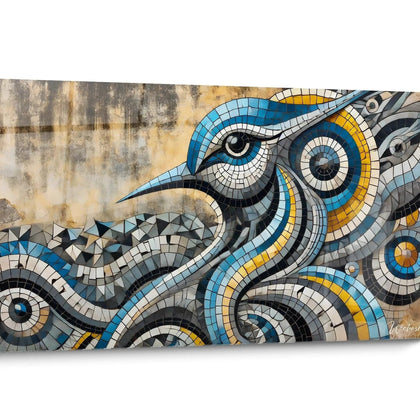
 Song of Tiles Artwork - Mosaic Street Art Edition273,90 €
Explore further
In Mosaic Street Art Wall
All about Mosaic Street Art Wall
- Overview Mosaic Artwork Street Art
- Mosaic in Urban Art
- Integration into Contemporary Decor
- Visual Impact and Styles
Mosaic street art represents a bold fusion between the raw energy of urban art and the fragmented sophistication of mosaic. This form of artistic expression captures the rebellious essence of graffitis, stencils, and murals while bringing a structured and contemporary dimension to your space. Designed in large format, this type of wall creation radically transforms architectural volumes, creating striking focal points that dialogue with the modern urban environment. The pixelated and geometric aesthetics characteristic of mosaic amplify the visual dynamism typical of street art, creating a sense of depth and movement particularly suited to contemporary spaces, industrial lofts, and interiors with a strong character.
Fragmented Mosaic at the Service of Urban Aesthetics
The mosaic street art paintings reinterprets the visual codes of urban art through a fragmented composition that simultaneously evokes digital pixelation and ancient mosaic techniques. This temporal duality creates a captivating aesthetic tension: motifs from tags, aerosol bombs, and stencils are deconstructed into multiple visual tesserae, generating an optical relief that amplifies the impact of original compositions. The large dimensions of these creations allow you to appreciate both the overall coherence of the urban message and the richness of the fragmented micro-details.
How does mosaic fragmentation amplify the energy of graffiti?
The fragmentation technique characteristic of mosaic gives graffiti, stencil, and urban lettering representations a new spatial dimension. Each colored segment functions as an autonomous energy cell that contributes to the overall vitality. This approach recalls free expression walls where different artistic interventions are superimposed, creating layered visual palimpsests. For collectors of contemporary urban art, this transposition offers a sophisticated wall while preserving the rebellious authenticity of the streets. The explosive chromatic tones characteristic of hip-hop culture and skateboarding are magnified by the contrasts between adjacent fragments.
Urban iconography reinvented by geometry
The emblematic symbols of street art – crowns, stylized characters, wildstyle lettering, urban tribal motifs – acquire an architectural presence when translated into a mosaic composition. This geometrization transforms originally ephemeral creations into permanent visual monuments suitable for spaces favoring deep blue tones or environments requiring bold color statements. The checkerboard or irregular paving structure reinforces the readability of iconic forms while creating particularly striking visual shimmering effects in high-traffic areas.
Underground culture transcended in monumental format
References to skateboarding culture, the hip-hop movement, and nocturnal clandestine interventions find decorative legitimacy through the large-format mosaic format. This elevation does not betray the original rebellious spirit but confers permanence and spatial recognition upon it. Collectors seeking pieces evoking open-air urban galleries, tagged train stations, or industrial wastelands invested by artists will discover in these creations a perfect synthesis between aesthetic provocation and sophisticated architectural integration.
Integrating Urban Rebellion into Contemporary Spaces
Which spaces particularly benefit from a street art mosaic artwork?
A street art mosaic artwork truly shines in environments with a strong industrial character: lofts with exposed structures, coworking spaces with a creative identity, showrooms for brands related to urban sports, or reception areas of agencies working in creative sectors. Its ability to dialogue with raw materials – polished concrete, brushed steel, exposed brick – creates visually coherent associations that reinforce the urban authenticity of the space. Large wall surfaces particularly benefit from these monumental compositions that structure the space by creating magnetic zones of attention.
In contemporary residential interiors, these creations act as energetic counterpoints to minimalist layouts. A accent wall transformed by a mosaic depicting wildstyle lettering or characters from urban culture injects a dose of controlled irreverence into otherwise neutral spaces. This decorative strategy particularly appeals to buyers sensitive to the history of urban popular art, counter-cultural movements, and artistic expressions born in the margins.
How to balance visual intensity with the existing environment?
The chromatic intensity and graphic density typical of street art require a thoughtful orchestration of the immediate environment. Adjacent furniture pieces benefit from adopting clean lines and neutral tones that allow the mosaic composition to radiate without competition. Metallic materials – particularly brushed aluminum or blackened steel – create interesting dialogues with the silver tones often present in aerosol and spray paint representations. For commercial spaces targeting a young urban clientele, this association reinforces brand identity while creating instagrammable zones that promote digital engagement.
The perceptual depth created by visual stratification
The mosaic technique applied to street art motifs generates a depth of field impossible with other supports. The characteristic superimpositions of urban walls – where different artistic interventions overlap over time – are suggested by the tonal variations between adjacent tesserae. This perceptual stratification creates a visual richness that is gradually revealed: the overall reading of the composition gives way to the discovery of micro-scenes and secondary details during close observations. This double reading corresponds perfectly to spaces requiring a constant renewal of visual interest, such as innovative company halls or cultural spaces dedicated to contemporary expressions.
The Chromatic and Stylistic Impact of Fragmented Urban Compositions
Explosive color palettes typical of the street art universe
A street art mosaic artwork is distinguished by the use of saturated color ranges inherited from aerosol spray cans: fluorescent pinks, acidic greens, incandescent oranges, glaring yellows, and vibrant purples. These color choices, far from being gratuitous, reflect the legacy of early graffiti artists using pigments available in industrial supply stores. The mosaic fragmentation allows these intense tones to be juxtaposed without mixing them, creating optical vibrations sought by buyers wishing to energize dull or standardized spaces. Variations on the blue spectrum – from electric cyan to deep cobalt – offer alternatives for environments requiring controlled energy rather than explosive.
Why choose a mosaic representation rather than a photographic reproduction?
Transposing a street art scene into a mosaic offers several decisive advantages over a simple photographic reproduction. First, the geometric fragmentation confers an abstract dimension that universalizes the message while preserving its urban essence – crucial for professional spaces wishing to evoke creativity without appearing too literal. Second, the tessellated structure creates changing light games depending on the angle of observation and lighting conditions, generating a liveliness impossible with uniform flat supports. Finally, this approach clearly positions the work as an artistic reinterpretation rather than a documentation, conferring an aesthetic legitimacy that facilitates its integration into various contexts.
Graphic styles of the urban movement declined in monumental format
Different stylistic trends in street art find particularly successful expressions through large-format mosaic format. The wildstyle with its complex interweaving of letters becomes more readable thanks to geometric structuring. Stencils inspired by political art – heirs to the aesthetics of Banksy – acquire a monumentality that amplifies their message. Cartoon characters from skate and snowboard culture benefit from pixelation that recalls retro video games, creating a strategic generational nostalgia. For collectors seeking pieces evoking iconic neighborhoods – Bushwick in Brooklyn, Shoreditch in London, Belleville in Paris – these creations capture the spirit of the places without requiring documentary authentication.
Perceptual evolution according to viewing distance
A specific advantage of the street art mosaic painting lies in its ability to offer radically different visual experiences depending on the distance. From afar, the composition reveals its global message – a portrait, lettering, a narrative scene – with immediate coherence. At intermediate distance, the chromatic variations between fragments create effects of texture and movement that animate the surface. Up close, each tessera becomes an autonomous chromatic event, revealing nuances and transitions impossible to perceive from a distance. This perceptual versatility justifies the investment in monumental formats for spaces traversed at different speeds – stairways, circulation corridors, back walls of multipurpose rooms.
Does a street art mosaic painting suit classic professional spaces?
Absolutely, provided you opt for compositions with mastered tones and universal messages rather than provocative ones. Large technology companies, creative agencies and innovation consulting firms are increasingly using these creations to signal their company culture geared towards disruption and creative boldness. Versions favoring monochromes or sophisticated duochromes make it possible to evoke urban energy while maintaining an elegance compatible with demanding professional environments.
How to maintain the chromatic vibrancy of a large-format street art mosaic painting?
Protection against direct exposure to UV rays is the main precaution to preserve the intensity of the saturated pigments typical of these creations. Spaces benefiting from indirect natural light or LED lighting with controlled spectrum offer the optimal conditions. Regular dusting with antistatic tools is generally sufficient to maintain the shine of the surfaces, while compositions benefiting from protective treatments resist high-traffic environments without visible alteration.
Can a street art mosaic painting be combined with other wall art styles?
The most successful combinations are with creations sharing a contemporary sensibility: black and white urban photographs, geometric abstract compositions, or generative digital works. The important thing is to maintain consistency in the visual intensity and scale of the different pieces to avoid one element overwhelming the others. In large residential spaces or multi-zone commercial environments, the creation of thematic galleries around contemporary urban culture makes it possible to juxtapose several styles while maintaining a coherent narrative.
Further reading
Our articles on this topic
- Street Art Painting: Transform Your Walls into Works of Art
- Investing in a Street Art Painting: A Profitable Investment?
- Toulouse-Lautrec: The Parisian Poster That Revolutionized Wall Art
- 5 Street Art Decor Ideas for a Unique Interior
- Contemporary art celebrates iconic cities around the world
- Street Art and Mural Painting: Create a Unique Atmosphere


