


Modern Vizsla Dog Canvas Art
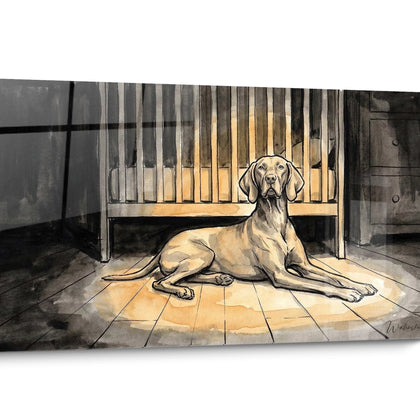
The Painting Vizsla Dog Modern captures the noble and graceful essence of this iconic Hungarian breed. This exclusive collection of contemporary Vizsla dog art offers artistic creations that celebrate the distinctive beauty and elegant character of the Hungarian pointing dog. Each work reflects the athletic silhouette and characteristic golden coat of this exceptional breed. Perfect for lovers of dog wall decoration Vizsla dog, this collection brings a refined and modern touch to your interior.
 Golden Geometric Abstraction Wall Art - Harmonious Spirals - Vizsla Edition273,90 €
 Vizsla Dog Swimming in Blue Water Painting - Artistic Ripples - Vizsla Edition273,90 €
 Red Dog Painting on Black and White Artistic Background - Creative Chaos - Vizsla Edition273,90 €
 Reddish-Brown Dog Relaxing on Yellow Couch - Artistic Relaxation - Vizsla Edition273,90 €
 Black Dog Lying on Couch Abstract Wall Art - Peaceful Rest - Vizsla Edition242,90 €
 Brown Dog Painting in Motion within Colorful Whirlwind - Dynamic Momentum - Vizsla Edition228,90 €
 Leaping Dog Painting with Colorful Splashes - Energy Explosion - Vizsla Edition273,90 €
 Red Vizsla and Outstretched Hand in Golden Whirlwind - Eternal Complicity - Vizsla Edition273,90 €
 Geometric Dog Painting Orange and Gold - Canine Constellation - Vizsla Edition273,90 €
Explore further
In Modern Vizsla Dog Canvas Art


All about Modern Vizsla Dog Canvas Art
- Presentation Painting Vizsla Modern
- Contemporary Aesthetics
- Breed Enhancement
- Decorative Integration
The painting Vizsla dog modern elevates this emblematic Hungarian breed through a contemporary artistic prism that breaks with traditional representations. This refined graphic approach enhances the athletic silhouette and the characteristic golden coat of the Hungarian Wirehaired Pointing Dog using minimalist, geometric visual codes and sophisticated color palettes. Unlike classic works, this modern vision transforms the Vizsla into a true architectural element for design interiors, urban lofts, and living spaces with clean lines where every detail counts.
The Graphic Expression of the Vizsla in Contemporary Art
The painting Vizsla dog modern reinterprets the nobility of this Hungarian pointing dog through contemporary artistic techniques that magnify its slender morphology. Contemporary artists exploit the natural symmetry of this breed, its proud head carriage, and its harmonious proportions to create striking geometric compositions. The color palette plays on copper, ochre, and rust hues that recall the red-gold coat of the Hungarian Wirehaired Pointing Dog, sometimes enhanced with touches of graphite or matte black for maximum contrast.
What graphic styles best enhance the Vizsla?
Silhouette cut representations remarkably exploit the pure line of the Vizsla, notably its graceful profile and characteristic drooping ears. Solid color versions with angular outlines transform the dog into a design icon, while minimalist line interpretations capture the dynamic essence of the breed. Large formats allow you to appreciate every anatomical detail: the lean musculature, the moderate stop, the tapered tail carried horizontally.
The Scandinavian influence on the representation of the Vizsla
Nordic aesthetics strongly inspire modern creations dedicated to the Vizsla, with neutral beige, pearl gray, or off-white backgrounds that highlight the warm tone of the coat. This chromatic sobriety reinforces the visual impact in minimalist spaces and creates essential visual breathing for large wall surfaces. Asymmetrical compositions and invisible frames perfectly align with hygge and lagom decorative codes, prioritizing balance over ornamental overload.
For lovers of more dynamic representations, a painting Vizsla hunting offers a captivating alternative showing the breed in its natural element.
Celebrating Hungarian Heritage Through a Contemporary Vision
How does modern design honor the origins of the Vizsla?
The painting Vizsla dog modern establishes a bold bridge between Hungarian cynophilic heritage and contemporary artistic expression. Creators subtly integrate references to the Puszta, those vast Hungarian plains where the breed developed, through purified horizons and infinite perspectives. Earthy tones evoke the clay soils of Hungary without falling into folklore, while flowing lines recall the natural elegance that Hungarian breeders have preserved for centuries.
This approach particularly values the performing lines of the Hungarian Wirehaired Pointing Dog, whose functional morphology lends itself admirably to graphic simplifications. The square proportions of the large format accentuate the balanced stature of this medium-sized breed, creating an imposing wall presence that reflects the Vizsla's assertive yet balanced character.
Canine psychology translated into shapes and colors
Contemporary artists capture the expressive intelligence of the Vizsla through the treatment of the gaze, often reduced to a simple but intensely evocative geometric form. The breed's characteristic amber eyes become magnetic focal points in minimalist compositions. The alert posture, typical of this pointing dog, is translated into dynamic angles and upward lines that infuse movement and vitality into the whole.
The endearing and sensitive temperament of the Vizsla also shines through in works that favor soft curves for the brisket and neck, contrasting with the angularity of the rest of the composition. This graphic duality perfectly reflects the nature of the Hungarian Vizsla: an accomplished athlete in the field, an affectionate companion at home.
Frequently Asked Questions
Why choose a modern Vizsla painting rather than a classic photograph?
Modern artistic interpretation transcends simple photographic reproduction by capturing the essence of the breed through a stylized vision that harmoniously integrates into contemporary interiors, where a traditional photo might create an aesthetic rupture.
Is a modern Vizsla dog painting suitable for professional spaces?
Absolutely, the clean graphic codes and neutral palette enhanced with copper accents harmonize perfectly with design office environments, specialized veterinary clinics, or refined reception areas seeking a distinctive touch without ostentation.
How does the modern style highlight the Vizsla's morphological specifics?
Contemporary techniques use the simplification of forms to accentuate distinctive breed characteristics: moderately wide skull, silky ears set low, straight topline, and tail set slightly below the topline, thus creating an immediately recognizable representation.
Integrating a Contemporary Vizsla into Your Interior Architecture
Which spaces benefit most from a large-format modern Vizsla painting?
The vast walls of open living rooms are the ideal location for a modern Vizsla dog painting of large dimensions. These imposing works create an immediate focal point in spaces with double height, industrial lofts, or architect-designed homes where uncluttered wall surfaces call for a significant centerpiece. The monumental format dialogues particularly well with generous volumes, establishing a harmonious proportion between the work and the surrounding architecture.
Spacious entrances and reception halls also benefit from this strong visual presence that welcomes visitors and residents with character. The slender silhouette of the Vizsla adapts remarkably to vertical spaces such as stairwells or narrow but high wall panels, where its long morphology creates a natural upward flow.
Color associations to sublimate the artwork
The golden-copper spectrum of the Vizsla's coat dialogues beautifully with contemporary raw materials: gray anthracite polished concrete, natural oak or smoked walnut woodwork, brushed brass or aged copper metals. These harmonies create a material sophistication that simultaneously enhances the artwork and its environment. Associated textiles will favor natural fibers in complementary tones: ecru linen, mustard velvet, terracotta bouclé wool.
For black and white monochromatic interiors, the introduction of a modern Vizsla painting brings that essential warm organic touch to the emotional balance of the space. The Braque hongrois's red coat then becomes the only color accent, a bold but remarkably effective decorative strategy in radical minimalist configurations.
Architectural lighting as a work revealer
Rail lighting systems with adjustable spotlights allow you to modulate the light intensity according to the time of day, revealing different facets of the graphic composition. A low-angle light emphasizes subtle reliefs and surface textures, while a direct light at 30 degrees eliminates parasitic reflections. Warm color temperatures (2700-3000K) enhance the coppery tones of the Vizsla, creating a welcoming atmosphere in the evening.
Integration into home automation systems allows you to program lighting scenarios that transform the perception of the artwork: accent lighting for receptions, subdued light for moments of relaxation. This technical flexibility is particularly relevant for large formats which benefit from variations in intensity revealing their compositional depth depending on the time and use of the space.
Further reading
Our articles on this topic
- Vizsla painting for a sporty teen's bedroom: capturing energy and movement
- Large Panoramic Vizsla Painting: Which Dimensions to Choose for Your Living Room?
- Original gift for Vizsla lovers: personalize a painting based on their story with their dog
- Vizsla painting in Scandinavian style for a bright entrance: the guide
- Golden dog portrait in an adult bedroom: playing with light to enhance the coppery tones
- Weimaraner painting for a modern living room: which style to choose?
L'art qui suscite l'envie
Maison belge d'art mural grand format
14 jourspour changer d'avis*
Protection Walenskyincluse
Fabriquéen Italie
FormatXXL
Kit de fixationtoujours fourni
* Hors tableaux personnalisés et tailles personnalisées


