


Minimalist Bichon Frise Dog Wall Art
The Painting Bichon Frise Dog Minimalist captures the refined essence of this iconic breed through purified dog art. Our collection celebrates the sweetness and charm of the Bichon with clean lines and a contemporary aesthetic. Each work evokes the joyful personality of this companion by sublimating its characteristic traits. Perfect for a minimalist wall decoration, this collection brings elegance and lightness to your interior. Ideal for dog and minimalist design lovers who want to celebrate their passion with style.
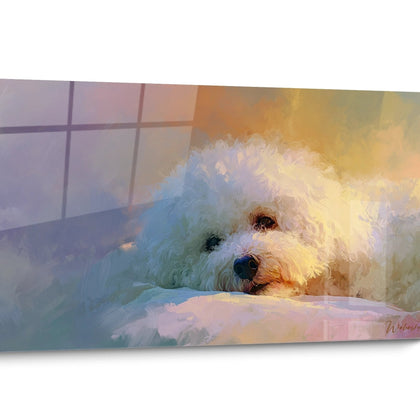
 Bichon Frise Portrait Canvas with Expressive Eyes - Tender Gaze - Bichon Frise Edition273,90 €
 Bichon Frisé Portrait Wall Art in Powdered Tones - Pastel Softness - Bichon Frisé Edition273,90 €
 White Bichon Frisé Canvas with Blue Nuances - Elegant Portrait - Bichon Frisé Edition228,90 €
Explore further
In Minimalist Bichon Frise Dog Wall Art


All about Minimalist Bichon Frise Dog Wall Art
- Presentation Painting Bichon Frise Minimalist
- Purity and Elegance
- Contemporary Aesthetics
- Spatial Integration
The painting dog Bichon Frise minimalist embodies the quintessence of pure design applied to canine art. This artistic approach revolutionizes the representation of the Bichon by favoring suggestion over exhaustive description. Unlike colorfully saturated paintings, this minimalist variation captures the essence of the Bichon Frise through a few delicate lines, a restricted color palette, and an airy composition that enhances contemporary spaces. Each creation exploits the expressive power of emptiness, transforming absence into visual presence and creating a subtle dialogue between the characteristic silhouette of the breed and modern architectural environments. This large-scale wall decoration is the ideal decorative element for dog art enthusiasts seeking a sophisticated alternative to traditional representations.
The Minimalist Essence of the Bichon Frise in Wall Decoration
The painting dog Bichon Frise minimalist redefines the decorative approach by reducing canine representation to its essential components. This artistic philosophy revolves around maximum visual economy, where each line, each curve, each shade of tone participates in the immediate evocation of the breed without ever falling into descriptive redundancy.
Why does minimalism particularly sublimate the Bichon Frise?
The characteristic fluffy structure of the Bichon finds a remarkable graphic translation in minimalist aesthetics. The contrast between the breed's compact silhouette and the surrounding large negative spaces creates a captivating visual tension. Artists exploit the instant recognition of the round profile of the Bichon to deploy compositions where a few linear suggestions suffice to evoke the entire animal. This formal reduction paradoxically amplifies the presence of the subject, transforming the absence of detail into an invitation to the viewer's imagination.
The minimalist approach also magnifies the distinctive texture of the Bichon Frise's fur. Rather than attempting an impossible faithful reproduction, refined creations suggest this tactile quality through monochrome blocks, subtle gradients, or delicate graphic textures. This partial abstraction resonates particularly with contemporary interiors where chromatic sobriety dominates, creating a natural harmony between the wall artwork and its architectural environment.
The visual codes of canine minimalist aesthetics
The painting dog Bichon Frise minimalist relies on rigorous compositional principles. The restricted palette favors neutral tones – deep black, immaculate white, nuanced grays – sometimes accented by a single chromatic point such as a warm beige or a powdery blue. This voluntary restriction amplifies the visual impact of each present element. Large formats brilliantly exploit this economy of means, transforming imposing wall surfaces into visual breathing spaces where the Bichon appears as a floating, almost meditative presence.
The graphic techniques employed vary intelligently: fluid continuous lines capturing the roundness of the body in a single movement, positive or negative silhouettes playing with figure-ground perception, or even geometric compositions fragmenting canine anatomy into recognizable abstract forms. Each approach nevertheless shares this desire for maximum clarity, elimination of the superfluous, celebration of emptiness as an active component of the composition. For those seeking an alternative while maintaining a contemporary approach, the modern Bichon Frise painting offers complementary variations.
The Psychological Impact of Purified Compositions
Beyond pure aesthetics, the minimalist Bichon Frisé dog painting generates specific psychological effects. The visual breathing spaces it establishes reduce cognitive saturation, creating mental resting zones in environments often overloaded with visual information. The simplified presence of the Bichon acts as an emotional anchor without requiring the constant attention imposed by a densely detailed work. This meditative quality explains the enthusiasm for these creations in contemporary living spaces where visual calm becomes a rare and sought-after luxury.
Architectural Integration of the Bichon Frisé Minimalist Painting
The installation of a large-scale minimalist Bichon Frisé dog painting radically transforms the spatial perception of an interior. This work does not merely occupy a wall surface: it redefines volumes, modulates visual circulations, and establishes a new architectural hierarchy. Unlike overloaded compositions, the minimalist approach dialogues with the architecture itself rather than competing with it.
How to strategically position this wall creation?
The generous format of these creations requires in-depth spatial reflection. In open-plan spaces such as lofts or open spaces, the minimalist Bichon Frisé dog painting acts as an immaterial visual separator, delineating functional zones without erecting physical barriers. On a clear main wall, it becomes the focal point around which all the layout is organized. Purified compositions particularly support coexistence with marked architectural structures – exposed beams, exposed brick, raw concrete – because their graphic simplicity contrasts without opposing.
White or light-colored surfaces amplify the inherent lightness of the minimalist aesthetic. The Bichon represented in its natural light tones stands out by its formal presence alone rather than by violent chromatic contrast. Conversely, on dark walls, the negative versions where the Bichon appears as a luminous reserve create sophisticated dramatic effects. This chromatic versatility fundamentally distinguishes these works from pop art versions requiring specific contexts.
Space modulation by the minimalist composition
Large-scale minimalists have this remarkable ability to visually enlarge the spaces they occupy. The minimalist Bichon Frisé dog painting exploits this property through its extended negative zones which visually extend the walls beyond their physical limits. The viewer's eye circulates freely between the graphic elements and the empty spaces, creating a perceptual expansion of the room. This characteristic is particularly valuable in urban apartments where every square meter counts.
The illusory depth generated by some layered compositions adds an additional dimension. When multiple graphic planes suggest a depth of field without resorting to traditional perspective, the work creates a fictitious visual window, an escape to an imaginary space. This atmospheric quality transforms the supporting wall into a permeable membrane rather than an opaque surface, reinforcing the feeling of spatial openness.
What decorative complements to associate without breaking the balance?
The successful integration of a Bichon Frisé dog wall art painting requires strict decorative discipline. Furniture with clean lines, favoring simple geometric shapes and natural materials, constitutes the ideal environment. Light wood, brushed metal, natural linen textiles create a material continuity without visual competition. Sculptural plants – monstera, ficus lyrata, palm – bring a complementary organic presence without visually fragmenting the space.
Ambient diffused lighting particularly enhances these creations. Avoid directional spotlights that create unwanted reflections and favor indirect light sources distributing light evenly. Variations in light intensity throughout the day gradually reveal the graphic subtleties, transforming the artwork into a dynamic element that dialogues with natural light. To discover other stylistic approaches to the Bichon Frisé, explore the complete collection of Bichon Frisé paintings .
Graphic and Symbolic Aesthetics of Canine Minimalism
The minimalist Bichon Frisé dog painting embodies an artistic philosophy where each graphic element carries a symbolic charge amplified by the surrounding absence. This approach transcends the simple canine representation to touch on deep emotional and conceptual dimensions, establishing a new visual language in contemporary animal art.
The expressive power of formal reduction
The communicative effectiveness of the Bichon Frisé dog minimalist painting rests on a fascinating paradox: the less the work shows, the more it expresses. By eliminating secondary details, the artist forces the viewer to project their own experiences and emotions onto the simplified Bichon form. This streamlined silhouette becomes a universal receptacle of memories, affections, and personal associations linked to the breed. Emotional identification occurs instantly without mediation of an imposed style, creating a direct and intimate connection.
Minimalist typographic variations – where the Bichon is sometimes reduced to a few essential curves – push this logic to its paroxysm. These abstract creations nevertheless maintain immediate recognition thanks to the intelligent exploitation of characteristic proportions: voluminous round head, compact body, short limbs. The human brain, remarkably performant in pattern recognition, automatically completes the missing information, transforming each viewer into a co-creator of the artwork.
How does minimalism magnify the personality of the Bichon Frisé?
The Bichon Frisé breed historically embodies aristocratic elegance, affectionate tenderness, and a certain playful sophistication. The minimalist treatment amplifies these intrinsic qualities by translating them graphically. The roundness of the shapes spontaneously evokes tactile softness and a warm temperament. Airy compositions reflect the physical and behavioral lightness of these companions. Clean palettes suggest the purity of their characteristic white coat while symbolically evoking their playful yet refined nature.
This graphic translation of character traits fundamentally distinguishes the minimalist approach from watercolor representations which privilege pictorial fluidity. Where watercolor dissolves contours in chromatic nuances, minimalism affirms sharp boundaries that paradoxically better express the solid and joyful presence of the Bichon in the daily life of its owners.
The evolution of perception according to prolonged observation
A remarkable phenomenon distinguishes the Bichon Frise minimalist wall art from more descriptive works: its ability to progressively reveal unsuspected levels of complexity. The initial observation perceives the obvious graphic simplicity. Sustained attention then discovers subtleties: subtle variations in shades, compositional tensions between graphic elements, directional dynamics suggested by the orientation of shapes. This hidden depth beneath the apparent simplicity prevents visual fatigue, keeping aesthetic interest intact despite daily exposure.
Large dimensions accentuate this effect of progressive discovery. The overall perception from the entrance of a room differs radically from the close observation revealing the execution details, the graphic textures, the specific technical choices. This double reading – synthetic and analytical – enriches the decorative experience, transforming the work into an evolving visual companion rather than static decor.
FAQ: Frequently Asked Questions about the Bichon Frise minimalist wall art
Is a Bichon Frise minimalist wall art suitable for eclectic interiors?
Absolutely, its graphic neutrality allows it to coexist with various decorative styles. The formal purity of the minimalist Bichon acts as a visual balancing element in heterogeneous environments, bringing a welcome breath without imposing a rigid stylistic constraint. Its large size gives it enough presence to structure the space despite the surrounding diversity.
Are these minimalist creations suitable for real Bichon Frise owners?
Bichon owners particularly appreciate these purified interpretations because they capture the essence of their companion without falling into photographic representation. Partial abstraction allows honoring the entire breed rather than a specific individual, creating a universal celebration of the Bichon Frise that resonates emotionally while maintaining a high decorative sophistication compatible with demanding contemporary interiors.
How does the Bichon Frise minimalist wall art age aesthetically?
Minimalist aesthetics transcend decorative trends thanks to its rejection of datable stylistic effects. Unlike fleeting trends, formal purity retains its aesthetic relevance decade after decade. Large minimalist formats even acquire a valorizing cultural patina, becoming witnesses of a thoughtful and timeless decorative choice that enhances the environment without ever appearing obsolete.
Further reading
Our articles on this topic
- Square woodcock painting: the minimalist choice for an elegant entryway
- Coton de Tulear painting, white background watercolor minimalist: how to avoid the invisible effect
- Whippet Greyhound Painting for a Modern Living Room: How to Showcase This Elegant Silhouette
- Bichon Frisé painting gift idea for a birthday: the guide to getting it right
- Bichon Havanese painting in Scandinavian style for an entrance: the practical guide
- French Bulldog Painting for a Scandinavian Living Room: How to Harmonize It Perfectly
L'art qui suscite l'envie
Maison belge d'art mural grand format
14 jourspour changer d'avis*
Protection Walenskyincluse
Fabriquéen Italie
FormatXXL
Kit de fixationtoujours fourni
* Hors tableaux personnalisés et tailles personnalisées


