








Bichon Frise Dog Pop Art Wall Art
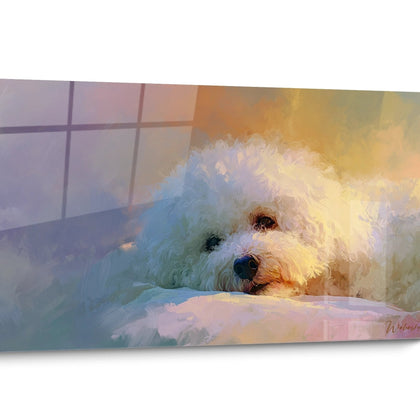
Our Pop Art Bichon Frisé Dog Painting elevates this iconic breed through vibrant and colorful artistic creations. Each artwork captures the playful spirit and sweetness of the Bichon in a unique pop art for dog decoration aesthetic. Bright colors and bold compositions transform your interior into a contemporary gallery. Perfect for dog lovers and modern art enthusiasts, this collection brings cheerfulness and character to your spaces. Discover artistic portraits that celebrate the elegance of the Bichon Frisé in pop art style.
 Bichon Frisé Colorful Portrait Painting on Multicolor Background - Artistic Tenderness - Bichon Frisé Edition273,90 €
 Bichon Frisé Wall Art on Colorful Geometric Background - Contemporary Brilliance - Bichon Frisé Edition273,90 €
 Bichon Wall Art with Flowing Hair on Red Background - Artistic Movement - Bichon Frisé Edition273,90 €
 White Bichon Frisé Painting on Bright Pink Background - Joyful Canine Portrait - Bichon Frisé Edition273,90 €
 White Dog Painting with Color Contrasts - Contrasted Modern Art - Bichon Frisé Edition228,90 €
Explore further
In Bichon Frise Dog Pop Art Wall Art


All about Bichon Frise Dog Pop Art Wall Art
- Bichon Frisé Pop Art Wall Art Presentation
- Graphic Explosion and Vibrant Colors
- Artistic Movement and Decorative Identity
- Stylistic Variations and Visual Impact
The Bichon Frisé Pop Art dog wall art reinvents canine representation by drawing from the legacy of the American artistic movement of the 1960s. This large-format mural creation transforms the iconic white silhouette of the Bichon into an explosion of saturated colors, striking contrasts, and bold graphic compositions. Inspired by the visual codes of Warhol, Lichtenstein and Hockney, this type of large-format mural creation revisits the characteristic curly coat in neon color blocks, fluorescent gradients, or stylized screen prints. The Pop Art approach transcends simple animal representation to create a strong aesthetic statement, transforming the familiar companion into a contemporary cultural icon. These large-scale mural compositions capture the joyful and playful essence of the Bichon while asserting a dominant visual presence in modern living spaces, creative offices, or avant-garde showrooms.
Pop Art Aesthetics in Service of Immediate Canine Recognition
The Bichon Frisé Pop Art dog wall art exploits the explosive chromatic codes of the artistic movement to create instant recognition. Blocks of acidic primary colors—hot pink, electric blue, lemon yellow, lime green—transform the natural white coat into a striking visual mosaic. This intentional color saturation generates immediate retinal impact, capturing attention in commercial spaces, private galleries, or converted industrial lofts.
Why do screen-printed contrasts reinforce the Bichon's mural presence?
The technique of screen-printed contrasts accentuates the characteristic curly volumes of the Bichon Frisé. Cast shadows become deep black masses, while light zones explode in pure white or fluorescent colors. This visual dichotomy creates graphic depth that works particularly well in monumental formats. Compositions in quadriptych or repetitive series, directly inherited from the Warhol approach, multiply the visual effect while exploring infinite chromatic variations of the same canine subject.
Sequential approach and repetition as stylistic signature
Unlike Bichon Frisé Watercolor wall art representations that prioritize fluidity, the Pop Art approach adopts systematic repetition as language. Four, six, or nine variations of the same Bichon, each in a different palette, create a hypnotic visual rhythm. This controlled multiplication transforms the domestic animal into a product of cultural consumption, subtly questioning our emotional relationship with canine companions while celebrating their joyful presence in our urban daily lives.
Extra-wide panoramic formats exploit this serial logic to create imposing mural frescoes. In creative professional spaces—communication agencies, design studios, technology startups—these sequential compositions embody a dynamic of innovation and visual boldness. The structured repetition of the Bichon becomes a metaphor for contemporary cultural production, where the original and the copy merge in an assumed graphic celebration.
Cultural Heritage of Pop Art Applied to Canine Iconography
The Bichon Frisé Pop Art dog wall art is part of an artistic tradition that elevates ordinary subjects to the status of cultural icons. This aesthetic democratization, initiated in the 1960s, finds particular resonance with the Bichon Frisé—a breed historically associated with European aristocracy but now an accessible urban companion. The contrast between this noble history and the democratizing Pop treatment creates fertile creative tension, particularly relevant for collectors who appreciate stratified cultural references.
How do references to mass culture transform the perception of the Bichon?
The integration of elements from popular culture—comic bubbles, polka dot patterns, visible offset printing screens—superimposes on the Bichon immediately recognizable visual codes. This fusion between animal subject and urban graphic vocabulary generates a multi-layered reading. Compositions can incorporate stylized typographic elements, visual onomatopoeia, or backgrounds inspired by commercial packaging from the 1960s-1970s, creating mural works that dialogue with the history of graphic design as much as with the tradition of animal portraiture.
The Bichon as a vector of nostalgia and modernity simultaneously
This stylistic approach simultaneously activates nostalgic registers—the golden age of American Pop Art—and ultra-contemporary ones—the visual codes of social networks and meme culture. For lovers of Colorful Bichon Frisé wall art, this Pop Art version represents the maximum expression of chromatic exuberance. Large formats exploit this temporal duality to create visual anchors in eclectic interiors that blend vintage furniture and contemporary technologies.
Mural installations of exceptional dimensions—exceeding two meters in width—transform the Bichon into an architectural presence. These masterpieces function as focal points in open spaces, mezzanines, or double heights. Their saturated visual impact effectively contrasts with raw materials—polished concrete, exposed brick, industrial steel—typical of urban architectural conversions, creating a dialogue between canine softness and material rudeness that enriches the overall spatial experience.
Stylistic Variations and Positioning in the Decorative Ecosystem
The Bichon Frisé Pop Art dog wall art comes in several stylistic subcategories that refine its decorative positioning. Neo-pop versions incorporate contemporary digital techniques—pixelation effects, visual glitches, layer superimpositions—that update the historical codes of the movement. Retro-pop interpretations respect the original palette of the 1960s more closely with its slightly desaturated hues and explicit references to icons of the era. This diversity allows precise adaptation to specific environments, from revisited Haussmann apartments to minimalist penthouses.
What are the optimal mural combinations to amplify Pop impact?
Strategic association with other decorative elements multiplies visual effectiveness. Furniture with refined geometric lines—inspired by Scandinavian design or Bauhaus—creates a formal counterpoint that values the graphic exuberance of Pop Bichon. Textiles with monochrome geometric patterns balance chromatic saturation without creating visual competition. For those who also appreciate refined approaches to Minimalist Bichon Frisé wall art, the juxtaposition of both aesthetics in adjacent rooms creates a particularly stimulating contrasted visual journey.
Positioning in creative professional environments
Coworking spaces, creative agencies, and fashion showrooms massively adopt these mural compositions for their ability to project a bold visual identity. Pop Art Bichon functions as an aesthetic signature, instantly communicating values of creativity, accessibility, and assumed humor. Modular formats allow custom installations that adapt to specific architectural constraints—structural columns, angled spaces, fragmented walls—while maintaining overall visual coherence.
The evolution of these compositions over time differs significantly from traditional approaches to Bichon Frisé wall art. Their assumed graphic nature resists decorative fashion effects better, as they are inscribed in documented and valued artistic history. Collectors find that these pieces gain in cultural relevance over time, particularly when contemporary versions incorporate references to current technological and media developments—augmented reality, artificial intelligence, digital culture—thus creating rich temporal stratifications.
Complementarity with adjacent artistic movements
Dialogue with other artistic movements enriches visual experience. Associations with Op Art create fascinating optical vibrations, while references to Street Art—graffiti, stencils, stylized tags—further urbanize the Bichon representation. These stylistic hybridizations find their optimal expression in large formats that offer sufficient compositional space to develop complex visual narratives. Those who appreciate current creations will also enjoy Modern Bichon Frisé wall art that explores other contemporary aesthetic territories.
Is Bichon Frisé Pop Art wall art suitable for classic interiors?
Absolutely, provided you adopt an assumed contrast approach. In Haussmann or bourgeois interiors, these compositions create refreshing visual breaks that modernize without distorting. Heritage furniture—Louis XVI armchairs, period dressers—gains contemporary relevance through contrast with Pop exuberance, creating sophisticated temporal dialogues appreciated by avant-garde interior designers.
What dimensions should be prioritized to maximize the visual impact of Pop Art Bichon?
Formats exceeding 120 centimeters in width fully exploit the graphic potential of the Pop approach. These dimensions allow appreciation of texture details—simulations of printing screens, screen print effects, subtle chromatic variations—while maintaining overall visual impact. In professional spaces or large residential rooms, compositions reaching 200 centimeters create truly architectural mural presences that restructure spatial perception.
How to sustainably maintain a large-format wall art with Pop Art aesthetics?
Optimal preservation requires positioning that avoids direct UV ray exposure which could alter the characteristic saturated pigments. Regular dusting with a dry microfiber cloth preserves the brightness of vibrant colors. Contrary to popular belief, distance from direct heat sources matters more than humidity control for these contemporary compositions, particularly in spaces with dynamic air circulation typical of converted lofts and studios.


