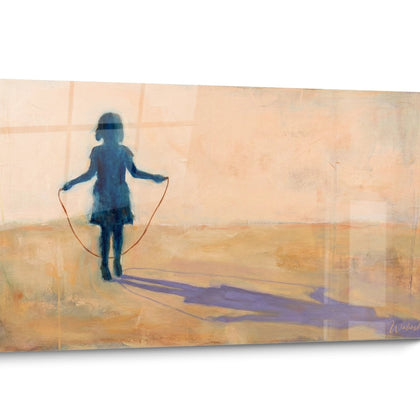
The impressionist jump rope painting captures the fleeting essence of athletic movement through a unique pictorial interpretation where fragmented brushstrokes reconstruct the energy of training sessions. This artistic representation transforms physical activity into a dynamic visual composition, combining the spontaneity of athletic gesture with the light sensitivity characteristic of the impressionist movement. Unlike geometric abstract works, this approach privileges chromatic variations and atmospheric effects to convey the vividness of a sports scene. Installing such a decorative element in a space dedicated to fitness or wellness creates a motivating atmosphere while bringing refined cultural appeal, revealing how art can elevate daily sports practice.
Expressing Movement Through Impressionist Brushstrokes
The impressionist jump rope painting stands out for its ability to translate the fluidity of athletic gesture into a succession of juxtaposed colored brushstrokes. This fragmented pictorial technique visually captures the acceleration of the rotating rope, creating an optical vibration effect that evokes the cardio intensity of the exercise. Impressionist fitness artists exploit gradations of light to dark tones to suggest depth of field and the elliptical trajectory of sports equipment.
How do lighting variations amplify sports intensity?
Chromatic modulations in an impressionist-style jump rope painting reproduce changing reflections on metallic surfaces of handles and moving shadows. These variable lighting effects create a temporal dimension, as if the observer were witnessing successive phases of the same exercise. The alternation between brightened and darkened areas generates a visual rhythm comparable to the high-intensity intervals characteristic of HIIT jump rope training.
Capturing morning training atmospheres
Impressionist compositions often favor early-day settings, when natural raking light passes through studio or gym windows. This particular light, conducive to transparency and opalescence effects, enhances representations of outdoor sports sessions. The impressionist fitness jump rope painting restores this energizing atmosphere characteristic of morning sessions, where light mist and first sunrays create an environment conducive to motivation.
Chromatic contrasts generating dynamism
The use of complementary colors in these artistic representations creates visual tension that reinforces movement perception. Brilliant oranges facing deep blues, or purples juxtaposed with vivid yellows, generate a retinal vibration that visually translates the energy deployed during an intensive session. This chromatic approach fundamentally distinguishes the impressionist jump rope painting from more conventional approaches or geometric abstract compositions that privilege structure over light sensations.
Decorative Integration in Sports and Wellness Spaces
Which size to choose for an impressionist home gym?
For a large-format impressionist jump rope painting, visual impact in a personal training room becomes monumental. Generous dimensions allow total immersion in material effects and chromatic variations, transforming the exercise space into a true motivating gallery. The imposing size faithfully renders the vigorous brushstrokes and impasto characteristic of this aesthetic, creating a visual presence comparable to original works by French impressionist masters.
Harmonizing with contemporary sports equipment
The impressionist fitness-themed painting establishes a fascinating visual dialogue with modern chrome steel equipment and technical materials of wellness spaces. This juxtaposition between 19th-century pictorial spontaneity and the precision of contemporary cardio devices creates a productive aesthetic tension, humanizing sometimes overly functional training environments. Pastel tones and atmospheric effects soften the rigidity of metal structures.
Creating narrative continuity between rest and activity
In multifunctional spaces combining exercise zones and relaxation areas, the impressionist jump rope painting acts as a visual transition between these two temporalities. Its ability to simultaneously capture movement and contemplation makes it ideal decorative element for sports lofts and apartments where training integrates into daily life. Represented scenes evoke both physical effort and poetic lightness, reflecting the sought balance between performance and wellness.
Psychological impact of impressionist sports representations
Research in environmental psychology reveals that artistic representations of movement in training spaces reinforce intrinsic motivation. An impressionist-style jump rope decorative painting activates neural circuits associated with motor preparation, creating favorable cognitive priming before effort. The emotional dimension of impressionist brushstrokes, less intimidating than hyperrealistic photographs of professional athletes, favors personal identification and reduces performance anxiety.
Chromatic Compositions and Impressionist Fitness Scenes
Typical palettes in impressionist sports representations
The impressionist jump rope painting generally privileges harmonies of atmospheric blues and natural pinks, evoking outdoor training atmospheres under different light conditions. Contemporary artists specializing in this theme also exploit emerald greens and mauves characteristic of twilight sessions, when natural lighting creates iridescent reflections on moving skin. These chromatic choices radically distinguish these compositions from academic representations or conventional sports illustrations.
Why group scenes amplify the impressionist effect?
Collective representations of group jump rope training sessions offer impressionist artists exceptional opportunities to fragment space into multiple movement sources. The superposition of several athletes in action creates visual complexity where silhouettes partially merge, generating transparency and interpenetration effects characteristic of impressionist aesthetics. This compositional density transforms the impressionist sports painting into a collective celebration of physical energy, transcending simple individual representation.
Integration of urban and natural environments
The most successful compositions often integrate blurred contextual elements in the background, suggesting either urban parks or bright gym interiors. This environmental contextualization anchors sports practice in a realistic living framework while maintaining focus on athletic gesture. Reflections on floors moistened by effort, treated in rapid horizontal brushstrokes, create typically impressionist spatial depth that enriches artwork interpretation.
Panoramic formats for movement sequences
Impressionist jump rope paintings in extended format allow deploying true pictorial chronophotography, where multiple movement phases succeed each other horizontally. This narrative approach transforms the decorative surface into a dynamic frieze that visually narrates complete exercise progression. For crosstraining spaces or boutique fitness studios, these panoramic compositions create visual momentum that naturally guides the eye along the main wall.
Is an impressionist jump rope painting suitable for professional coaching spaces?
Absolutely, as it humanizes the professional environment while reinforcing visual identity focused on movement and performance. Personal coaching studios particularly benefit from these artistic representations that differentiate their space from standardized commercial gyms, creating a premium and culturally enriched atmosphere.
How to maintain a large-format impressionist jump rope painting?
Imposing formats require regular dusting with a dry microfiber cloth, avoiding any chemicals that could alter pigments. In sports environments where relative humidity fluctuates, maintaining adequate ventilation prevents premature degradation while preserving the brilliance of impressionist colors.
Can multiple impressionist jump rope paintings be hung in series?
Creating a triptych or coordinated series amplifies decorative impact, especially if artworks represent different light atmospheres or training phases. This museographic approach transforms the sports space into a true immersive visual journey, multiplying points of interest and enriching the sensory experience of practitioners.


 Impressionist Ballerina Painting - Golden Grace - Jump Rope Edition232,90 €
 Child Jump Rope Painting - Movement and Light - Jump Rope Edition213,90 €
 Children's Jumping Rope Painting - Joy in the Storm - Jumping Rope Edition233,90 €