


Impressionist Night City Painting
Our City at Night Impressionistic collection captures the magic of cities after dusk. Inspired by Impressionist masters, each work reveals the nocturnal urban lights in a poetic and captivating atmosphere. The reflections of streetlights, mysterious silhouettes and illuminated facades blend into refined pictorial compositions. Perfect for creating a sophisticated atmosphere, these city night paintings bring depth and character to your decor.
 New York Street in the Rain Painting - Nocturnal Urban Symphony - New York Edition228,90 €
 New York Street in the Rain Wall Art - Impressionist Urban Night - New York Edition242,90 €
 Painting Inspired by Boulevard Montmartre, Night by Camille Pissarro No.1 – A Tribute to a Celebrated Artist273,90 €
 London Canvas No.1 - England Around the World Edition273,90 €
 Rainy Paris Canvas N°1 - Paris Around the World Edition273,90 €
Explore further
In Impressionist Night City Painting
-
 Night City Wall Art51
artworks
Night City Wall Art51
artworks
-
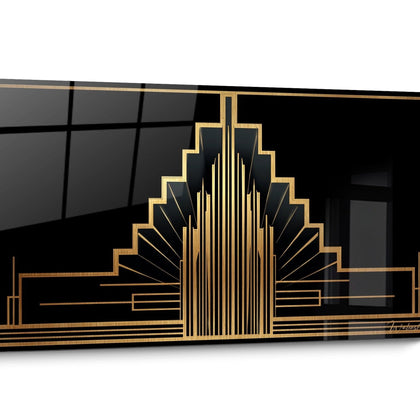 Night City Art Deco Wall Art3
artworks
Night City Art Deco Wall Art3
artworks
-
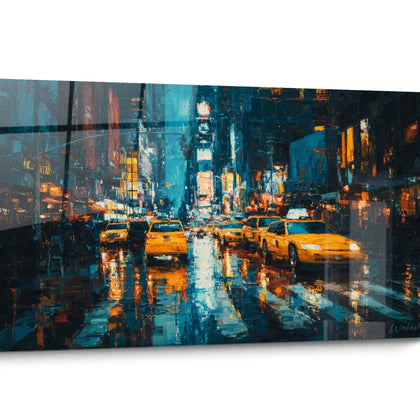 Rainy Night City Painting11
artworks
Rainy Night City Painting11
artworks
-
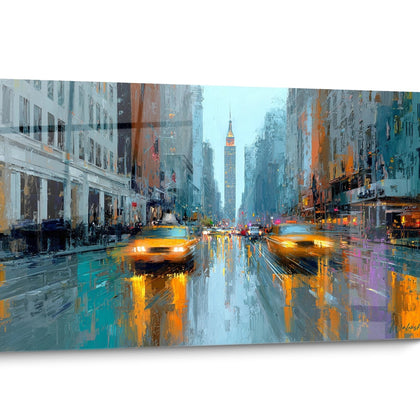 New York City Night Wall Art19
artworks
New York City Night Wall Art19
artworks
-
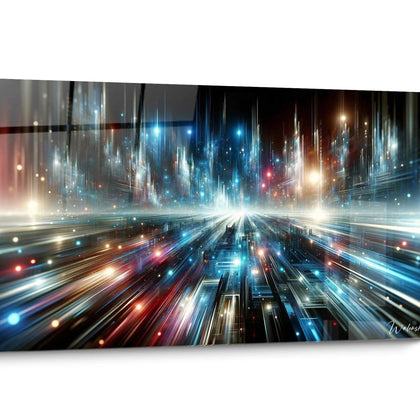 Cyberpunk Night City Wall Art3
artworks
Cyberpunk Night City Wall Art3
artworks
-
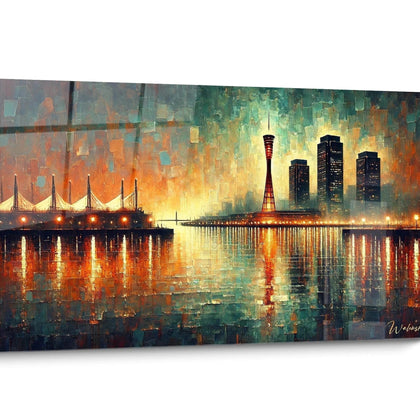 Night City Sunset Wall Art6
artworks
Night City Sunset Wall Art6
artworks
-
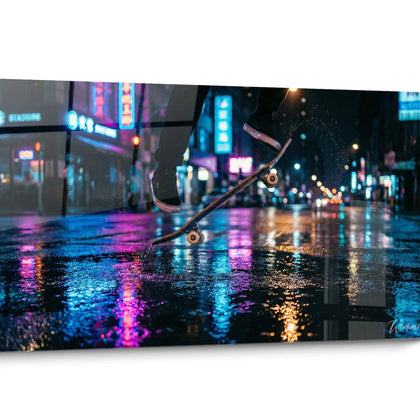 Night City Street Art Wall Art4
artworks
Night City Street Art Wall Art4
artworks
-
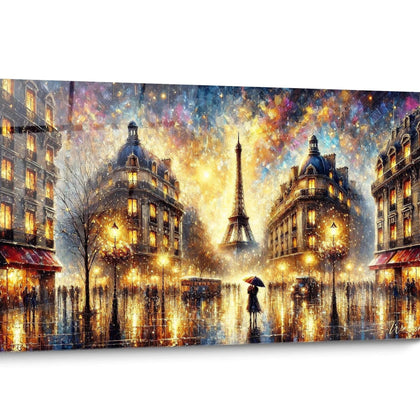 Romantic Nighttime City Wall Art8
artworks
Romantic Nighttime City Wall Art8
artworks

All about Impressionist Night City Painting
- Presentation Painting City at Night Impressionistic
- Impressionistic Nocturnal Atmospheres
- Urban Lighting Effects
- Composition & Placement
An painting city at night impressionistic captures the ephemeral magic of metropolises after dusk, sublimating the moving reflections and characteristic luminous halos of the Impressionist movement. This fusion of modern urbanity and 19th-century pictorial aesthetics offers a dreamlike interpretation of contemporary urban landscapes, transforming each nocturnal scene into a vibrant visual symphony. Generous formats magnify the chromatic intensity and atmospheric depth inherent in this theme, creating a striking focal point in sophisticated interiors.
The Impressionist Aesthetic Applied to Nocturnal Urban Landscapes
The painting city at night impressionistic reinvents the codes of the artistic movement by transposing the technique of fragmented touches to contemporary urban scenes. Unlike Monet’s rural landscapes, this approach captures the shimmering of neon signs, the trails of car headlights, and the golden reflections on wet asphalt.
Why choose an impressionistic interpretation of nocturnal metropolises?
The nocturnal urban impressionism reveals a unique emotional dimension where contours dissolve into a luminous haze. The diffused halos around the streetlights, the subtle gradations between illuminated areas and deep darkness create an incomparable visual depth. This aesthetic is particularly suitable for residential spaces seeking a contemplative atmosphere without photographic rigidity, offering this artistic imprecision that stimulates the imagination.
The chromatic vibration of urban lighting
In a painting city at night impressionistic, artificial light sources generate bold color palettes: saturated orange hues of sodium streetlights, electric blues of commercial neon signs, deep purples of urban twilight skies. These thermal contrasts between warm and cool lights faithfully reproduce the sensory experience of nocturnal walks in a metropolis, capturing this visual tension between natural and artificial.
Artistic blur as a stylistic signature
The Impressionist technique transforms photographic sharpness into pictorial vibration where each architectural element merges into a vaporized atmosphere. Skyscrapers become dark masses punctuated by shattered luminous windows, streets transform into rivers of flowing light. This dissolution of rigid forms brings a poetic dimension absent from hyperrealistic representations, particularly sought after in contemporary interiors that prioritize suggestion over evidence.
- Juxtaposition of colored touches creating an optical luminescence
- Absence of defined lines favoring atmospheric immersion
- Complex tonal gradations reproducing the density of the nocturnal air
- Capturing urban movement through directional blurring
Mastering the Play of Light in a Painting City at Night Impressionistic
Reflections are the very essence of a painting city at night impressionistic, transforming every urban surface into a distorting mirror. Wet pavements, shop windows, car bodies become countless reflective planes that multiply light sources and create this characteristic spatial depth.
How do reflections multiply the presence of light?
In nocturnal urban impressionistic compositions, reflections are never exact duplicates but chromatic interpretations enriched. A yellow lamppost is reflected in an orange trail on the wet asphalt, while red neon lights fragment into a constellation of vermilion points. This visual multiplication fills the pictorial space with an exceptional luminous density, particularly valued on monumental formats where each reflective area becomes an autonomous wall art.
The balance between dark areas and luminous planes
The impressionistic nocturnal composition rests on a dramatic contrast where masses of deep shadow frame luminous explosions. Side alleys plunged into darkness accentuate the brilliance of the main arteries illuminated, creating a captivating visual rhythm. This game of opposition generates a spatial dynamic where the gaze constantly travels between these poles, reproducing the real perceptive experience of urban nocturnal environments with a high density of lighting.
Halos and aureoles as structuring elements
Unlike daytime representations, the impressionistic nocturnal city painting uses luminous halos as true architectural components. Each source generates a radial diffusion zone where pigments gradually dissolve towards the dark peripheries. These halos structure the pictorial space by creating zones of luminous influence that guide the reading of the work, particularly effective in residential spaces where prolonged observation gradually reveals this subtle organization.
- Superposition of translucent layers simulating atmospheric density
- Variations in light intensity creating visual anchor points
- Inverted reflections adding a dreamlike dimension
- Complex gradations translating the dispersion of light in humid air
Generous formats amplify these luminous phenomena by allowing a more progressive and nuanced gradation, transforming each chromatic transition into an immersive experience.
Integrating an Impressionistic City Painting into Interior Architecture
The installation of a city painting of impressionistic nights requires reflection on the interaction between its painted luminous zones and the actual ambient lighting. Unlike daytime works, these nocturnal compositions develop their full potential in conditions of adjustable lighting that respect their chromatic identity.
What luminous exposure optimizes the impressionistic nocturnal subtleties?
The delicate tonal variations of an urban impressionistic painting require indirect lighting avoiding parasitic reflections on the dark areas. The dimmed ambient lighting in the evening creates a continuity between the represented nocturnal atmosphere and the real environment, amplifying the immersive effect. Adjustable light sources allow you to adjust the intensity according to the moments, revealing either the details of the shadow areas or the brilliance of the central luminous planes.
Color associations with contemporary furniture
Impressionistic nocturnal urban palettes, dominated by deep blues, twilight purples and artificial oranges, harmonize with contemporary materials. Smoked glass, brushed steel and anthracite textiles amplify the nocturnal sophistication, while dark woods create a warm transition. Metallic copper or gold accents in the furniture echo the painted luminous reflections, establishing subtle visual correspondences in the decorative ensemble.
Strategic positioning in residential spaces
A large format painting of an impressionistic cityscape finds its ideal place facing reduced traffic areas, allowing the necessary distance to appreciate the atmospheric effects. Reception areas particularly benefit from this theme, which generates conversation and contemplation. Positioning opposite glazed openings creates an intriguing dialogue between the real daytime urban landscape and the impressionistic nocturnal interpretation, enriching the spatial experience according to the hours.
- Avoid direct sunlight that alters chromatic nuances
- Favor neutral walls that amplify the color intensity
- Create a visual rhythm with low furniture that frees up perception
- Exploit panoramic formats in longitudinal spaces
Would an impressionistic cityscape painting be suitable for professional spaces?
Absolutely, this theme brings a refined cultural dimension particularly appreciated in executive offices, law firms, and high-end reception areas. The nocturnal impressionistic aesthetic evokes urban sophistication and artistic mastery, reinforcing the brand image while creating an atmosphere conducive to reflection without the distraction of hyperrealistic scenes.
Can several impressionistic urban night paintings be combined?
Multiplying impressionistic nocturnal works requires consistency in color palettes and the intensity of light represented. Prioritize variations of the same metropolis or complementary views creating a narrative journey rather than repetition. Differentiated formats avoid the gallery effect, preferring a dynamic asymmetrical composition.
How to maintain the subtle nuances of a large format impressionistic cityscape painting?
Impressionistic compositions with complex gradations benefit from delicate dusting with an antistatic microfiber cloth monthly. Avoid any liquid cleaning product that could alter the chromatic transitions. Controlling ambient humidity between 40-60% preserves the integrity of the pigments in the areas of high color saturation characteristic of this urban nocturnal theme.
L'art qui suscite l'envie
Maison belge d'art mural grand format
14 jourspour changer d'avis*
Protection Walenskyincluse
Fabriquéen Italie
FormatXXL
Kit de fixationtoujours fourni
* Hors tableaux personnalisés et tailles personnalisées


