


Greyhound Portrait Wall Art
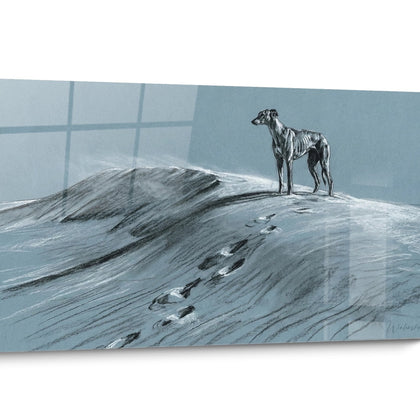
The Greyhound Portrait Wall Art captures all the grace and distinction of this mythic breed. Our collection celebrates the refined anatomy of the greyhound with elegant canine art pieces that enhance its aristocratic allure and profound gaze. Each creation reveals the timeless beauty of this exceptional dog, between athletic power and feline gentleness. Perfect for greyhound wall decor enthusiasts, these portraits transform your interior into an art gallery dedicated to one of the most noble and fascinating breeds in the canine world.
 Greyhound Mosaic Canvas - Ochre and Blue Tones - Artistic Portrait in Tessellations - Greyhound Edition273,90 €
 Greyhound Portrait Canvas in Ochre and Rust Tones - Melancholic Gaze - Greyhound Edition273,90 €
 Greyhound Portrait Painting with Expressive Eyes - Intense Gaze - Greyhound Edition228,90 €
 Greyhound Portrait Painting Red and Black Pop Art Style - Intense Expression - Greyhound Edition228,90 €
Explore further
In Greyhound Portrait Wall Art


All about Greyhound Portrait Wall Art
- Greyhound Portrait Wall Art Presentation
- Greyhound Sleek Aesthetic
- Aristocratic Canine Portrait
- Greyhound Character in Decor
The greyhound portrait wall art sublimes the refined elegance of this exceptional dog through an artistic representation that captures its singular anatomy and noble temperament. Prized by enthusiasts of sophisticated canine decoration, this type of artwork showcases the aerodynamic silhouette and penetrating gaze of the greyhound, making each piece a visual celebration of this emblematic breed. Collectors particularly seek large-format portraits that magnify the elongated stature and aristocratic posture of this sighthound, transforming an ordinary wall into a gallery dedicated to the exceptional world of canine art.
The Greyhound's distinctive morphology in artistic composition
The exceptional anatomy of the greyhound demands specific aesthetic choices for the greyhound portrait wall art. Its deep rib cage, retracted abdomen, and disproportionately long limbs create a natural verticality that large-format dimensions exploit masterfully. This slender silhouette contrasts with more compact dog breeds and requires a vertical or panoramic composition to respect the characteristic proportions of this exceptional racer.
How does the dolichocephalic skull influence portrait composition?
The greyhound's elongated and narrow skull confers unique graphic sophistication to the portrait. This distinctive cranial structure, with its finely chiseled muzzle and powerful jaws, creates fascinating diagonal lines in the composition. Artists specializing in sighthound portraiture exploit this anatomical particularity to generate visual dynamism rarely observed in portraits of other breeds, establishing an immediately recognizable aesthetic signature in premium canine decoration.
The decorative impact of musculature visible beneath short fur
Unlike breeds with abundant fur, the greyhound's short coat reveals every detail of its exceptional musculature. This anatomical transparency transforms the greyhound portrait wall art into a true artistic biomechanical study. The interplay of shadows naturally sculpts the prominent thigh muscles, the pronounced dorsal ridge, and the definition of the chest, creating striking three-dimensionality. For contemporary minimalist spaces, this muscular legibility brings a sculptural dimension that dialogues with design furniture featuring pure lines and minimalist architectural volumes.
Atypical proportions and their valorization in large formats
Imposing formats fully reveal the greyhound's extraordinary height-to-length ratio, with legs representing nearly 60% of its total height. This unique proportional peculiarity among domestic canids expresses itself magnificently in paintings exceeding 120 cm in height. Discerning collectors favor these generous dimensions to transform a spacious entrance hall or cathedral-style living room into a sanctuary dedicated to sighthound aesthetics. The visual effect evokes ancient statuary, recalling that these dogs already accompanied Egyptian pharaohs. To complement this artistic approach, enthusiasts sometimes turn to a greyhound watercolor portrait that offers a more fluid and poetic interpretation of these same exceptional proportions.
Facial expression and the characteristic greyhound gaze in portrait
The greyhound portrait distinguishes itself fundamentally through its enigmatic facial expression, a paradoxical blend of meditative gentleness and predatory intensity. The oval eyes, slightly oblique and remarkably spaced, confer upon each greyhound portrait wall art a psychological depth rarely achieved in canine representation. This ocular particularity creates an immediate emotional connection with the observer, transforming the wall hosting the artwork into a magnetic focal point of the residential space.
Why does the greyhound's gaze capture so much attention in interior decoration?
The lateral positioning of the greyhound's eyes, an evolutionary adaptation linked to its sight-hunting function, generates unique visual intensity in portraits. This ocular configuration allows artists to play with multiple gaze angles, creating the illusion that the sighthound observes the space from its frame. In a directorial office or private library, this vigilant presence establishes an atmosphere of aristocratic concentration, evoking British manor houses where these dogs traditionally accompanied landed nobility.
The specific chromatic palette of greyhound coats
Greyhound coats offer exceptional chromatic richness, from jet black to immaculate white, passing through brindle striping, sandy fawn, and rare slate blue. This diversity permits harmonizing the greyhound portrait wall art with varied decorative schemes without compromising breed authenticity. A portrait featuring a cream-white greyhound particularly sublimes Scandinavian interiors with light tones, while a dark brindle subject visually anchors industrial spaces with raw materials like polished concrete and patinated steel.
The elegance of lateral profile versus the power of frontal portrait
The greyhound's lateral profile reveals the graceful curve of its arched neck and the perfect alignment of its aristocratic muzzle, a composition favored for panoramic hallways and narrow walls. Conversely, the frontal portrait exposes the surprising chest width and the spacing of the front legs, an ideal configuration for square spaces like cubic living rooms. Discerning buyers select portrait orientation based on their room's architecture, thereby maximizing the spatial impact of the artwork. This attention to representation angle testifies to a deep understanding of strategic canine decoration, where every artistic choice responds to precise spatial logic.
The greyhound's temperament visually translated in wall art
Beyond exceptional anatomy, the greyhound portrait wall art excels in capturing the behavioral paradox of this breed: athletic explosivity on the track and meditative serenity at rest. This fascinating duality, rarely represented in canine art, confers upon greyhound portraits a narrative complexity that considerably enriches the ambiance of an interior. Collectors specifically seek works that crystallize this tension between latent power and Olympian calm.
How does the static portrait suggest the legendary velocity of the greyhound?
Artists specializing in sighthound portraiture employ subtle techniques to evoke the mythic speed of the greyhound—capable of reaching 70 km/h—even in a static composition. The orientation of semi-erect ears, the imperceptible tension of the hind leg muscles, and especially the focused gaze toward a point beyond the frame create palpable kinetic anticipation. In an urban loft with generous volumes, this contained energy dialogues beautifully with open architecture, suggesting the space necessary for the expression of this power.
Aristocratic melancholy as a distinctive decorative element
Greyhounds, particularly those retired from racing, possess a deeply touching melancholic expression that sensitive portraits capture with accuracy. This emotional dimension transforms the greyhound portrait wall art into far more than a simple decorative element: it becomes a silent witness to a story, a catalyst for conversations, and an emotional anchor point in the home. Spaces dedicated to reflection—personal libraries, reading nooks, creative offices—particularly benefit from this contemplative presence that invites introspection without imposing heaviness.
The cultural association of the greyhound with discreet luxury
Historically reserved for European nobility and forbidden to commoners under severe penalties, the greyhound carries an aristocratic heritage that artistic portraiture naturally perpetuates. Integrating a greyhound portrait wall art in a contemporary penthouse or secondary residence affirms erudite cultural refinement, far from vulgar ostentation. This symbolism proves particularly relevant in premium professional spaces—specialized law firms, art galleries, luxury showrooms—where decoration must communicate excellence and tradition without excessive emphasis.
Which location should be privileged for a greyhound portrait wall art in a residence?
Vertical circulation spaces like staircases ideally exploit the natural vertical format of the greyhound portrait, visually accompanying the staircase ascent. Living rooms with ceiling heights exceeding 3 meters also constitute choice locations, allowing artwork to be hung at eye level without visual overwhelm. Avoid areas of high humidity that could compromise artwork conservation.
How does a greyhound portrait wall art influence spatial perception?
The pronounced verticality of the greyhound in portrait creates the illusion of elevated ceilings, particularly effective in square-proportioned rooms lacking perceived height. The eye naturally follows the ascending lines of the silhouette, generating an upward visual movement that optically aerates the space. This architectural property makes it a strategic decorative tool for visually correcting compressed volumes.
Does greyhound portrait wall art suit contemporary minimalist interiors?
Absolutely, the greyhound's anatomical simplicity—absence of voluminous fur, pure lines, often sober chromatic palette—integrates perfectly into minimalist aesthetic codes. The sighthound portrait brings the organic and emotional touch necessary to humanize spare spaces without compromising their visual coherence. It establishes a harmonious bridge between contemporary architectural rigor and timeless classical reference.


