


Geometric Schnauzer Dog Wall Art
The Painting dog Schnauzer Géométrique Geometric celebrates the elegance of the schnauzer through a contemporary artistic prism. This unique collection transforms the distinctive character of this iconic breed intogeometric dog art , combining angular shapes and clean lines. Perfect for dog lovers and modern design enthusiasts, each piece captures the essence of the schnauzer with sophistication. Ideal for creating a modern schnauzer wall decoration, this collection brings character and refinement to your living space.
 Geometric Dog Wall Art in Beige and Black Tones - Modern Silhouette - Schnauzer Edition273,90 €
 Geometric Abstract Schnauzer Canvas - Colorful Mosaic - Schnauzer Edition273,90 €
 Geometric Schnauzer Canvas with Gold and Brown Tones - Cubist Portrait - Schnauzer Edition273,90 €
 Geometric Schnauzer Wall Art Orange and Grey - Modern Canine Portrait - Schnauzer Edition273,90 €
 Geometric Schnauzer Wall Art Ochre and Grey Tones - Cubist Portrait - Schnauzer Edition273,90 €
Explore further
In Geometric Schnauzer Dog Wall Art
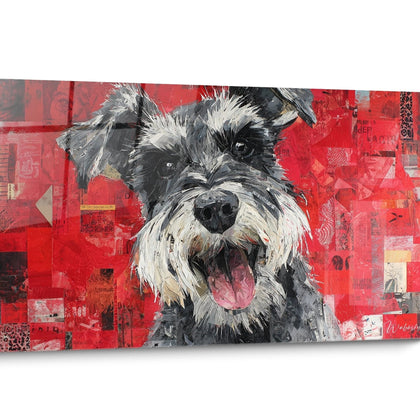

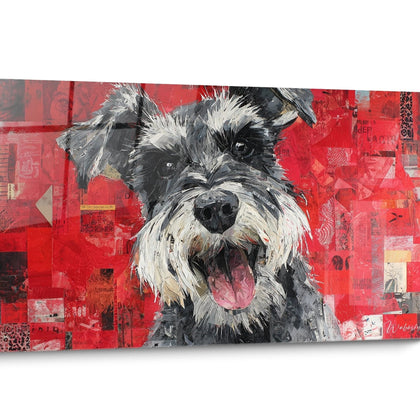


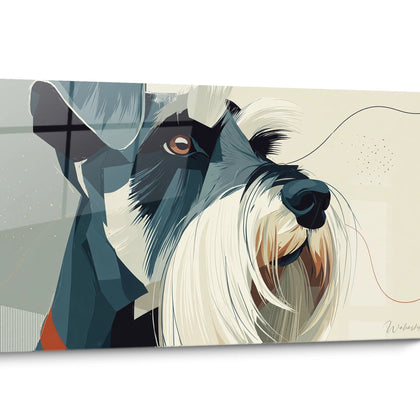
All about Geometric Schnauzer Dog Wall Art
- Geometric Schnauzer Painting Presentation
- Geometric Canine Art
- Modern Schnauzer Décor
- Polygonal & Minimalist Style
The geometric Schnauzer dog painting reinvents canine representation through a contemporary artistic approach based on polygonal fragmentation and structured abstraction. This digital vision of the Schnauzer transforms the breed's characteristic features into angular, crystalline, and faceted forms that capture light differently depending on the viewing angle. Designed for refined urban interiors, modern offices, and minimalist living spaces, this large-format decorative style establishes itself as an audacious alternative to traditional representations. The low-poly aesthetic elevates the Schnauzer's distinctive attributes – its square silhouette, prominent beard, bushy eyebrows – by decomposing them into precise graphic segments that create visual tension between immediate recognition and conceptual abstraction, perfectly suited for collectors of digital animal art and owners seeking an unconventional celebration of their companion.
Polygonal Architecture Serving Schnauzer Morphology
The geometric Schnauzer dog painting exploits triangular facet decomposition to restructure the characteristic anatomy of this German breed. Unlike the Schnauzer watercolor painting which favors pigment fluidity, the geometric approach constructs representation through assembly of angular planes creating a three-dimensional effect without traditional depth. The broken lines naturally follow the square structure of the skull, the geometry of the powerful jaw, and the sharp angles of the Schnauzer's compact body.
Why does geometrization enhance the Schnauzer's distinctive traits?
Polygonal fragmentation transforms natural contrast zones – white beard against dark coat, marked eyebrows, transition between limbs and trunk – into distinct chromatic areas bordered by sharp edges. This segmentation visually amplifies the characteristic proportions sought by cynological standards: broad chest, straight limbs, silhouette inscribed in a square. The large dimensions of the support enable multiplication of facets creating subtle gradations within each geometric segment, producing a sophisticated rendering avoiding the simplistic effect of basic low-poly.
Chromatic composition and restricted palette for maximum impact
The geometric rendering of the Schnauzer generally revolves around extended monochromatic palettes or bold dichromic contrasts. Metallic tints – silver, graphite, oxidized copper – accentuate the futuristic aspect while black-white-gray combinations respect the authenticity of salt-and-pepper or solid black coats. Some interpretations integrate neon touches – electric blue, vivid orange, magenta – on neutral background to create focal points on the nose, eyes, or collar, transforming the geometric Schnauzer painting into a statement piece for industrial lofts and design apartments.
Visual dynamics and strategic fragmentation angles
The orientation of polygonal cut lines radically influences perception of movement and character. Horizontal facets evoke stability and confidence – intrinsic qualities of the guard Schnauzer – while ascending diagonals suggest vigilance and dynamism. Specialized digital artists precisely calculate triangulation density: facial zones heavily segmented to preserve recognizable expression, body in large planes to balance complexity and readability at distance, thus creating visual hierarchy naturally guiding the eye toward the identifying elements of the breed.
Integration of Geometric Schnauzer Painting in Contemporary Spaces
The geometric Schnauzer dog painting functions as an architectural element in modern environments dominated by refined lines, smooth surfaces, and industrial materials. Its digital aesthetic naturally dialogues with Scandinavian furniture, exposed metal structures, polished concrete, and workshop glass partitions. The recommended monumental format – 120x80cm minimum – allows the polygonal composition to deploy all its visual complexity, the multiple facets creating micro-reflections varying according to ambient lighting and observer position.
Which environments particularly valorize this graphic style?
Residential open-spaces benefit from the structuring effect of geometric rendering which visually anchors functional zones – above a modular anthracite-gray sofa, facing a black quartz kitchen island. Professional offices in the technology sector, startups, and creative agencies massively adopt this iconography which projects innovation and disruptive thinking. Specialized veterinary clinics and premium canine accessory boutiques utilize the geometric Schnauzer painting to assert premium positioning transcending traditional sentimental imagery.
Decorative associations amplifying visual impact
The geometric canine artwork integrates ideally into asymmetrical mural compositions combining mirrors with thin metallic frames, minimalist design clocks, and suspended black steel shelving. Architectural plants – Sansevieria with sharp vertical lines, Monstera with natural geometric cuts – establish interesting formal dialogue. Directional lighting through adjustable LED spotlights reveals the virtual depth created by tonal variations between adjacent facets, transforming the static visual into quasi-kinetic installation according to time of day.
Formats adapted to urban spatial constraints
City apartments with limited floor space but generous ceiling height benefit from vertical diptych or triptych compositions: geometric Schnauzer profile fragmented across 2-3 vertically aligned panels, creating imposing presence without monopolizing wall width. Transitional corridors – often neglected – perfectly welcome panoramic formats where the polygonal dog silhouette stretches horizontally. This modular approach also enables progressive renewal: initial acquisition of a central panel, subsequently complemented by lateral elements forming a coherent evolving ensemble adapted to staggered budgets of young urban professionals passionate about contemporary design and canine culture.
Symbolism and Cultural Resonance of Polygonal Schnauzer
Beyond pure aesthetics, the geometric Schnauzer dog painting conveys stratified symbolic reading particularly relevant for breed owners. The transformation into crystalline forms simultaneously evokes the legendary robustness of the Schnauzer – Bavarian farm dog become urban guardian – and its adaptation to contemporary environments. Geometrization metaphorically represents the Schnauzer's mental structure: analytical intelligence, unwavering loyalty, character with well-defined contours without fuzzy or ambiguous behavioral zones.
How does geometric stylization translate the breed's temperament?
Sharp angles and construction through distinct planes faithfully reflect Schnauzer temperament: maximum alertness, clearly established territoriality, sharp demarcation between protected family circle and strangers. The absence of smooth transitions in polygonal rendering echoes the uncompromising character of these dogs who don't adopt intermediate positions – total trust or vigilant wariness. Digital animal art collectors appreciate this concordance between artistic form and psychological essence, creating representation that transcends simple portraiture to become conceptual interpretation of the human-dog bond reimagined for the digital era.
Decorative trends and cultural positioning
The canine wall art market evolves from anthropomorphic sentimentalism toward intellectualized approaches where the animal becomes pretext for formal exploration. The geometric Schnauzer fits within this cultural shift alongside animal NFTs, parametric sculptures, and art-tech installations. Millennials and Gen Z Schnauzer owners – educated urban populations with strong digital visual culture – massively reject cute representations favoring iconographies asserting sophistication and cultural differentiation, positioning their canine attachment in an assumed aesthetic register rather than primary emotional one.
Heritage value and stylistic permanence
Unlike ephemeral decorative fashions, geometric art anchors itself in modernism history – Cubism, Suprematism, Bauhaus – guaranteeing trans-generational legitimacy. Investment in a large-format geometric Schnauzer constitutes heritage purchase resistant to trend fluctuations, its stylistic relevance remaining intact facing taste evolution. Limited-numbered editions by recognized digital artists progressively gain value on contemporary animal art secondary market, particularly when documented with authenticity certificates and blockchain creation metadata.
Does the geometric Schnauzer dog painting suit classical interiors?
Though naturally aligned with modern aesthetics, the deliberate contrast between digital rendering and traditional décor creates sophisticated visual tension appreciated by decorators seeking the surprise effect. A large polygonal Schnauzer in a wood-paneled library asserts cultural boldness and refusal of decorative pastiche.
What perceptual difference exists depending on viewing distance of the geometric Schnauzer painting?
From afar, the brain automatically reconstructs facets into recognizable continuous image; upon closer approach, fragmentation becomes evident revealing technical construction. This dual reading – figurative from distance, abstract up close – enriches daily contemplative experience avoiding visual saturation of one-dimensional images.
Can a geometric Schnauzer dog painting personalize a specific portrait?
Custom creation services transform personal photographs into polygonal renderings preserving individual characteristics – unique coat markings, specific ear carriage, distinctive facial expression – while applying signature geometric aesthetic, producing unique artwork combining stylistic universality and affective singularity of the represented companion.
Further reading
Our articles on this topic
- Which schnauzer painting size for an entrance hall?
- Schnauzer painting for a grey and white Scandinavian living room: how to match it well
- Original schnauzer gift: how to get a personalized realistic portrait right
- Large shar pei painting above a sideboard: a guide to the right proportions
- German Shepherd painting, large format: which dimensions for your living room
- What size chihuahua painting for a small wall?
L'art qui suscite l'envie
Maison belge d'art mural grand format
14 jourspour changer d'avis*
Protection Walenskyincluse
Fabriquéen Italie
FormatXXL
Kit de fixationtoujours fourni
* Hors tableaux personnalisés et tailles personnalisées


