









Black and White Schnauzer Dog Wall Art
The Painting Dog Schnauzer Black and White celebrates the timeless elegance of this iconic breed. Our collection captures the intensity of the gaze and the affirmed character of the Schnauzer through refined artistic compositions. Each work highlights the graphic beauty of the black and white contrast, emphasizing the unique texture of its coat and its noble expression. Perfect for lovers of this distinguished breed, this Wall Decor Schnauzer brings character and sophistication to your interior. A Monochrome Dog Art that transforms your space into a contemporary gallery.
 Schnauzer Wall Art with Tender Eyes Under a Blanket - Cozy Shelter - Schnauzer Edition273,90 €
 Dog Portrait Canvas with Sketched Strokes - Intense Gaze - Schnauzer Edition273,90 €
 Gray Schnauzer Portrait Painting in Profile - Thoughtful Gaze - Schnauzer Edition273,90 €
 Black and White Schnauzer Portrait Wall Art - Noble Gaze - Schnauzer Edition273,90 €
 Schnauzer Portrait Canvas in Black and White - Intense Gaze - Schnauzer Edition228,90 €
Explore further
In Black and White Schnauzer Dog Wall Art
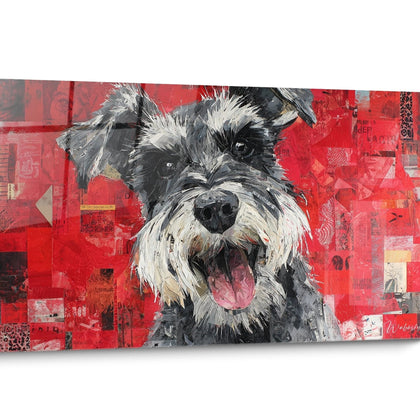



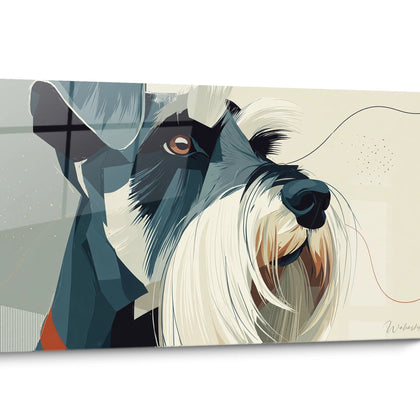
All about Black and White Schnauzer Dog Wall Art
- Presentation Painting Black and White Schnauzer
- Monochrome Aesthetic
- Decorative Integration
- Schnauzer Character
The painting Schnauzer dog black and white embodies the graphic elegance of a breed with a strong temperament. This monochrome representation enhances the characteristic traits of the Schnauzer: its imposing mustache, its bushy eyebrows, and its penetrating gaze. The absence of color reveals with rare intensity the dense texture of its coat, the marked contrasts between the dark and light areas that define its distinctive silhouette. This decorative format transforms your space into a contemporary canine art gallery, where each anatomical detail becomes an element of visual composition.
The visual impact of monochrome contrast for a Schnauzer
The painting dog Schnauzer black and white exploits the power of chiaroscuro to reveal the distinctive morphology of this breed. The rough and hard coat of the Schnauzer, normally salt and pepper gray, takes on a sculptural dimension when translated into monochrome scales. Deep shadow areas accentuate the depth of its wide chest, while bright highlights emphasize the architecture of its rectangular skull and the prominence of its square muzzle.
How does black and white magnify the physical attributes of the Schnauzer?
This refined chromatic approach concentrates attention on the distinctive elements of the breed: the thick vibrissae forming this characteristic mustache, the bushy eyebrows that top oval and dark eyes, the V-shaped ears carried high. The monochrome treatment transforms these particularities into strong graphic elements, creating a composition where each hair seems precisely delineated. Large formats amplify this effect, allowing you to appreciate the density of the undercoat and the texture of the cover coat that define the compact and muscular silhouette of the Schnauzer.
Chromatic duality as a reflection of canine temperament
The choice of black and white resonates with the contrasted character of the Schnauzer: both a vigilant guard dog and an affectionate companion. This chromatic duality evokes the complex personality of the breed, alternating moments of intense concentration and phases of energetic play. For Schnauzer owners, this bicolor representation captures the very essence of their companion, this intelligent gaze traversing the nuances of gray to communicate an affirmed presence. Collectors appreciate this graphic interpretation that moves away from conventional color representations, just as a painting Schnauzer watercolor offers a more fluid and colorful vision of the same breed.
What spaces benefit from a large-format monochrome artwork?
Scandinavian minimalist interiors, industrial lofts with exposed brick walls, contemporary offices seeking a strong visual statement without chromatic disturbance: all are environments where the Schnauzer painting monochrome naturally asserts itself. Its reduced palette facilitates integration into existing decorative schemes, acting as a focal point without creating dissonance with surrounding textiles, wall coverings, or furniture.
Decorative integration strategies for a monochrome canine composition
The placement of a painting dog Schnauzer black and white of large dimension requires reflection on the visual hierarchy of the space. Unlike colorful works that dialogue with the surrounding tones, this monochrome representation works by structural contrast rather than chromatic contrast. It becomes a graphic anchor around which to organize furniture, creating a contemplation zone that attracts the gaze from the moment you cross the threshold.
The multiplying effect of monochrome wall compositions
Lovers of sophisticated canine decor exploit chromatic neutrality to create coherent gallery walls. A large format depicting a black and white Schnauzer can be accompanied by framed silver prints, antique botanical engravings, or architectural illustrations, all sharing this same color economy. This strategy avoids visual cacophony while building a thematic narrative around pure graphic aesthetics. Large formats allow for the establishment of this centerpiece without it being drowned in a composite set.
Materials and textures in dialogue with the monochrome image
The black and white rendering encourages the exploration of tactile variations in the immediate environment: natural linen in ecru tones, polished concrete in anthracite shades, raw wood grain, brushed metal. These materials with varied finishes create a sensory richness compensating for chromatic austerity, while the Schnauzer image introduces a living organic presence. Professional spaces - specialized veterinary clinics, high-end grooming salons, cynophilic breeding farms - use this approach to communicate expertise and refinement without ostentation.
How to create visual depth with a reduced palette?
The layering of planes becomes essential: position the wall art on a wall whose tint creates a subtle contrast (medium gray on off-white, charcoal on pearl gray), add three-dimensional decorative elements in the foreground - black wire shelves, matte white ceramic planters, plants with graphic foliage like the Ficus lyrata. This layered composition generates spatial depth that monochrome could otherwise flatten. The imposing scale of the format amplifies this architectural effect, transforming the wall into a scenic installation.
Giant Schnauzer owners find in these large formats a correspondence of scale with their real companion, creating a playful dialogue between the living animal and its artistic representation. This mirroring becomes a natural conversation starter for visitors, instantly establishing an emotional connection with the domestic space.
Capturing the behavioral essence of the Schnauzer in black and white
The black and white Schnauzer dog painting transcends the simple physical representation to evoke the distinctive behavioral traits of this terrier breed. The intensity of the gaze, the position of the semi-erect ears, the angle of the head: every anatomical detail communicates an emotional state. Monochrome compositions accentuate these non-verbal signals, eliminating chromatic distractions to focus attention on the facial expression and body posture that define the Schnauzer's personality.
Why does the Schnauzer lend itself particularly well to monochrome treatment?
The facial structure of the Schnauzer naturally presents areas of marked contrast: dark muzzle, pronounced eyebrows, abundant beard creating plays of light and shadow. Even in natural color varieties (pepper and salt, pure black, white), this breed possesses a cranial architecture that generates dramatic reliefs. Black and white treatment exalts this innate geometry, transforming functional characteristics - developed for rodent hunting and property guarding - into pure aesthetic elements. Large formats allow for detailing this complex facial topography with almost anatomical precision.
Canine intelligence translated into visual composition
The breeders and enthusiasts of Schnauzers immediately recognize in these monochrome representations the lively intelligence characteristic of the breed. The fixed, slightly tilted gaze evokes this keen ability to observe and a tendency to constantly assess the environment. The black and white amplifies this impression of mental concentration, creating an atmosphere of calm vigilance. This representation particularly resonates with owners who have chosen the Schnauzer for its alarm dog qualities, appreciating this deterrent presence even in artistic form.
What poses best reveal the character of the Schnauzer?
The three-quarter compositions offering a direct gaze towards the observer capture the territorial confidence of the breed. Profile portraits emphasize the straight dorsal line and the high tail carriage, physical manifestations of self-assurance. Close-ups on the face accentuate the determined expression, while full-body views in an alert position - front paws slightly apart, body weight forward - evoke the Schnauzer's instant reactivity to environmental stimuli. The monumental format amplifies the imposing presence of this medium-sized breed, giving it a visual stature equivalent to large-sized guard breeds.
Frequently asked questions about monochrome Schnauzer paintings
Is a black and white Schnauzer painting suitable for a colorful contemporary interior?
Absolutely, the chromatic neutrality of the monochrome acts as a stabilizing element in a vibrant environment. It creates a visual respite while maintaining a strong graphic presence, allowing other colorful elements to express themselves without chromatic competition.
What distance should be observed to fully appreciate a large monochrome format?
For monumental formats, allow a viewing distance equivalent to 1.5 times the diagonal of the image. This proportion allows you to embrace the overall composition while perceiving the textural details of the fur and the nuances of gray creating the modeling of volume.
Is the black and white Schnauzer dog painting suitable for animal-related professional spaces?
This representation finds its ideal place in veterinary clinics, high-end dog training centers and kennels. It communicates specific breed expertise while maintaining an elegant and professional aesthetic, reassuring for a demanding clientele seeking specialized services.
Further reading
Our articles on this topic
- Which schnauzer painting size for an entrance hall?
- Schnauzer painting for a grey and white Scandinavian living room: how to match it well
- Original schnauzer gift: how to get a personalized realistic portrait right
- Vizsla painting on black background: the graphic style that elevates your office
- Dog-themed white fluffy wall art for an adult bedroom: a guide to texture and mood
- Black and white Shetland Sheepdog dynamic painting: how to stage it in an adult bedroom
L'art qui suscite l'envie
Maison belge d'art mural grand format
14 jourspour changer d'avis*
Protection Walenskyincluse
Fabriquéen Italie
FormatXXL
Kit de fixationtoujours fourni
* Hors tableaux personnalisés et tailles personnalisées


