


Doberman Dog Portrait Wall Art
Our Painting dog Doberman Portrait collection celebrates the nobility and elegance of this iconic breed. Each artwork captures the intensity of the gaze and the natural bearing of the doberman through stunning portraits de chiens dobermans . These artistic creations reveal the proud and protective personality of this loyal companion. Perfect for dog lovers and fans of art canin contemporain, these paintings bring character and refinement to your interior decoration.
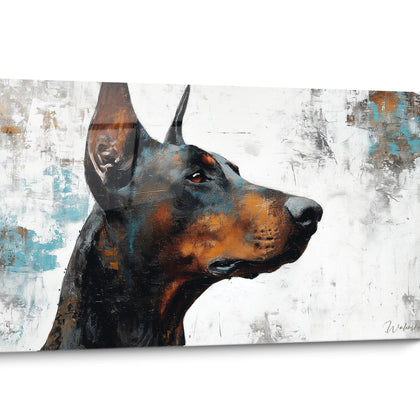
 Doberman Portrait Wall Art Turquoise Abstract Background Piercing Gaze Doberman Edition273,90 €
 Black and Tan Doberman Portrait Painting with Amber Eyes - Noble Gaze - Doberman Edition273,90 €
 Black and Tan Doberman Painting Profile Portrait on Bright Yellow Background - Canine Majesty - Doberman Edition273,90 €
 Blue and Orange Canine Portrait Canvas Intense Expression - Piercing Gaze - Doberman Edition273,90 €
 Doberman Portrait Canvas with Ochre and Blue Tones - Intense Gaze - Doberman Edition273,90 €
 Doberman with Amber Gaze on Red Background - Portrait of Nobility - Doberman Edition273,90 €
 Blue Doberman Wall Art with Orange Accents - Expressive Portrait - Doberman Edition273,90 €
 Doberman Painting with Orange and Purple Tones - Expressive Canine Portrait - Doberman Edition273,90 €
 Geometric Doberman Portrait Canvas in Turquoise-Green Tones - Intense Gaze - Doberman Edition273,90 €
 Elegant Dog in Purple and Pink Tones - Contemporary Artistic Portrait - Doberman Edition273,90 €
 Doberman Black and Rust Painting on Red Background - Artistic Portrait - Doberman Edition273,90 €
 Blue Dog Canvas with Yellow and Red Tones - Contemporary Portrait - Doberman Edition273,90 €
 Black and Tan Doberman Portrait Canvas on Red Background - Canine Nobility - Doberman Edition273,90 €
 Doberman Blue Artwork with Colorful Reflections - Contemporary Canine Portrait - Doberman Edition228,90 €
 Doberman Portrait Wall Art Purple and Orange - Chromatic Brilliance - Doberman Edition228,90 €
 Blue Doberman Portrait Painting With Floral Touches - Intense Gaze - Doberman Edition228,90 €
Explore further
In Doberman Dog Portrait Wall Art


All about Doberman Dog Portrait Wall Art
- Doberman Portrait Wall Art Presentation
- Contemporary Canine Art
- Psychological Impact of the Gaze
- Minimalist Elegance Large Format
The Doberman Portrait dog canvas stands out as a captivating wall art piece that celebrates the intensity and nobility of this emblematic breed. Unlike geometric or stylized representations, this portrait format captures the very essence of the Doberman through its penetrating gaze and magnetic presence. Designed for demanding contemporary living spaces, this type of large-format wall decoration instantly transforms a room's atmosphere by creating a hypnotic focal point that leaves no one indifferent.
The Doberman's Facial Expression as a Major Decorative Element
The Doberman Portrait dog canvas distinguishes itself through its ability to immortalize the unique facial expression of this breed. Unlike full-body compositions, the portrait format concentrates all attention on facial features, capturing that paradoxical alliance between power and sensitivity that characterizes the Doberman. The subtle forehead wrinkles, the position of the upright ears, and especially the intensity of the amber or dark gaze create an immediate emotional connection with the viewer.
How does the Doberman's facial anatomy enrich your space?
The Doberman's marked bone structure, with its prominent cheekbones and sculpted muzzle, offers a particularly photogenic interplay of shadows and light. In a large-format portrait, these anatomical details become powerful graphic elements that visually structure the space. The natural symmetry of the face creates a reassuring visual balance, while the depth of the gaze introduces a contemplative dimension to reception areas or executive offices.
The psychology of canine gaze in wall decoration
A Doberman Portrait dog canvas exploits the human fascination with animal eye contact. This direct gaze, neither aggressive nor submissive, conveys an assertive presence particularly sought after in contemporary masculine interiors or high-end professional spaces. The emotional mirror effect created by this type of portrait establishes an atmosphere of benevolent vigilance, ideal for entry halls or workspaces requiring concentration and determination.
Differentiation from geometric styles
While geometric representations of the Doberman favor abstraction and stylization, the portrait format relies on emotional realism and intimate connection. This approach particularly suits Doberman owners wishing to honor their companion, but also animal art enthusiasts seeking a masterpiece charged with character rather than mere graphic decoration. The portrait captures individual personality where geometry celebrates the archetype.
Space Psychology and Monumental Animal Presence
Why does the portrait format transform how we perceive a room?
Integrating a Doberman Portrait dog canvas in large dimensions into a living space generates what designers call the "presence effect". Unlike complete animal scenes, the facial close-up creates the illusion of a silent guardian observing without judgment. This psychological presence unconsciously alters behaviors in the space: it encourages posture, inspires respect, and establishes a form of aesthetic discipline particularly appreciated in industrial lofts or minimalist apartments.
The imposing dimensions amplify this effect. A portrait of 120x180cm or larger literally positions the Doberman at human scale, or even above, creating an unusual visual hierarchy. This inversion of habitual human-to-animal representation size ratios generates a fascinating creative tension, particularly exploited in contemporary art galleries and architect residences.
The chromatic impact of black and tan coat in large format
The Doberman's characteristic coat, with its deep black contrasts and tan orange, offers a naturally sophisticated color palette. In a monumental portrait, these nuances create visual rest zones (dark masses) and luminous focal points (tan markings above the eyes, on the muzzle and chest). This natural chromatic distribution works remarkably well in monochrome interiors or neutral-toned spaces, where the canvas becomes the sole source of controlled color warmth.
How does this type of decoration influence evening ambiance?
Often overlooked is the Doberman Portrait dog canvas's presence after nightfall. Unlike colorful works that disappear in dim light, the Doberman's natural contrasts capture the slightest ambient light source. The reflection in the eyes, even if stylized, creates luminous points that maintain the artwork's presence even in subdued lighting. This nocturnal visual persistence suits master bedrooms or meditation spaces particularly well, where it evokes protection and vigilance without aggression.
Canine Minimalism and Modern Interior Architecture
The alliance between refined aesthetics and animal power
The Doberman Portrait dog canvas fits perfectly into the organic minimalism trend that characterizes contemporary interior architecture. This decorative approach privileges unique works with strong impact rather than accumulations. A monumental Doberman portrait advantageously replaces a gallery of minor works, concentrating attention on a single memorable image. The Doberman's short coat and sculpted musculature evoke that same philosophy of essentials guiding contemporary Scandinavian or Japanese design.
In double-height spaces or blind walls of lofts, this type of portrait magnificently exploits underutilized vertical surfaces. The naturally vertical orientation of a facial portrait harmonizes with the elongated proportions of modern architectures, where horizontal compositions would create imbalance. This structural compatibility explains the growing success of animal portrait format in high-end renovation projects.
Which buyer profiles specifically seek this type of artwork?
Buyers of Doberman Portrait dog canvases divide into three distinct categories. First, passionate breed owners, often engaged in breeding or dog competitions, who seek an artistic celebration of their favorite animal. Second, professionals in security, defense, or combat sports sectors, who identify in the Doberman values of discipline and determination resonating with their professional identity. Third, contemporary animal art collectors attracted by the powerful aesthetics and relative rarity of this specific iconography compared to traditional feline or equine representations.
Integration into premium commercial spaces
Beyond private residences, the Doberman Portrait dog canvas finds its place in commercial spaces seeking distinctive visual identity. Law offices specializing in defense, high-end sports clubs, premium automobile dealerships, or exclusive fitness facilities exploit the Doberman's symbolism: protection, excellence, athletic elegance. In these contexts, the portrait doesn't merely decorate—it communicates brand values nonverbally yet immediately comprehensible to the target clientele.
Is a Doberman Portrait dog canvas suitable for family spaces with children?
Absolutely. Contrary to common misconceptions, a quality artistic Doberman portrait introduces no aggression into family space. Rather, it can serve as an educational support for teaching children respect for animals and appreciation of their natural beauty. The direct yet neutral gaze typical of these portraits encourages conversations about responsible cohabitation with large domestic animals.
How do you choose between a photographic portrait and a stylized artistic interpretation?
The choice depends on desired ambiance. An ultra-realistic photographic rendering maximizes emotional connection and suits contemporary classic interiors. An artistic interpretation with pictorial treatment, texture play, or material effects harmonizes better with eclectic interiors or mixed art collections. For large formats destined for commercial spaces, artistic interpretation generally offers greater visual impact from a distance.
What is the durability of a Doberman Portrait dog canvas against decorative trends?
Animal art transcends ephemeral fashions, particularly when celebrating iconic breeds like the Doberman. Portraiture representation, anchored in centuries-old artistic tradition, guarantees lasting aesthetic relevance. Unlike trendy decorative motifs, a quality portrait gains in sentimental and potentially financial value over time, especially if it's a limited edition or creation by an emerging artist specializing in contemporary canine art.


